Understanding the Investment in Facial Rejuvenation
How much facelift procedures cost is one of the most common questions we hear from individuals considering facial rejuvenation. Here’s what you need to know:
- Full Facelift Cost: $20,000 to $40,000+ on average
- Mini Facelift Cost: $8,000 to $15,000 on average
- National Average: $11,395 (surgeon’s fee only)
- Cost Includes: Surgeon’s fee, anesthesia, facility fees, pre/post-operative care
- Not Typically Included: Prescriptions, aftercare garments, medical tests
A facelift, medically known as a rhytidectomy, is a surgical procedure designed to address the visible signs of aging in the face and neck. It targets sagging skin, jowls, deep wrinkles, and loose tissue by removing excess skin and repositioning the underlying muscle structure. The goal is to create a refreshed, natural-looking appearance that restores confidence without appearing “overdone.”
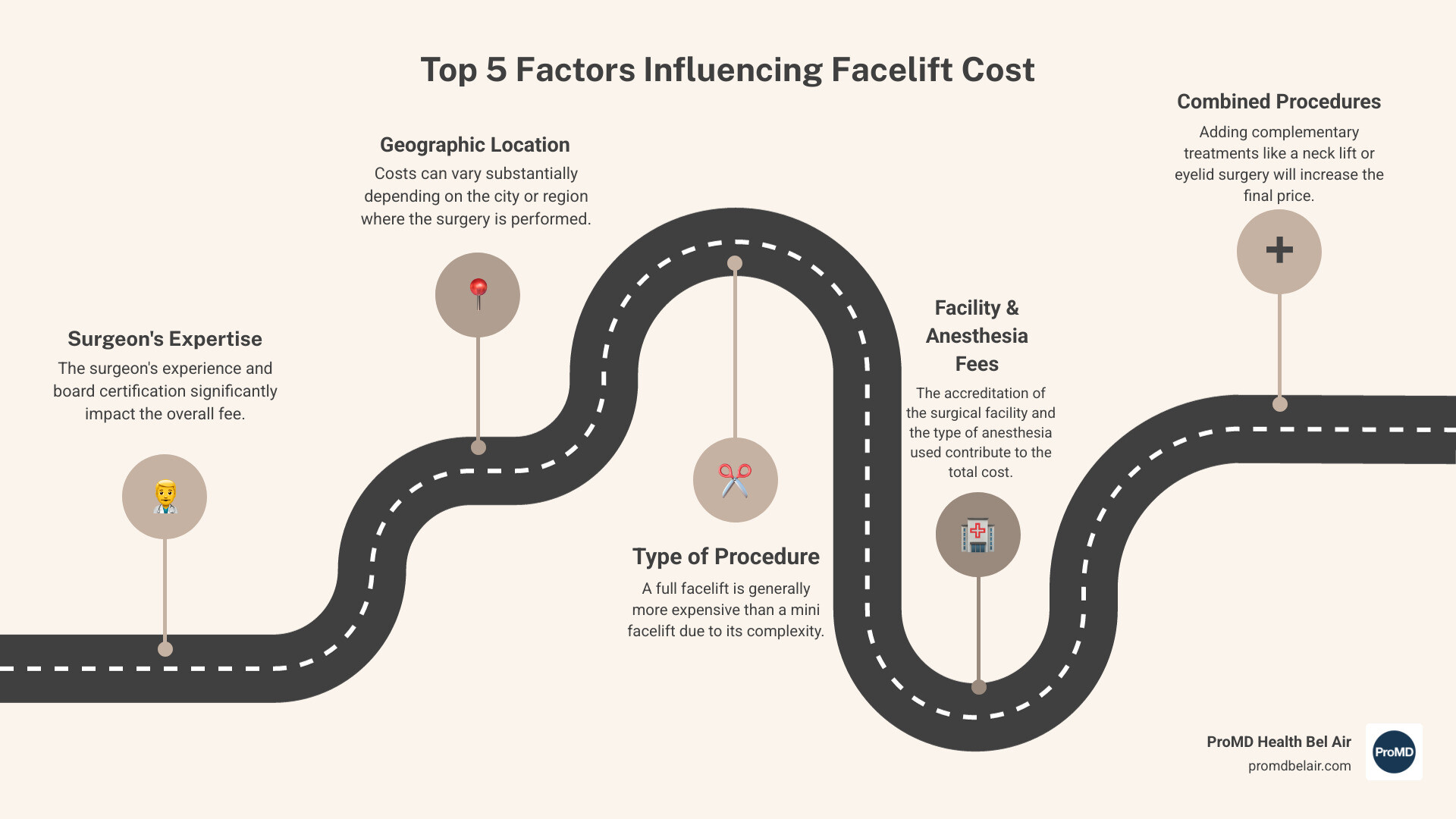
The cost of a facelift reflects much more than just the procedure itself. It’s an investment in expertise, safety, and quality results. Several factors influence the final price, including your surgeon’s experience and credentials, the complexity of your specific procedure, geographic location, and whether you combine your facelift with complementary treatments like eyelid surgery or a neck lift.
Understanding these cost components helps you make an informed decision about your facial rejuvenation journey. At ProMD Health Bel Air, we believe transparency about pricing and realistic expectations are essential to your satisfaction and peace of mind.
I’m Ryan Pittillo, Franchise Owner at ProMD Health Bel Air, and part of the team dedicated to helping patients understand their aesthetic treatment options, including how much facelift procedures cost and what factors influence that investment. My team-first approach ensures every patient receives personalized guidance throughout their journey.
Basic how much facelift terms:
Understanding How Much a Facelift Costs: A Detailed Breakdown
When considering a facelift, one of the first questions on your mind is likely, “how much facelift surgery will cost?” It’s a complex question with a multifaceted answer, as the total price involves various components beyond just the surgeon’s fee. According to the American Society of Plastic Surgeons, the average cost of a facelift (rhytidectomy) is $11,395. However, it’s crucial to understand that this figure typically represents only the surgeon’s fee and doesn’t include all associated expenses. For a more comprehensive view of facelift surgery cost statistics, you can refer to resources like the Facelift Surgery cost statistics from the American Society of Plastic Surgeons.
The overall cost of a facelift in the U.S. can range significantly, from approximately $4,125 to $13,000 for the surgeon’s fee alone, and often between $20,000 and $40,000 when all fees are factored in. Some complex cases or those involving multiple bundled procedures can even reach upwards of $250,000. This wide range reflects the personalized nature of plastic surgery and the various elements contributing to the final bill.
So, what exactly is included in the total cost of a facelift? Generally, the price you’re quoted will encompass:
- Surgeon’s Fee: This is the primary cost, covering the surgeon’s expertise, time, and skill in performing the procedure. Highly experienced and board-certified surgeons typically command higher fees, reflecting their specialized training and proven track record.
- Anesthesia Fees: A facelift is usually performed under general anesthesia, though sometimes local anesthesia with sedation is used. These fees cover the anesthesiologist’s services and the medications used to ensure your comfort and safety during the surgery.
- Facility Fees: These charges cover the use of the surgical facility, including the operating room, state-of-the-art equipment, and nursing staff. Accredited surgical centers adhere to strict safety standards, which are reflected in these costs.
- Pre- and Post-Operative Care: This often includes initial consultations, follow-up appointments, and any necessary post-operative care to monitor your recovery and ensure optimal results.
What’s typically not included in the base cost are expenses such as:
- Prescriptions: Medications for pain management, antibiotics, or other post-surgical needs.
- Aftercare Garments: Compression garments or special bandages required during the recovery period.
- Medical Tests: Any lab tests or medical clearances needed before your surgery.
Understanding these components is the first step in comprehending the true investment involved in a facelift.
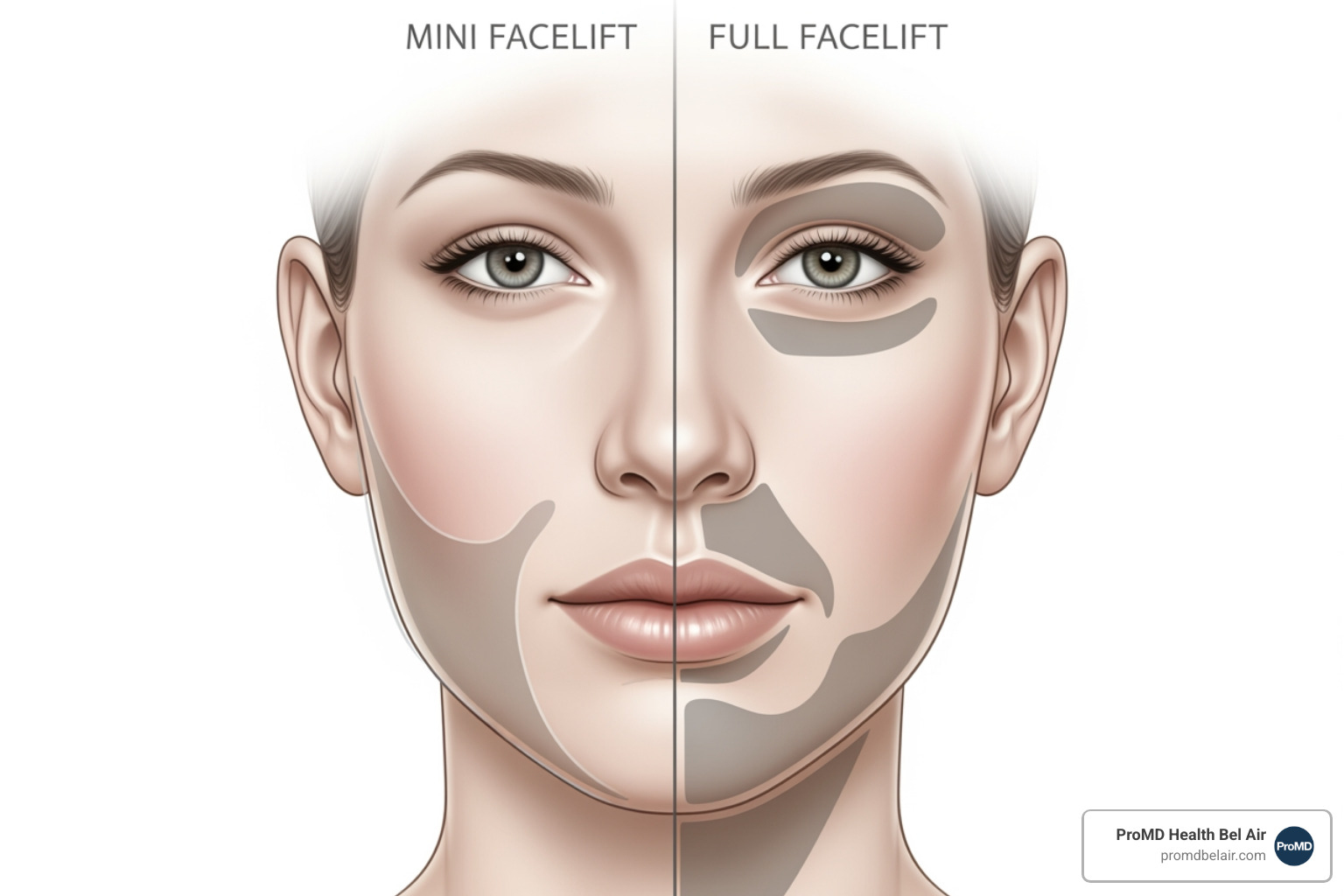
This image illustrates the areas typically addressed by a mini facelift versus a full facelift.
Key Factors That Influence the Final Price
Several factors contribute to the variability of facelift costs. Recognizing these helps you understand why prices differ and make an informed decision.
- Surgeon’s Experience and Credentials: This is a significant factor. A board-certified plastic surgeon with experience in facial surgery typically charges more. You are paying for their skill, artistry, and a proven record of natural-looking, long-lasting results. We emphasize prioritizing quality and safety over the cheapest option.
- Geographic Location: The cost of cosmetic procedures varies by location. Areas with high demand, like those around Bel Air, MD, Fallston, MD, and Forest Hill, MD, may have higher overhead costs, influencing the price. Our proximity to larger Maryland cities can also reflect regional pricing trends.
- Type of Anesthesia: The choice of anesthesia and procedure duration will impact the anesthesiologist’s fees. General anesthesia typically costs more due to specialized monitoring.
- Facility Accreditation: Surgery in an accredited facility ensures the highest safety standards. The costs of maintaining such a facility, including advanced equipment and a skilled team, are factored into the fees.
- Procedure Complexity: The extent of your aging and unique facial anatomy determine the facelift’s complexity. A more extensive procedure is naturally more complex and costly.
How Much Does a Mini Facelift Cost Compared to a Full Facelift?
The terms “mini facelift” and “full facelift” refer to distinct procedures designed to address different degrees of facial aging, and their costs reflect these differences.
A mini facelift is a less invasive option ideal for individuals with early signs of aging. It targets mild to moderate skin laxity in the lower face and jawline, often addressing jowls and some sagging around the mouth. The incisions are typically shorter and less extensive than a full facelift, leading to a quicker recovery. On average, a mini facelift can cost anywhere from $8,000 to $15,000. It’s an excellent choice for those who aren’t quite ready for a comprehensive surgical solution but desire a refreshed appearance.
A full facelift, on the other hand, is designed for more significant signs of aging, addressing extensive sagging in the mid-face, lower face, and neck. This procedure involves more comprehensive lifting and repositioning of deeper tissues, muscle, and skin, often extending into the hairline and behind the ears. A full facelift provides more dramatic and long-lasting rejuvenation. The cost for a full facelift typically ranges from $20,000 to $40,000 or more, reflecting the greater complexity, longer surgical time, and more extensive recovery.
The choice between a mini and full facelift depends on your individual needs, the extent of your aging, and your aesthetic goals. A thorough consultation with our experts at ProMD Health Bel Air will help determine which procedure is right for you.
How Much Do Additional Procedures Add to the Cost?
It’s common for individuals to combine a facelift with other cosmetic procedures to achieve a more harmonious and comprehensive facial rejuvenation. While adding procedures will increase the total cost, there can often be “cost efficiencies” when bundling multiple treatments into a single surgical session, as it consolidates anesthesia and facility fees.
Common procedures combined with a facelift include:
- Neck Lift: Often performed alongside a facelift, a neck lift addresses sagging skin, muscle banding, and excess fat in the neck area, creating a smoother, more defined jawline and neck contour. The average cost of a neck lift in the U.S. is around $5,270 (surgeon’s fee only).
- Eyelid Surgery (Blepharoplasty): This procedure corrects drooping upper eyelids and puffy bags under the eyes, which can make you look tired or older. The average cost of blepharoplasty is approximately $4,451.
- Brow Lift: A brow lift, or forehead lift, lifts sagging eyebrows and smooths horizontal forehead wrinkles, opening up the eye area and creating a more alert appearance. The national average for a brow lift is about $4,430.
- Fat Transfer: Fat grafting can be used to restore lost volume in areas like the cheeks, temples, or under-eye hollows, complementing the lifting effects of a facelift. The average cost for fat transfer is around $2,130.
- Dermal Fillers: While not typically performed during a surgical facelift, dermal fillers can be used before or after to address specific areas of volume loss or fine lines, enhancing the overall result. Learn More info about dermal fillers and how they can contribute to your aesthetic goals.
Bundling these procedures can provide a more balanced and natural-looking outcome, addressing all aspects of facial aging simultaneously.
Financing Your Facelift & Insurance Coverage
Understanding how much facelift surgery costs naturally leads to questions about how to manage this significant investment. It’s important to note upfront that, as an elective cosmetic procedure, facelift surgery is generally not covered by health insurance. Insurance typically covers procedures deemed medically necessary, and facelifts, by definition, are performed for aesthetic improvement. While very rare, if a cosmetic procedure were to address a functional impairment (e.g., severe ptosis affecting vision), there might be an exception, but this is highly uncommon for a facelift.
However, the good news is that there are several financing options available to make your facelift journey more accessible:
- Third-Party Financing: Many patients use specialized medical financing companies, such as CareCredit or Cherry, which offer payment plans with various interest rates and repayment terms. These plans can help spread the cost of your procedure over several months or years.
- In-House Payment Plans: Some clinics, including ours at ProMD Health Bel Air, may offer flexible in-house payment plans or package deals to help manage the cost. We encourage you to discuss these options with our patient coordinators during your consultation.
- Personal Loans: You might consider a personal loan from a bank or credit union, which can offer competitive interest rates depending on your credit history.
We understand that investing in yourself is a big decision, and we’re here to help you explore all available avenues. For more detailed information on payment solutions and to see what options might be available to you, please visit our More info about financing offers page.
Surgical vs. Minimally Invasive Facelifts: A Cost and Outcome Comparison
When patients ask “how much facelift costs,” it’s crucial to differentiate between surgical and minimally invasive approaches, as they vary significantly in price, results, and recovery.
| Feature | Surgical Facelift | Minimally Invasive “Facelift” (e.g., Thread Lift, Fillers) |
|---|---|---|
| Cost | Higher upfront cost ($8,000 – $40,000+) | Lower per-session cost ($300 – $4,000+ per treatment) |
| Results | Dramatic, comprehensive lifting and tightening | Subtle, gradual improvement, volume restoration |
| Downtime | Longer (2-4 weeks for initial recovery) | Minimal to none (few hours to a few days) |
| Longevity | Long-lasting (10-15 years or more) | Temporary (6 months to 2 years, depending on treatment) |
| Best For | Moderate to severe sagging, significant aging signs | Mild to moderate laxity, volume loss, early aging |
Surgical facelifts offer the most dramatic and long-lasting results. They physically lift and reposition sagging tissues, remove excess skin, and tighten underlying muscles, effectively turning back the clock by a decade or more. The initial investment is higher, but the results endure for many years.
Minimally invasive options, often referred to as “liquid facelifts” or non-surgical skin tightening, provide more subtle improvements with less downtime and a lower per-session cost. They are excellent for addressing early signs of aging, restoring lost volume, or refining contours. However, these treatments are temporary and require regular maintenance sessions, meaning their cumulative cost over time can sometimes exceed that of a single surgical facelift.
This image depicts a minimally invasive skin rejuvenation procedure, highlighting the precision and non-surgical nature of the treatment.
Exploring Minimally Invasive Alternatives Offered at ProMD Health Bel Air
At ProMD Health Bel Air, we offer a range of effective minimally invasive treatments that can provide significant rejuvenation for those not ready for or not needing a surgical facelift. These options are often a fantastic way to address early aging, restore volume, or refine contours with minimal downtime.
- Thread Lifts: A thread lift is a procedure that uses dissolvable sutures to subtly lift and reposition sagging skin. These threads also stimulate your body’s natural collagen production, which can continue to improve skin firmness even after the threads have absorbed. A thread lift can offer some of the benefits of a facelift without the extensive surgery, providing a more natural appearance with no scars. Results can last about two years. You can find More info about thread lifts on our website.
- Dermal Fillers: Often a key component of a “liquid facelift,” dermal fillers are injectable gels that restore lost volume, smooth out wrinkles, and improve facial contours. They can be used to lift and define the cheeks, jawline, and temples, filling in hollows and reducing the appearance of deep folds. While they don’t offer the same lifting power as surgery, they can create a refreshed and more youthful appearance by re-volumizing key areas.
- Neuromodulators (Botox & Dysport): These injectables relax specific facial muscles to smooth out dynamic wrinkles, such as crow’s feet, frown lines, and forehead furrows. While they don’t “lift” the face in the same way as surgery or even fillers, they are an essential tool in achieving overall facial rejuvenation by softening expression lines. For more information on how these work, visit our page on More info about Botox & Dysport.
It’s important to consider the cumulative cost of maintenance treatments for minimally invasive options. While each session is less expensive than a surgical facelift, these treatments need to be repeated regularly to maintain results. Over several years, the total expenditure on non-surgical solutions could potentially rival or even exceed the upfront cost of a surgical facelift. We’ll help you weigh these long-term costs during your consultation to determine the best path for your goals and budget.
The Facelift Journey: From Consultation to Recovery
Starting on a facelift journey is a deeply personal decision, and it begins long before the actual procedure. The path from initial curiosity to final results involves careful consideration, professional guidance, and a commitment to recovery.
A patient engages in a professional consultation, discussing their aesthetic goals with a medical expert.
The consultation process is paramount. This is where you’ll discuss your aesthetic concerns, medical history, and desired outcomes with your surgeon. It’s a two-way conversation where we assess your facial anatomy, skin quality, and overall health to determine if you’re a good candidate for a facelift. At ProMD Health Bel Air, we use our innovative AI Simulator during consultations, allowing you to visualize personalized post-treatment results and set realistic expectations for your change. This helps ensure that the outcome aligns with your vision.
Choosing the Right Surgeon
Selecting the right surgeon is arguably the most critical step in your facelift journey. The success of your procedure, the naturalness of your results, and your overall safety depend heavily on your surgeon’s qualifications and expertise.
- Board Certification: Always choose a board-certified plastic surgeon. This certification indicates that the surgeon has met rigorous standards for training, experience, and ethical practice. It’s a testament to their commitment to patient safety and surgical excellence.
- Specialization in Facial Surgery: Look for a surgeon with special expertise in facial plastic surgery. While many plastic surgeons perform facelifts, those who specialize in the face often possess a deeper understanding of facial anatomy and the nuances required to create natural-looking results.
- Reviewing Before-and-After Photos: A surgeon’s portfolio of before-and-after photos is invaluable. It provides tangible evidence of their skill and aesthetic style. Pay attention to the consistency of results and whether the patients look refreshed and natural, not “pulled” or artificial.
- Questions to Ask Your Surgeon: Don’t hesitate to ask about their experience, the number of facelifts they’ve performed, the specific techniques they favor, and what kind of follow-up care they provide, especially if complications arise. Understanding their approach to potential issues is just as important as their success rate.
Your comfort level with your surgeon is as important as their credentials. Choose someone with whom you feel a strong sense of trust and open communication.
What to Expect During Recovery
Recovery is an integral part of the facelift process, requiring patience and adherence to post-operative instructions.
- Typical Timeline: Most patients experience an initial recovery period of 2 to 4 weeks. During this time, you’ll need to take it easy and avoid strenuous activities. You should be public-ready within 10 to 14 days, though some residual signs might still be present.
- Bruising and Swelling: It’s normal to experience bruising and swelling after a facelift. Bruising is typically visible for at least 2 weeks, while swelling can persist for several weeks or even months, gradually subsiding. Some minor swelling can linger for up to 6 to 12 months, though it’s usually not noticeable to others.
- Activity Restrictions: You’ll be advised to avoid strenuous activities, heavy lifting, and intense exercise for at least 2 to 4 weeks. Gentle walking is usually encouraged early on to promote circulation.
- When to See Final Results: While you’ll notice an immediate improvement, the true and final results of your facelift will gradually become apparent as swelling resolves and tissues settle. This can take anywhere from 6 to 9 months, with maximum improvement visible around six months post-surgery.
We will provide you with detailed instructions for wound care, medication, and activity limitations to ensure a smooth and comfortable recovery.
Understanding the Potential Risks
Like any surgical procedure, a facelift carries potential risks and side effects. While serious complications are rare, especially with a qualified, board-certified surgeon, be aware of them.
- Common Side Effects: These include temporary numbness or altered sensation in the face, a feeling of stiffness or tightness, bruising, and swelling. Mild pain is also common and manageable with medication. Some patients may also experience temporary hair loss around incision sites.
- Less Common Complications: More serious, though rare, risks can include infection, excessive bleeding (hematoma), nerve injury (which can lead to temporary or permanent facial weakness or numbness), asymmetry, and unfavorable scarring.
- Importance of a Qualified Surgeon: Choosing an experienced, board-certified surgeon significantly minimizes these risks. Their expertise allows them to anticipate and manage potential complications effectively. At ProMD Health Bel Air, your safety is our utmost priority, and we adhere to the highest standards of care.
For a comprehensive overview of potential risks, you can consult resources like the American Society of Plastic Surgeons’ page on What are the risks of facelift surgery?. We will also discuss all potential risks thoroughly during your consultation.
Frequently Asked Questions About Facelift Costs
How long do facelift results last?
A surgical facelift is a significant investment that yields long-lasting results. Typically, facelift results can last anywhere from 10 to 15 years, or even longer, depending on the individual, the surgical technique used, and lifestyle factors. While a facelift effectively turns back the clock, it doesn’t stop the aging process entirely. Your skin will continue to age naturally, but you will always look younger than if you had never had the procedure.
To maximize the longevity of your results, we recommend maintaining a healthy lifestyle, protecting your skin from sun exposure, avoiding smoking, and considering complementary non-surgical treatments to address new signs of aging as they emerge.
Will a facelift look unnatural or “pulled”?
The fear of a “pulled” or unnatural-looking facelift is a common concern, but with modern surgical techniques and a skilled, board-certified surgeon, this outcome is largely a thing of the past. Today’s facelifts focus on lifting and repositioning the underlying facial structures, particularly the SMAS layer (Superficial Musculoaponeurotic System), rather than just pulling the skin taut.
By addressing the deeper tissues and muscles, a talented surgeon can achieve a natural, refreshed appearance that restores youthful contours without creating a stretched or artificial look. The goal is to make you look like a younger, more rested version of yourself, not like a different person. The expertise and artistic eye of your surgeon are paramount in achieving these natural-looking results.
Is a “liquid facelift” the same as a surgical one?
No, a “liquid facelift” is not the same as a surgical facelift, though both aim to refresh the face. A liquid facelift typically refers to a non-surgical approach that uses a combination of injectable treatments, primarily dermal fillers and neuromodulators like Botox or Dysport, to restore volume, smooth wrinkles, and subtly lift certain facial features.
While a liquid facelift can effectively address volume loss and static wrinkles, and soften dynamic lines, it does not provide the same degree of skin tightening or long-term lifting that a surgical facelift offers. A surgical facelift physically removes excess skin and repositions sagging tissues, which a liquid facelift cannot achieve. Think of it this way: a liquid facelift adds volume and relaxes muscles, while a surgical facelift provides a true structural lift. For more details on how neuromodulators work, explore our page on More info about Botox & Dysport.
Liquid facelifts offer temporary results (typically 6 months to 2 years) and require maintenance, whereas surgical facelifts provide dramatic, long-lasting corrections to sagging skin and deeper tissues.
Conclusion: Making an Informed Investment in Yourself
Understanding “how much facelift surgery costs” is the first step toward making an informed decision about your facial rejuvenation journey. As we’ve explored, the cost is an investment in much more than just a procedure; it’s an investment in expert care, improved safety, and ultimately, your renewed confidence and self-image. The benefits of a facelift, from restoring a youthful appearance to boosting your self-esteem, can positively impact various aspects of your life.
We strongly emphasize the importance of thorough research, selecting a board-certified and experienced surgeon, and engaging in a comprehensive consultation. At ProMD Health Bel Air, we are committed to guiding you through every step of this process. Our unique AI Simulator allows you to visualize potential post-treatment results, empowering you to make decisions with clarity and confidence. We believe in crafting personalized treatment plans that align with your individual needs and aesthetic goals, ensuring the most natural and satisfying outcomes.
Whether you’re considering a full facelift, a mini facelift, or exploring our range of effective minimally invasive alternatives, our team in Bel Air, Fallston, and Forest Hill, MD, is here to provide the highest standard of care.
Ready to take the next step in your journey to a more youthful and confident you? We invite you to schedule a consultation with our expert team at ProMD Health Bel Air. Let us help you understand your options and achieve the beautiful, natural results you deserve. Don’t forget to check our View our specials and events for any current offers that might make your investment even more accessible.