Why More People Are Choosing a Facelift Without Surgery
A facelift without surgery offers multiple proven options to address signs of aging like sagging skin, wrinkles, and volume loss. The three main approaches are:
- Injectables (Liquid Facelift) – Dermal fillers and neuromodulators restore volume and smooth wrinkles (6 months to 2 years)
- Energy-Based Skin Tightening – Ultrasound, radiofrequency, and laser treatments stimulate collagen for firmer skin (1-2 years with maintenance)
- PDO Thread Lifts – Absorbable sutures mechanically lift sagging areas while boosting collagen (1-3 years)
Seeing sagging jowls, deepening wrinkles, or hollow cheeks can be frustrating when you want to look as vibrant as you feel. The thought of a surgical facelift can also seem overwhelming or unnecessary.
The good news? You’re not alone, and you have options.
Non-surgical facial rejuvenation has exploded in popularity. In 2020, providers performed more than 13 million minimally invasive cosmetic procedures in the U.S., with most targeting the face, according to industry statistics. This reflects a clear shift toward less invasive alternatives.
But why are so many people choosing non-surgical options? The reasons are compelling: minimal downtime, lower costs, natural-looking results, and the ability to preview outcomes before committing to anything permanent. For someone seeking discreet, confidence-boosting treatments, these alternatives check all the boxes.
Understanding what causes facial aging helps explain why these treatments work. Your skin ages primarily due to collagen loss, sun damage, fat pad shifting, and weakening of the skin’s elastin framework. Non-surgical treatments target these exact issues by stimulating your body’s natural collagen production, restoring lost volume, and tightening loose skin.
I’m Ryan Pittillo, a franchise owner at ProMD Health Bel Air. I’ve helped countless clients achieve natural-looking results with facelift without surgery alternatives. In this guide, I’ll explain the three most effective approaches to help you make an informed decision.
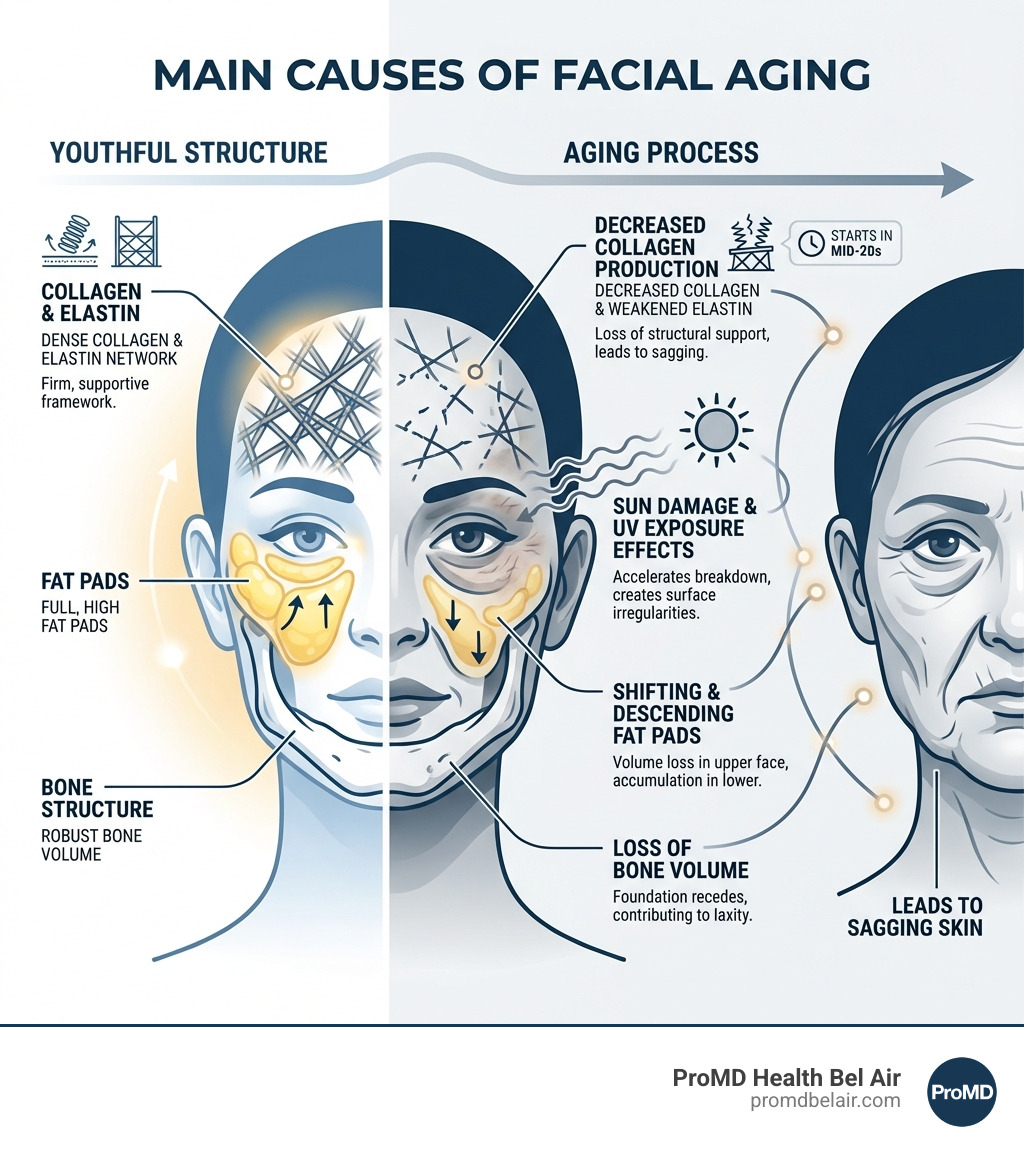
Surgical vs. Nonsurgical Facelift: What’s the Difference?
When we talk about a “facelift,” many people picture a traditional surgical procedure. However, aesthetic medicine has evolved to offer a spectrum of solutions. A nonsurgical facelift is a procedure designed to temporarily refresh, firm, or plump the skin on your face without requiring large incisions, general anesthesia, or an overnight hospital stay. It uses a combination of minimally invasive techniques to achieve its rejuvenating effects.
So, how does this differ from its surgical counterpart? A surgical facelift (rhytidectomy) involves making incisions to physically lift and tighten the skin, and sometimes reposition underlying fat or muscles. This requires general anesthesia and significant downtime. The results are dramatic and long-lasting, often for 10 to 15 years or more.
In contrast, a facelift without surgery is less invasive. While results are more subtle and temporary compared to surgery, they can still significantly improve your appearance without the risks or long recovery. The goal is to improve your natural beauty, not overhaul it.
Here’s a quick comparison to highlight the key differences:
| Feature | Surgical Facelift | Nonsurgical Facelift |
|---|---|---|
| Invasiveness | High (requires incisions, general anesthesia) | Low (no large incisions, local anesthesia or none) |
| Anesthesia | General anesthesia | Local anesthesia or topical numbing cream |
| Downtime | Weeks (swelling, bruising, restricted activity) | Minimal to none (minor swelling, redness, bruising) |
| Cost | Higher upfront cost | Lower per-session cost, but may require maintenance |
| Results Longevity | Long-lasting (10-15+ years) | Temporary (months to a few years) |
| Best Candidates | Significant sagging, deep wrinkles, excess loose skin | Mild-to-moderate sagging, early signs of aging, volume loss |
Nonsurgical treatments deliver short-term results, making them a great option for those seeking a short-term commitment or who aren’t ready for the permanent changes of surgery. They are also ideal for people looking to address specific concerns like volume loss or fine lines, rather than significant skin laxity.
For a deeper dive into the nuances of these options, you can find More info about the differences on our website.
The Top 3 Options for a Facelift Without Surgery
At ProMD Health Bel Air, we believe in providing effective, safe, and personalized solutions to help you achieve your aesthetic goals. We’ve seen how these three primary approaches can transform appearances, offering incredible results without traditional surgery.
Way 1: Injectables (The “Liquid Facelift”)
When we talk about a facelift without surgery, injectables often come to mind first. These treatments, known as a “liquid facelift,” use a combination of dermal fillers and neuromodulators to refresh your facial appearance. The beauty of this approach is its ability to restore lost volume, smooth wrinkles, and subtly lift the face with minimal downtime.
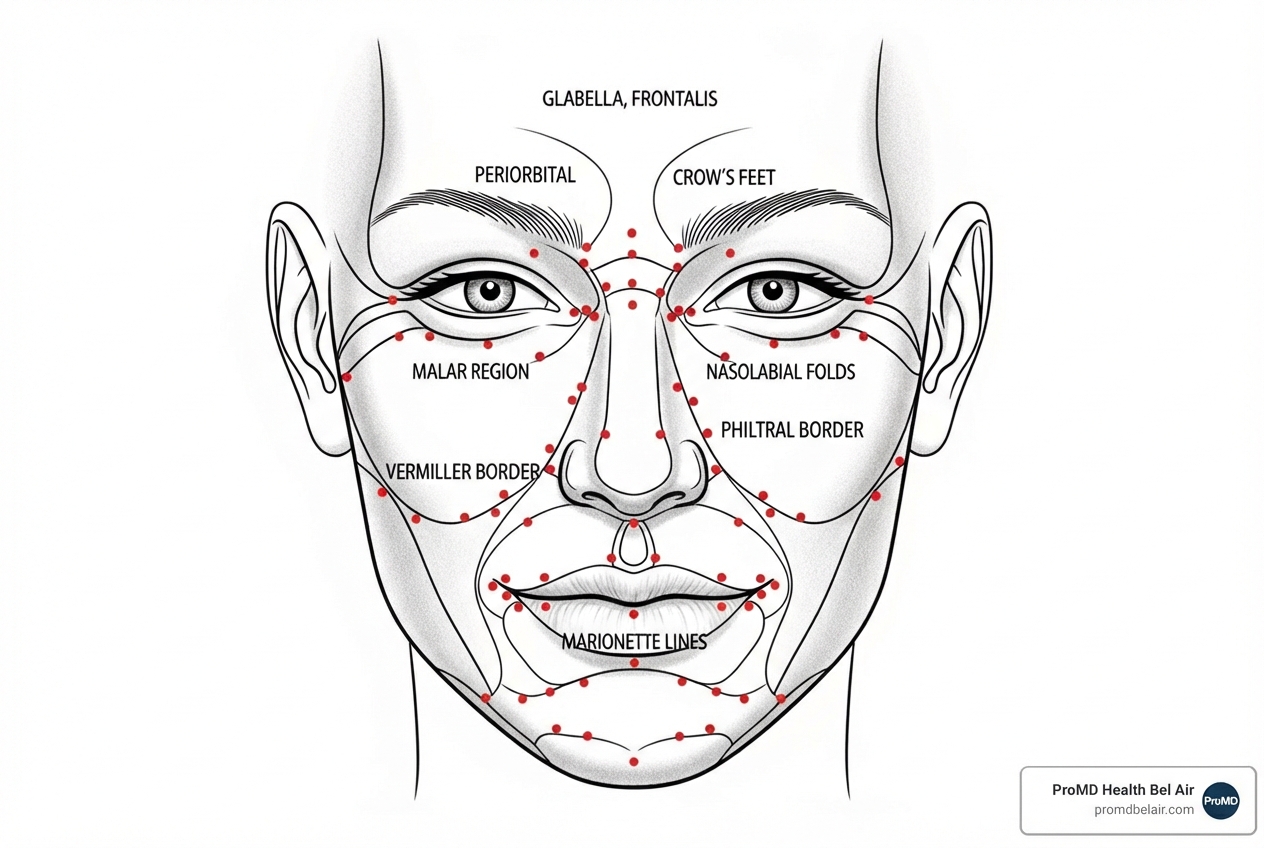
How it Works:
- Dermal Fillers: These substances replace lost volume in the face. As we age, collagen and fat diminish, causing hollows and sagging. Fillers, often made of hyaluronic acid, are strategically injected to plump areas like sunken cheeks, thin lips, and under-eye hollows. Brands like JUVEDERM®, Radiesse®, Restylane®, and Sculptra® are popular choices. Some, like Sculptra®, also stimulate your body’s own collagen production for gradual, longer-lasting benefits.
- Neuromodulators: Think of these as wrinkle relaxers. Products like BOTOX® and Dysport® temporarily relax the facial muscles that cause dynamic wrinkles—the lines that appear with expression. They are excellent for smoothing crow’s feet, frown lines, and forehead lines, giving your face a more relaxed and youthful look.
Concerns Addressed:
A liquid facelift can address a wide range of concerns, including:
- Sunken cheeks and temples
- Thinning lips
- Deep lines around the mouth (nasolabial folds, marionette lines)
- Wrinkles (frown lines, crow’s feet, forehead lines)
- Mild jowling
- Shadows around the eyes
- Certain types of acne scars
Results and Downtime:
One of the biggest draws of injectables is the minimal downtime. You might experience temporary swelling, redness, or bruising, but these typically subside quickly. Results from dermal fillers can last from 6 months to 2 years, depending on the filler used. Neuromodulator results usually last about 3 to 4 months. Regular maintenance sessions help prolong these results.
Ready to explore how injectables can refresh your look? Learn about Dermal Fillers and Explore Botox & Dysport on our site.
Way 2: Energy-Based Skin Tightening
Beyond injectables, another powerful approach for a facelift without surgery involves energy-based treatments. These technologies harness ultrasound, radiofrequency (RF), and lasers to stimulate your body’s natural collagen production, leading to firmer, tighter skin.
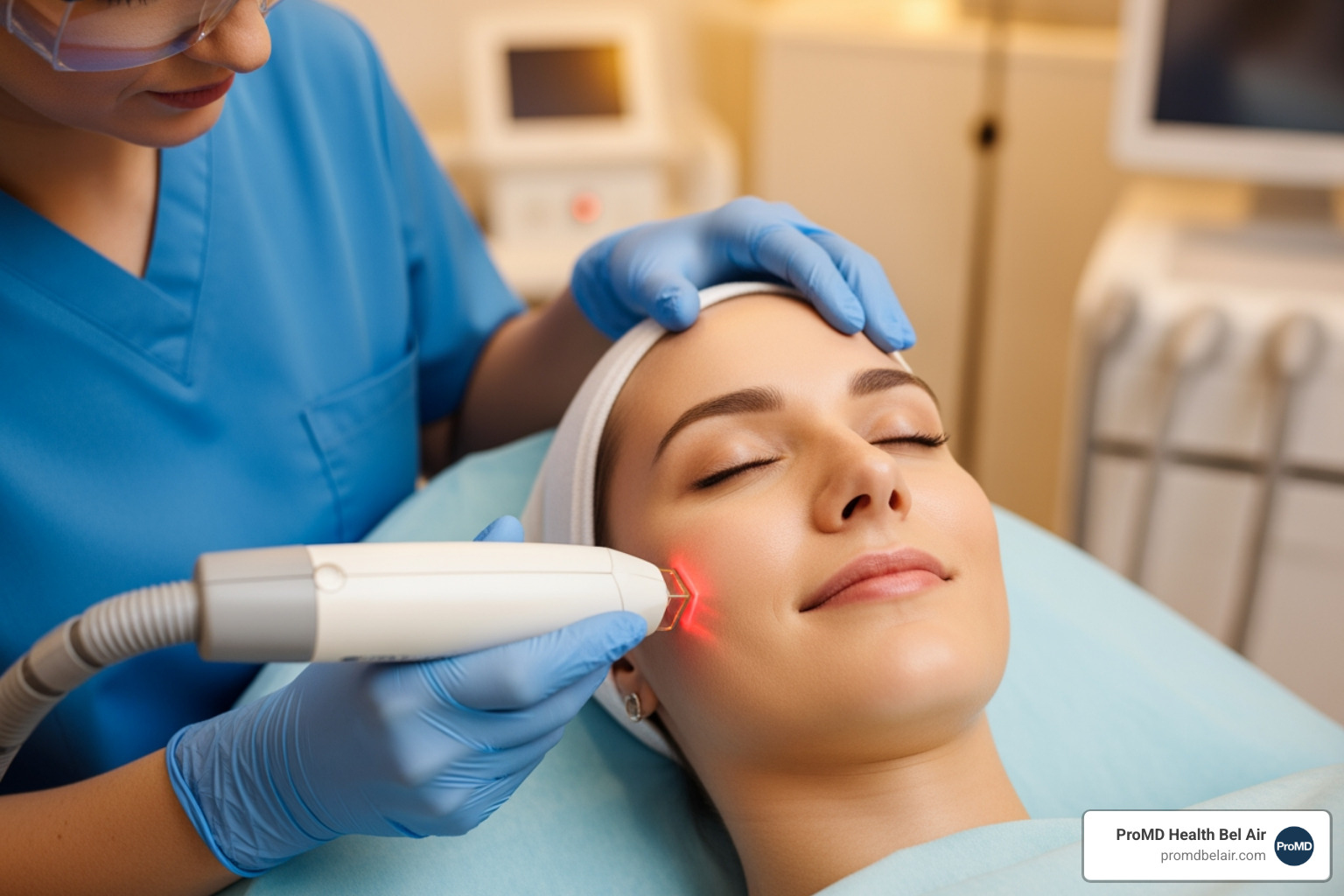
How it Works:
These treatments deliver controlled energy to the deeper layers of your skin. This triggers a healing response, prompting your body to produce new collagen and elastin—the proteins that keep skin firm and elastic.
- Ultrasound Therapy (e.g., Ultherapy): This uses focused ultrasound energy to target deep tissues, effectively lifting and tightening skin on the chin, neck, and brow. It’s a popular choice for reducing jowls and a double chin.
- Radiofrequency (RF) Treatments (e.g., FaceTite, Morpheus8): RF energy gently heats deep skin layers, causing existing collagen to contract and stimulating new collagen production. Treatments like FaceTite and Morpheus8 are excellent for mild to moderate skin laxity, especially in the lower face and neck.
- Laser Resurfacing (e.g., BBL, Fraxel, Contour TRL): Lasers use focused light to improve skin texture, tone, and elasticity. Some, like BBL, gently heat skin to stimulate regeneration. Others, like Fraxel or Contour TRL, create microscopic channels to trigger a more intensive healing response, addressing sun damage, fine lines, and scars.
Concerns Addressed:
Energy-based treatments are ideal for:
- Mild to moderate skin laxity and sagging
- Jowls and loss of jawline definition
- Fine lines and wrinkles
- Uneven skin texture and tone
- Sun damage and age spots
- Acne scars
Results and Downtime:
Results are gradual as new collagen develops over several weeks to months. While there’s usually minimal downtime, some treatments might cause temporary redness or swelling. We often recommend a series of treatments and maintenance sessions every 1-2 years for lasting results.
Curious about our advanced light and laser technologies? Discover our Laser Treatments to see how we can help you achieve firmer, smoother skin.
Way 3: PDO Thread Lifts
For those seeking a more noticeable lift without surgery, PDO (Polydioxanone) thread lifts offer an exciting, effective option. This minimally invasive procedure provides a mechanical lift to sagging tissues while also stimulating natural collagen production.
How it Works:
A PDO thread lift inserts absorbable, medical-grade sutures into the skin. These threads act as a scaffold, using tiny barbs to gently lift sagging skin into a more youthful position, providing an immediate, subtle lift.
As the threads dissolve over 4-6 months, they stimulate a powerful regenerative response, boosting new collagen and elastin production. This improves skin firmness and texture long after the threads are gone, extending the lifting effects.
Concerns Addressed:
PDO thread lifts are excellent for addressing:
- Sagging jawline and jowls
- Loose skin on the neck (neck laxity)
- Drooping brows and forehead lines
- Mid-face descent
- Fine lines and wrinkles
Results and Downtime:
The procedure takes 45 to 60 minutes under local anesthesia. You’ll see some immediate lifting, but full benefits become more apparent over one to two months. Downtime is minimal, with most clients resuming normal activities in a few days. You might experience mild soreness, swelling, or bruising.
The results of a PDO thread lift are temporary but can last from 1 to 3 years. This makes it a great “test run” for those considering a surgical facelift, offering a preview without a permanent commitment. It leaves no scars and provides a natural-looking improvement.
To learn more about this innovative lifting technique, Read more on Thread Lifts on our website.
Are You a Good Candidate for a Nonsurgical Facelift?
Deciding if a facelift without surgery is right for you is a crucial first step. These treatments offer fantastic benefits but aren’t for everyone. A thorough consultation is essential to determine the best path for your goals.
Good candidates for a nonsurgical facelift typically exhibit:
- Mild to Moderate Sagging: You’re likely a good candidate if you have early to moderate signs of aging, like subtle jowls or mild skin laxity.
- Volume Loss: If your concern is hollows in the cheeks, temples, or under the eyes, injectables can restore youthful fullness.
- Realistic Expectations: Nonsurgical treatments provide significant, natural-looking improvements, but they will not replicate the dramatic results of a surgical facelift.
- Good Overall Health: Being in good general health is important for any cosmetic procedure.
- Desire to Avoid Surgery: These treatments are a compelling alternative for those concerned about general anesthesia, incisions, or lengthy recovery.
- Early Signs of Aging: People in their late 30s to early 50s often achieve the most satisfying results.
Who should generally avoid a nonsurgical facelift (or consider alternatives):
- Severe Skin Laxity: If you have a significant amount of excess or severely sagging skin, a surgical facelift might be more effective.
- Very Deep Wrinkles or Severe Scars: Extremely deep lines or severe scarring might require more intensive procedures.
- Certain Active Skin Conditions: Active acne, cold sores, eczema, or rashes in the treatment area may require postponing treatment.
- Unrealistic Expectations: If you expect results identical to a surgical facelift, nonsurgical options may not meet your expectations.
A personalized consultation is the best way to determine your candidacy. Our expert team at ProMD Health in Bel Air, Fallston, and Forest Hill, MD, will assess your skin, discuss your goals, and recommend the most suitable treatments.
Choosing the Right Facelift Without Surgery for You
How do you choose the best facelift without surgery? The right choice aligns with your specific concerns, desired outcomes, lifestyle, and budget. Here’s a guide:
- For Volume Loss and Dynamic Wrinkles: Injectables are the go-to solution for hollow areas, thinning lips, or expression lines like crow’s feet.
- For Overall Skin Quality and Mild Tightening: Energy-based treatments like ultrasound, RF, or lasers are effective for improving skin texture, tone, and mild laxity.
- For a Noticeable Lift in Specific Areas: Thread lifts are an excellent choice for an immediate, noticeable lift for sagging jowls, a drooping neck, or falling brows.
Often, the most comprehensive results come from combining treatments. For example, we might use fillers to restore cheek volume, BOTOX® to smooth forehead lines, and an energy-based treatment to tighten skin. Our specialists are experts at creating custom plans that leverage the strengths of different modalities.
At ProMD Health Bel Air, we take personalization a step further with our AI Simulator. This tool allows us to digitally preview your potential results, giving you a clear visual of what to expect. It’s an invaluable way to ensure your chosen treatments will lead to the beautiful, natural-looking outcome you desire.
Frequently Asked Questions About Nonsurgical Facelifts
We know you likely have many questions when considering a facelift without surgery. Here, we address some of the most common inquiries.
How long do the results of a nonsurgical facelift last?
How long results last is a common question. The duration varies by treatment, your body, and your maintenance routine.
- Injectables (Liquid Facelift): Dermal fillers can last from 6 months to 2 years. Neuromodulators typically last around 3 to 4 months.
- Energy-Based Treatments: Results can last for 1 to 2 years or more, but these treatments require maintenance sessions (often annually) to sustain the benefits.
- PDO Thread Lifts: The visible lifting effects can last between 1 to 3 years as the threads stimulate collagen production.
Factors affecting duration include:
- Lifestyle: Sun exposure, smoking, and diet impact skin health and result longevity.
- Age and Skin Condition: Younger skin often responds more robustly.
- Product Used: Different fillers and devices have varying lifespans.
- Treatment Area: Some areas hold results longer than others.
- Maintenance: Following a recommended maintenance schedule and using medical-grade skincare will extend your results.
What are the potential risks and side effects?
A key advantage of a facelift without surgery is fewer risks and shorter recovery than surgery. However, any medical procedure has potential side effects, which we discuss thoroughly in your consultation.
Common, temporary side effects include:
- Swelling: Mild to moderate swelling is normal and usually subsides within a few days.
- Bruising: Some bruising can occur, especially with injectables or thread lifts, and typically resolves within a week.
- Redness: Temporary redness is common and usually fades within a few hours.
- Mild Discomfort or Soreness: Tenderness in treated areas may last a few days.
Rare, but more serious risks can include:
- Infection: Any time the skin is broken, there is a small risk of infection.
- Allergic Reaction: Though uncommon, reactions to injectable ingredients can occur.
- Asymmetry: Uneven results can happen, but this risk is reduced by choosing an experienced provider.
- Skin Necrosis: An extremely rare complication with dermal fillers where blood flow is compromised, underscoring the need for a highly qualified medical professional.
At ProMD Health, your safety is our priority. Our procedures are performed by experienced, board-certified professionals who are experts in facial anatomy. We provide detailed pre- and post-treatment instructions to minimize risks and ensure optimal recovery.
What is the cost of a facelift without surgery?
Cost is a key consideration. A facelift without surgery is generally less expensive than a surgical facelift, making it more accessible. The final cost is dynamic and influenced by several factors:
- Procedure Type: Different treatments have different price points.
- Number of Sessions/Syringes: The total cost will reflect the number of treatments or syringes needed for optimal results.
- Provider Expertise: The skill and experience of your provider influence the price. An investment in expertise often leads to safer procedures and better results.
- Geographic Location: Costs can vary by region. Our pricing at ProMD Health Bel Air, Fallston, and Forest Hill, MD, is competitive for our area.
While the upfront cost is lower, nonsurgical results are temporary and require maintenance. This allows for greater flexibility in your aesthetic budget over time.
During your consultation, we provide a transparent, detailed cost breakdown for your personalized plan. We also offer flexible payment solutions. You can View our Financing Offers to learn more.
Reclaim Your Youthful Appearance in Bel Air, MD
Looking and feeling your best doesn’t have to involve extensive surgery. A facelift without surgery offers a diverse range of effective treatments to address the signs of aging, helping you achieve a refreshed, natural-looking appearance with minimal downtime.
From the volume-restoring power of injectables to the collagen-stimulating magic of energy-based devices and the immediate lift of PDO threads, we have solutions customized to your unique needs. The benefits are clear: minimal downtime, lower costs, and results that improve your natural beauty.
At ProMD Health in Bel Air, Fallston, and Forest Hill, MD, we are committed to providing the highest standard of care. Our expert team will design a personalized treatment plan that aligns with your aesthetic goals. We pride ourselves on using advanced techniques and technology to deliver exceptional, natural-looking results.
Ready to see the possibilities? Our unique AI Simulator lets you visualize potential results, giving you clarity and confidence before any treatment. We empower you to make informed choices for your aesthetic journey.
Don’t let sagging skin and wrinkles diminish your confidence. Take the first step towards a refreshed, more youthful you. We invite you to experience the ProMD Health difference. Schedule Your Consultation Today and let us help you reclaim your youthful glow.