You catch your reflection at the wrong angle, or you look at one side-profile photo and think, that's not my jawline anymore. The fullness under the chin shows up in good lighting, bad lighting, after a long workday, after weight changes, and sometimes even when the rest of the body looks fine. That's why how to get rid of neck fat is rarely a single-answer question. It's usually a layered problem, and you need a layered fix.
Table of Contents
- What Neck Fat Actually Is and Why It Lingers
- The Lifestyle Foundation That Has to Come First
- Neck Exercises That Improve Posture and Definition
- Kybella for Submental Fat at ProMD Health Bel Air
- Thread Lift and Other In-Clinic Options Worth Knowing
- What a Bel Air Consult, Treatment, and Recovery Actually Look Like
- Your Action Plan and Booking a Consultation in Bel Air
What Neck Fat Actually Is and Why It Lingers
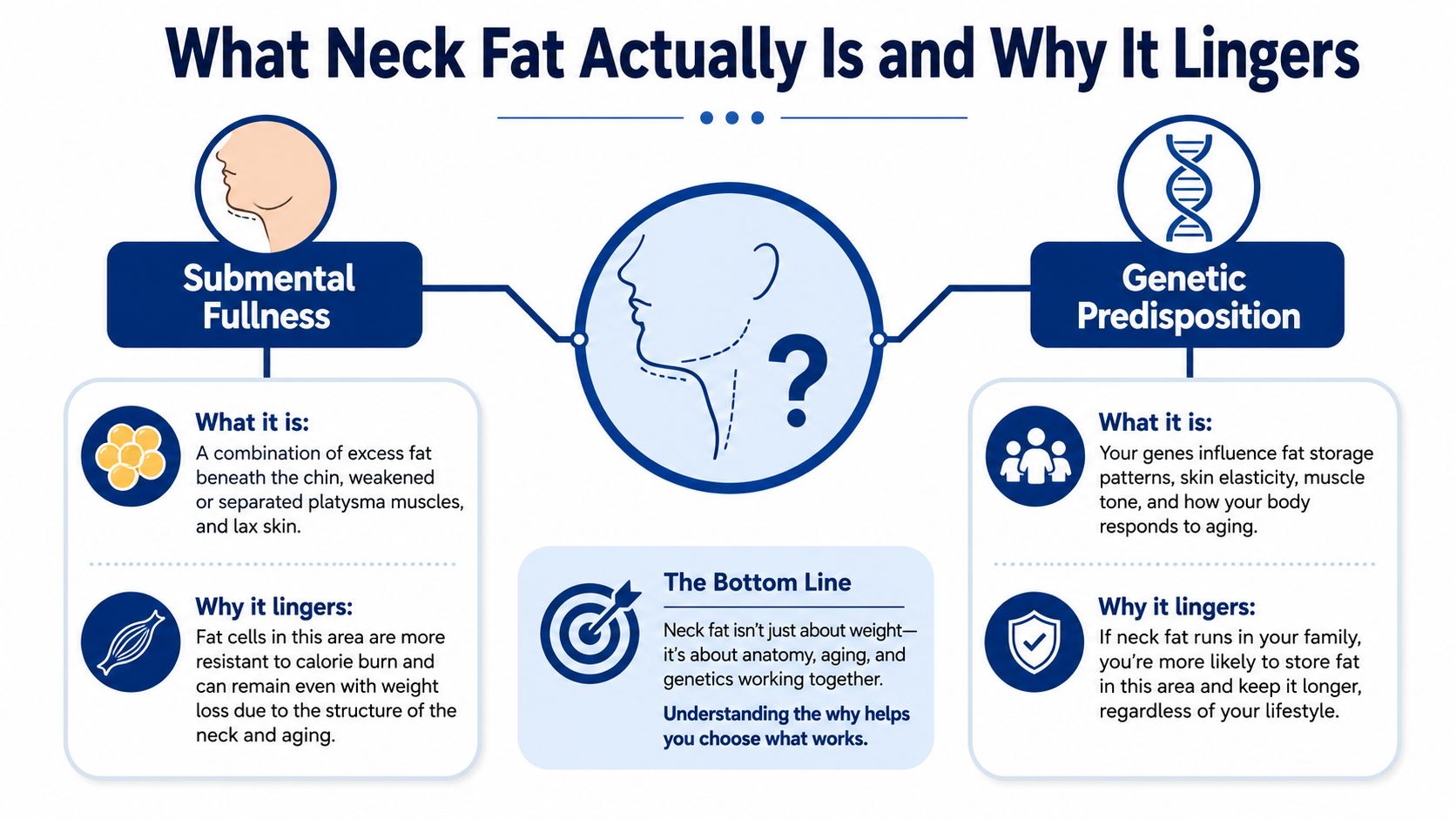
The neck is rarely one problem. It is usually a stack of them. A patient may have true submental fat, a forward-head posture that pushes the area outward, loose skin that blurs the jawline, or platysmal banding, the vertical cords that show when the neck flexes. If you only treat one layer, the result usually disappoints.
People often assume they need to “burn off” the neck directly. The body does not work that way. Submental fat became a distinct treatment category when Kybella became the first and only FDA-approved injectable specifically for submental fat in 2015. That mattered because it confirmed what clinicians already knew, the under-chin area can be treated as its own contour problem.
Practical rule: if the chin looks fuller only when you slump, posture is part of the issue. If the fullness stays there when you sit tall, fat or laxity is more likely driving it.
| Layer | What it looks like | What actually helps |
|---|---|---|
| Submental fat | Soft fullness under the chin | Weight loss or Kybella |
| Posture and head position | Neck looks fuller when the chin juts forward | Posture correction and neck exercises |
| Skin laxity | Loose, crepey, or drooping skin | Thread lift or other tightening support |
| Platysmal banding | Vertical cords or rope-like lines | Botox or Dysport for muscle softening |
That table is the starting point. The question is not, “How do I get rid of neck fat?” The better question is which layer is creating the look in the mirror. Once you separate fat from posture, skin, and muscle banding, the next step becomes obvious. If weight is part of the picture, a structured plan matters more than guesswork, and our physician-supervised weight loss approach at ProMD Health Bel Air is designed for exactly that kind of problem.
The Lifestyle Foundation That Has to Come First
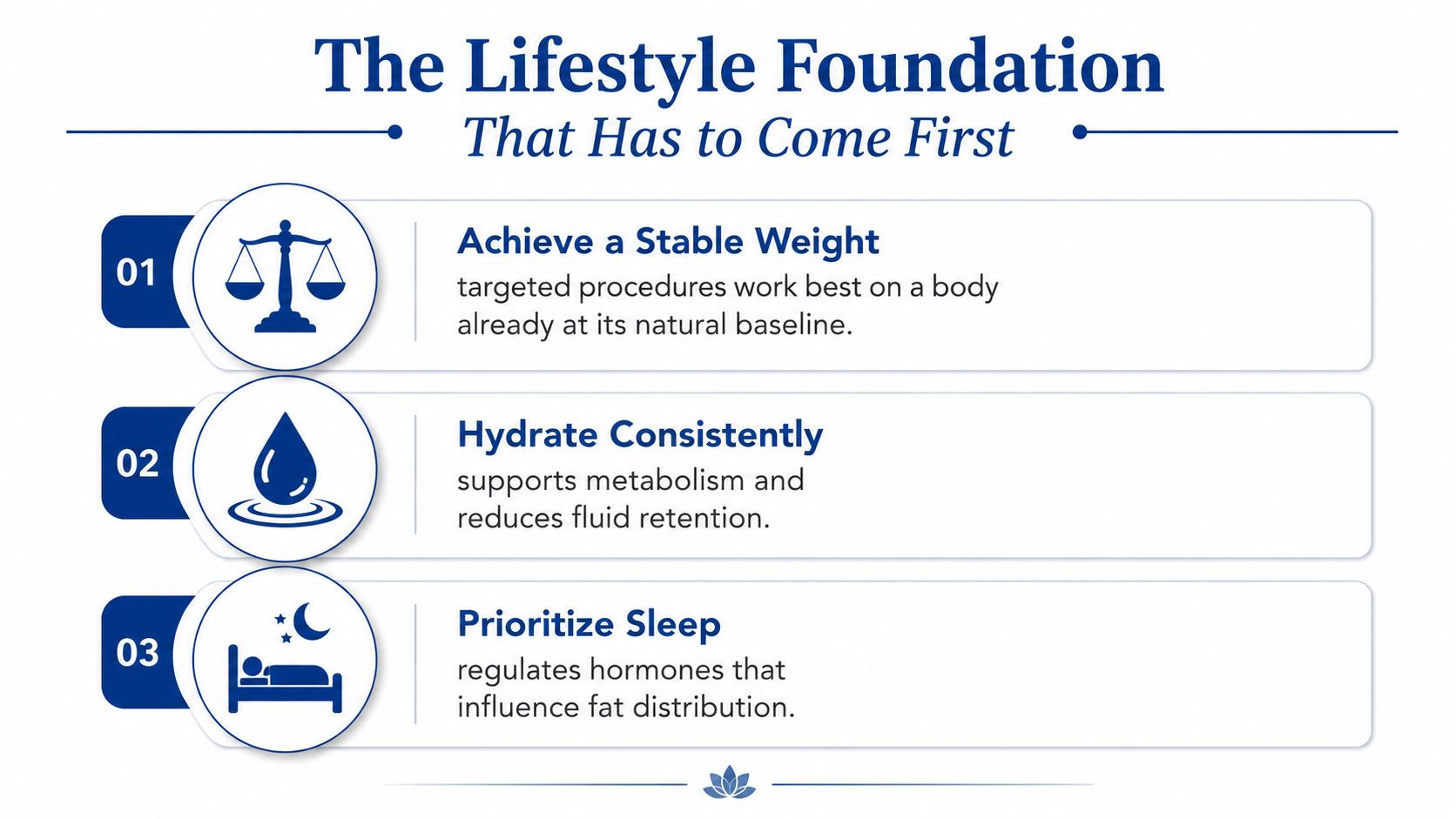
Start with the obvious truth. If your overall body fat is still climbing, the neck will show it quickly. A steady calorie deficit helps, and so does regular activity. A practical starting point is to reduce intake enough to support fat loss, keep cardio consistent, and maintain strength training so the weight you lose comes from the right places. If you want a clean framework for the food side of that work, meal prepping for fitness enthusiasts can make the day-to-day structure easier to follow.
Stable weight beats wishful thinking
The neck is a layered problem. Fat, posture, skin laxity, and muscle banding all change the way it looks, and body weight is only one part of that picture. If weight is still moving up and down, any contour treatment will be harder to judge because the area has not settled yet. I tell patients to get their weight stable first, then decide what remains worth treating.
That is why lifestyle work comes before procedure talk. You are not trying to micromanage every fluctuation. You are trying to stop the constant changes that blur the true contour problem. Once the body is on a steadier track, you can see whether the fullness is mostly fat, loose skin, or something else.
Bottom line: if your weight keeps changing from week to week, hold off on a contour procedure. Stabilize first, then judge the neck honestly.
Small habits that change how the neck looks
Sodium, alcohol, poor sleep, and dehydration do not create true neck fat, but they do change the way the lower face and neck present in the mirror. Some mornings the area looks softer because of fluid retention. That can make the neck seem fuller even when the underlying fat has not changed. Stress matters too, because it often pushes people into the kind of eating pattern that adds fullness through the face and neck together.
If your neck fullness tracks with overall body weight, a structured medical plan is a better fit than guessing at calorie cuts on your own. Our physician-supervised weight loss approach at ProMD Health Bel Air is built for patients who need that kind of guidance before deciding what the next step should be.
Neck Exercises That Improve Posture and Definition
Exercises will not melt fat. They do help with posture, muscle tone, and how the chin sits over the clavicle, which changes how the neck reads in the mirror more than many people expect. That is the primary role of neck work. It supports the structure around the neck, so the area looks less collapsed and less pushed forward.
Use a repeatable routine, not random movements
Start upright. Roll the neck and jaw gently in circles to warm up the area, then move into holds. Sit or stand tall before each movement, hold the position for 10 to 20 seconds, and repeat it about 10 times.
Other common moves follow the same logic. The jaw thrust can be held for 10 seconds and repeated 10 times. Tongue-up and tongue-out movements are also held for 10 seconds and repeated 10 to 20 times daily. Chin lifts against a ball and similar controlled holds are used in the same kind of routine, with slow repetitions and steady form.
What these moves can and can't do
They can improve posture. They can strengthen the surrounding muscles. They can make the neck look more upright and better supported. They cannot selectively dissolve a fat pad under the chin.
Do the exercises for structure, not fantasy. If the problem is skin laxity or a real fat pocket, exercise alone will not fix it.
I usually suggest a short daily routine rather than a second workout. Keep the movements controlled, do them consistently, and use them as support while you work on weight and decide whether the remaining issue is fat. If you want a clearer read on whether your neck fullness is something exercise can help with or something that needs an in-clinic plan, review this ProMD Health Bel Air checklist for Kybella candidacy.
Kybella for Submental Fat at ProMD Health Bel Air
If the fullness under the chin is a distinct fat pocket, Kybella is the office treatment to understand first. It is the FDA-approved injectable for submental fat, and it targets the exact area many mean when they talk about a double chin. In the Bel Air setting, that gives patients a focused option without surgery.
How the treatment works
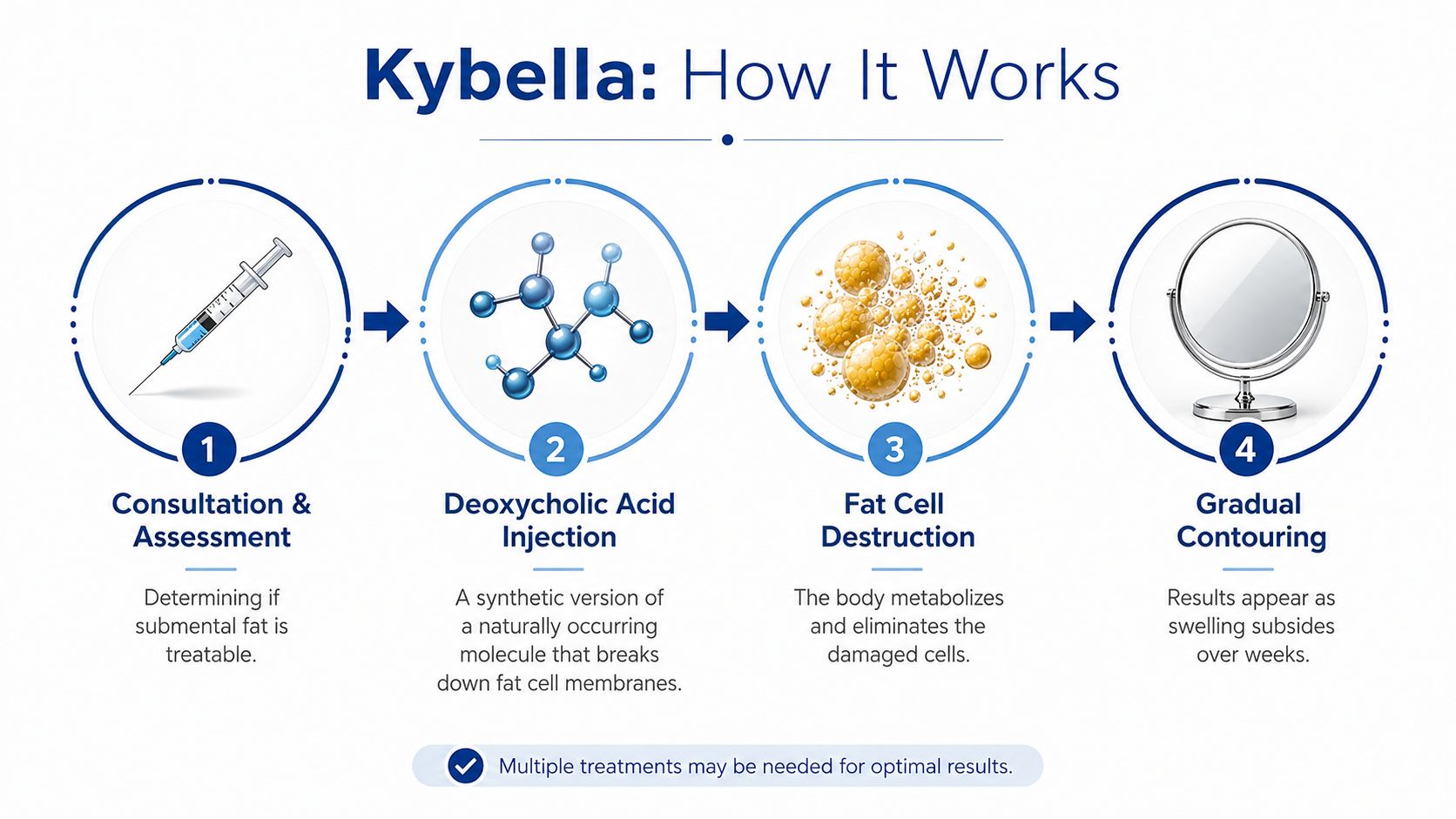
The clinician maps the submental fat compartments, then places injections in a grid pattern. The active ingredient is deoxycholic acid, which breaks down fat cell membranes so the body can clear the treated cells over time. That is why the result does not show up instantly. The fat cells are damaged first, then the contour changes gradually as swelling settles and the body processes the area.
A session can involve up to 50 injections, and patients may receive up to six monthly treatments depending on response. This is the expected cadence. It is not a one-visit fix.
Who is a good candidate
Kybella works best when the problem is true submental fat, the skin still has decent elasticity, and body weight is fairly stable. It is the wrong choice if loose skin is doing most of the work, or if the neck fullness is mostly posture-related. Patients get frustrated when they treat the wrong layer, then blame the product.
Recovery is part of the decision too. Swelling and bruising are expected because the treatment depends on inflammatory fat-cell breakdown. Safety matters as well, especially anatomy. The clinician has to respect the treatment zone and avoid complications such as nerve injury and dysphagia.
If you want a clear candidacy check, use the clinic's guide on whether Kybella is right for you. If you have a real fat pad and want contour change without surgery, that is the conversation to have. The infographic below shows the basic treatment process.
Thread Lift and Other In-Clinic Options Worth Knowing
Some neck concerns involve tissue dropping rather than fat volume. A patient can have a fairly clean chin line and still look heavy through the neck because the skin has loosened, the bands are showing, or the jawline no longer holds its shape. A thread lift fits that problem. It supports and repositions soft tissue, which is useful when the issue is sagging instead of bulk.
Match the tool to the layer
A thread lift works best when the contour needs support, not fat removal. It does not dissolve fat. It lifts and reinforces the area so the neck line looks cleaner, and that matters if the goal is to improve the look of the neck without surgery. If the concern is structure, a support procedure makes more sense than a fat treatment.
Botox or Dysport can help when vertical platysmal bands are the main issue. These injections can temporarily soften those bands for about 3 to 4 months. They are useful when the neck cords are what stands out first in the mirror. They are not fat treatments, and they will not change the look of a true fat pad.
Dermal filler-based contouring is another option when the jawline needs definition. Reported longevity is roughly 6 to 12 months depending on product, which makes it useful for shape rather than fat reduction. Medical weight management sits at the other end of the spectrum. It is for patients whose neck fullness tracks with total body weight and who need a structured way to lower that baseline.
For a closer look at how a thread lift works, review the clinic's thread lift procedure guide.
Practical rule: if the neck looks loose, lift it. If the bands pop, relax them. If the whole body is carrying extra volume, manage the weight first.
The honest takeaway is simple. Thread lift, Botox, and weight management solve different problems. Pick the wrong one, and the mirror issue stays the same while the spending goes up.
What a Bel Air Consult, Treatment, and Recovery Actually Look Like
A good consultation should feel blunt and specific. At ProMD Health Bel Air, that means a medically supervised visit at 2023 Emmorton Rd, Suite A, Bel Air, with virtual consultations available if you can't get in easily. The first step is sorting the neck into the right bucket, fat, skin, muscle, or all three. That's the part patients usually skip when they self-diagnose.
What the appointment feels like
If Kybella is the plan, the clinician marks the treatment zone, injects in a grid, and sends you home the same day. The recovery is mostly about swelling and bruising, so I tell people to plan around events instead of pretending it won't be obvious. Results appear over weeks as the body clears the treated fat.
If a thread lift is the better fit, the appointment is still office-based, with local anesthesia used during the procedure. Recovery is different from Kybella because you're dealing with tissue support rather than inflammatory fat breakdown. Either way, you want a calm calendar and a realistic plan for the next stretch of time.
Don't schedule neck contour work right before a major event. Give the area room to settle.
When to book
Book after weight has stabilized. Book when posture work has plateaued. Book when you've already done the basics and the neckline still bothers you. That's how you avoid guessing. It also makes the consult more productive, because the decision becomes about anatomy instead of frustration.
For patients who want to compare the procedure itself in more detail, the clinic's thread lift procedure guide is the right place to start before the visit. It helps you understand what lift can do that fat reduction cannot.
Your Action Plan and Booking a Consultation in Bel Air
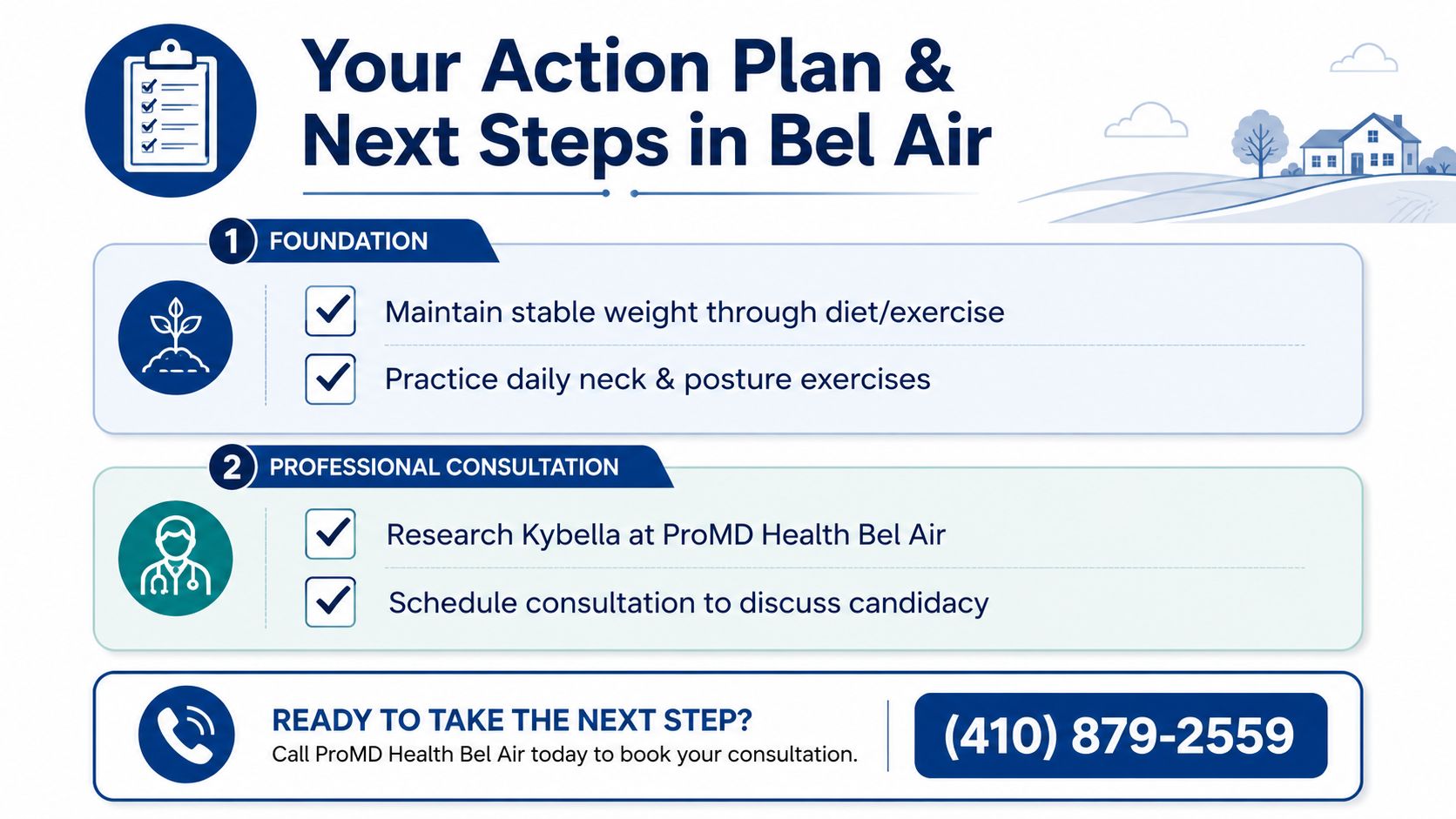
Start with the basics this week. Clean up your eating pattern, keep your body weight steady, and do the posture and neck routine every day. Give that plan 8 to 12 weeks before you decide what is left in the mirror.
After that, the consult gets more specific. If the fullness is still a true submental fat pad, Kybella belongs in the discussion. If the problem is loose skin or visible banding, thread lift or muscle-relaxing treatment may fit better. If the fullness is really part of overall weight gain, medical weight management belongs in the plan before you chase contour work.
Do not guess at the cause and do not book around a major event. Bel Air patients can ask about extended weekday availability, Saturday appointments by arrangement, and virtual consultations when coming in person is difficult. If you want a visual preview before you commit, the Entity Med AI Simulator can help you think through possible outcomes in a realistic way.
The right next step is simple. If you are ready to stop guessing, schedule a consultation with ProMD Health Bel Air and let the team sort out whether your neck needs weight loss support, Kybella, thread lift, or a different plan altogether.