What is Synvisc and How Does It Help with Knee Osteoarthritis?
When you’re dealing with knee pain from osteoarthritis, understanding your treatment options is important. Synvisc is one option that may be discussed for symptom management.
Understanding Viscosupplementation
Synvisc (hylan G-F 20) is a form of viscosupplementation, a procedure used to help relieve knee pain caused by osteoarthritis. It involves injecting a gel-like substance based on hyaluronic acid into the affected knee joint. This substance is similar to the fluid found in healthy joints, which helps with lubrication and shock absorption.
How Synvisc Works for Osteoarthritis
In people with osteoarthritis, the natural hyaluronic acid in the joint may become thinner and less effective. This can contribute to friction, stiffness, and pain. Synvisc injections are intended to supplement joint fluid and may help to:
- Cushion the joint: Add shock-absorbing support during movement.
- Lubricate the joint: Reduce friction within the knee.
- Reduce pain: Improve comfort with everyday activity.
- Improve mobility: Support smoother movement in some patients.
Synvisc is generally considered after evaluation by a qualified medical provider. Because ProMD Health Bel Air focuses on aesthetic and wellness services and does not provide Synvisc injections, this article is for general educational purposes only and should not be taken as medical advice or as a description of services available at our Bel Air office.
Navigating Your Synvisc Treatment Journey: What to Discuss with Your Doctor
ProMD Health Bel Air does not offer Synvisc injections. If you are searching for this treatment in Bel Air, MD, the best next step is to speak with a licensed medical provider who treats knee osteoarthritis.
Consulting Your Healthcare Provider for Synvisc Injections
If you are considering Synvisc injections for knee osteoarthritis, start with your primary care physician or the clinician already managing your knee symptoms. They can:
- Review your health history: Including medications, allergies, and other medical conditions.
- Confirm the diagnosis: Make sure knee osteoarthritis is the issue being treated.
- Discuss whether Synvisc is appropriate: Based on your symptoms, prior treatment history, and overall health.
- Help coordinate next steps: Including referral to an appropriate in-network specialist if needed.
Important Considerations for Your Treatment Plan
When discussing Synvisc with your healthcare provider, consider asking about:
- Whether you are a good candidate: Not every patient with knee pain is an ideal candidate for viscosupplementation.
- Typical treatment course: How many injections may be needed and over what time period.
- Expected results: What level of pain relief or functional improvement may be realistic.
- Insurance requirements: Whether prior authorization, documentation, or step-therapy requirements apply.
- Out-of-pocket costs: Including medication, administration, and facility fees.
If you are looking for a provider in the Bel Air area, it is wise to verify credentials, confirm the exact service offered, and check your insurance network before scheduling.
What Should You Expect During a Synvisc Injection Procedure and Recovery?
Knowing what to expect can help ease any anxieties you might have about medical procedures. Here’s a general overview of the Synvisc injection process and what comes afterward.
Preparing for Your Synvisc Appointment
Before your Synvisc injection, your healthcare provider will take several steps to ensure your safety and the effectiveness of the treatment. We will typically:
- Review your medical history: This includes any allergies, previous medical conditions, and past treatments for your knee pain.
- Discuss current medications: It’s vital to inform your doctor about all medications you are taking, including over-the-counter drugs, supplements, and herbal remedies, as some might need to be temporarily stopped before the injection.
- Confirm prior authorization: As mentioned earlier, prior authorization from your insurance is almost always required. Your provider’s office will usually handle this, but it’s good practice to ensure it has been obtained before your appointment.
- Address any concerns: This is your opportunity to ask questions and voice any worries you might have about the procedure.
The Injection Procedure
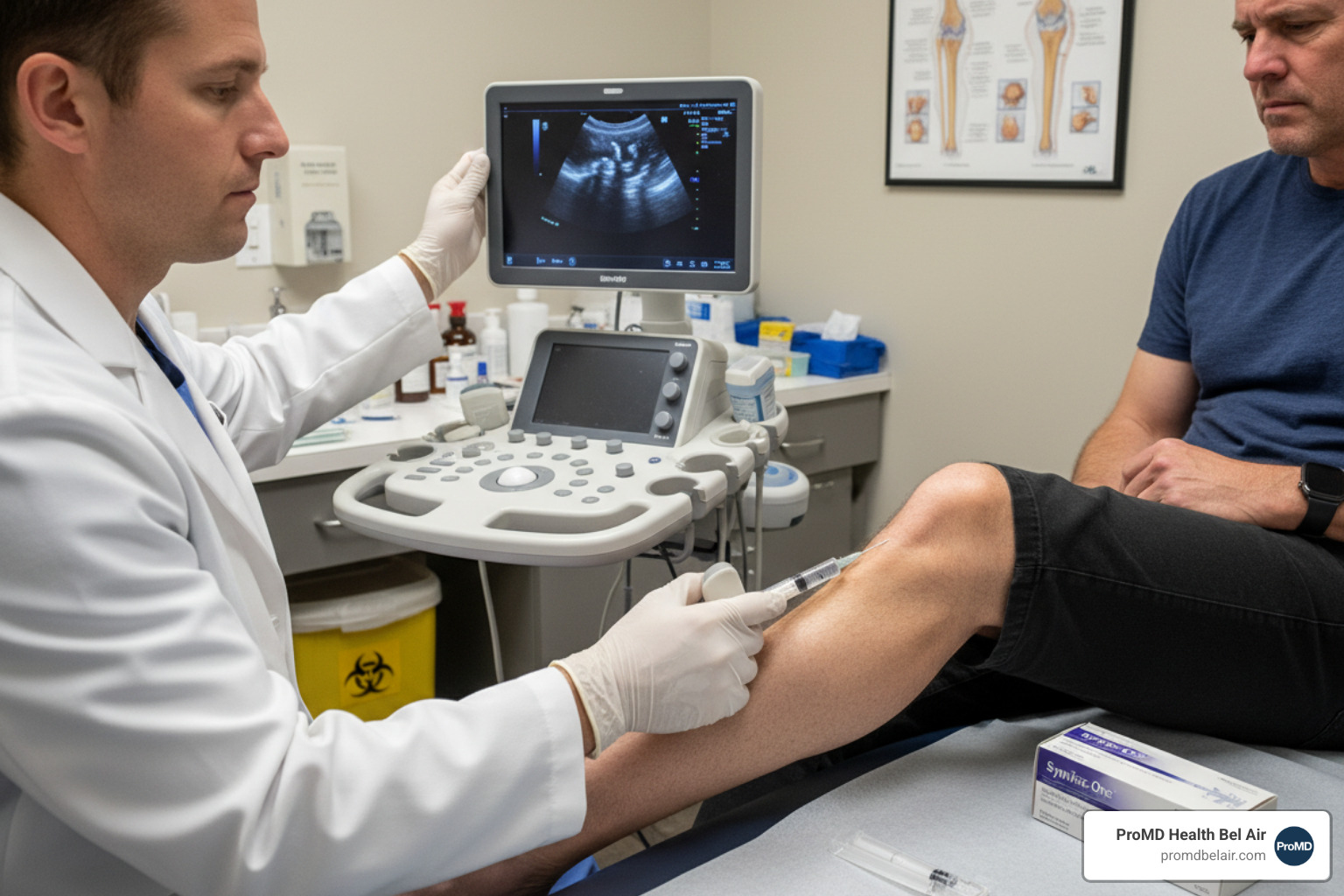
The Synvisc injection itself is a relatively quick and straightforward process, typically performed in an outpatient clinic setting. Here’s what usually happens:
- Positioning: You will be positioned comfortably, usually lying down, to allow easy access to your knee.
- Cleaning the area: The skin around your knee will be thoroughly cleaned with an antiseptic solution to minimize the risk of infection.
- Local anesthetic: A local anesthetic may be injected into the skin around your knee to numb the area, making the Synvisc injection more comfortable.
- Fluid removal (if necessary): If there is excess fluid in your knee joint, your doctor might first remove some of it using a syringe. This is known as arthrocentesis.
- Synvisc injection: The Synvisc solution is then carefully injected directly into the knee joint. In many cases, your doctor may use ultrasound guidance or fluoroscopy (a type of X-ray) to ensure precise placement of the needle and the medication within the joint capsule.
- Bandaging: Once the injection is complete, the needle is removed, and a small bandage is applied to the injection site.
The entire procedure usually takes only a few minutes from start to finish.
Post-Injection Care and Recovery
After receiving a Synvisc injection, you might experience some mild and temporary side effects at the injection site. These can include:
- Mild pain or discomfort: This is common and usually subsides within a day or two.
- Swelling: Some localized swelling around the knee is also normal.
- Heat or redness: The treated area might feel warm or appear slightly red.
- Stiffness: You might notice some temporary stiffness in the joint.
Your doctor will provide specific post-care instructions, which commonly include:
- Rest: It’s generally recommended to avoid strenuous activities, heavy lifting, or prolonged standing for at least 24 to 48 hours after the injection.
- Ice: Applying an ice pack to the knee can help reduce swelling and discomfort.
- Pain relief: Over-the-counter pain relievers, such as acetaminophen, can be used if needed.
- Monitoring: Keep an eye on your knee for any signs of infection, such as increasing pain, significant redness, warmth, or fever, and contact your doctor if these occur.
A full course of Synvisc treatment often involves a series of injections, typically one injection per week for three to five weeks, depending on the specific Synvisc product and your doctor’s recommendation. The pain relief from Synvisc is not immediate; it usually builds up over the course of the injections and can last for several months.
How Do Costs and Insurance Coverage Impact Synvisc Injections?
Understanding the financial aspects of Synvisc injections is a crucial part of your treatment planning. The costs can vary significantly, and insurance coverage plays a major role.
Understanding Synvisc Costs
The overall cost of Synvisc injections can be substantial and depends on several factors, including:
- Number of injections: A full course often involves multiple injections.
- Provider fees: The cost charged by the doctor or clinic administering the injection.
- Facility fees: If the injection is performed in a hospital outpatient setting or specialized clinic, there may be additional facility charges.
- Medication cost: The price of the Synvisc medication itself.
Without insurance coverage, the cost for a single Synvisc injection can range from several hundred to over a thousand dollars, and a full course of treatment can easily run into thousands of dollars.
Insurance Coverage and Prior Authorization
Most insurance plans, including Medicare, may cover Synvisc injections if they are deemed medically necessary. This typically means that your doctor must demonstrate that you have knee osteoarthritis, have tried other conservative treatments without success, and meet specific criteria for the injection.
However, a critical requirement for almost all insurance plans is prior authorization. This means that your doctor’s office must submit documentation to your insurance company outlining your medical necessity for Synvisc before the injections are administered. Without prior authorization, your insurance company may deny coverage, leaving you responsible for the full cost. We always recommend contacting your insurance provider directly to understand your specific benefits, copayments, deductibles, and any out-of-pocket maximums that may apply.
Synvisc and Iron Road Healthcare 2024 Formulary
For those covered by Iron Road Healthcare, it is particularly important to be aware of their specific formulary. According to the Iron Road Healthcare 2024 Abridged Formulary, SYNVISC is listed as a Tier E (Excluded) drug.
What does “Tier E (Excluded)” mean for you?
- Full patient responsibility: If a drug is listed as Tier E (Excluded), it generally means that Iron Road Healthcare does not cover the cost of that medication. As a result, you would typically be responsible for the full cost of the Synvisc injection, including the medication itself and any associated administration fees.
- Potential exceptions: While excluded, there might be a process for requesting a tier exception or an appeal if your physician can provide compelling medical justification and demonstrate that no covered alternatives are suitable for your condition. However, this process is often complex and does not guarantee coverage.
Therefore, if you have Iron Road Healthcare, we strongly advise you to contact them directly before pursuing Synvisc injections to fully understand your financial obligations and explore any potential exception processes. This proactive step can help prevent unexpected out-of-pocket expenses.
Are There Complementary Approaches to Support Joint Health in Bel Air, MD?
While navigating options like Synvisc is important for direct joint pain management, overall wellness can still play a supportive role in how you feel day to day.
Exploring Supportive Approaches
Managing knee osteoarthritis often involves more than one strategy. Depending on your situation, your licensed medical provider may recommend approaches such as:
- Physical activity guidance: Low-impact movement may help support mobility.
- Weight management: Reducing excess body weight can decrease stress on the knees.
- Lifestyle adjustments: Daily habit changes may support comfort and function.
- General wellness support: Nutrition, hydration, and overall health habits can be part of a broader plan.
Supporting Overall Wellness at ProMD Health Bel Air
At ProMD Health Bel Air, we do not offer Synvisc injections or orthopedic care. However, we do provide wellness services that may support your broader health goals while you work with the appropriate medical provider for knee osteoarthritis care.
Here are Bel Air services that may be relevant to overall wellness:
Medical Weight Management: Excess body weight can place additional stress on weight-bearing joints. Our personalized medical weight management programs are designed to support healthy, sustainable weight goals.
Hormone Replacement Therapy: Hormonal balance can affect energy, body composition, and overall well-being. Our Bel Air team offers hormone replacement therapy as part of a personalized wellness approach.
Wellness Services: Our wellness offerings focus on helping patients feel their best through individualized support for overall health.

If you are interested in wellness support from ProMD Health Bel Air, we encourage you to explore the services we actually offer while continuing to consult the appropriate medical specialist for Synvisc questions and knee treatment.
Frequently Asked Questions about Synvisc Injections
We understand you likely have many questions about Synvisc injections. Here, we address some of the most common inquiries to help you feel more informed.
What is the typical duration of Synvisc’s effectiveness?
The duration of pain relief from Synvisc injections can vary significantly from person to person. However, many patients experience relief for up to six months following a full course of treatment. Synvisc does not cure osteoarthritis but rather helps manage its symptoms by reducing pain and improving joint function for a period. The full benefits often become noticeable after a few weeks, as the hyaluronic acid integrates into the joint fluid.
Are there any side effects associated with Synvisc injections?
Like any medical procedure, Synvisc injections can have side effects, though they are generally mild and temporary. The most common side effects occur at the injection site and may include:
- Pain or discomfort: Aching or soreness around the knee is common.
- Swelling: Localized swelling in or around the joint.
- Heat or redness: The treated area might feel warm to the touch or appear slightly red.
- Fluid accumulation: Sometimes, there might be a temporary increase in fluid within the knee joint.
Serious side effects are rare but can occur. These might include allergic reactions, infection in the joint, or bleeding. If you experience severe pain, significant swelling, fever, or any other concerning symptoms after your injection, you should contact your doctor immediately.
Can I get Synvisc injections if I have other medical conditions?
Your doctor will conduct a thorough review of your full medical history and current health status to determine if Synvisc is appropriate for you. There are certain conditions or situations where Synvisc injections may not be recommended, such as:
- Allergies: Individuals with known allergies to hyaluronic acid, avian proteins (as Synvisc is derived from rooster combs), or other components of the injection.
- Infections: If you have an infection in or around the knee joint, or a systemic infection, the injection will likely be postponed.
- Skin conditions: Active skin disease or infection at the injection site.
- Blood clotting disorders: Conditions that affect blood clotting or the use of certain blood-thinning medications may require special consideration.
- Pregnancy and breastfeeding: The safety of Synvisc in pregnant or breastfeeding women has not been fully established, so it’s generally avoided.
Always have an open and honest discussion with your healthcare provider about all your medical conditions and medications to ensure Synvisc is a safe and suitable treatment option for you.
Conclusion
If you are searching for where to get a Synvisc injection in Bel Air, MD, you will need to work with a qualified medical provider who diagnoses and treats knee osteoarthritis. ProMD Health Bel Air does not provide Synvisc injections, orthopedic treatment, or joint injection services.
What we do offer is support for overall wellness through services such as Medical Weight Management, Hormone Replacement Therapy, and Wellness Services. If your goals include improving general health, supporting healthy weight, or feeling better overall, our Bel Air office may be able to help in those areas.
To learn more about the actual services available at ProMD Health Bel Air, please visit our Services page.