Why Lip Filler for Volume Is One of the Most Popular Aesthetic Treatments Right Now
Lip filler for volume is one of the fastest-growing aesthetic procedures in the United States — and for good reason.
Here’s what you need to know at a glance:
- What it is: A hyaluronic acid (HA) gel injected into the lips to add fullness, shape, and definition
- Who it’s for: Anyone wanting fuller lips, better proportions, or a more youthful appearance
- How long it lasts: Typically 6 to 12 months, depending on the product and your metabolism
- Average cost: Around $300 to $600 per syringe; most patients need just one
- Downtime: Minimal — mild swelling for 2 to 5 days, with final results visible by week two
- Key benefit: Results can look completely natural when done by a skilled injector using the right technique
Many people assume lip fillers will look overdone or “plasticky.” But when done well — with careful attention to your natural proportions and a conservative approach — the results are subtle, balanced, and confidence-boosting.
Whether you’re noticing age-related volume loss or simply want a little more definition in your pout, this guide walks you through everything you need to make a smart, informed decision.
I’m Ryan Pittillo, Franchise Owner at ProMD Health Bel Air, and I work alongside our talented aesthetics team to help patients in the Bel Air area feel their best through treatments like lip filler for volume. Read on for a complete breakdown of the process, the products, and what to realistically expect.
Learn more about Lip filler for volume:
Understanding Lip Filler for Volume and How It Works
To understand how we achieve that perfect “plump,” we first have to look at the science of the skin. Most modern lip fillers are made of hyaluronic acid (HA). HA is a sugar molecule that occurs naturally in your body—specifically in your skin, eyes, and joints. Its primary “superpower” is moisture retention; a single molecule of HA can hold up to 1,000 times its weight in water.
When we use lip filler for volume, we aren’t just “stuffing” the lips. We are strategically placing this HA gel to integrate with your soft tissue. Once injected, the filler draws in moisture, which provides immediate physical volume. Beyond that instant boost, scientific research on hyaluronic acid effectiveness suggests that these injections can actually stimulate your body’s own collagen production over time. This means that even as the filler eventually breaks down, your lips may retain a slightly more structured, hydrated appearance than before you started.
At ProMD Health Bel Air, we view dermal fillers as an art form. It’s about more than just size; it’s about restoring the soft, pillowy texture that often diminishes as we age. Because HA is a natural substance, the body eventually metabolizes it, which is why treatments are temporary and adjustable. If you’re a first-timer, this is great news—it means you aren’t locked into a look forever, and we can always build the volume gradually over multiple sessions.
Achieving the Golden Ratio: Proportions and Shaping
One of the biggest fears patients in Bel Air have is ending up with “duck lips.” This usually happens when an injector ignores the “Golden Ratio.” In aesthetics, beauty is often defined by balance rather than sheer size.
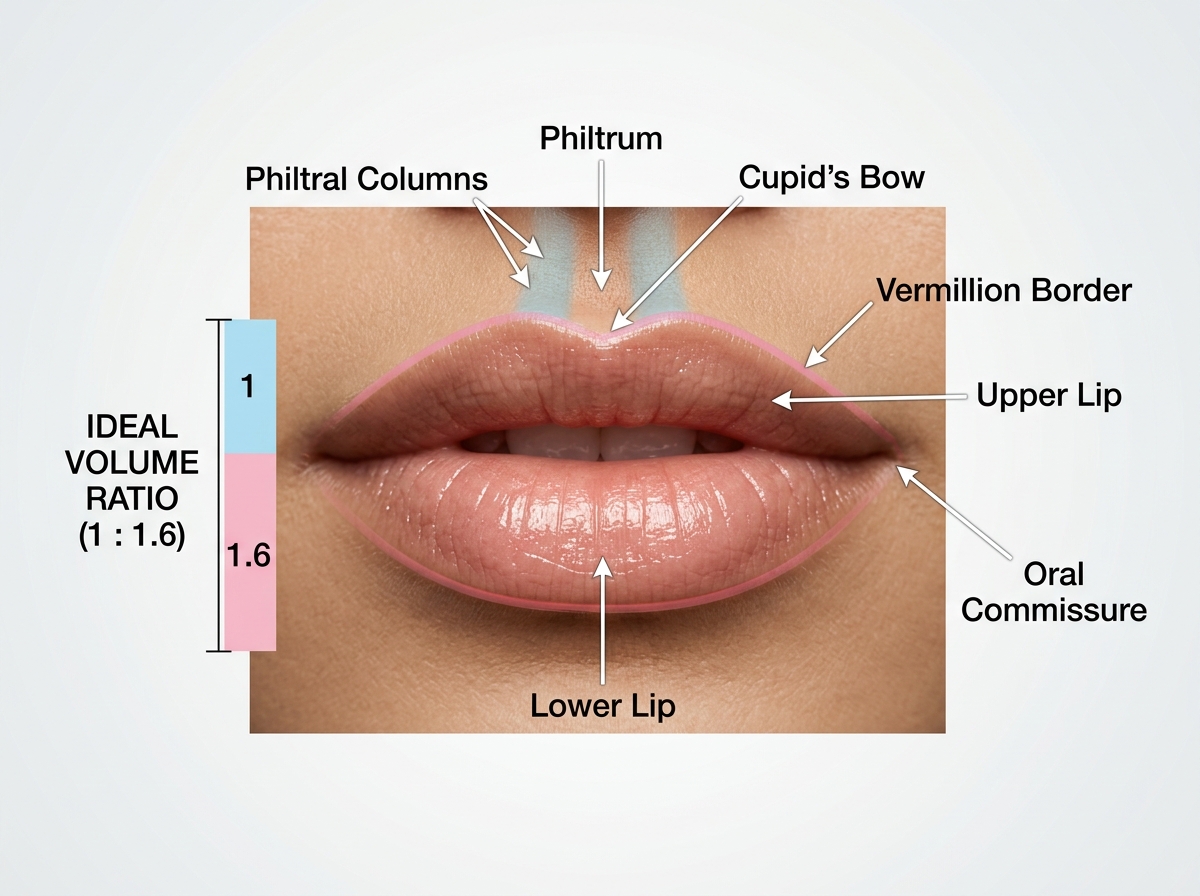
The ideal lip volume ratio is generally considered to be 1:1.6—meaning the upper lip should be about one-third of the total volume, while the lower lip takes up the remaining two-thirds. When we focus on lip filler for volume, we also look at key anatomical landmarks:
- The Cupid’s Bow: The double curve of the upper lip that resembles an archer’s bow. Enhancing this provides a youthful “flip.”
- The Vermillion Border: The crisp line where your lip meets your skin. Defining this prevents lipstick from “bleeding” into fine lines.
- Philtral Columns: The two vertical pillars leading from your nose to your upper lip. Adding a tiny bit of structure here can make the entire mouth area look more refined.
- Oral Commissures: The corners of the mouth. As we age, these can downturn, creating a sad appearance. Filler can help turn these back up.
Scientific research on age-related lip volume loss shows that the dermis thins over time due to a loss of collagen and elastin, often made worse by sun exposure or smoking. This causes the lips to flatten and the distance between the nose and the lip to lengthen. By restoring these proportions, we don’t just give you “big lips”—we restore facial symmetry and a healthy, youthful glow.
Customizing Your Lip Filler for Volume
No two sets of lips are the same, which is why we offer a variety of specialized formulas. Each product has a different “G-prime” (firmness) and flexibility, allowing us to tailor the treatment to your specific goals.
- Juvederm Ultra XC: This is the “gold standard” for those seeking noticeable, plush volume. It is a robust gel that provides a significant “oomph” for patients who want a fuller pout.
- Restylane Kysse: Designed with “XpresHAn Technology,” this filler is incredibly flexible. It allows for natural movement when you talk, smile, or kiss, making it a favorite for those who want volume that feels completely soft to the touch.
- Juvederm Volbella XC: This is the thinnest, most subtle filler in the lineup. It’s perfect for smoothing “smoker’s lines” (perioral rhytids) or adding a very delicate “mini-plump” to the lips without changing the overall size too much.
During your consultation at ProMD Health Bel Air, our expert injectors—like Amanda Pittillo, PA-C or Lauren Mason, PA-C—will assess your tissue density and bone structure to recommend the perfect “cocktail” for your needs.
Immediate and Long-Term Results of Lip Filler for Volume
What does the timeline actually look like? Most patients are surprised by how quickly they see a change, but patience is key for the final result.
- Immediate (Minutes after): Your lips will look much fuller right away. However, some of this is initial swelling from the injections.
- Days 2-5: This is the “peak swelling” phase. Don’t panic! Your lips might look a bit larger than you intended during this time. Minor bruising is also common.
- Week 2: The filler has settled into the tissue, and the swelling has vanished. This is your true result.
- Months 6-12: This is the typical duration for most HA fillers. Factors like a high metabolism, frequent exercise, or even how much you talk can affect how quickly your body breaks down the gel.
- Maintenance: We often recommend “maintenance” touch-ups every 6 to 9 months. By adding a small amount (like a half syringe) before the filler is completely gone, you can maintain a consistent look.
Our team is dedicated to providing comprehensive services that keep you looking refreshed, not “done.”
What to Expect During Your Lip Augmentation Procedure
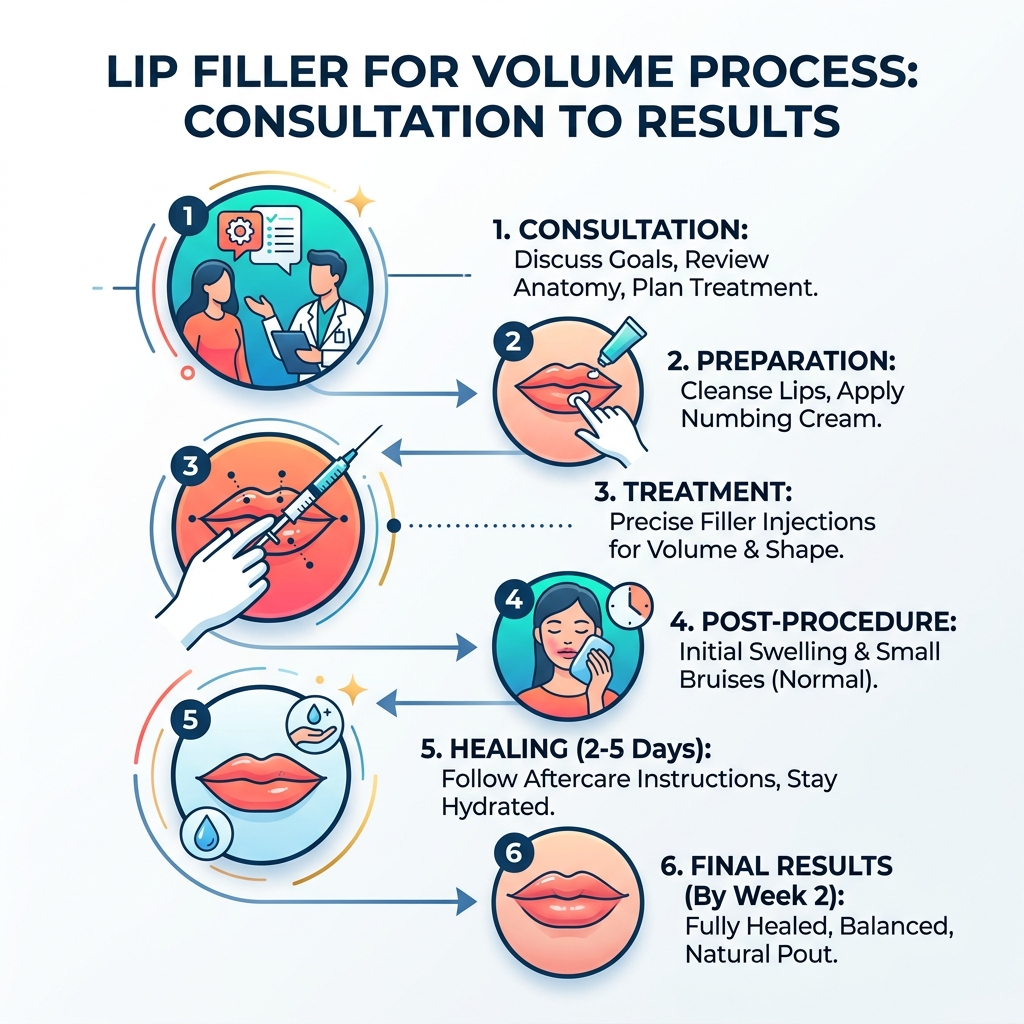
If you’re nervous about needles, take a deep breath—the process is much faster and more comfortable than you might think. A typical session at our Bel Air, Fallston, or Forest Hill area locations takes about 30 to 45 minutes from start to finish.
- The Consultation: We start by discussing your goals. We might even use our AI Simulator to show you a preview of what your post-treatment results could look like. This helps ensure we are on the same page before we even pick up a syringe.
- Numbing: We apply a medical-grade topical numbing cream to the lips. Additionally, most modern fillers (like the Juvederm and Restylane lines) contain lidocaine, a local anesthetic that numbs the area from the inside out as the injection happens.
- The Injection Technique: Our injectors use either a very fine needle or a cannula. A needle allows for extreme precision in the Cupid’s bow and border. A cannula is a blunt-tipped tool that can sometimes reduce bruising by sliding past blood vessels rather than through them.
- The “Massage”: After the filler is placed, your provider may gently massage the lips to ensure the product is evenly distributed and there are no lumps or bumps.
Most patients describe the sensation as a “pinch and a pressure,” but it is very tolerable. You’ll be able to drive yourself home immediately after.
Safety, Aftercare, and Minimizing Side Effects
While lip filler for volume is very safe when performed by medical professionals, it is still a medical procedure. Following aftercare instructions is the best way to ensure a smooth recovery and a beautiful result.
| Do’s | Don’ts |
|---|---|
| Apply ice packs (20 mins on, 20 mins off) for the first 24 hours. | Don’t do strenuous exercise for 24-48 hours (it increases blood flow/swelling). |
| Stay hydrated by drinking plenty of water. | Don’t use straws, kiss, or massage your lips for the first 48 hours. |
| Sleep with your head slightly elevated the first night. | Avoid alcohol and blood thinners (like aspirin) for 24 hours. |
| Use Arnica Montana to help with bruising. | Avoid extreme heat (saunas, tanning beds) for 48 hours. |
Safety is our top priority. Our team is trained to recognize and manage rare complications like vascular occlusion (where filler accidentally enters a blood vessel). In some cases, we use ultrasound guidance to map out your specific arterial anatomy before we inject, ensuring the highest level of precision. For more detailed tips, check out our dermal filler aftercare content.
Frequently Asked Questions about Lip Volumization
How much does lip filler cost?
The cost of lip filler for volume typically ranges from $500 to $800 per full syringe, though “mini” treatments or half-syringes can range from $300 to $600. Most patients achieve their desired look with just one syringe. At ProMD Health Bel Air, we believe in transparent pricing and will provide a full quote during your consultation. You aren’t just paying for the product; you’re paying for the skill and safety of a board-certified provider.
Will my lips look fake or “ducky”?
Not if you choose the right provider! The “ducky” look happens when filler is placed too superficially or in excessive amounts, causing it to migrate above the lip border. Our “less is more” philosophy ensures that we respect your natural anatomy. We focus on “layering” volume over time if you want a dramatic change, which allows the tissue to expand naturally and maintain a soft, realistic shape.
Conclusion
Ready to “Pump Up the Pout”? Whether you’re looking for a subtle hydration boost or a more defined, voluminous look, the team at ProMD Health Bel Air is here to guide you. Serving the Bel Air, Fallston, and Forest Hill communities, we pride ourselves on delivering results that make you feel like the best version of yourself.
With our advanced AI Simulator, you don’t have to guess what your results will look like—you can see them. From the expert hands of Tyra Lindblad and Amanda Pittillo, PA-C to our welcoming office environment, we make the journey to fuller lips easy and exciting.
Don’t wait to get the smile you’ve always wanted. Schedule your lip filler for volume consultation today and let’s create a personalized plan that’s perfectly “you.”