Why Understanding Dermal Fillers Matters for Your Aesthetic Journey
What are dermal fillers and why are they so popular? Here’s the quick answer:
Dermal fillers are gel-like substances injected beneath the skin to:
- Restore lost volume in areas like cheeks, temples, and lips
- Smooth lines and wrinkles around the nose, mouth, and chin
- Enhance facial contours for a more youthful appearance
- Provide immediate results with minimal downtime
Key facts:
- More than 1 million people choose dermal fillers annually
- FDA-approved for adults 22 and older
- Results typically last 6-18 months depending on the type
- Most common ingredient is hyaluronic acid, naturally found in skin
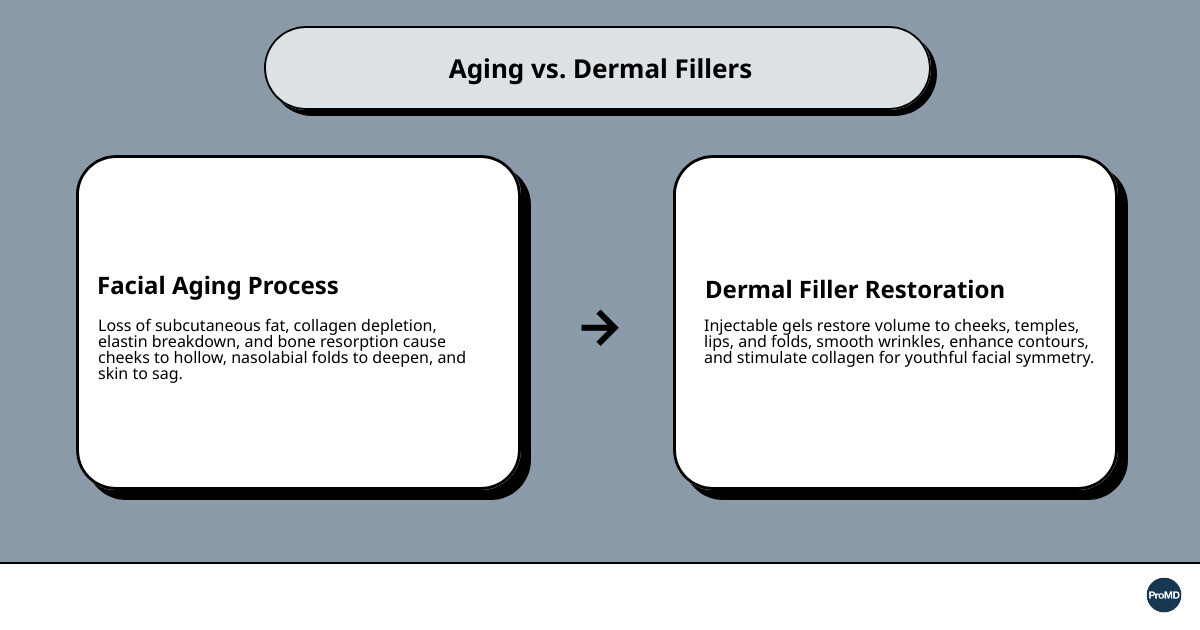
As we age, our faces naturally lose subcutaneous fat. The facial muscles work closer to the skin surface, making smile lines and crow’s feet more apparent. Skin stretches, collagen depletes, and the heart-shaped fullness of youth begins to fade.
Dermal fillers offer a non-surgical solution to these changes. They’re medical device implants that work by replacing lost volume and stimulating natural collagen production in some cases. Unlike surgical facelifts, they require no incisions and minimal recovery time.
The beauty of modern fillers lies in their versatility. Different formulations target specific concerns—from subtle lip enhancement to dramatic cheek contouring. Some last six months, others up to two years. And if you’re unhappy with the results, many types can be safely dissolved.
But here’s what matters most: choosing the right provider and understanding what you’re getting into.
I’m Ryan Pittillo, Franchise Owner at ProMD Health Bel Air, where our team helps clients understand what are dermal fillers and how they can achieve natural-looking results tailored to their unique facial structure. My background in coaching has taught me the importance of personalized strategy and helping people reach their goals with confidence.
What are Dermal Fillers and How Do They Work?
To really understand what are dermal fillers, we have to look beneath the surface—literally. Our skin is composed of several layers, and as we age, the structural support in those layers begins to crumble. Think of your skin like a high-quality mattress; over time, the springs (collagen and elastin) lose their bounce, and the stuffing (subcutaneous fat) starts to shift or disappear.
Dermal fillers are injectable gels that act as a temporary “refilling” of that mattress stuffing. When we inject these substances into the dermis or just above the bone, they physically take up space, pushing the skin back out to create a smoother, fuller surface. This process is essential for restoring facial symmetry and softening the harsh shadows that develop as fat pads in the cheeks and temples diminish.
Research shows that Hyaluronic acid: A key molecule in skin aging plays a vital role in this process. Hyaluronic acid (HA) is a sugar molecule naturally found in our bodies that can hold up to 1,000 times its weight in water. By injecting HA-based soft tissue fillers, we aren’t just adding volume; we are increasing hydration and structural integrity from the inside out.
Restoring Volume and Smoothing Lines
It isn’t just about “filling” a hole; it’s about biology. While some fillers simply provide immediate volume, others act as “biostimulators.” This means they encourage your body to start producing its own natural support systems again. The scientific community refers to this as Neocollagenesis and Neoelastinogenesis: From the Laboratory to the Clinic, which is a fancy way of saying the filler helps your skin grow new collagen and elastin.
When we address wrinkle reduction, we are looking at two types of lines: dynamic and static. While Botox handles the dynamic lines (the ones that appear when you move your face), dermal fillers are the champions of static lines—those that stay visible even when your face is at rest. By restoring that lost volume, we can smooth out skin folds and provide the hydration necessary for a vibrant, healthy glow.
Main Types of Dermal Fillers and Their Ingredients
Not all fillers are created equal. Depending on your goals—whether you want “pillowy” lips or “chiseled” cheekbones—we choose a filler with specific properties like thickness (viscosity) and elasticity.
What are dermal fillers’ most common ingredients?
- Hyaluronic Acid (HA): This is the gold standard and the most common filler used in cosmetic facial procedures. Because HA is naturally occurring in the skin, it is highly biocompatible and, most importantly, reversible. Brands like Juvéderm and Restylane fall into this category.
- Calcium Hydroxylapatite (CaHA): Found naturally in our bones, this substance is used in fillers like Radiesse. It is thicker than HA and is excellent for deeper lines and structural contouring. It also helps stimulate natural collagen production.
- Poly-L-lactic Acid (PLLA): Known by the brand name Sculptra, this is a “collagen stimulator.” It doesn’t give immediate results; instead, it works over several months to rebuild the skin’s foundation.
- Polymethylmethacrylate (PMMA): This is a semi-permanent filler containing tiny beads (microspheres) that remain under the skin to provide long-term support.
- Autologous Fat: Also known as facial fat grafting, this involves taking fat from one part of your body (via liposuction) and injecting it into your face.
Most modern fillers also include lidocaine, a local anesthetic, integrated directly into the gel to make the injection process much more comfortable for you.
Synthetic vs. Natural Stimulators
When we discuss Treating Aging Changes of Facial Anatomical Layers with Hyaluronic Acid Fillers, we differentiate between substances that the body eventually absorbs (natural/absorbable) and those that stay put (synthetic/non-absorbable).
Most of our patients in Bel Air, Fallston, and Forest Hill prefer absorbable fillers because they allow for adjustments as the face continues to age. A “permanent” filler might look great at age 40, but as your facial structure shifts at age 60, that permanent implant might no longer sit in the right spot!
Common Treatment Areas and Benefits
Where can we use these magical gels? Almost anywhere that needs a little “lift.”
- Cheeks & Temples: Restoring volume here creates that youthful “heart-shaped” face and can actually help lift the lower face, reducing the appearance of jowls.
- Nasolabial Folds: These are the “smile lines” that run from the nose to the corners of the mouth.
- Marionette Lines: The lines that run downward from the corners of the mouth, which can sometimes make us look sad or tired even when we aren’t.
- Lips: We can add volume, define the “Cupid’s bow,” or smooth out vertical lip lines (often called smoker’s lines).
- Jawline & Chin: We use thicker fillers here to create a more defined profile or correct a recessed chin.
- Under-Eye Hollows (Tear Troughs): Filling these can significantly reduce the look of dark circles and tiredness.
- Hands: Often overlooked, our hands lose fat and show veins and tendons as we age. The 5-Step Filler Hand Rejuvenation is a popular way to make hands look years younger.
Aesthetic Advantages
The benefits of dermal fillers go beyond just looking younger. For many, it’s about feeling like the best version of themselves.
- Immediate Results: You walk out of our office seeing a difference.
- Minimal Downtime: Most people return to work or normal activities the same or the next day.
- Cost-Effective: Compared to a surgical facelift, fillers are much more accessible.
- Reversibility: If you use an HA filler and decide you want to go back to your “before” look, we can use an enzyme to dissolve it.
What to Expect: The Procedure and Results
If you’re nervous about needles, don’t worry—we’ve got you. The process is straightforward and designed for your comfort.
The Consultation
Every journey at ProMD Health Bel Air begins with a thorough consultation. We examine your facial anatomy, discuss your medical history, and use our AI Simulator to show you exactly what your results could look like. This is the time to disclose any medications you’re taking, especially blood thinners like aspirin or ibuprofen, which can increase bruising.
The Procedure
- Mapping: We may mark your face with a washable pen to identify the exact injection sites.
- Numbing: We apply a topical numbing cream and use fillers that contain lidocaine to ensure the process is as painless as possible.
- Injections: Using very thin-gauge needles or a blunt-tipped cannula, we carefully place the filler. The whole thing usually takes between 15 and 60 minutes.
- Clean-up & Ice: We clean the skin and provide an ice pack to help with initial swelling.
To ensure the best outcome, we follow protocols for Minimizing bruising following fillers and other cosmetic injectables, such as advising patients to avoid certain supplements before their visit.
Longevity and Maintenance
How long will your new look last? It depends on a few factors:
- The Product: Thicker fillers used in cheeks tend to last longer (up to 2 years) than thinner fillers used in lips (6-12 months).
- Your Metabolism: If you have a very high metabolism, your body may break down the filler faster.
- Movement: Areas that move a lot (like your mouth) tend to “wear out” filler faster than stationary areas like the temples.
Most patients find that a “touch-up” appointment once or twice a year keeps them looking fresh without ever looking “overdone.”
Safety, Side Effects, and FDA Guidelines
Safety is our absolute priority. While dermal fillers are incredibly safe when administered by professionals, they are still medical procedures.
The FDA has issued a Safety Communication on needle-free devices, warning consumers against using “hyaluron pens” or other DIY injection tools. These devices use high pressure to force filler into the skin, which can cause permanent tissue damage, scarring, and even blindness. Never attempt to inject yourself or use unapproved devices.
What are dermal fillers’ primary side effects?
Most side effects are mild and temporary, usually resolving within a few days:
- Swelling and Bruising: The most common reactions.
- Redness and Tenderness: At the injection site.
- Itching or Rash: Occasionally occurs.
Rare but serious risks include:
- Nodules or Granulomas: Small lumps that may need to be treated or dissolved.
- Vascular Occlusion: This happens if filler is accidentally injected into a blood vessel, which can lead to skin necrosis (tissue death). This is why choosing an expert who understands facial anatomy is non-negotiable.
- Vision Changes: Extremely rare, but requires immediate medical attention.
Always be aware of the signs of a stroke or vascular issues, such as unusual pain or skin blanching (turning white), and contact your provider immediately if these occur.
Frequently Asked Questions about Dermal Fillers
Are dermal fillers the same as Botox?
No! This is the most common mix-up in aesthetics.
- Botox is a neurotoxin (muscle relaxant) that stops the muscles from contracting, which smooths out “dynamic” wrinkles like forehead lines.
- Dermal Fillers are for volume loss and “static” wrinkles.
In many cases, we use combination therapy—Botox for the top half of the face and fillers for the bottom half—to achieve a full “liquid facelift” effect.
Who is a candidate for dermal fillers?
Most healthy adults aged 22 and older are great candidates. If you have moderate to severe wrinkles, skin folds, or volume loss, fillers can help. However, we generally advise against fillers if you are pregnant, breastfeeding, or have a history of severe allergies (anaphylaxis) to filler ingredients.
Can dermal fillers be removed?
Yes, if they are Hyaluronic Acid (HA) fillers. We use an enzyme called hyaluronidase to safely dissolve the filler within hours or days. This provides a safety net for our patients, knowing that the results aren’t permanent if they change their mind.
Conclusion
Understanding what are dermal fillers is the first step toward reclaiming your confidence and refreshing your appearance. Whether you’re looking to plump your lips in Fallston, contour your cheeks in Bel Air, or rejuvenate your hands in Forest Hill, our team at ProMD Health Bel Air is here to guide you.
We don’t believe in a one-size-fits-all approach. By using our AI Simulator, we can give you a personalized preview of your results, ensuring your aesthetic goals align perfectly with our expert injectors’ plans. Don’t leave your face to chance—trust the professionals who understand the science of beauty.
Ready to see what’s possible? Schedule your dermal filler consultation today and let’s start your journey to a more vibrant, youthful you!