Finding the Right Provider for Your Skin Change
Ablative laser resurfacing near me is a powerful cosmetic procedure that removes damaged outer layers of skin and stimulates collagen production deep in the dermis, offering dramatic improvements for wrinkles, scars, and sun damage—but finding the right provider in your area is crucial for safe, effective results.
Quick Guide to Finding Ablative Laser Resurfacing Services:
- Look for board-certified dermatologists or plastic surgeons with specific training in laser procedures
- Verify they have experience with your skin type (especially important for darker skin tones, which have higher pigmentation risks)
- Check before-and-after photos from actual patients treated at the practice
- Ask about the specific laser technology they use (CO2, Erbium YAG, or fractional ablative)
- Ensure a thorough consultation that includes medical history review, skin assessment, and realistic expectations discussion
- Confirm they offer advanced visualization tools like AI simulators to preview potential results
This treatment delivers remarkable results—tighter, smoother, more youthful-looking skin—but it requires significant downtime (typically 1-2 weeks) and carries real risks if not performed correctly. You’ll want a provider who understands your specific concerns, has extensive experience, and uses medical-grade equipment in a safe, accredited facility.
The recovery process is intense. Your skin will be red, swollen, and tender for days. It may weep or ooze. You’ll need to avoid sun exposure completely during healing and follow strict aftercare protocols. But for many people seeking to address deep wrinkles, severe sun damage, or significant scarring, ablative laser resurfacing offers results that non-ablative treatments simply can’t match.
As Ryan Pittillo, Franchise Owner at ProMD Health Bel Air, I’ve seen how important it is to find a provider who prioritizes both safety and results when searching for ablative laser resurfacing near me. Our team serves the Bel Air, Fallston, and Forest Hill communities with advanced laser technology and personalized care that puts patient confidence first.
What is Ablative Laser Resurfacing and How Does It Work?
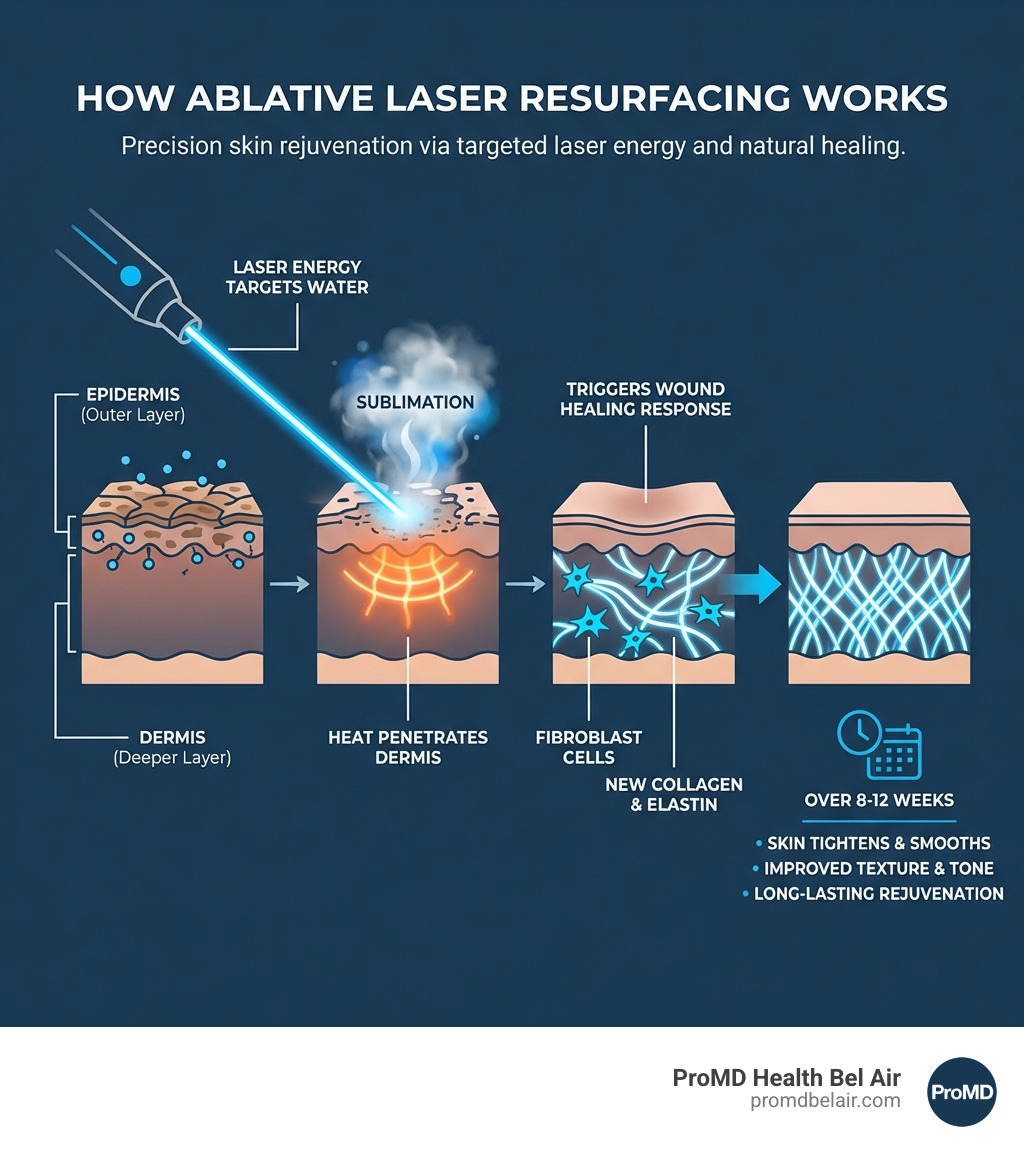
Ablative laser resurfacing is a powerful skin rejuvenation treatment that uses concentrated beams of light to precisely remove the outer layers of damaged skin, revealing a fresh, smoother complexion underneath.
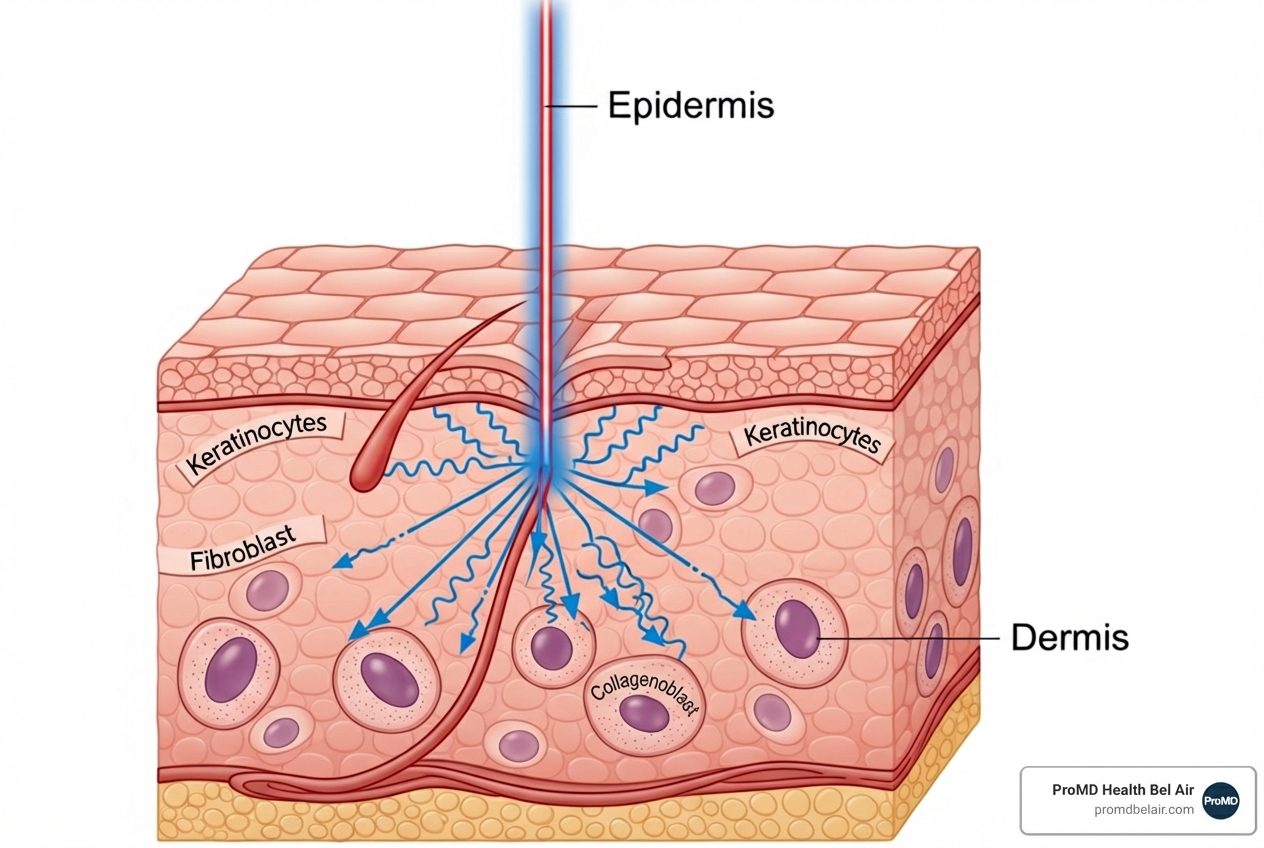
Here’s how it works: the laser energy is attracted to the water in your skin and blood. When this energy hits the skin, it rapidly heats and vaporizes the outermost layers of the epidermis. This precise removal of damaged skin triggers a wound healing response in your body. As the skin heals, it produces new, healthy cells and increases collagen production in the underlying dermis.
Collagen is the basic structural protein in our skin. As it rebuilds, you see tighter, firmer, and smoother skin with improved texture and tone.
You can learn more about our laser services and how they can benefit you. For a comprehensive overview of the procedure, the Mayo Clinic offers a detailed explanation of laser resurfacing.
Ablative vs. Non-Ablative: What’s the Difference?
When exploring laser resurfacing, you’ll often hear about two main categories: ablative and non-ablative. While both aim to improve skin appearance, they differ in intensity, recovery, and how quickly results appear.
Here’s a quick comparison:
| Feature | Ablative Laser Resurfacing | Non-Ablative Laser Resurfacing |
|---|---|---|
| Invasiveness | More invasive; removes outer skin layers | Less invasive; heats underlying skin without surface damage |
| Downtime | Significant (about 1-2 weeks of acute healing) | Minimal to none (slight redness/swelling for a few days) |
| Results | Dramatic and long-lasting; often after one treatment | More subtle and gradual over several sessions |
| Number of Sessions | Typically 1-2 sessions for significant results | Often 3-6 sessions for optimal results |
| Best For | Deep wrinkles, severe sun damage, significant acne/surgical scars, uneven texture | Mild to moderate concerns, fine lines, pigmentation issues, early aging |
Ablative lasers are the “heavy hitters” that resurface the skin more aggressively for more profound changes. Non-ablative lasers are gentler, with less recovery but more modest, incremental improvements.
Types of Ablative Lasers
Within the ablative category, there are a few primary types of lasers, each with its own strengths:
-
CO2 Lasers (Carbon Dioxide Lasers): Highly effective for treating:
- Deep wrinkles and fine lines
- Severe sun damage
- Acne scars and other textural irregularities
- Uneven skin tone and texture
CO2 lasers provide dramatic results and notable skin tightening but generally require the longest recovery.
-
Erbium YAG Lasers: Less aggressive than CO2, these lasers are a good option for:
- Superficial lines and moderate wrinkles
- Mild to moderate sun damage
- Certain types of scars
Erbium YAG lasers offer shorter recovery and fewer side effects, with a lower risk of hyperpigmentation, making them a better choice for some darker skin tones.
-
Fractional Ablative Lasers: This technology creates microscopic treatment zones, leaving surrounding skin intact. This allows for:
- Faster healing and reduced downtime
- Lower risk of complications
- Effective treatment of wrinkles, scars, and sun damage
Fractional CO2 or Erbium YAG systems balance the power of ablative resurfacing with a more conservative delivery.
Are You a Good Candidate for This Treatment?
Deciding if ablative laser resurfacing is right for you requires a careful consultation with an expert. It is a powerful procedure with impressive results, but it is not appropriate for everyone.

At ProMD Health Bel Air, we prioritize your safety and satisfaction. We assess your skin concerns, medical history, and goals to determine if ablative laser resurfacing is the best choice. For a broader overview of laser treatments, review this guide to laser treatments.
Skin Conditions Treated
Ablative laser resurfacing is particularly effective for a range of moderate to severe skin concerns:
- Deep wrinkles and fine lines, especially around the eyes, mouth, and forehead
- Severe sun damage and photodamage
- Acne scars, including pitted or boxcar scars
- Surgical or trauma scars
- Uneven skin texture and enlarged pores
- Age spots and certain types of hyperpigmentation
- Some benign growths, such as warts, in selected cases
Who is an Ideal Candidate?
The best candidates for ablative laser resurfacing typically:
- Have fair to light brown skin tones (Fitzpatrick I-III), which carry a lower risk of pigment changes
- Have significant concerns such as deep wrinkles, prominent scars, or marked sun damage
- Understand the procedure, recovery, and likely outcomes
- Are willing to commit to downtime and follow aftercare closely
- Are non-smokers or willing to stop for a period before and after treatment
- Are in good overall health, without conditions that impair wound healing
Who Should Avoid Ablative Lasers?
You may not be a good candidate if you have:
- Active acne breakouts in the treatment area
- Very dark skin tones (Fitzpatrick IV-VI), due to a higher risk of long-term pigmentation changes
- A history of keloid or raised scarring
- Used isotretinoin (Accutane) within the past year
- Certain autoimmune or connective tissue disorders that affect healing
- A history of ectropion (outward-turning eyelid) when treating the eye area
- A current bacterial, viral (such as herpes simplex), or fungal infection in the treatment area
The Procedure and Recovery: What to Expect
Starting ablative laser resurfacing involves preparation, a precise in-office procedure, and focused aftercare. Knowing the steps helps you plan realistically for your skin change.
How to Prepare for Your Treatment
Preparation is key to a smooth recovery and good results. You can generally expect to:
- Have a consultation: We review your medical history, medications, and expectations, and design a personalized plan.
- Avoid sun exposure: Practice strict sun protection and use a broad-spectrum sunscreen (SPF 30+) for at least 4-8 weeks before treatment.
- Stop smoking: If you smoke, we strongly recommend stopping at least two weeks before and after your procedure to support healing.
- Avoid certain medications: You may need to stop aspirin, anti-inflammatory drugs (like ibuprofen), and some herbal supplements beforehand, as advised by your provider.
- Arrange for a ride home: If sedation is used, you will need someone to drive you after the procedure.
- Start antiviral medication if prescribed: If you have a history of cold sores or shingles, you may begin an antiviral regimen to reduce the risk of an outbreak.
- Avoid deep facial peels, waxing, or collagen injections: These should be avoided for several weeks prior to your laser resurfacing.
What to Expect from an Ablative Laser Resurfacing Near Me Procedure
When you come to ProMD Health Bel Air for ablative laser resurfacing, the procedure generally includes:
- Outpatient treatment: Performed in our office-based medical setting.
- Duration: Typically 30 minutes to 2 hours, depending on the treatment area.
- Anesthesia: Local anesthesia, often with oral or IV sedation, is used for comfort. For extensive full-face treatments, stronger anesthesia may be considered.
- Skin cleansing: The skin is thoroughly cleansed to remove makeup, oils, or debris.
- Protective eyewear: You wear special shields or goggles to protect your eyes.
- Laser application: With proper anesthesia, you should not feel sharp pain, though you may feel pressure or warmth as the laser passes over the skin.
The Recovery Process and Aftercare
Recovery is intensive and requires careful home care:
- Downtime: Expect about 1-2 weeks of acute healing. Full settling of the skin can take several more weeks.
- Redness and swelling: Your skin will look and feel like a severe sunburn immediately afterward, with redness and swelling that gradually improve.
- Itching and tenderness: Common as the skin heals.
- Oozing and crusting: The treated area may be raw and ooze initially. Small brown carbon crusts can form and should be allowed to shed naturally.
- Gentle cleansing: You will be instructed to cleanse the area several times a day, often with saline or a diluted vinegar solution after the initial dressing is removed.
- Ointment application: A protective ointment such as Aquaphor or petroleum jelly is applied regularly to keep the skin moist and support healing.
- Strict sun avoidance: Avoid direct sun exposure during healing and use broad-spectrum SPF 30+ sunscreen daily for months afterward. Tinted formulas with iron oxide and titanium dioxide are particularly helpful for those prone to hyperpigmentation.
- Avoid irritants: Delay makeup and avoid harsh products, exfoliants, and activities that increase infection risk (such as public pools) until cleared by your provider.
- Milia and breakouts: Small white bumps (milia) or temporary acne can appear but often resolve with time.
- Pain management: We will guide you on appropriate pain relievers and the use of cool compresses.
We also offer various peels and skin rejuvenation treatments that can complement or, in some cases, substitute for ablative laser resurfacing depending on your goals and tolerance for downtime.
Finding a Provider and Understanding Costs for Ablative Laser Resurfacing Near Me
When searching for ablative laser resurfacing near me in Bel Air, Fallston, or Forest Hill, choosing the right provider is critical. This is an advanced medical procedure that should be performed by experienced professionals in a proper clinical setting.
How to Find a Qualified Provider
Look for the following when evaluating providers:
- Check credentials: Choose a board-certified dermatologist or plastic surgeon with specific training and experience in laser procedures.
- Ask about experience with your skin type: This is especially important for patients with brown or Black skin, who are at higher risk for pigment changes.
- Read reviews: Look for detailed patient feedback about ablative laser resurfacing outcomes and care.
- Ensure a thorough consultation: A reputable provider will review your full medical history, examine your skin, and discuss expectations, risks, and recovery in detail.
- Ask about technology used: Inquire about the types of ablative lasers available (CO2, Erbium YAG, fractional systems) and how they are custom to your needs.
- Look for advanced tools like an AI Simulator to preview results: At ProMD Health Bel Air, our AI Simulator helps you preview personalized post-treatment results, supporting realistic expectations and treatment planning.
Understanding the Cost of Ablative Laser Resurfacing Near Me
Pricing for ablative laser resurfacing can vary. Factors that influence cost include:
- Location: Regional market rates and local demand
- Provider expertise: More experienced or specialized providers may charge higher fees
- Treatment area size: Full-face treatments cost more than small, focused areas
- Type of laser used: Different technologies carry different costs
- Number of sessions: While many patients see significant change in 1-2 sessions, some may need additional treatments
Ablative laser resurfacing is generally considered an elective cosmetic procedure and is rarely covered by health insurance.
To make treatment more accessible, many clinics offer financing solutions. We provide various financing offers available to help you budget for care over time, including options like third-party healthcare financing programs.
Frequently Asked Questions about Ablative Laser Resurfacing
We know you have questions, and we’re here to provide clear, straightforward answers about ablative laser resurfacing.
How long do the results of ablative laser resurfacing last?
Ablative laser resurfacing can deliver long-lasting improvement because it remodels collagen and resurfaces damaged skin. Many patients enjoy refreshed skin quality for years, especially when they protect their results.
Collagen remodeling continues for several months after the procedure, so improvements may keep developing over time. However, the natural aging process and future sun exposure will still affect your skin. Consistent sun protection and a good skincare regimen are essential for maintaining your outcome.
Is ablative laser resurfacing painful?
During the procedure, comfort is managed with anesthesia. This usually includes local anesthesia to numb the area, often combined with oral or intravenous sedation so you can relax. For larger full-face treatments, stronger anesthesia may be considered.
Most discomfort occurs during the recovery period. Your skin may feel hot, tight, tender, and sore, similar to a severe sunburn. Itching and swelling are also common. We provide guidance on pain management, which may include medication and cool compresses.
What are the most common risks and side effects?
Like any medical procedure, ablative laser resurfacing carries potential risks and side effects, which will be reviewed thoroughly during your consultation:
- Prolonged redness (erythema) that can last weeks, and occasionally longer
- Swelling and itching, especially in the first days after treatment
- Hyperpigmentation (skin darkening), particularly in darker skin tones
- Hypopigmentation (skin lightening) in some cases
- Infection (bacterial, viral, or fungal), including cold sore flare-ups
- Scarring, including keloid formation in susceptible individuals
- Milia (tiny white bumps) or temporary acne breakouts
With careful patient selection, proper technique, and diligent aftercare, these risks can be reduced, but not entirely eliminated.
Achieve Your Best Skin with a Trusted Local Expert
Ablative laser resurfacing offers powerful results for deep wrinkles, severe sun damage, and stubborn scars. It does require commitment to downtime and aftercare, but the reward can be smoother, tighter, more youthful-looking skin.
Choosing the right provider for ablative laser resurfacing near me is essential for both safety and results. At ProMD Health Bel Air, we bring advanced laser technology, an experienced clinical team, and a strong focus on patient education to every treatment. We proudly serve Bel Air, Fallston, and Forest Hill with medical-grade aesthetic care close to home.
Our AI Simulator lets you visualize potential results in advance, helping you make informed decisions and set realistic expectations. From detailed consultation through recovery support, we are with you at every step.
Take the next step toward healthier, more radiant skin. We invite you to experience the ProMD Health difference. Book your consultation today and explore whether ablative laser resurfacing is right for you.