Why Facial Wrinkles Form and How You Can Address Them
Reduce facial wrinkles through a combination of prevention, targeted skincare, and professional treatments. The most effective approaches include:
- Daily sun protection with broad-spectrum SPF 30+ sunscreen
- Retinoids and retinol to boost collagen production
- Antioxidants like Vitamin C to protect against environmental damage
- Professional treatments including neuromodulators (Botox/Dysport), dermal fillers, chemical peels, laser therapy, and microneedling
- Lifestyle habits like quitting smoking, eating antioxidant-rich foods, staying hydrated, and getting adequate sleep
Wrinkles are a natural part of aging. As we grow older, our skin produces about 1% less collagen each year starting in our 30s. This collagen loss, combined with environmental factors like sun exposure and lifestyle choices, creates those lines and creases we start to notice.
But here’s the good news: you have more control than you might think. Some wrinkles are preventable, and many existing ones can be significantly reduced. The key is understanding what causes them and taking action early.
Fine lines appear first, often around the eyes and mouth, caused by dehydration and early sun damage. Deeper wrinkles develop from repeated facial expressions and more significant collagen breakdown. Each type responds to different treatment approaches.
As part of the team at ProMD Health Bel Air, we’ve seen countless clients regain confidence through personalized aesthetic treatments that reduce facial wrinkles while maintaining natural-looking results. Our practice combines advanced technology with individualized care to help you achieve your goals.
Understanding Why Facial Wrinkles Form
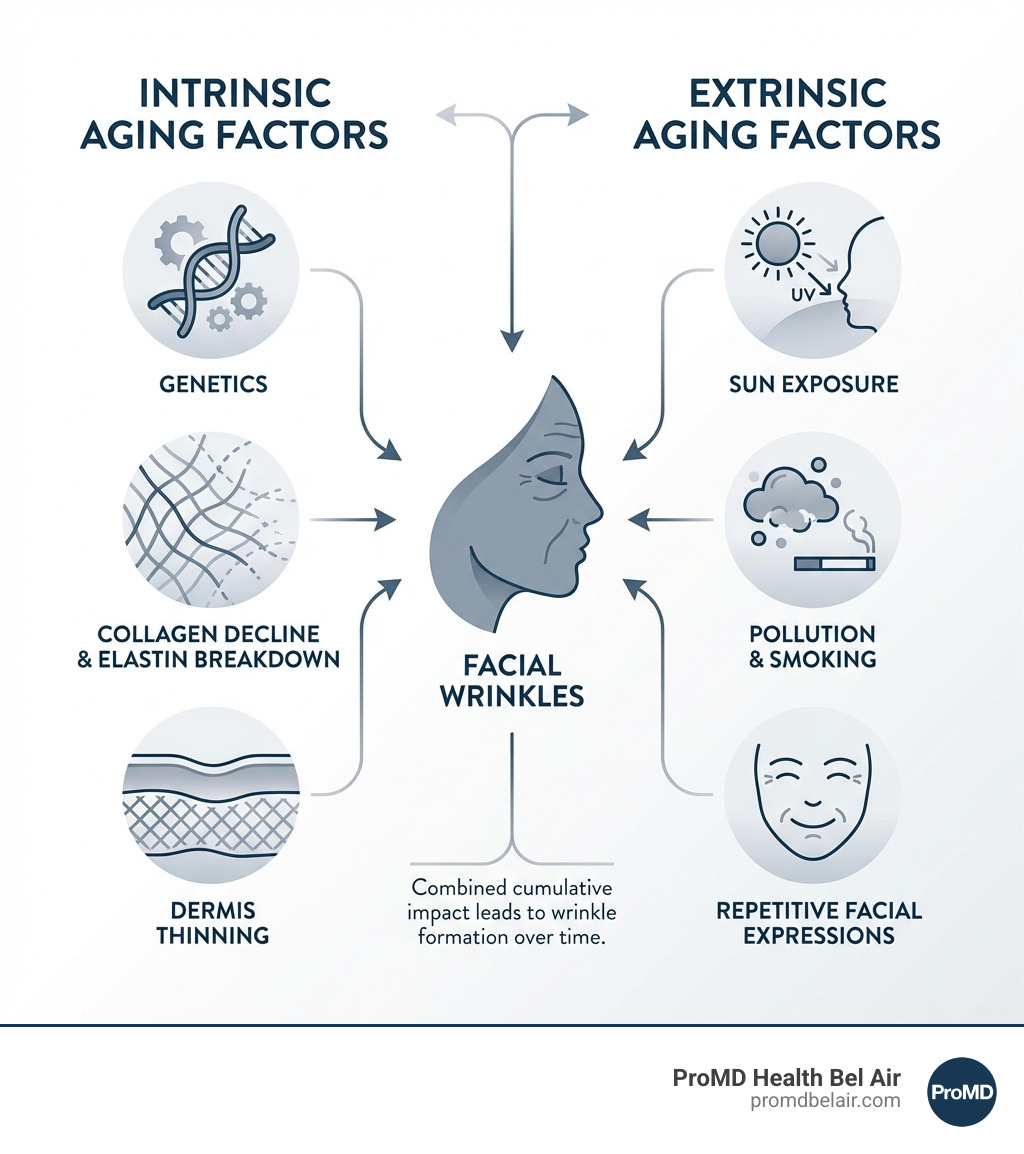
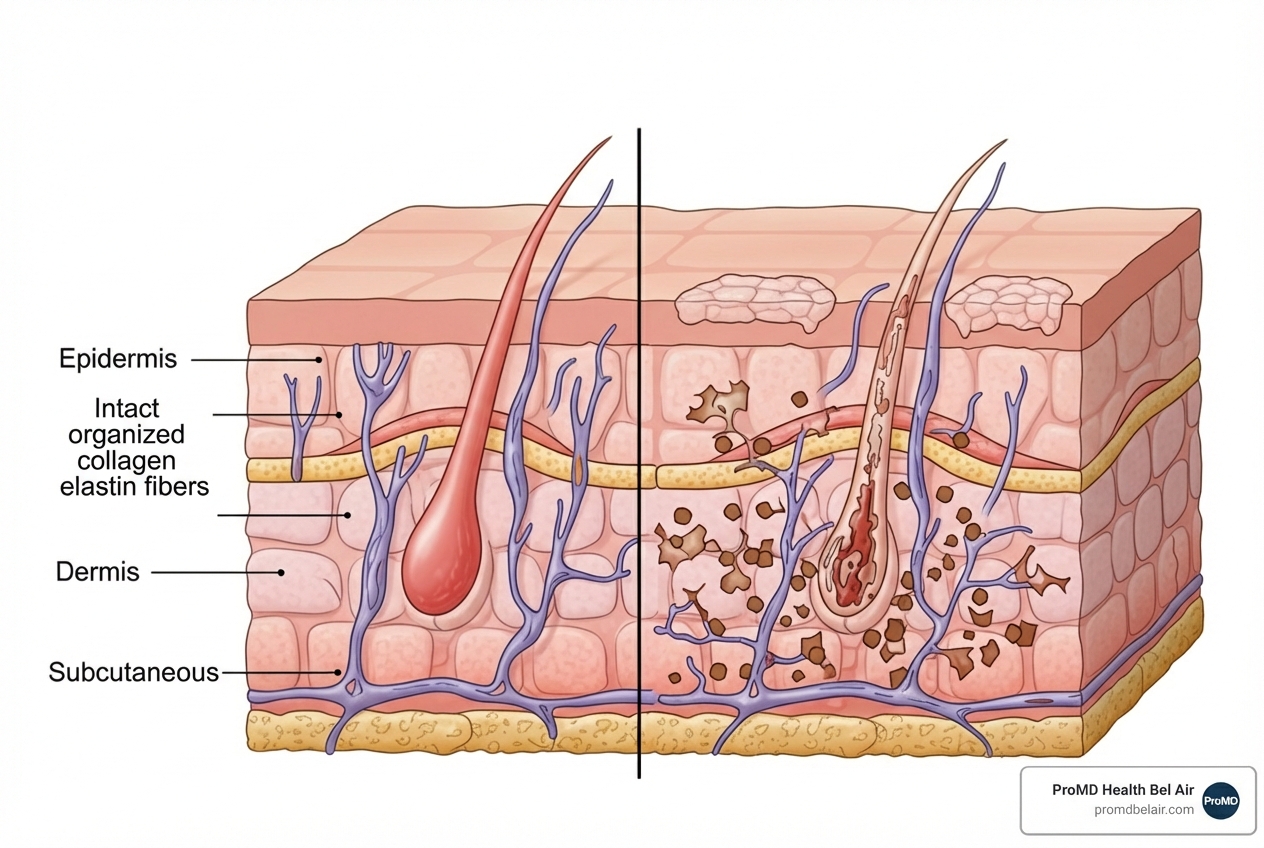
To effectively reduce facial wrinkles, it’s crucial to understand their origins. Wrinkles aren’t just a sudden appearance; they are the result of complex interactions between our body’s natural aging process (intrinsic factors) and external influences (extrinsic factors). As we age, skin cells divide more slowly, and the middle layer of our skin, the dermis, begins to thin. This dermal layer is a crucial network of elastin and collagen fibers that provide support and elasticity. When this network loosens and solves over time, depressions form on the skin’s surface, leading to wrinkles.
Intrinsically, our bodies produce less collagen and elastin as we get older, proteins essential for keeping skin firm and smooth. A significant statistic reveals that we experience a 1% annual decline in collagen levels starting around the age of 25. This gradual loss, combined with an increasingly disorganized dermal tissue arrangement, causes a loss of skin strength. Genetics also play a role, influencing how quickly and prominently these changes manifest.
Extrinsically, environmental and lifestyle factors accelerate this process. Sun exposure is a primary culprit; UV rays, in particular, break down collagen and elastin fibers, which contributes significantly to wrinkle development, a process known as photoaging. Smoking also severely impacts skin health by slowing down collagen production. Furthermore, constant exposure to pollutants like particulate matter, soot, and nitrogen dioxide can break down collagen. Repetitive facial expressions, such as smiling, frowning, or squinting, create grooves beneath the skin’s surface. Over time, these dynamic lines become etched into the skin, changing into static wrinkles.
Fine Lines vs. Deeper Wrinkles: What’s the Difference?
When we talk about facial wrinkles, it’s helpful to distinguish between fine lines and deeper wrinkles, as their causes and treatments can differ.
Fine lines are typically the first signs of aging to appear. They are surface-level creases that often arise from dehydration and early sun damage. They are characterized by irregular skin thickening and a decrease in the water held by the epidermis. These lines are often subtle and can be improved with consistent hydration and gentle exfoliation. Think of the faint lines around your eyes when you smile or the slight creasing on your forehead.
Deeper wrinkles, also known as furrows, are more pronounced. They fall into two main categories:
- Dynamic wrinkles are those that appear with facial expressions. These are the lines that form when you smile (crow’s feet), frown (frown lines between the eyebrows), or raise your eyebrows (forehead lines). They are caused by repeated muscle contractions.
- Static wrinkles are those that remain visible even when your face is at rest. These deeper lines often develop from dynamic wrinkles that have become permanently etched into the skin over time, due to collagen and elastin breakdown. They can also result from a loss of volume in the face, such as nasolabial folds (lines linking the nose and mouth).
Treating fine lines often focuses on improving skin texture and hydration, while addressing deeper wrinkles usually requires more significant interventions aimed at stimulating collagen production, relaxing facial muscles, or restoring lost volume. Understanding this distinction is key to choosing the most effective strategy to reduce facial wrinkles.
For more detailed information on the different types of facial lines and wrinkles, you can refer to More info about facial lines and wrinkles.
The Foundation: A Proactive Approach to Wrinkle Prevention
While we all eventually develop wrinkles as a natural part of aging, a proactive approach can significantly delay their onset and reduce their severity. Prevention is often the best treatment, and it largely hinges on our lifestyle choices and daily habits. Many of these foundational steps are simple, yet incredibly impactful, in helping us maintain youthful-looking skin.
The Gold Standard: Sun Protection Strategies
Undoubtedly, the most effective scientifically-backed method for preventing wrinkles is rigorous sun protection. UV rays are a major contributor to premature skin aging, breaking down the vital collagen and elastin fibers that keep our skin smooth and firm. This process is known as photoaging.
Our top recommendations for sun protection include:
- Wear Broad-Spectrum Sunscreen Daily: Apply a broad-spectrum sunscreen with an SPF of 30 or higher every single day, regardless of the weather. This protects against both UVA (aging) and UVB (burning) rays.
- Reapply Regularly: Sunscreen isn’t a one-and-done application. Reapply it every two hours, or more frequently if you’re swimming or sweating.
- Seek Shade: Limit your time in direct sunlight, especially during peak hours (10 AM to 4 PM).
- Wear Protective Clothing: Opt for wide-brimmed hats, sunglasses (to protect the delicate skin around your eyes and prevent squinting), and long-sleeved shirts or pants when outdoors.
- Avoid Tanning Beds: Tanning beds emit harmful UV radiation that severely damages your skin and accelerates wrinkle formation.
By making sun protection a non-negotiable part of your routine, you’re taking the most critical step to reduce facial wrinkles and maintain skin health. The Mayo Clinic offers comprehensive guidance on this topic, and you can find more information in their guide: Mayo Clinic’s guide to wrinkle diagnosis and treatment.
Lifestyle Habits for Youthful Skin
Beyond sun protection, several lifestyle habits play a pivotal role in skin aging and wrinkle development. By adopting healthier choices, we can significantly support our skin’s resilience and youthful appearance.
- Anti-Smoking Benefits: Smoking is one of the worst culprits for accelerating skin aging. The chemicals in cigarettes damage collagen and elastin, leading to premature wrinkles and a dull complexion. Quitting smoking can dramatically improve skin tone and texture, even for long-term smokers.
- Antioxidant-Rich Diet: What you eat profoundly affects your skin. A diet rich in antioxidants helps combat oxidative stress, which damages skin cells. Incorporate plenty of fruits, vegetables, and foods high in omega-3 fatty acids, like salmon. Cocoa with high levels of antioxidants (epicatechin and catechin) can also protect skin from sun damage and improve blood flow.
- Proper Hydration: Drinking plenty of water daily is fundamental. Well-hydrated skin appears plumper and smoother, making fine lines less noticeable. Dehydration can cause skin cells to shrink, leading to a duller appearance and more prominent wrinkles.
- Adequate Sleep: Aim for 7-9 hours of quality sleep each night. During sleep, our bodies repair and regenerate skin cells. Chronic sleep deprivation can lead to increased stress hormones, which can negatively impact collagen.
- Sleep Position: Believe it or not, how you sleep can contribute to “sleep lines.” Sleeping on your side can lead to wrinkles on your cheeks and chin, while sleeping face down can cause a furrowed brow. Sleeping on your back can help minimize these mechanically induced lines.
- Stress Management: High stress levels can lead to repetitive facial expressions (frowning, squinting) and can also impact collagen levels. Finding healthy ways to manage stress, whether through meditation, exercise, or hobbies, benefits both your mind and your skin.
The Importance of a Basic Skincare Routine
A consistent, gentle skincare routine provides the canvas for healthy, youthful skin. It supports the skin’s natural barrier function and prepares it for more active ingredients.
- Gentle Cleansing: Wash your face twice daily with a mild, non-soap cleanser. Avoid harsh soaps or aggressively scrubbing your skin, as this can strip away natural oils and disrupt the skin’s protective barrier, leading to dryness and irritation.
- Moisturizing Daily: Moisturizing is non-negotiable. It helps to seal in hydration, keeping your skin supple and plump. Look for moisturizers containing ingredients like hyaluronic acid, which is a powerful humectant that attracts and holds moisture in the skin. Well-hydrated skin appears smoother and can temporarily fill in fine lines.
By consistently adhering to these foundational practices, you’re laying the groundwork for healthier, more resilient skin and significantly contributing to your efforts to reduce facial wrinkles.
At-Home Treatments to Reduce Facial Wrinkles
Once you’ve established a solid foundation of sun protection and healthy lifestyle habits, incorporating targeted at-home skincare treatments can further improve your efforts to reduce facial wrinkles. The market is flooded with products, but certain powerhouse ingredients stand out for their scientifically-backed efficacy.
Powerhouse Ingredients for Your Skincare Arsenal
- Retinoids (Vitamin A): These are perhaps the most celebrated anti-aging ingredients. Retinoids, including over-the-counter retinol and prescription-strength options, are derivatives of Vitamin A. They work by boosting collagen production and accelerating cell turnover, which helps to smooth fine lines, reduce splotches, and improve skin texture. While retinoids are incredibly effective, they can cause initial redness and dryness as your skin adjusts.
- Antioxidants: These ingredients are vital for protecting your skin from environmental damage caused by free radicals.
- Vitamin C (L-ascorbic acid, ascorbyl palmitate): A potent antioxidant that not only fights free radicals but also boosts collagen production, protects against UVA/UVB damage, and helps reduce redness and uneven skin tone. L-ascorbic acid is often considered the most effective form for wrinkle relief.
- Vitamin E: Another powerful antioxidant that works synergistically with Vitamin C to protect skin from damage.
- Niacinamide (Vitamin B3): Helps improve skin elasticity, reduce hyperpigmentation, and strengthen the skin barrier, all contributing to a smoother appearance.
- Peptides: These are short chains of amino acids that act as building blocks for proteins like collagen and elastin. When applied topically, peptides can signal the skin to produce more collagen, leading to improved skin repair, firmness, and elasticity. Growth factors are a type of peptide that can also aid in skin regeneration.
- Alpha Hydroxy Acids (AHAs): Ingredients like glycolic and lactic acid gently exfoliate the top layer of dead skin cells. This process not only improves skin texture and tone but can also stimulate collagen production, making fine lines and surface wrinkles appear less prominent, especially around the eyes.
How to Incorporate Active Ingredients
Introducing active ingredients into your routine requires a thoughtful approach to avoid irritation and maximize benefits:
- Start Slow: Begin with lower concentrations and gradually increase frequency as your skin tolerates it. For example, use a retinoid product 2-3 times a week initially, then increase to every other night or nightly.
- Patch Testing: Always patch test new products on a small, inconspicuous area of your skin to check for any adverse reactions before applying them to your entire face.
- Consistency is Key: The benefits of these ingredients are cumulative. Regular, consistent use over several weeks or months is necessary to see noticeable improvements.
- Using Retinoids at Night: Retinoids can be inactivated by sunlight and can make your skin more sensitive to the sun. Apply them in your evening routine.
- Pairing with Daily Sunscreen: This is non-negotiable, especially when using active ingredients like retinoids and AHAs, which can increase sun sensitivity.
Wrinkle Myths vs. Reality: What Doesn’t Work
The desire to reduce facial wrinkles has fueled a market full of promises, but not all treatments live up to the hype. It’s important to differentiate between scientifically-backed solutions and common myths or ineffective remedies.
- Ineffective Topical Collagen: While collagen is vital for skin structure, topical collagen products are generally ineffective for wrinkle reduction. The collagen molecules are too large to penetrate the skin’s barrier, meaning they can’t reach the dermis where new collagen production occurs. They might offer temporary surface hydration but won’t stimulate new collagen.
- Unproven “Miracle” Creams: Many over-the-counter anti-aging creams promise dramatic results but lack scientific support. Skincare products classified as cosmetics are not regulated in the same way as drugs, and often contain insufficient concentrations of active ingredients to be truly effective. Don’t be swayed by marketing; look for products with proven ingredients and research.
- Mixed Results from Oral Collagen Supplements: Collagen supplements have mixed results. While some studies suggest hydrolyzed collagen peptides may improve skin hydration and elasticity in some individuals, they don’t always yield noticeable benefits for wrinkle reduction. The body breaks down ingested collagen into amino acids, which are then used where the body needs them most, not necessarily directly to boost facial collagen.
- Harmful DIY Remedies: The internet is rife with DIY home remedies for wrinkles. Many of these can do more harm than good, potentially disrupting the skin’s natural barrier, causing irritation, or even accelerating signs of aging. It’s best to stick to professionally formulated products and treatments.
Understanding what truly works and what doesn’t helps us make informed decisions and avoid wasting time and money on ineffective solutions. For more insights on aging skin and what truly helps, you can consult Cleveland Clinic on what you need to know about aging skin.
Professional Treatments for Significant Results
When at-home skincare and lifestyle changes aren’t enough to achieve your desired results, or if you’re looking for more significant improvements, professional treatments offer powerful solutions to reduce facial wrinkles. It’s no wonder that non-surgical procedures to treat wrinkles are incredibly common, with over 4 million wrinkle-relaxing treatment injections occurring in 2020. The most common age group seeking treatment is between 40 to 55, reflecting a desire to address visible signs of aging effectively.
A crucial first step before considering any professional treatment is a personalized consultation with a qualified professional, like our team at ProMD Health Bel Air. We can assess your skin, discuss your goals, and recommend the most appropriate and effective treatment plan for your unique needs.
Injectables: Relaxing and Restoring Volume
Injectable treatments are a cornerstone of modern medical aesthetics, offering effective ways to address both dynamic and static wrinkles.
- Neuromodulators (Botulinum Toxin): Products like Botox and Dysport fall into this category. They work by temporarily blocking nerve signals to specific facial muscles, which in turn relaxes those muscles. This relaxation smooths out the overlying skin, effectively reducing dynamic wrinkles caused by repetitive facial expressions. They are particularly effective for:
- Frown lines: The “11s” between the eyebrows.
- Crow’s feet: Lines at the corners of the eyes.
- Forehead lines: Horizontal lines across the forehead.
Dysport, in particular, has been noted for its effectiveness. A scientific study showed that Dysport may be more effective at treating crow’s feet than Botox, with patients and physicians reporting better reduction during smiling. The effects of Dysport usually appear within a few days, with full results visible in about two weeks, and generally last between 3 and 4 months, though some individuals report effects lasting up to 5 months. At least 95% of people report satisfaction with Dysport treatment results after only two sessions per year. For more information on these treatments, visit our page on More info about neuromodulator injections.
- Dermal Fillers: These injectables, most commonly made with hyaluronic acid, work differently by restoring lost volume and filling in static wrinkles or depressions. As we age, our skin loses fat and hyaluronic acid, leading to hollows and deeper lines. Fillers can plump up these areas, creating a smoother, more youthful contour. They are excellent for:
- Nasolabial folds: Lines running from the sides of the nose to the corners of the mouth.
- Marionette lines: Lines extending downwards from the corners of the mouth.
- Lip augmentation: Adding volume to thinning lips.
- Cheek augmentation: Restoring volume to lift and contour the cheeks.
Dermal fillers provide immediate results, and their effects can last from six months to two years, depending on the specific product and treatment area. Learn more about our dermal filler services here: More info about dermal filler services.
Skin Resurfacing to reduce facial wrinkles
Skin resurfacing treatments focus on improving the skin’s surface texture, tone, and stimulating collagen production for overall rejuvenation.
- Chemical Peels: These treatments involve applying a chemical solution to the skin, which exfoliates the top layers. The controlled removal of old, damaged skin cells encourages the growth of new, healthier skin, leading to improved texture, reduced fine lines, and more even skin tone. Peels can range from superficial to deep, depending on the desired outcome and skin concerns. Explore our chemical peel services: More info about chemical peel services.
- Laser Therapy: Laser treatments use concentrated beams of light to target specific skin concerns.
- Ablative lasers remove the outer layers of skin and heat the underlying dermis to stimulate collagen.
- Non-ablative lasers warm the dermis without removing the outer layer, also stimulating collagen.
Both types can effectively reduce facial wrinkles, improve skin texture, and address issues like sun spots and scars. They are particularly effective for fine lines around the eyes and mouth, as well as deeper wrinkles. Our laser services are detailed here: More info about laser services.
- Microneedling: Also known as collagen induction therapy, microneedling involves using a device with tiny needles to create controlled micro-injuries in the skin. These micro-injuries stimulate the body’s natural wound healing process, leading to increased collagen and elastin production. This results in firmer, smoother skin, reduced fine lines, improved texture, and diminished appearance of scars. Find the benefits of microneedling: More info about microneedling services.
Comparing Professional Options to reduce facial wrinkles
Choosing the right professional treatment depends on the type of wrinkles you have, your desired results, and your tolerance for downtime. Here’s a quick comparison of some popular options:
| Treatment Type | Best For | Average Recovery | Results Duration |
|---|---|---|---|
| Neuromodulators | Dynamic wrinkles (frown lines, crow’s feet) | Minimal (few hours to days) | 3-5 months |
| Dermal Fillers | Static wrinkles, volume loss | Minimal (few hours to days) | 6 months to 2 years |
| Chemical Peels | Fine lines, texture, tone, pigmentation | Varies (minimal to 1 week) | Varies, often requires multiple sessions |
| Laser Therapy | Fine lines, deeper wrinkles, texture | 1 day to 1 week (depending on type) | Can be long-lasting, but skin continues to age |
| Microneedling | Fine lines, texture, scars, collagen | 1-2 days (redness) | Progressive over weeks/months, maintenance needed |
This table provides a general overview. During your consultation at ProMD Health Bel Air, we will help you understand which treatment or combination of treatments is best suited to your specific needs and goals.
Conclusion: Your Personalized Path to Smoother Skin
Starting on a journey to reduce facial wrinkles is about more than just aesthetics; it’s about feeling confident and comfortable in your own skin. As we’ve explored, achieving smoother, more youthful-looking skin is a multi-faceted endeavor, combining diligent prevention, consistent at-home care, and, for many, strategic professional treatments.
We’ve seen that the foundation lies in lifelong sun protection, adopting healthy lifestyle habits like avoiding smoking, eating a nutrient-rich diet, staying hydrated, prioritizing sleep, and managing stress. A consistent basic skincare routine, featuring gentle cleansing and moisturizing, further supports skin health. When it comes to targeted at-home care, powerhouse ingredients like retinoids, antioxidants (especially Vitamin C), peptides, and AHAs can make a significant difference, provided they are incorporated correctly and consistently. We also debunked myths, reminding us that not all anti-aging claims hold true, and focusing on scientifically-backed methods is key.
For those seeking more dramatic or targeted results, professional treatments offer advanced solutions. Neuromodulators like Dysport can relax dynamic wrinkles, while dermal fillers restore lost volume in static lines. Skin resurfacing techniques such as chemical peels, laser therapy, and microneedling stimulate collagen and improve overall skin texture.
At ProMD Health Bel Air, we believe in embracing aging gracefully while empowering you with the tools and treatments to look and feel your best. Our approach is always personalized, recognizing that each individual’s skin and goals are unique. We pride ourselves on combining cutting-edge technology with compassionate care. Our unique AI Simulator technology, for example, allows you to preview personalized post-treatment results, giving you confidence and clarity before you even begin.
Whether you’re in Bel Air, Fallston, or Forest Hill, MD, our team is ready to guide you. If you’re ready to explore your options and create a custom plan to reduce facial wrinkles and improve your natural beauty, we invite you to connect with us.