

Why Finding the Right Doctors Who Perform PRP Injections Near Me Matters More Than You Think
If you’re looking for doctors who perform PRP injections near me, here’s a quick answer to get you started:
The fastest way to find qualified local PRP providers for hair restoration:
- Search Google Maps for “PRP hair restoration” + your city or zip code
- Filter for medical clinics (MD, DO, or PA-C on staff) — not just spas
- Look for providers who offer a formal consultation and scalp assessment
- Confirm they use a centrifuge-based PRP system with documented platelet concentration
- Ask about their session protocol, aftercare plan, and realistic timelines before booking
Noticing your hair getting thinner is one of those things that sneaks up on you — and once you see it, it’s hard to unsee. Hair loss affects roughly 50 million men and 30 million women in the U.S., and for many, PRP (platelet-rich plasma) therapy has become a compelling non-surgical option worth exploring. But the quality of your results depends heavily on who performs the treatment and how well the clinic matches your specific needs.
That’s where the search gets frustrating. A quick online search turns up dozens of options — med spas, orthopedic clinics, dermatology offices — and it’s not always obvious which providers have the right training, the right equipment, and a genuine focus on hair restoration outcomes.
I’m Ryan Pittillo, Franchise Owner at ProMD Health Bel Air, and as someone who has spent years working alongside our clinical team to connect Maryland patients with effective, personalized treatments — including PRP for hair restoration — I understand exactly what to look for when evaluating doctors who perform PRP injections near me. In this guide, I’ll walk you through everything you need to make a confident, informed decision.
Basic doctors who perform prp injections near me glossary:
What PRP Is and Why People Search for doctors who perform prp injections near me
When you start searching for doctors who perform prp injections near me, you’re likely looking for a way to tap into your body’s own healing potential. Platelet-Rich Plasma (PRP) is a concentrated source of autologous platelets—meaning they come from your own body—suspended in a small amount of plasma.
While normal blood consists of about 6% platelets, PRP is engineered to contain roughly 94% platelets. This creates a concentration of growth factors that is 5 to 10 times higher than what is found in your resting blood flow. For those of us in Bel Air dealing with thinning hair or androgenetic alopecia, this concentrated “liquid gold” serves as a non-surgical signal to the scalp to get back to work.
How PRP works in hair restoration
The science is actually quite elegant. Platelets are the “first responders” of the blood. When they are concentrated and injected into the scalp, they release specific growth factors that send healing signals to dormant or miniaturizing hair follicles. This process helps improve scalp circulation and triggers a collagen response, essentially providing a more nutrient-rich environment for hair to grow.
Hair concerns PRP may help address
PRP isn’t a “one-size-fits-all” miracle, but it is highly effective for specific concerns:
- Androgenetic Alopecia: The most common form of hair loss in both men and women.
- Early-Stage Thinning: PRP is often most effective when follicles are still active but producing thinner, shorter hairs.
- Post-Transplant Support: Helping newly transplanted follicles settle in.
Why PRP is especially relevant for hair restoration
When many hair loss “solutions” involve daily pills with potential side effects or invasive surgery, PRP stands out as a personalized, natural alternative. Because it uses your own blood, the risk of an allergic reaction is virtually zero. For many of our patients in the Fallston and Forest Hill areas, it’s the perfect middle ground—more powerful than over-the-counter foams, but less intense than a full transplant. You can learn more about why your own blood might be the best hair tonic to see if this biological approach aligns with your goals.
How to evaluate doctors who perform prp injections near me
Not all PRP is created equal. The “PRP” you get at a discount salon might be little more than slightly colored water if they don’t use the right centrifuge or concentration techniques. When vetting doctors who perform prp injections near me, you need to look past the marketing and into the medical credentials.
What qualifications and experience to look for
In Maryland, you want to ensure your provider is a licensed medical professional. At our Bel Air office, we rely on the expertise of providers like Amanda Pittillo, PA-C, and Lauren Mason, PA-C, MSHS. Look for:
- Medical Credentials: MD, DO, PA-C, or NP.
- Aesthetic Focus: Someone who understands the artistry of the hairline, not just the mechanics of an injection.
- Scalp Assessment Skills: A provider should actually look at your scalp with magnification, not just glance from across the room.
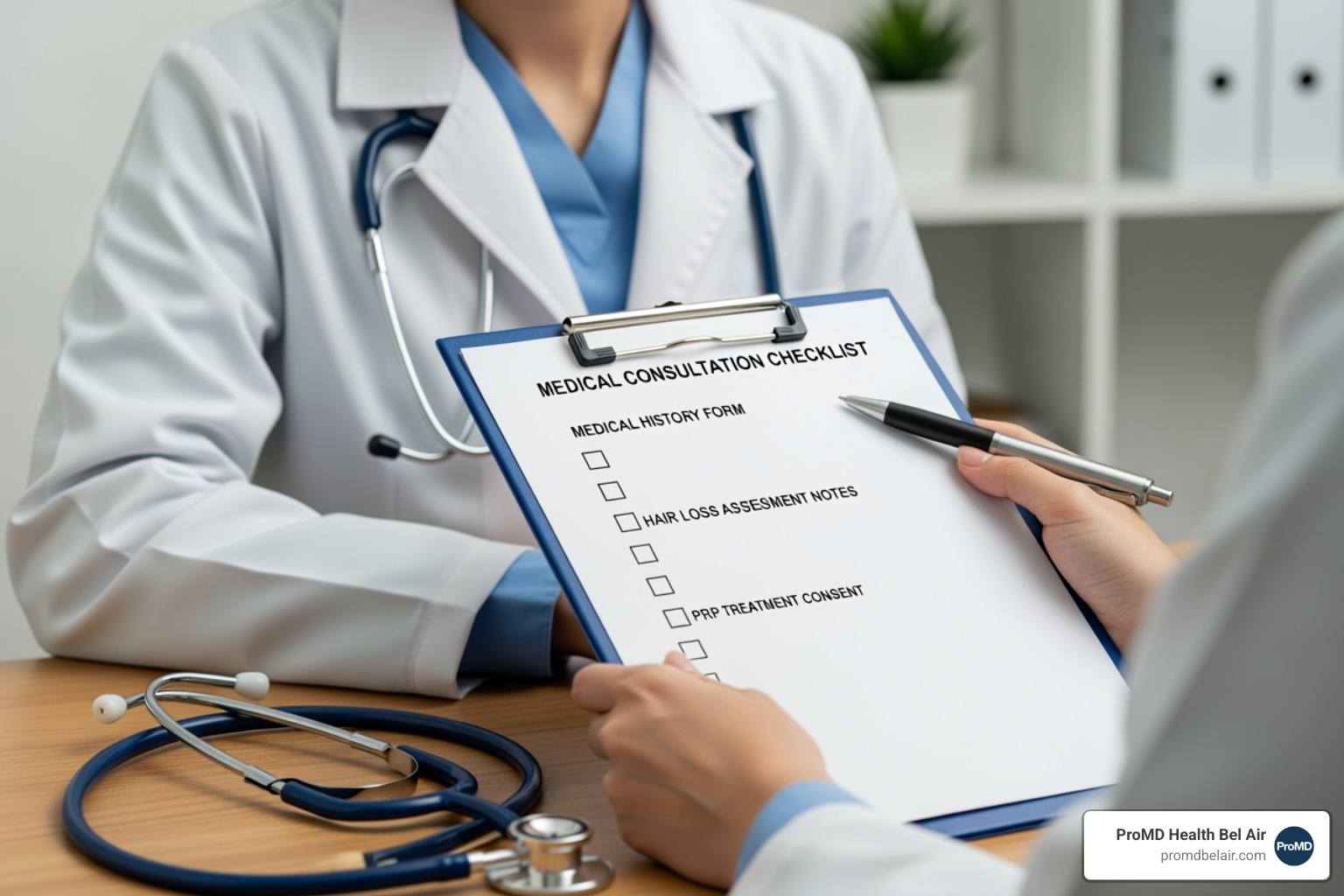
Questions to ask at your consultation
Don’t be shy! A good provider will welcome these questions:
- What specific PRP system do you use, and what is the platelet concentration?
- How many sessions do you typically recommend for someone with my level of thinning?
- Do you use any comfort options (like topical numbing or cooling devices)?
- Are there any contraindications based on my medical history?
Red flags that may signal a poor PRP provider
- Guaranteed Results: No medical procedure has a 100% success rate. Run from anyone promising a “full head of hair in 30 days.”
- No Medical Review: If they don’t ask about your medications or health history, they aren’t treating you like a patient.
- Vague Pricing: You should know exactly what a session costs before the needle comes out.
- Poor Sanitation: This is a blood-based procedure; the environment must be clinical and sterile.
What to expect from a PRP hair restoration appointment
The idea of “scalp injections” sounds a lot more intimidating than the reality. Most of our patients are surprised by how quick and manageable the process actually is.
Before your PRP treatment
Preparation is key for high-quality plasma. We typically advise patients to:
- Hydrate: Drink plenty of water the day before and the morning of. It makes the blood draw much easier.
- Avoid NSAIDs: If instructed by your provider, stop taking anti-inflammatories like ibuprofen or aspirin for about 7 days prior, as these can interfere with platelet function.
- Wash Your Hair: Come in with a clean scalp, free of sprays or fibers.
During the procedure
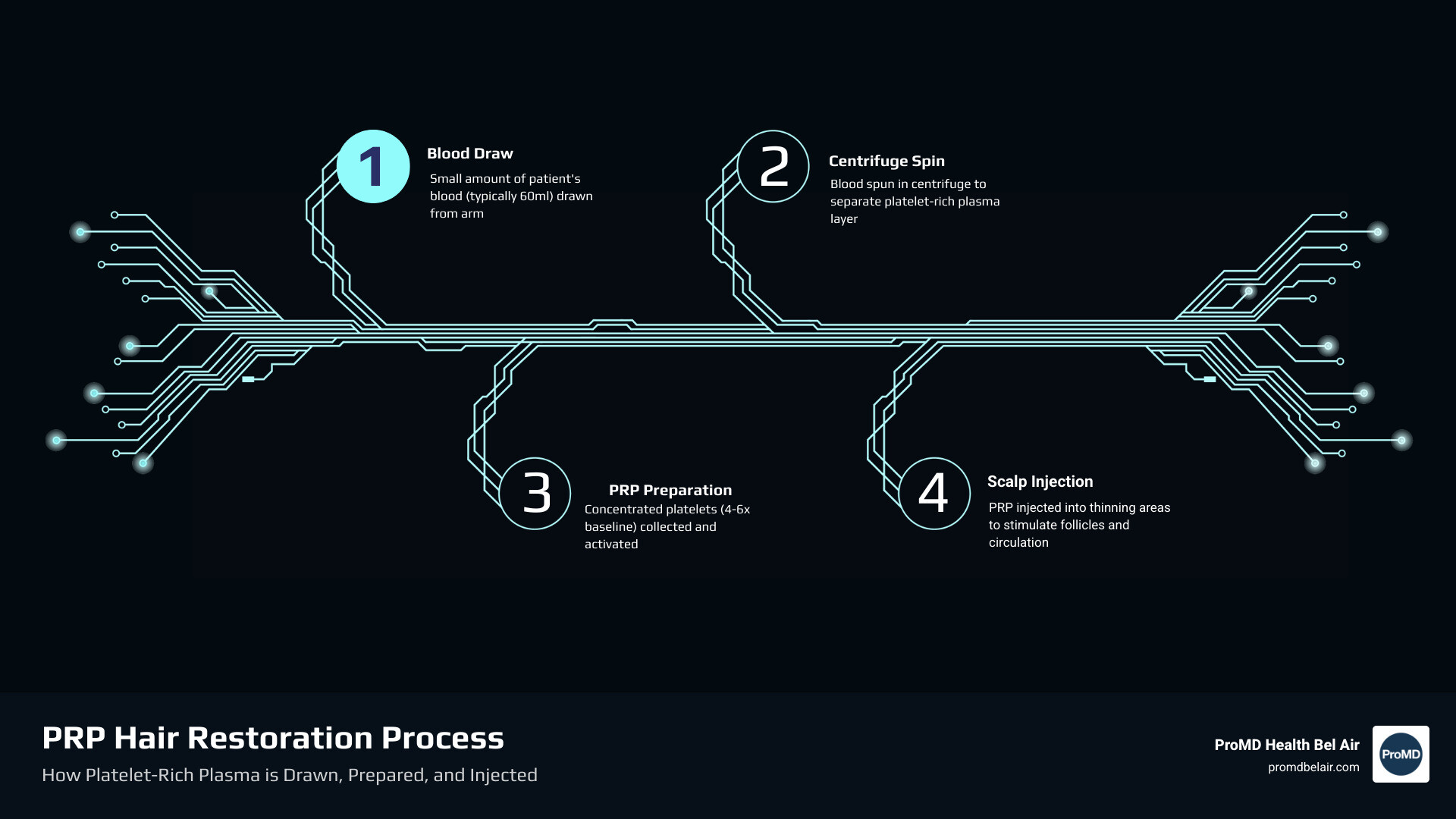
- The Draw: We take a small amount of blood, similar to a standard lab test.
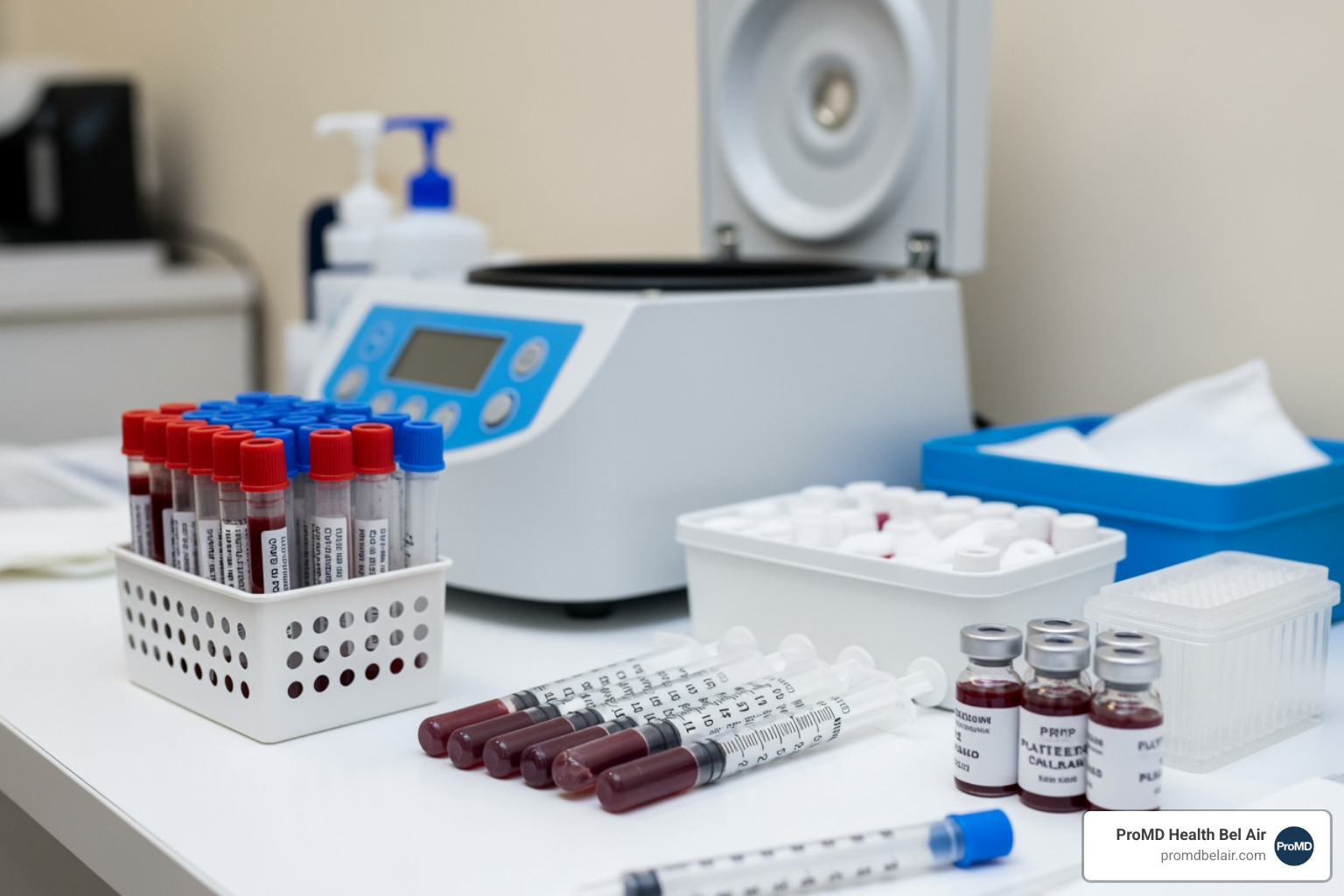
- The Spin: The blood is placed in a centrifuge. This is where the magic happens—separating the red blood cells from the platelet-rich plasma.
- The Mapping: Your provider will identify the areas of thinning that need the most attention.
- The Injections: Using a very fine needle, the PRP is administered into the scalp at the level of the hair follicles. The whole process usually takes about 30 to 45 minutes.
Recovery time and post-procedure care
There is essentially zero “downtime.” You can drive yourself home and go back to work immediately. You might feel some mild soreness or “fullness” in the scalp for a day or two. We recommend waiting until the next morning to wash your hair and avoiding heavy exercise for 24 hours to keep blood pressure stable at the injection sites. If you have discomfort, stick to acetaminophen (Tylenol) rather than NSAIDs.
How many sessions you may need and how long results can last
PRP is a journey, not a destination. Most protocols involve an initial series of 3 to 4 sessions spaced about a month apart. After that, maintenance sessions are usually recommended every 6 to 12 months to keep the follicles stimulated.
Cost, risks, and how PRP fits into a hair restoration plan
Let’s talk numbers and safety. Transparency is vital when choosing doctors who perform prp injections near me.
Typical PRP pricing and what affects cost
Nationally, PRP injections average around $875 to $950 per session. Factors that influence this include:
- The Technology: High-end centrifuges that achieve 5x-10x concentrations cost more but deliver better results.
- The Provider: You are paying for the diagnostic eye and the steady hand of a medical professional.
- The Location: Prices in the Bel Air/Harford County area are generally competitive with the broader Baltimore metro region.
Risks, side effects, and who should avoid PRP
Since it’s your own blood, the risks are minimal. You might experience temporary bruising, swelling, or redness. Very rarely, some patients notice a “temporary shedding” as old hairs make way for new growth cycles. Who should avoid it? If you have a low platelet count, active scalp infection, or certain blood disorders, PRP may not be for you.
Is PRP covered by insurance or financed?
Because hair restoration is considered elective/cosmetic, insurance rarely covers it. However, many patients use HSA or FSA funds, and we offer payment plans to make the “investment in your confidence” more manageable.
How PRP compares with other hair restoration approaches
| Feature | PRP Therapy | Hair Transplant | Topical (Minoxidil) |
|---|---|---|---|
| Invasiveness | Low | High | None |
| Downtime | None | 1-2 Weeks | None |
| Maintenance | Every 6-12 Months | Permanent* | Daily Use |
| Ideal For | Early/Mid Thinning | Advanced Balding | Early Prevention |
PRP systems, real-world outcomes, and where to start your local search
Not all “spinning” is the same. Some clinics use a “single-spin” method that yields lower platelet counts. At ProMD Health Bel Air, we focus on systems that ensure a high concentration of growth factors to give your scalp the best possible signal.
Are all PRP injections the same?
No. The difference lies in the concentration. You want a system that can concentrate platelets up to 10x baseline, often achieving over one billion platelets per milliliter. This is the difference between a “refresh” and a true regenerative treatment.
What patient reviews and outcomes can really tell you
When looking at reviews for doctors who perform prp injections near me, look for mentions of “professionalism,” “cleanliness,” and “realistic expectations.” Photos are great, but hair grows slowly—look for reviews from patients who have completed a full 3-4 session series.
Why a local consultation matters in Bel Air
Convenience is more than just a short drive from Fallston or Forest Hill. It’s about continuity of care. Hair restoration requires follow-ups and adjustments. Having a local team like Tyra Lindblad, Kate Maguire, or Natalie Shek means you have experts who know your history and can track your progress using tools like our AI Simulator to preview potential results.
Frequently Asked Questions about doctors who perform prp injections near me
How soon will I see results from PRP for hair restoration?
Patience is a virtue here. You might notice less shedding within a few weeks, but visible “new” density usually takes 3 to 6 months to become apparent.
Who is a good candidate for PRP hair injections?
The best candidates are those in the early to middle stages of hair thinning. If a follicle has been completely dormant for many years (creating a shiny, smooth bald spot), PRP has less to work with.
Can PRP be combined with other hair restoration treatments?
Absolutely. In fact, it’s often more effective when part of a multi-pronged approach. We frequently discuss how blood plasma can be the best hair regrowth solution when paired with proper nutrition and medical-grade topical support.
Conclusion
Finding the right doctors who perform prp injections near me shouldn’t be a headache. By focusing on medical expertise, high-concentration technology, and a local team that understands the Harford County community, you can stop stressing about your hair and start taking action.
At ProMD Health Bel Air, we’re here to help you navigate these choices with clarity and confidence. Whether you’re coming from Fallston, Forest Hill, or right here in Bel Air, your journey to thicker hair starts with a conversation. Ready to see what’s possible? Learn more about our hair restoration options and let’s build a plan that works for you.
