You may be hearing about peptide therapy because something feels stuck.
Maybe your energy isn't where it used to be. Maybe body composition has become harder to change even though you're still trying to eat well and stay active. Maybe recovery feels slower, or you're seeing peptide conversations online tied to weight management, hormone support, or overall wellness and wondering whether this is real medicine, marketing hype, or something in between.
That confusion is normal. Peptides sit at an unusual intersection of modern medicine, wellness trends, and compounding practices. Some peptide-based treatments are firmly established in regulated care. Others are still investigational and often marketed far more confidently than the evidence supports. If you're looking into options through wellness services at ProMD Health Bel Air, the most useful question isn't just what is peptide therapy. It's what does peptide therapy specifically mean for you, your goals, and your safety.
Table of Contents
- An Introduction to Advanced Wellness
- The Building Blocks of Health What Peptides Are
- How Peptide Therapy Works to Optimize Your Body
- Common Peptides for Aesthetics and Wellness
- Benefits and Potential Risks of Peptide Therapy
- Your Peptide Therapy Journey at ProMD Health Bel Air
- FAQs About Peptide Therapy
An Introduction to Advanced Wellness
A lot of patients start looking into peptide therapy after doing many of the right things already. They may have tried to improve sleep, clean up nutrition, stay consistent with exercise, or address symptoms that don't feel dramatic enough for a major medical intervention but still affect daily life. They want more precision, not more guesswork.
That's where peptide therapy gets attention. Peptides have become a meaningful part of modern medicine over time. Since insulin was synthesized in 1921 as the first therapeutic peptide, more than 80 peptide drugs have been approved globally, and between 2016 and 2022 the FDA approved 26 new peptide drugs as part of the growing peptide class, according to this overview of peptide therapy in modern medicine. That history matters because it tells us peptides aren't fringe science. They're a real therapeutic category.
At the same time, not every peptide discussed online belongs in the same bucket.
What matters most for patients: some peptide therapies are established, condition-specific medical treatments, while others are compounded or investigational options with much thinner human evidence.
That distinction is where people often get lost. Search results can blur weight management medications, hormone-related peptide protocols, and unproven "anti-aging" compounds into one big trend. In real clinical care, those differences affect candidacy, safety monitoring, expected results, and whether a treatment has a well-defined evidence base.
For adults in Bel Air, Fallston, and Forest Hill, the practical question isn't whether peptides sound exciting. It's whether a specific peptide fits a specific goal, and whether that plan is being handled with medical oversight instead of wellness marketing alone.
The Building Blocks of Health What Peptides Are
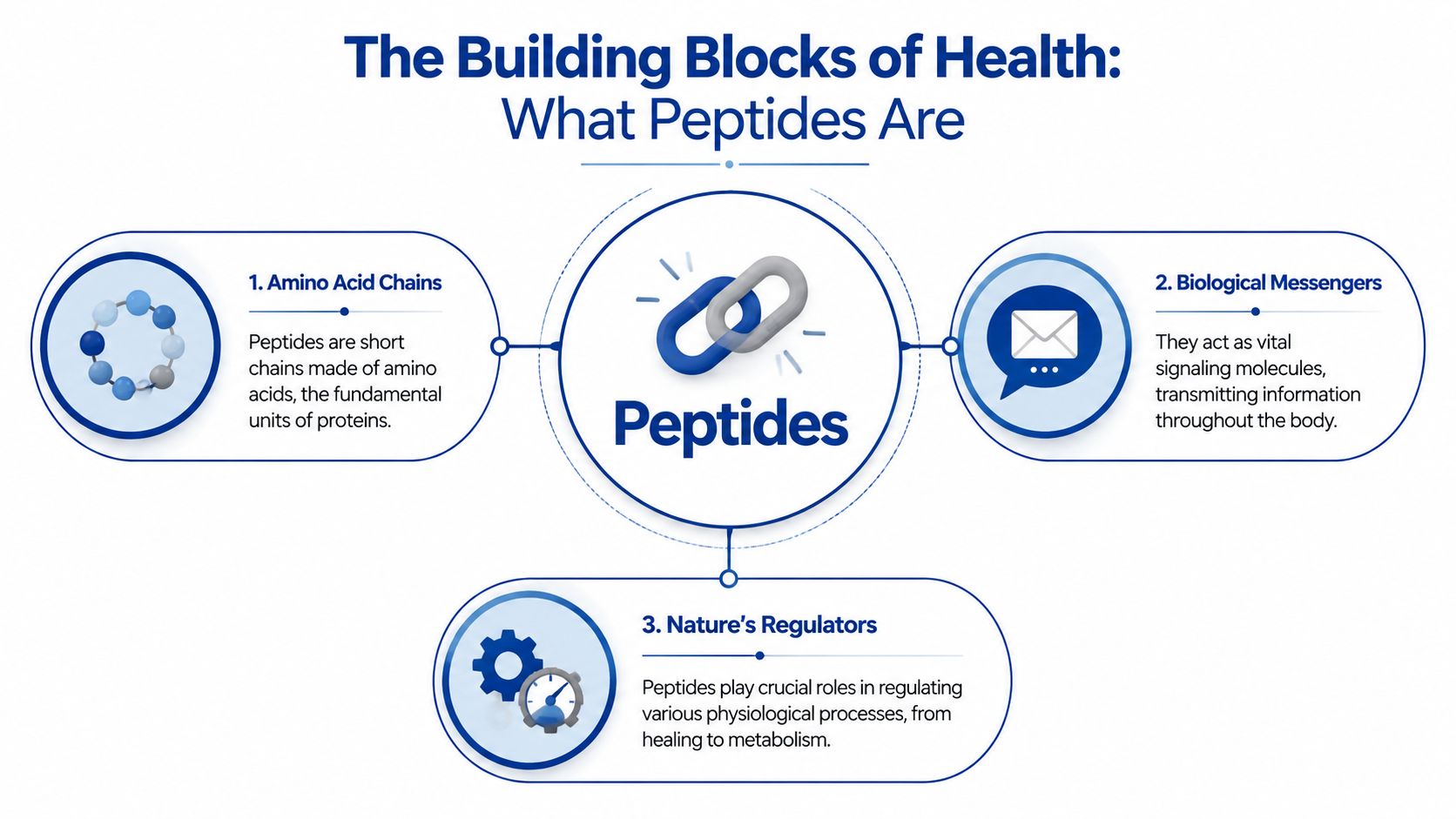
At the most basic level, peptides are made from amino acids, which are the same building blocks used to make proteins. The difference is size and function. A peptide is smaller and often acts more like a messenger than a structural material.
Why the body responds to peptides
A useful way to answer what is peptide therapy is this: it's the use of short amino acid chains to send targeted biological instructions.
Peptides are chemically defined as short chains of amino acids containing exactly 2 to 50 units, and they function as signaling molecules that bind to specific cell surface receptors to trigger intracellular cascades involved in processes such as fat burning, tissue healing, or growth hormone release, as described in this patient-friendly explanation of peptide biology.
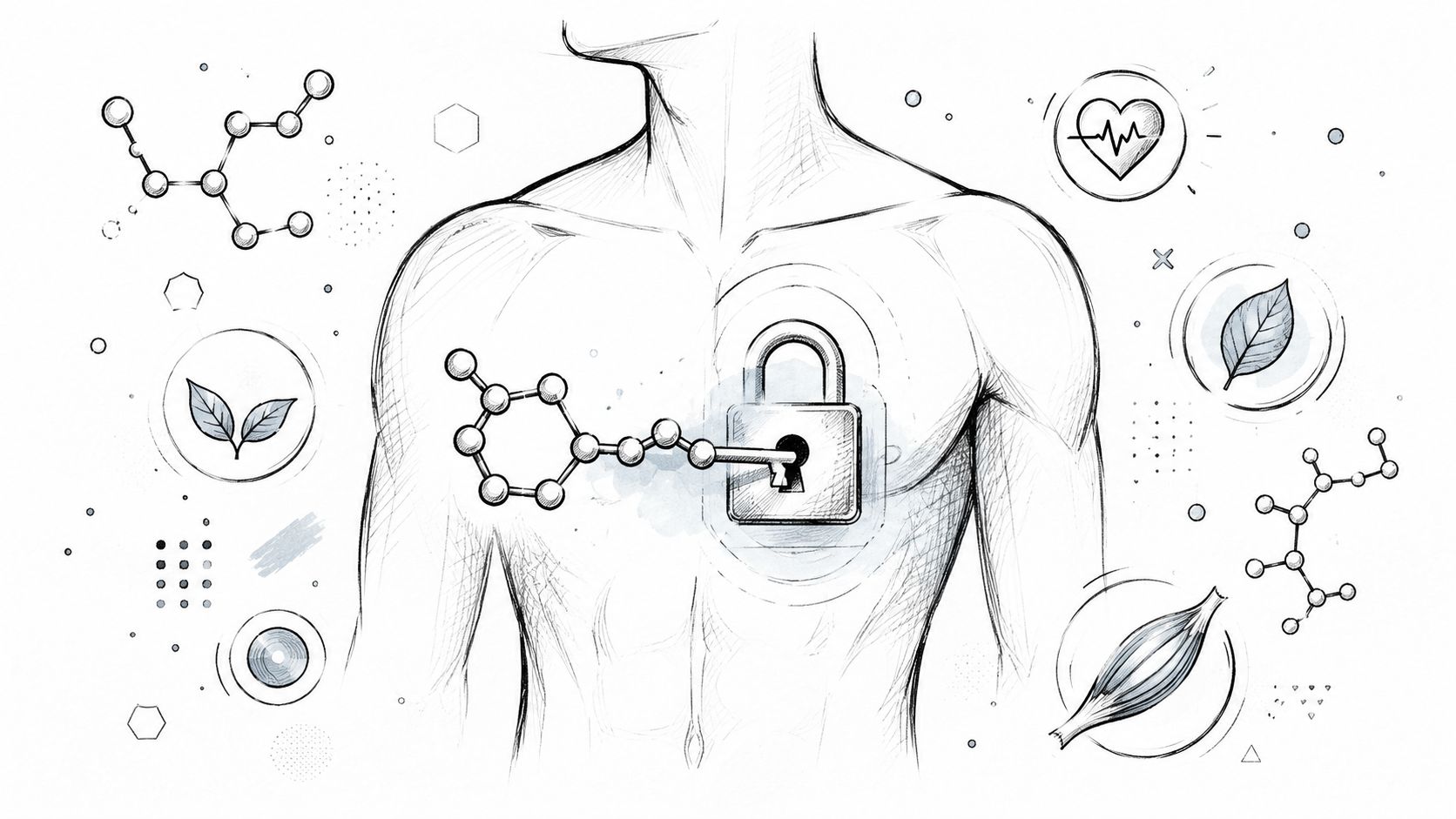
If that sounds technical, think of it this way. A cell has receptors on its surface. A peptide fits a matching receptor like a key fitting a lock. When the fit is right, the cell receives a message and responds. That response depends on the peptide involved. One message may influence metabolism. Another may affect healing signals. Another may stimulate hormone-related pathways.
Peptides compared with proteins and hormones
People often confuse peptides with proteins or with hormones. They're related, but they aren't interchangeable.
- Peptides are smaller: they're short chains rather than large, complex biomolecules.
- Proteins are larger structures: they often have broader structural or functional roles in the body.
- Hormones are messengers too: but peptide therapy doesn't always mean replacing a hormone directly.
That smaller size helps explain why peptides can be so targeted. The same source notes that, unlike larger biomolecules, peptides can achieve deep tissue penetration while maintaining high target specificity. In plain language, they can deliver a more focused signal than many people expect.
A good starting mindset is to think of peptides as instruction molecules, not magic shortcuts.
That also helps clear up a common fear. Peptides aren't automatically "unnatural" just because they're used therapeutically. The body already relies on peptide signaling every day. Therapy aims to use that signaling system in a deliberate way.
How Peptide Therapy Works to Optimize Your Body
The most helpful way to understand peptide therapy in practice is to stop thinking in terms of brute force. Peptides don't always work by overpowering a system. They often work by nudging a system.
Think signaling not force
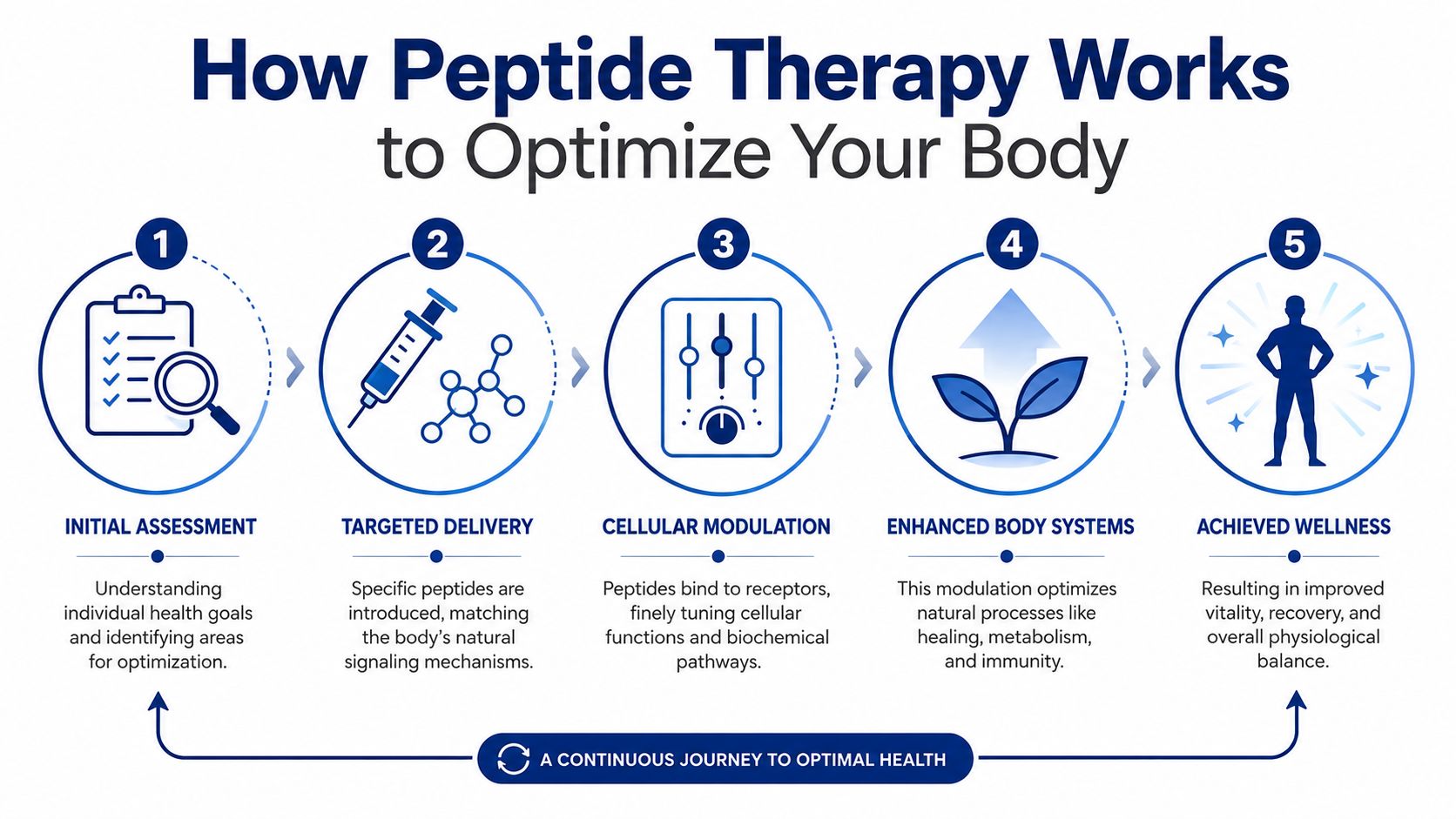
Some medications block a pathway hard. Others replace something directly. Peptide therapy is often better understood as modulation. A peptide binds to a receptor on the cell surface, then triggers a downstream signal that tells the body to increase, decrease, or fine-tune a response.
A useful analogy is a dimmer switch rather than an on-off button. Instead of shutting a pathway down completely or turning it on all at once, a peptide may help regulate the intensity of a physiologic process through receptor-based signaling.
This mechanism is one reason peptide-based care has drawn so much attention. The global peptide therapeutics market reached $52.6 billion in 2025, and projections estimate growth to $294.58 billion by 2033 depending on market definition. The same report notes that as of March 2026 there were more than 5,800 active clinical trials involving peptide-based therapeutics registered on ClinicalTrials.gov, showing how much research interest exists in this category, according to this 2026 peptide market and adoption summary.
A practical example of targeted hormone signaling
One concrete example involves growth hormone-releasing hormone analogs. According to this clinical overview of how peptide therapy works, peptide therapy uses short amino acid chains as high-specificity receptor modulators, and peptides such as GHRH analogs can coax the pituitary gland to release growth hormone in a pulsatile, circadian fashion, which then stimulates IGF-1 production involved in body composition and tissue repair.
That doesn't mean every person should use a growth hormone-stimulating peptide. It means the logic is targeted. Instead of giving a broad hormone signal from the outside, the goal may be to work with the body's own signaling rhythm.
For some patients, that overlaps conceptually with broader hormonal evaluation. If you're also trying to understand symptoms tied to changing hormone patterns, bio-identical hormone replacement therapy is a separate but related conversation because the mechanism, goals, and monitoring are not identical.
The right question isn't "Do peptides work?" It's "Which peptide, for which goal, under what supervision, and how will the response be measured?"
Common Peptides for Aesthetics and Wellness
Patients require the clearest guidance. "Peptide therapy" sounds like one treatment category, but in reality it includes very different products with very different evidence levels.
FDA-approved peptides and wellness peptides are not the same
Some peptides are FDA-approved for specific medical conditions. Others are used through compounding or wellness channels and are still investigational for many of the claims attached to them online.
A key safety point from this discussion of peptide evidence and regulation is that there is a critical distinction between FDA-approved peptides such as semaglutide and investigational compounded peptides such as BPC-157. The approved products have extensive clinical data for defined uses, while investigational peptides often lack human randomized controlled trials and may have unknown long-term safety profiles.
That difference changes the whole conversation. An approved medication used for a defined indication has one kind of evidence base. A wellness peptide marketed for recovery, anti-aging, or tissue repair may have a very different level of support.
Another practical point is that not every peptide conversation is really about the same treatment goal. Semaglutide belongs in a medical weight management discussion. Growth hormone-stimulating peptides belong in a different conversation. Hair-related protocols may raise yet another set of questions, especially if someone is also reading about hair restoration options and regenerative support.
Common Peptides in Aesthetic & Wellness Medicine
| Peptide | Primary Use / Goal | Context / Status |
|---|---|---|
| Semaglutide | Weight management | FDA-approved peptide for specific medical use |
| Tesamorelin | HIV-related lipodystrophy | FDA-approved peptide for a specific indication |
| Bremelanotide (PT-141) | Sexual dysfunction | FDA-approved peptide for a specific indication |
| CJC-1295 | Growth hormone signaling support | Used in wellness settings, status depends on formulation and context |
| Ipamorelin | Growth hormone signaling support | Used in wellness settings, often discussed with compounded protocols |
| BPC-157 | Tissue repair and recovery claims | Investigational. Human evidence remains limited |
| TB-500 or TB-4 | Recovery-related wellness claims | Investigational with limited human evidence |
That table isn't a recommendation list. It's a reality check.
Only specific peptide therapies hold full FDA approval for distinct conditions such as semaglutide for weight loss, tesamorelin for HIV-related lipodystrophy, and bremelanotide for sexual dysfunction, while many marketed anti-aging peptides don't hold approval for those broader wellness claims, according to this overview of condition-specific peptide effectiveness.
If you're researching what is peptide therapy for your own goals, the most important habit is to ask three questions before getting attached to any name:
- What exactly is this peptide intended to do
- Is that use FDA-approved or investigational
- How will success be measured objectively
Benefits and Potential Risks of Peptide Therapy
Peptide therapy gets attention because the upside can sound appealing. For the right patient and the right indication, targeted signaling can support defined goals in a way that feels more personalized than one-size-fits-all treatment.
Why patients are interested
Patients usually aren't looking for "peptides" in the abstract. They're looking for outcomes.
Some are interested in body composition support. Some want a medical path for weight management. Others ask about recovery, tissue support, healthy aging, or whether peptide-based care may complement a broader wellness plan. Therapeutic peptides have been developed across many disease categories, and approved peptide drugs now span conditions including diabetes, cardiovascular disease, cancer, and infectious diseases, as noted in the earlier historical overview.
Administration can also vary. According to this WebMD overview of peptide use, peptide therapies may be delivered through oral or dietary supplements, topical or transdermal formats, nasal sprays, and injections. In practice, the route depends on the specific peptide and clinical goal.
Where caution matters most
The promise of targeted treatment shouldn't erase the limits.
Safety data for synthetic peptide use in humans is still developing. Documented side effects include injection site reactions, headaches, and nausea, and a major risk comes from sourcing because some products are sold on the gray market as research-only chemicals without governmental oversight, creating guaranteed risks of contamination and mislabeling, according to this medical review of peptide safety concerns.
That sourcing issue is not a minor technicality. It's one of the biggest reasons internet peptide culture can become unsafe quickly. A label may not reliably reflect the contents, concentration, or sterility of what someone is taking.
There's also a medical nuance many patients never hear. Some peptides have very short half-lives and may require stability modifications to last long enough in the body to be clinically useful. This background review of peptide therapeutics explains that therapeutic peptides often need engineered changes such as cyclization or lipidation to improve stability and extend systemic exposure, while many wellness peptides still have limited human data despite promising preclinical findings.
If a peptide is being sold with sweeping claims but little discussion of regulation, side effects, follow-up labs, or sourcing, that's a warning sign.
Your Peptide Therapy Journey at ProMD Health Bel Air
A safe peptide plan starts long before the first dose. It starts with deciding whether peptide therapy even fits the problem you're trying to solve.

What a careful evaluation looks like
A good candidate requires more than curiosity. A good candidate is someone with a specific goal, an appropriate medical history review, and a plan that can be monitored. That may include symptoms related to body composition, recovery, or broader wellness concerns. It also includes ruling out situations where a peptide approach may not be appropriate.
In a clinic setting, that evaluation should feel focused and concrete. A provider may review your symptoms, medications, history, lifestyle patterns, and what you've already tried. If peptide therapy is being considered, the next step is matching the peptide category to a defined goal rather than chasing a vague promise of anti-aging.
For adults exploring this option, ProMD Health Bel Air offers peptide therapy within a medically supervised wellness setting. In practical terms, that means the conversation should center on candidacy, treatment logic, monitoring, and whether another service such as hormone-related care or medical weight management may be a better fit.
How progress is measured
At this point, careful care stands apart from online hype. Feeling better matters, but it isn't enough on its own.
Objective measurement is key. For growth hormone-stimulating peptides, IGF-1 is the primary lab marker that must rise measurably within 2 to 3 months, and follow-up labs are typically scheduled at 8 to 12 weeks to confirm whether the protocol is working, according to this clinical discussion of questions patients should ask before peptide therapy.
That gives patients something very practical to hold onto:
- Define the target: know what result you're trying to produce.
- Choose a marker when appropriate: don't rely only on impressions.
- Reassess on schedule: if the response isn't there, the plan may need to change.
- Stop guessing: a peptide protocol should have criteria for success and criteria for discontinuation.
Patients do best when the goal, the expected timeline, and the monitoring plan are all clear before treatment begins.
FAQs About Peptide Therapy
How long does peptide therapy take to work
That depends on the peptide and the goal. Some patients notice changes in appetite, recovery, or energy earlier than lab-based changes, but expectations should stay grounded. If a protocol relies on measurable biologic response, your provider should tell you what marker matters and when it should be checked. For growth hormone-stimulating approaches, objective follow-up is part of the plan, not an extra.
Is peptide therapy the same as hormone replacement therapy
No. They may overlap in the same wellness conversation, but they aren't the same thing. Hormone replacement therapy generally involves replacing or optimizing hormone levels directly. Peptide therapy often works upstream by signaling receptors and influencing how the body responds. That's why two treatments can both relate to symptoms like energy or body composition while using very different mechanisms.
Do results last after treatment stops
Some effects may fade if the signaling support is removed, especially when the underlying issue hasn't changed. That's true for many medical and wellness interventions. The better approach is to ask whether the treatment is meant to be short term, cyclical, or ongoing, and what will be used to decide that. Treatment plans should also fit alongside basics such as nutrition, sleep, exercise, and treatment of any underlying medical issues.
Are all peptides equally safe because they sound natural
No. "Natural" language can be misleading. Some peptide-based medications have extensive clinical data for specific uses. Some compounded or investigational peptides do not. The safer path is to ask about approval status, evidence quality, sourcing, side effects, and monitoring before starting anything.
If you're considering peptide therapy and want a medically grounded conversation about whether it fits your goals, ProMD Health Bel Air can help you review your options, clarify the difference between approved and investigational peptide uses, and build a plan that includes appropriate follow-up rather than guesswork.