Why Carbon Laser Skin Rejuvenation is a Game-Changer for Your Skin
Carbon laser skin rejuvenation is a non-invasive facial treatment that uses a carbon mask and laser energy to deeply exfoliate, reduce acne, shrink pores, and stimulate collagen for smoother, brighter skin—with zero downtime.
Quick Answer: What to Know About Carbon Laser Skin Rejuvenation
- What it is: Also called a Hollywood Peel, China Doll Facial, or Black Doll Facial—a gentle laser treatment using liquid carbon
- How it works: Carbon lotion absorbs into pores, then a laser vaporizes it along with dirt, oil, and dead skin cells
- Treatment time: About 30 minutes
- Downtime: None—you can resume normal activities immediately
- Best for: Acne, oily skin, enlarged pores, fine lines, uneven texture, and dull complexion
- Results: Immediate glow; optimal results after 4-6 sessions spaced 2-4 weeks apart
- Safety: Safe for all skin types (Fitzpatrick I-VI) when performed by trained professionals
- Cost: Typically $120-$400 per session
If you’ve been searching for a treatment that delivers visible results without surgery, recovery time, or harsh chemicals, carbon laser skin rejuvenation might be exactly what you need. In 2020, nearly two million Americans chose either a chemical peel or laser treatment to refresh their skin. This procedure has become a celebrity favorite for good reason—it’s painless, fast, and effective.
Unlike traditional ablative lasers that remove layers of skin or chemical peels that use acids, carbon laser treatments work through a unique two-step process. First, a medical-grade carbon lotion penetrates deep into your pores, binding to impurities like dirt, oil, and dead skin cells. Then, a specialized laser (typically a Q-switched Nd:YAG) passes over your face, heating and vaporizing the carbon particles in what’s sometimes described as a “mini-explosion” effect. This process simultaneously exfoliates the surface, unclogs pores, and stimulates collagen production in the deeper skin layers.
The treatment is particularly effective for those struggling with acne. A study of 32 patients showed that 100% experienced overall skin improvement, with 18 patients seeing significant acne reduction. The laser targets Cutibacterium acnes bacteria, shrinks oil-producing sebaceous glands, and helps prevent future breakouts—all while making your skin feel smoother and look brighter immediately after treatment.
What makes this treatment stand out is the complete lack of downtime. Most people experience only slight redness that fades within an hour. You can literally get the treatment during your lunch break and return to work with glowing skin. Compare that to traditional CO2 laser resurfacing (1-2 weeks of recovery) or medium chemical peels (3-7 days of peeling), and you’ll see why carbon laser facials have earned their reputation as a “lunchtime peel.”
I’m Ryan Pittillo, Franchise Owner at ProMD Health, and I’ve seen how carbon laser skin rejuvenation transforms our patients’ confidence at our Bel Air practice. Just as I’ve coached athletes to reach their potential, I’m passionate about helping our community access treatments that deliver real, visible results.
The Science Behind Carbon Laser Skin Rejuvenation
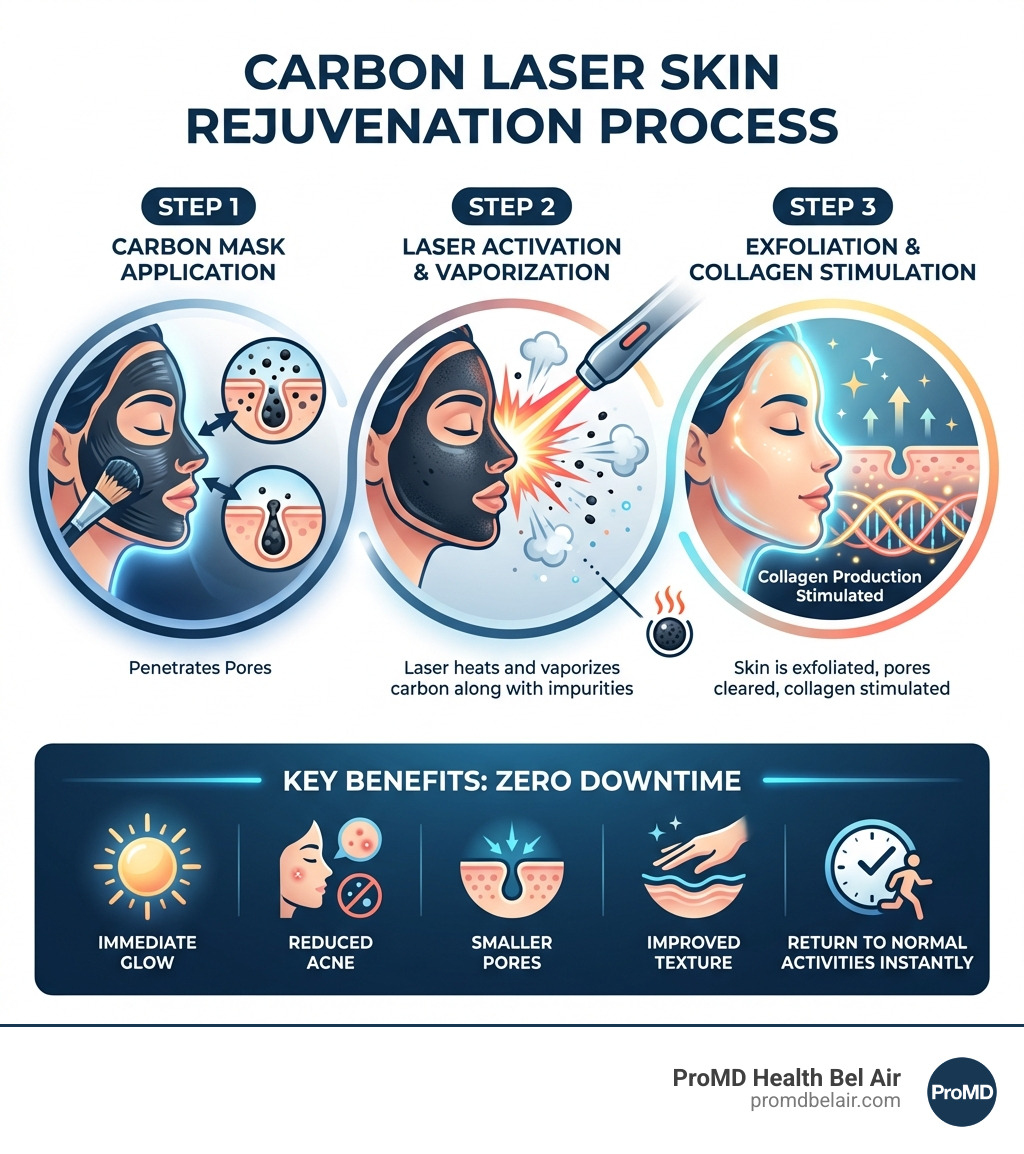
At its core, carbon laser skin rejuvenation is a sophisticated two-step process designed to purify and revitalize your skin from the inside out. It combines the power of a specialized carbon solution with advanced laser technology to deliver truly remarkable results. This innovative method sets it apart from more abrasive treatments, offering effective exfoliation, deep rejuvenation, and significant stimulation of collagen and elastin production.
Our goal is always to help your skin achieve its natural radiance, and understanding the science behind this treatment will show you just how effectively it works.
Step 1: The Carbon Mask Application
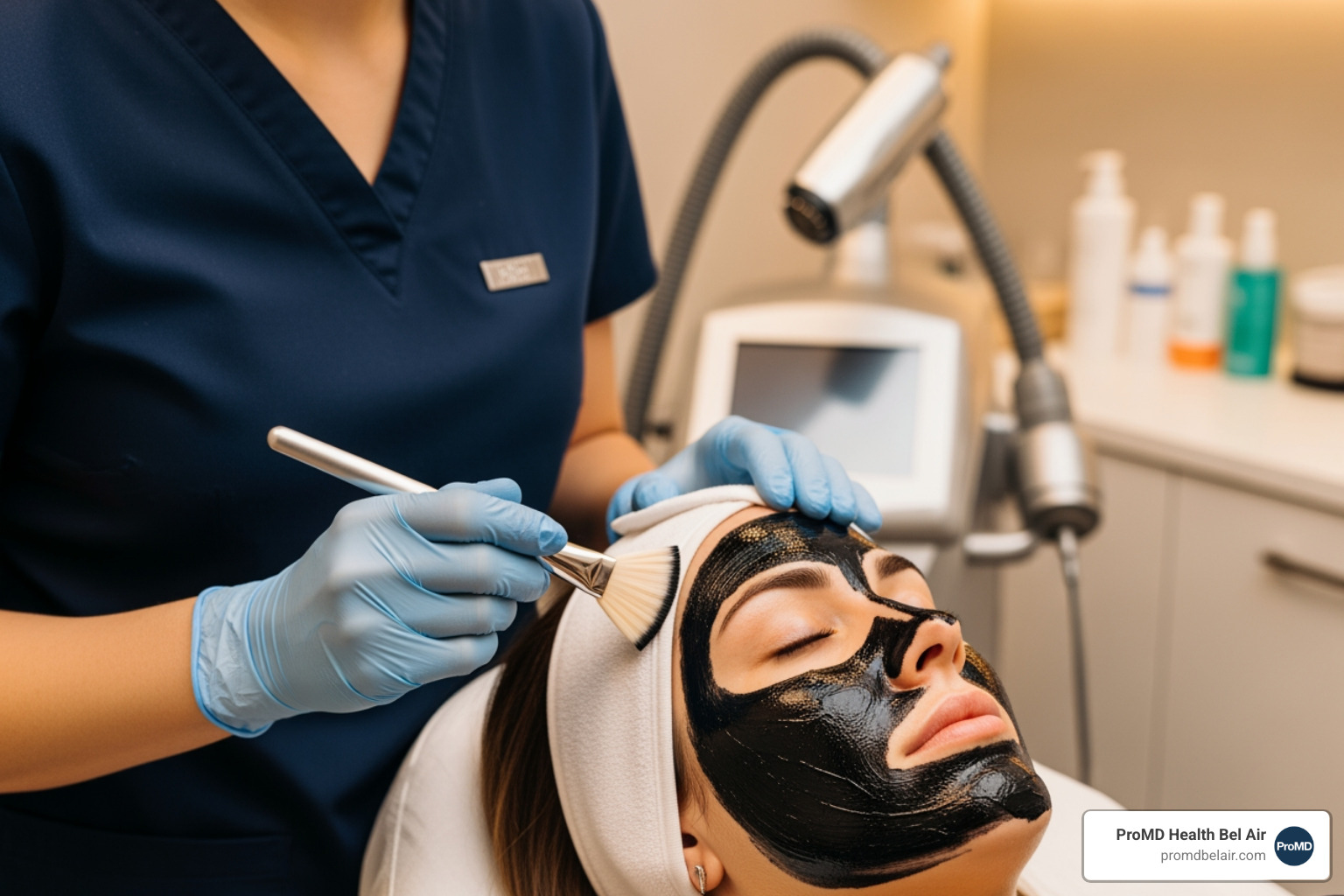
The journey to radiant skin begins with the application of a medical-grade liquid carbon solution to your face. This isn’t just any charcoal mask; it’s specially formulated to interact with the laser. The carbon lotion is applied thinly and allowed to dry, typically for about 10 minutes. During this time, the tiny carbon particles work their magic by penetrating deep into your pores.
As the carbon lotion settles, it acts like a magnet, bonding with surface debris, dead skin cells, excess oil, and other impurities that accumulate in your pores. It effectively “sponges up” all the unwanted elements, preparing them for the next phase of the treatment. This deep penetration ensures that when the laser is applied, it can effectively target and remove impurities from even the most stubborn areas.
Step 2: The Laser’s Dual Action
Once the carbon mask has adequately dried and absorbed impurities, the laser treatment begins. We typically use a Q-switched Nd:YAG laser, which is renowned for its precision and effectiveness in aesthetic treatments. The laser process involves two distinct passes over the skin:
-
The Warming Laser Pass: The first pass uses a low-energy laser setting. This gentle warming phase heats the carbon particles, further enhancing their binding capabilities with the skin’s impurities. This heat also begins to prepare the skin, making it more receptive to the subsequent, more intense laser action. You might feel a mild warmth during this stage, but it’s generally very comfortable.
-
The Pulsed Laser Pass: The second pass uses a higher-energy, pulsed laser. This is where the magic truly happens! The carbon particles, having absorbed the laser light, rapidly heat up and undergo a process called photomechanical destruction. This causes a “mini-explosion” effect, vaporizing the carbon particles along with the bonded dirt, oil, and dead skin cells. This powerful yet precise action effectively unclogs pores, removes surface impurities, and deeply exfoliates the skin.
The laser’s energy is specifically tuned to be absorbed by the carbon, meaning the surrounding skin remains largely untouched, minimizing discomfort and downtime. This mechanism of action, where carbon molecules bind to corneocytes and serum within hair follicles and are then eliminated by laser irradiation, has been scientifically studied to reduce sebum production and inhibit Cutibacterium acnes (the bacteria responsible for acne) replication. The shockwaves generated by the laser-irradiated carbon also stimulate the dermis, contributing to overall skin improvement.
Step 3: Collagen Stimulation and Skin Renewal
Beyond its impressive exfoliating and purifying capabilities, a key benefit of carbon laser skin rejuvenation lies in its ability to stimulate collagen and elastin production. The thermal effect generated by the laser penetrates into the deep skin layers, initiating a natural healing response. This gentle heating encourages your body to kickstart the synthesis of new collagen and elastin fibers.
Collagen and elastin are the essential proteins responsible for your skin’s firmness, elasticity, and youthful appearance. As we age, their production naturally declines, leading to fine lines, wrinkles, and a loss of skin tone. By stimulating their regeneration, the carbon laser peel helps to:
- Tighten the skin: Giving it a firmer, more lifted look.
- Reduce fine lines and wrinkles: Smoothing out existing imperfections and preventing new ones.
- Improve overall skin texture: Making your complexion feel softer and appear more refined.
This process of collagen stimulation continues for weeks and months after your treatment, meaning your skin will continue to improve over time. Scientific research, such as studies evaluating the carbon peel laser technique, confirms its effectiveness in improving skin quality, including acne lesions, pores, and wrinkles. One such study, published in Dermatology Practical & Concept, highlights the science behind this technique. You can explore more about this research here: Scientific research on the Carbon Peel Laser Technique.
Key Benefits and Conditions Treated
Carbon laser skin rejuvenation offers a wide array of benefits, making it a versatile treatment for various skin concerns. From combating persistent acne to reversing the signs of aging, this gentle yet powerful procedure can significantly improve your complexion. Our patients in Bel Air, Fallston, and Forest Hill, MD often tell us how much smoother and brighter their skin feels immediately after a session.
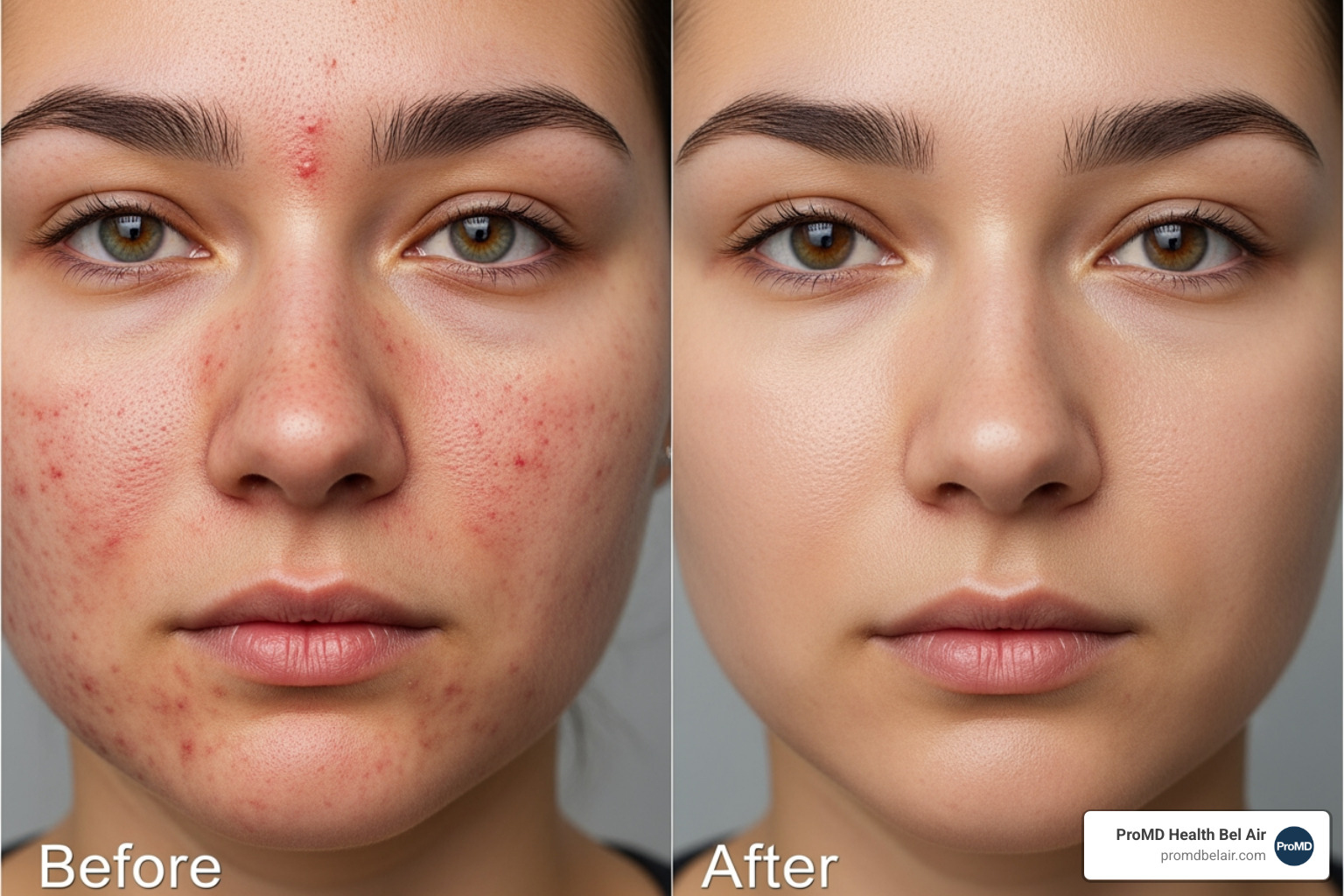
The treatment’s dual action of deep exfoliation and gentle rejuvenation contributes to a visibly smoother skin surface and a brighter, more even complexion. It addresses both superficial imperfections and underlying dermal health, making it an excellent choice for comprehensive skin improvement.
For Acne and Oily Skin
If you’re struggling with acne, excess oil, or congested pores, a carbon laser peel can be a game-changer. It’s safe and effective for all types of acne, including blackheads and whiteheads. Here’s how it helps:
- Reduces Blackheads and Minimizes Whiteheads: The carbon particles penetrate deep into the pores, binding to sebum and dead skin cells that cause blockages. The laser then vaporizes these impurities, effectively clearing out blackheads and whiteheads.
- Shrinks Sebaceous Glands and Controls Oil Production: The thermal energy from the laser gently heats the sebaceous glands, causing them to shrink. This leads to a significant reduction in oil production, helping to control shine and prevent future breakouts.
- Kills P. acnes Bacteria: The heat generated by the laser also targets and destroys Cutibacterium acnes bacteria (formerly P. acnes), a primary contributor to inflammatory acne. This antibacterial action helps to clear existing blemishes and reduce the likelihood of new ones forming.
A remarkable case study highlighted a young woman with severe pustular, cystic acne who underwent six carbon laser peel treatments, two weeks apart. By the fourth treatment, she showed significant improvement, and after the sixth, experienced a 90 percent reduction in acne. The positive results were still evident two months later, demonstrating the lasting impact of this treatment for acne-prone skin. You can read more about this compelling case study here: Case study on treating severe acne.
Beyond acne, our facials at ProMD Health Bel Air are designed to address a variety of skin needs. Find more about our facial treatments here: More info about facials.
For Anti-Aging and Texture Improvement
Beyond acne, carbon laser skin rejuvenation is a powerful tool in the fight against aging and for improving overall skin texture. It’s like a reset button for your complexion, helping to diminish common signs of premature aging and environmental damage.
- Reduces Fine Lines and Minimizes Wrinkles: By stimulating collagen and elastin production, the treatment helps to plump up the skin from within, visibly reducing the appearance of fine lines and superficial wrinkles. The skin becomes firmer and smoother, restoring a more youthful contour.
- Shrinks Enlarged Pores: The process effectively clears out debris and tightens the skin around pores, making them appear significantly smaller. This creates a much smoother and more refined skin surface.
- Evens Skin Tone and Fades Hyperpigmentation: The laser’s action helps to break down pigmented cells, leading to a more even skin tone. It can effectively fade dark spots, sun spots, freckles, and other forms of hyperpigmentation, revealing a brighter complexion.
- Improves Sun Damage: For skin affected by years of sun exposure, the carbon laser peel can help to repair and refresh, reducing the rough texture and uneven pigmentation often associated with photodamage.
You’ll notice an immediate refresh, with brighter, glowing skin and tighter pores right after your session. For those interested in exploring other advanced treatments for skin rejuvenation, we offer a range of laser solutions. Learn more about our laser treatments here: More info about laser treatments.
Carbon Laser Peel vs. Chemical Peels
When considering skin rejuvenation treatments, many of our clients in Bel Air, Fallston, and Forest Hill, MD often ask about the differences between a carbon laser peel and traditional chemical peels. While both aim to improve skin appearance, they achieve this through distinct mechanisms and offer different experiences.
The primary difference lies in how they exfoliate and refresh the skin. A carbon laser peel uses a combination of a carbon mask and laser energy, making it a physical and thermal process. Chemical peels, on the other hand, rely on chemical solutions (acids) to dissolve and remove dead skin cells.
Here’s a comparison to help illustrate the differences:
| Feature | Carbon Laser Peel | Chemical Peel |
|---|---|---|
| Mechanism | Uses a carbon mask and laser energy (physical/thermal) to vaporize impurities from pores. | Uses chemical solutions (acids) to dissolve and remove dead skin cells. |
| Downtime | None. You can resume normal activities immediately. | Varies from none (light peels) to 3-7+ days of peeling (medium/deep peels). |
| Pain Level | Minimal to none; often described as a mild warming or tingling sensation. | Mild to moderate stinging or burning sensation during application. |
| Best For | Oily skin, acne, enlarged pores, fine lines, and dull complexion. | Fine lines, wrinkles, sun damage, acne scars, and hyperpigmentation. |
| Suitable Skin Types | Safe for all skin types (Fitzpatrick I-VI). | Varies; deeper peels may carry risks for darker skin tones. |