Why Face Rejuvenation Matters More Than Ever
The best treatment for face rejuvenation depends on your specific concerns, but the most effective approaches typically include neurotoxins like Botox for dynamic wrinkles, hyaluronic acid fillers for volume restoration, laser resurfacing for skin texture and tone, microneedling for collagen induction, and IPL therapy for pigmentation and redness. Many patients achieve optimal results through combination therapy that addresses multiple layers of facial aging.
| Treatment Category | Best For | Downtime | Results Duration |
|---|---|---|---|
| Neurotoxins | Dynamic wrinkles, prevention | None | 3-4 months |
| Dermal Fillers | Volume loss, static lines | Minimal | 6-18 months |
| Laser Resurfacing | Texture, deep wrinkles, scars | Varies | Long-lasting |
| Microneedling | Scars, texture, pore size | 1-3 days | 1-3 months |
| IPL Therapy | Pigmentation, redness, sun damage | Minimal | 3-6+ months |
Our faces tell our stories, but when the reflection in the mirror no longer matches how vibrant you feel inside, it’s time to explore your options.
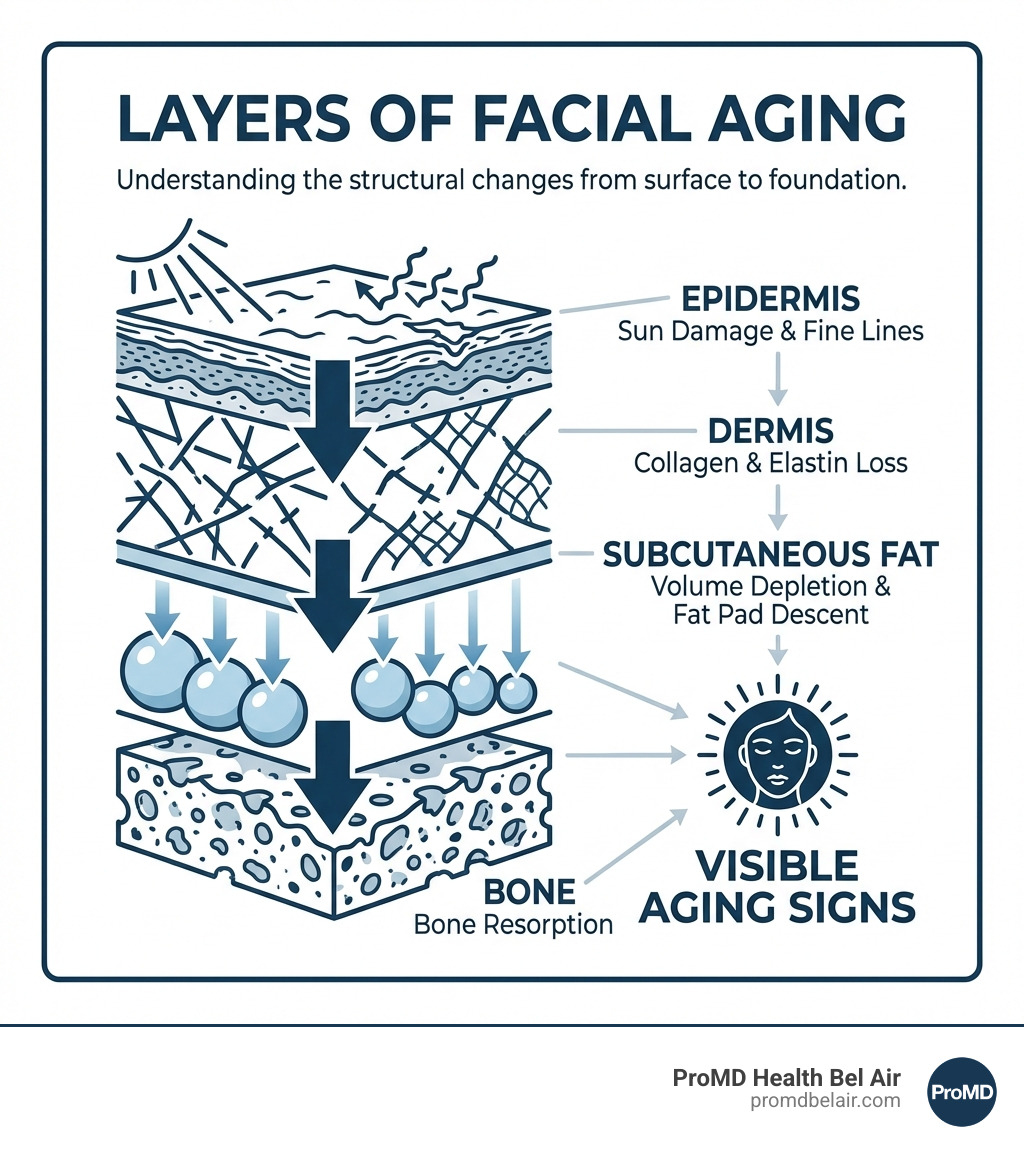
Facial aging is complex. It’s not just about wrinkles. After age 35, your skin loses collagen, elastin, and hyaluronic acid—the building blocks of firm, smooth skin. Fat pads shift, volume disappears from cheeks and temples, and sun damage creates uneven tone. This can result in a tired appearance that doesn’t reflect your inner energy.
The good news is that the facial rejuvenation market is booming with effective solutions. Valued at $15.1 billion in 2022 and projected to reach $35.7 billion by 2032, its growth is fueled by results. In 2021 alone, over 17.7 million minimally invasive cosmetic procedures were performed in the U.S.
Modern facial rejuvenation goes far beyond a single treatment. The best results come from understanding the layers of your face—from bone structure to the surface of your skin—and addressing each layer with the right approach. Some treatments restore volume. Others smooth texture. Many stimulate your body’s natural collagen production. The key is finding the right combination for your specific concerns.
As Ryan Pittillo, Franchise Owner at ProMD Health Bel Air, I’ve seen how the right combination approach can restore confidence. My team and I are committed to helping you find the treatments that will deliver the natural, personalized results you’re seeking.
Understanding the Landscape of Facial Aging
Our skin undergoes changes over time that lead to visible signs of aging. Understanding these causes is the first step in finding the best treatment for face rejuvenation.
Facial aging is a complex interplay of intrinsic (genetic) and extrinsic (environmental) factors. The most significant external cause is sun exposure, which leads to sun spots, uneven pigmentation, and a breakdown of skin components. Other factors include smoking, pollution, and repetitive facial expressions.
At a cellular level, aging is driven by the degradation of collagen and elastin—the proteins that provide skin’s firmness and elasticity. After age 35, our bodies lose these components, along with hyaluronic acid, leading to laxity, fine lines, and wrinkles.
Beyond the skin, volume loss is also key. Subcutaneous fat pads shift and diminish, leading to hollow cheeks, sunken eyes, and a less defined jawline. Bone resorption also affects the face’s underlying support structure.
These changes manifest as different types of wrinkles:
- Dynamic wrinkles appear with facial expressions, like crow’s feet or frown lines. These are caused by repetitive muscle movements.
- Static wrinkles are present even when your face is at rest, often developing from dynamic wrinkles becoming etched into the skin.
Additionally, many individuals experience pigmentation issues such as sun spots and uneven skin texture, which contribute to a less radiant complexion. The goal of rejuvenation is to kickstart the skin’s natural ability to produce more collagen and hydrate itself—a process known as neocollagenesis, which is vital for restoring youthful vigor and improving skin quality, as highlighted by scientific research.
The Different Categories of Rejuvenation Treatments
Given the multifaceted nature of facial aging, a multi-modality or “combination therapy” approach often yields the most comprehensive results. Treatments are generally categorized as:
- Injectables: Substances injected to relax muscles, restore volume, or stimulate collagen.
- Resurfacing Treatments: Procedures that remove damaged outer skin layers to reveal fresher skin.
- Light and Energy-Based Therapies: Treatments using light or energy to target specific concerns like pigmentation and laxity.
- Mechanical Exfoliation: Techniques that physically remove dead skin cells from the surface.
- Combination Therapy: Strategically combining treatments to address multiple signs of aging simultaneously.
- Surgical vs. Non-Surgical Options: While our focus is on non-surgical approaches, surgical procedures exist for more dramatic results. Many non-surgical treatments can complement surgery or serve as an excellent alternative.
Your Guide to the Best Treatment for Face Rejuvenation
The quest for a youthful appearance has led to many innovative treatments. With over 17.7 million minimally invasive procedures in the U.S. in 2021, their popularity is clear. Whether you want to smooth wrinkles, reduce scars, or even out pigmentation, there’s a treatment plan for you. Here are the most effective options available.
Injectables: Restoring Volume and Relaxing Wrinkles
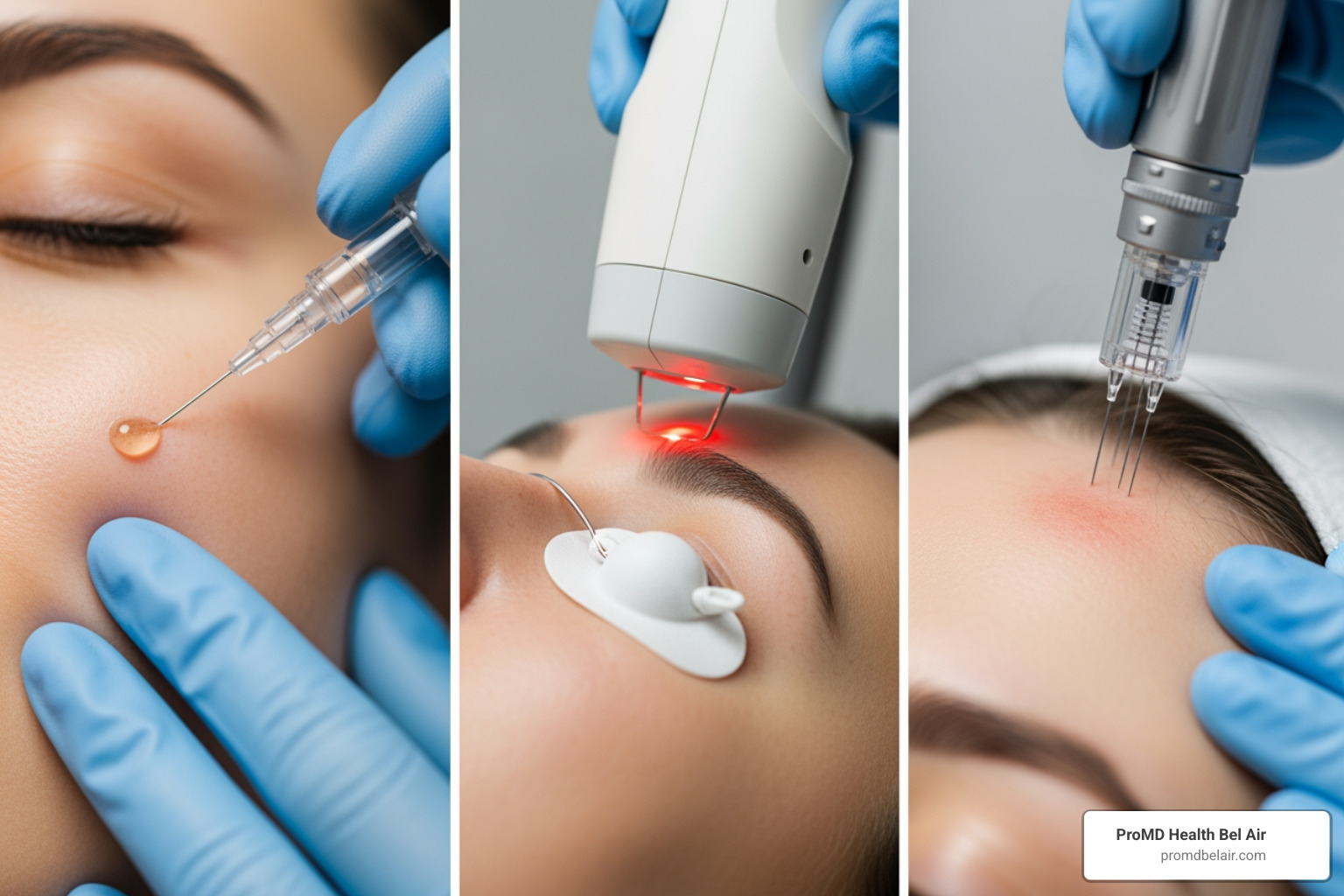
Injectable treatments are among the most popular non-surgical options, offering impressive results with minimal downtime. They work by either relaxing muscles that cause wrinkles or adding volume to areas that have lost fullness.
Neurotoxins (Botulinum Toxin)
Neurotoxins like Botox, Dysport, and Xeomin excel at treating dynamic wrinkles—lines that appear with facial expressions. By temporarily relaxing the underlying muscles, they smooth the skin above, softening lines like:
- Crow’s feet: The lines at the outer corners of your eyes.
- Frown lines (Glabellar lines): The “11s” between your eyebrows.
- Forehead lines: Horizontal lines across your forehead.
Beyond smoothing existing lines, neurotoxins can also prevent them from becoming deeper static wrinkles. They are relatively affordable, have few risks, and require no recovery time. Effects last around 3-4 months. In 2021, botulinum toxin injections were the most common minimally invasive procedure, with over 7.5 million performed.
Learn more about these powerful wrinkle relaxers at our dedicated page: More info about Botox & Dysport.
Dermal Fillers
Dermal fillers, mostly made of hyaluronic acid (HA), restore lost volume, soften static wrinkles, and improve facial contours. They combat the hollowness and sagging caused by age-related fat, collagen, and bone loss. Fillers can effectively:
- Add height to cheekbones and restore fullness to hollow cheeks.
- Improve the jawline and diminish jowls.
- Fill in nasolabial folds (lines from nose to mouth) and marionette lines (lines from mouth to chin).
- Resculpt lips and fill fine vertical lines around the mouth.
- Restore fullness to hollow eyes and reduce the appearance of dark circles.
Fillers provide immediate results by plumping up thinned areas. HA fillers last from 6 to 18 months, depending on the product and injection site. Some fillers, like Sculptra Aesthetic, stimulate your body’s own collagen production for more gradual but long-lasting results. Soft tissue filler injections were the second most common minimally invasive procedure in 2021, with over 6.1 million performed.
Find how dermal fillers can restore your youthful contours: More info about Dermal Fillers.
Skin Resurfacing: Showing a Fresher, Smoother Surface
Skin resurfacing treatments improve skin texture and tone by removing damaged outer layers and stimulating the growth of new, healthier skin cells.

Chemical Peels
Chemical peels use an acid solution to exfoliate the skin’s top layers. This process triggers cellular turnover, encouraging the growth of smoother, more even-toned skin. Chemical peels can address:
- Wrinkles and fine lines
- Milder acne scars
- Pigmentation (age spots, sun spots, freckles)
- Overall skin texture and brightness
Peels are categorized by depth:
- Light peels (e.g., glycolic acid, AHA) offer minimal downtime and are great for brightening skin.
- Medium peels (e.g., TCA peels) penetrate deeper to address moderate wrinkles and sun damage, with a few days to a week of downtime.
- Deep peels (e.g., phenol peels) provide dramatic results for severe damage but require significant downtime.
Chemical peels are an excellent and popular option for revealing a refreshed complexion.
Uncover the benefits of chemical peels for your skin: More info about Peels.
Laser Skin Resurfacing
Laser skin resurfacing uses concentrated light energy to improve skin tone, texture, and clarity, effectively addressing many signs of aging. A 10% increase in these procedures from 2020 to 2021 highlights their growing demand.
Lasers are generally divided into two main types:
- Ablative Lasers: (e.g., CO2, Erbium YAG) vaporize the outermost layers of damaged skin. This aggressive approach leads to significant tightening and wrinkle reduction but requires more downtime (1-2 weeks).
- Non-Ablative Lasers: Heat the underlying skin tissue without removing the surface. They stimulate collagen with little to no downtime, offering more gradual results.
- Fractionated Lasers: Modern lasers are often “fractionated,” treating only a fraction of the skin at a time. This allows for faster healing and reduced downtime while still delivering impressive results.
Laser treatments can minimize fine lines, treat brown spots and redness, tighten skin, and remove scars. The science behind these treatments is well-documented.
Explore advanced laser solutions for radiant skin: Assessment of Laser Effects on Skin Rejuvenation and More info about Lasers.
Mechanical & Collagen-Inducing Therapies
These therapies refresh the skin by focusing on physical exfoliation and stimulating the body’s natural healing processes.
Mechanical Resurfacing
- Microdermabrasion: This procedure uses a device to gently exfoliate the outermost layer of skin, revealing a smoother, brighter complexion. It’s safe for all skin types with no downtime.
- Dermabrasion: A more intensive form of exfoliation, dermabrasion uses a rotating instrument to remove deeper layers of skin. It is effective for deep wrinkles and scars but involves more downtime.
Microneedling (Collagen Induction Therapy)
Microneedling’s popularity is rising, with demand increasing 20-30% annually in many clinics. This treatment uses a device with fine needles to create controlled micro-injuries in the skin. These punctures trigger the body’s healing response, stimulating the production of new collagen and elastin—the proteins essential for firm, youthful skin.
The advantages of microneedling include:
- Versatility: Safe for virtually all skin types and tones.
- Acne Scars: Effective at improving the appearance of acne scars.
- Pore Size: Can help minimize the appearance of large pores.
- Fine Lines and Wrinkles: Smooths out fine lines and improves skin texture.
- Sun Damage & Pigmentation: Can help improve sun damage and mild pigmentation.
- Minimal Downtime: Typically involves only 1-3 days of redness.
Microneedling can also be combined with therapies like Platelet-Rich Plasma (PRP), which uses growth factors from your own blood to improve collagen stimulation and healing.
Dive deeper into the science of microneedling: Microneedling: Advances and widening horizons and More info about Microneedling.
Light and Energy-Based Treatments
Using the power of light and energy, these treatments target specific skin concerns with varying levels of intensity and downtime.
Intense Pulsed Light (IPL) Therapy
Often called a “photofacial,” IPL therapy uses a broad spectrum of light to target pigments in the skin. Unlike single-wavelength lasers, IPL’s multiple wavelengths can address various concerns at once:
- Sun Damage: Reduces sun spots, age spots, and freckles.
- Redness and Rosacea: Minimizes facial redness.
- Vascular Lesions: Treats spider veins and broken capillaries.
- Fine Lines and Texture: Stimulates collagen for overall skin improvement.
IPL is a non-ablative treatment with minimal downtime. A series of 1-3 treatments is often recommended for optimal results. The skill of the provider is critical, so choose an experienced professional.
Understand the role of light therapy in dermatology: The role of lasers and intense pulsed light technology in dermatology.
Ultherapy (Focused Ultrasound)
Ultherapy is a non-invasive treatment that uses micro-focused ultrasound energy to lift and tighten sagging skin. It targets the skin’s foundational layers, stimulating deep collagen production without disturbing the surface. Ultherapy is FDA-approved for:
- Lifting the brow.
- Tightening skin on the neck.
- Improving lines and wrinkles on the décolletage.
With high patient satisfaction, Ultherapy is an excellent option for a noticeable lift without surgery. Optimal results appear in 3-6 months, with maintenance sessions recommended every 12-18 months.
Crafting Your Personalized Rejuvenation Journey
With so many options, navigating facial rejuvenation can feel overwhelming. A personalized approach is paramount. The best treatment for face rejuvenation isn’t one procedure but a custom plan for your unique skin, concerns, and lifestyle.
How to Choose the Right Provider and Treatment
Your choice of provider is the most critical decision. The success and safety of any procedure depend on the practitioner’s expertise and credentials.
- Board-Certified Professionals: For more invasive procedures, a board-certified plastic surgeon or dermatologist is essential. For many non-surgical treatments, a highly trained registered nurse or licensed aesthetician under medical supervision can perform them safely.
- Experience Matters: Always select a provider experienced in medical skincare and the specific treatments you are considering. Ask about their training and how many times they’ve performed the procedure.
- Asking the Right Questions: During your consultation, ask about their experience with your skin type and concerns, potential risks, expected downtime, and the number of sessions needed.
- Individual Needs: Your skin type, lifestyle, and downtime availability will influence your treatment plan. We believe the provider has the biggest impact on your results.
At ProMD Health Bel Air, our team of licensed and experienced professionals in Bel Air, Fallston, and Forest Hill, MD, are dedicated to guiding you through this process, ensuring you receive the safest and most effective care.
The Role of At-Home Care in Maximizing Results
Professional treatments lay the groundwork, but at-home care is crucial for maximizing and prolonging results. Think of it this way: professional treatments are about 20% of the equation, while consistent homecare makes up the other 80%.
We emphasize integrating powerful topical therapies into your daily routine:
- Prescription Retinoids (Vitamin A): A gold-standard ingredient that accelerates cellular turnover and stimulates collagen to improve fine lines, wrinkles, and pigmentation.
- Vitamin C Serums: A potent antioxidant that protects from environmental damage, brightens your complexion, and supports collagen synthesis.
- Growth Factors/Stem Cell Serums: Advanced serums that support skin repair, especially after professional treatments.
- Sunscreen (SPF): This is non-negotiable. Daily use of a broad-spectrum sunscreen (SPF 30+) is the single most effective way to protect your investment and prevent future damage.
A proper at-home skincare routine protects and prolongs your results. It’s also vital to avoid over-exfoliating, which can damage your skin barrier.
What to Expect: Recovery, Risks, and Costs
Starting on a facial rejuvenation journey means understanding the recovery, risks, and costs of each treatment.
Potential Risks and Side Effects
While generally safe, all minimally invasive procedures have potential risks. Common temporary side effects include:
- Redness: Often like a sunburn, common after peels, microneedling, and some lasers.
- Swelling: Can occur after injectables, aggressive lasers, or microneedling.
- Bruising: Possible with any injection.
- Sensitivity: Skin may feel sensitive after resurfacing treatments.
More severe, though rare, risks can include infection, allergic reactions, hyperpigmentation (if sun exposure is not avoided), or unsatisfactory results. This is why choosing an accredited and experienced clinician is crucial.
Recovery Expectations and Downtime Comparison
Downtime varies significantly by treatment intensity:
- Neurotoxins & Light IPL: Typically no downtime.
- Dermal Fillers: Minimal downtime, with potential for slight swelling or bruising for a few days.
- Microneedling & Light Chemical Peels: Usually 1-3 days of redness.
- Non-Ablative Lasers: Little to no downtime.
- Medium Chemical Peels & More Aggressive Non-Ablative Lasers: A few days to a week of peeling or redness.
- Ablative Lasers: Can involve 1-2 weeks of significant redness, swelling, and peeling.
We will always provide you with detailed post-treatment care instructions to ensure optimal healing.
Factors Influencing Cost
The cost of facial rejuvenation is influenced by several factors and is typically not covered by insurance.
- Treatment Type: More intensive treatments are more expensive. For example, PRP Facials can range from $250-$1,500 per session, dermal fillers from $500-$2,000 per syringe, and laser resurfacing from $1,000-$3,000 per session.
- Number of Sessions: Many treatments require a series of sessions for optimal results.
- Provider Expertise: Highly experienced professionals may charge more for their services.
- Geographic Location: Costs can vary between different regions. At ProMD Health Bel Air, we provide transparent pricing during your consultation in Bel Air, Fallston, or Forest Hill, MD.
- Product Volume: For fillers, the cost depends on the number of syringes needed.
Frequently Asked Questions about Face Rejuvenation
What is the most effective treatment for deep wrinkles?
Deep wrinkles often require a combination approach. Ablative laser resurfacing can improve skin texture, while dermal fillers address volume loss contributing to deep static lines. Neurotoxins are highly effective for dynamic wrinkles from muscle movement. A consultation with our experts will determine the optimal plan for your specific needs.
How long do the results of face rejuvenation treatments last?
Longevity varies by treatment. Neurotoxins last 3-4 months, while HA fillers last 6-18 months. Laser and microneedling offer long-lasting results with proper skincare and sun protection, but most treatments require maintenance. For example, Ultherapy may need sessions every 12-18 months, and IPL benefits from yearly touch-ups.
Is there a single best treatment for face rejuvenation?
No single “best treatment for face rejuvenation” exists. The optimal approach is personalized to your signs of aging, skin type, goals, and budget. For example, Botox targets dynamic wrinkles, while fillers restore volume. Microneedling improves texture, while IPL targets pigmentation. Combination therapy often yields the most comprehensive, natural-looking results, which is why a detailed consultation is essential.
Begin Your Change with Expert Guidance
We hope this comprehensive guide has shed some light on the exciting world of facial rejuvenation. From injectables that restore volume and relax wrinkles, to resurfacing treatments that reveal fresher skin, and light therapies that target specific imperfections, the options for achieving a more youthful and radiant complexion are more advanced than ever.
The best treatment for face rejuvenation is not a one-size-fits-all solution, but a personalized plan crafted just for you. It’s about addressing your unique concerns, understanding the underlying causes of your facial aging, and combining the right treatments for optimal, natural-looking results.
At ProMD Health Bel Air, located conveniently in Bel Air, Fallston, and Forest Hill, MD, we pride ourselves on our expert guidance and personalized approach. We even offer an innovative AI Simulator that allows you to preview your potential post-treatment results, helping you visualize your change before it begins.
Ready to take the first step towards achieving your aesthetic goals and refinding a more vibrant you? We’re here to help you steer your journey with confidence and care.