A New Era for Skin Rejuvenation
Carbon dioxide laser skin resurfacing is a powerful ablative laser treatment that removes damaged outer layers of skin while stimulating deep collagen production. This advanced procedure addresses fine lines, wrinkles, acne scars, sun damage, and uneven skin texture by vaporizing thin layers of skin with precision, triggering your body’s natural healing response to reveal smoother, younger-looking skin.
Quick Overview: What You Need to Know
- What it treats: Wrinkles, acne scars, sun damage, age spots, uneven texture
- How it works: Ablative CO2 laser vaporizes outer skin layers and heats the dermis
- Recovery time: 10-21 days for initial healing; 3-6 months for full results
- Results: Long-lasting improvement, often several years with proper care
- Best candidates: Fair-skinned individuals with realistic expectations and no active infections
While physicians once relied on chemical peels and dermabrasion, the advent of carbon dioxide laser technology in the late 1980s revolutionized skin resurfacing. Today’s CO2 lasers are far more sophisticated, using ultra-short pulses and fractional delivery patterns to maximize results while minimizing side effects and downtime. The procedure is particularly effective for treating:
- Deep wrinkles around the eyes, mouth, and forehead
- Acne scarring and other types of atrophic scars
- Severe sun damage and age spots
- Uneven skin tone and texture irregularities
- Loose, sagging skin that needs tightening
CO2 laser resurfacing stimulates new collagen formation that continues for up to six months after treatment, with improvements lasting for years with proper skincare and sun protection.
Why the Recovery is Worth It
Unlike gentler lasers, CO2 laser resurfacing delivers significant improvement in a single procedure. This power comes with a more intensive recovery: 10-21 days of downtime, with redness lasting 2-6 months as the skin fully heals. The procedure isn’t for everyone; ideal candidates typically have fair to medium skin tones, realistic expectations, no active skin infections, and good overall health.
As Ryan Pittillo, Franchise Owner at ProMD Health, I’ve seen how carbon dioxide laser skin resurfacing transforms not just skin, but confidence—when performed by experienced providers who prioritize patient safety and personalized care. Our team at ProMD Health Bel Air combines advanced laser technology with individualized treatment planning to help patients achieve their aesthetic goals.
The Science and Benefits of Carbon Dioxide Laser Skin Resurfacing
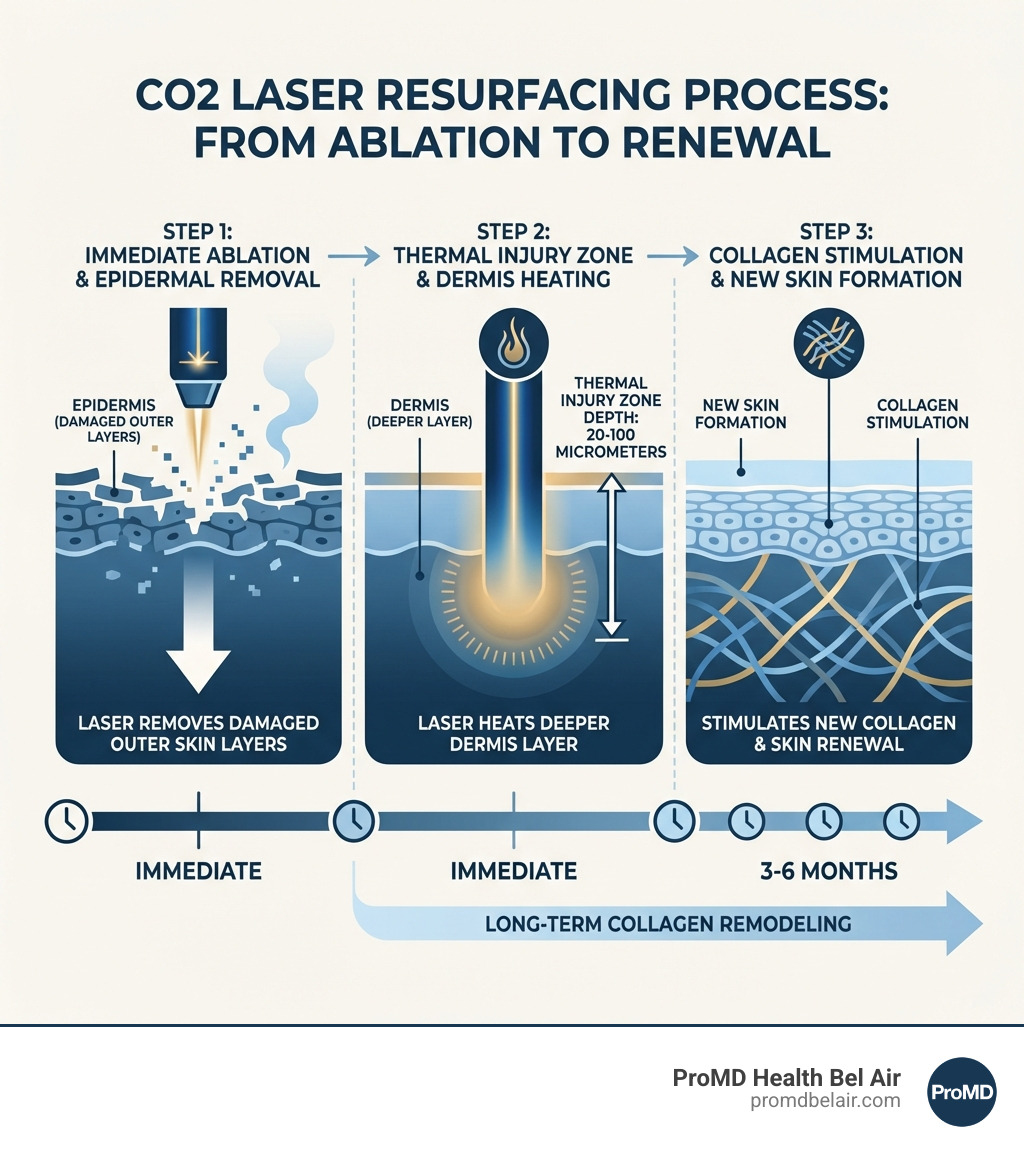
Carbon dioxide laser skin resurfacing is a carefully controlled process of skin renewal. The laser acts like a precise eraser, removing worn-out top layers to reveal fresh, vibrant skin underneath. The laser’s energy not only vaporizes the epidermis (outermost layer) but also heats the dermis (underlying layer). This controlled thermal injury triggers neocollagenesis: the production of new collagen and elastin, leading to smoother, firmer skin.
What is carbon dioxide laser skin resurfacing and how does it work?
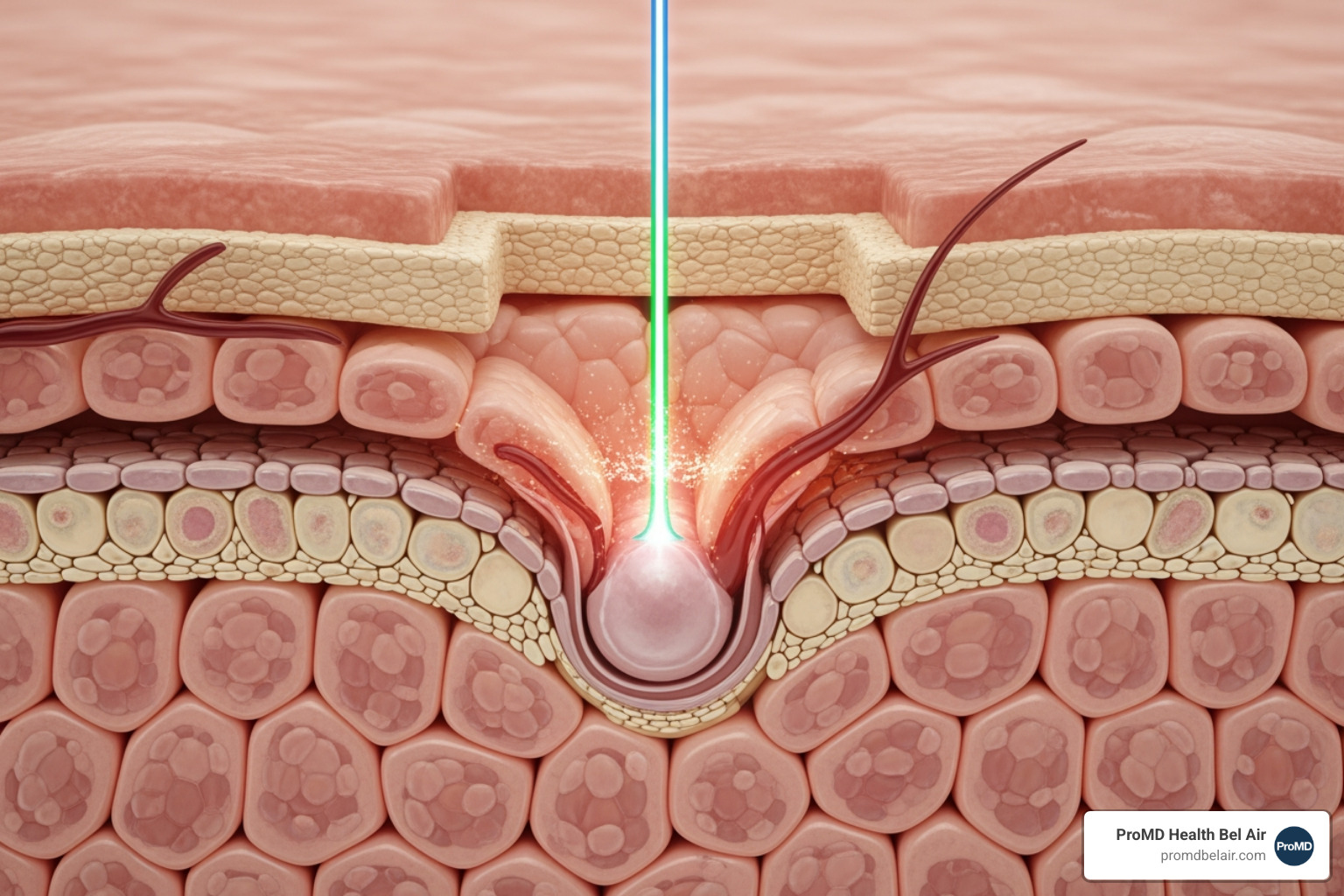
As an ablative procedure, carbon dioxide laser skin resurfacing removes thin layers of skin. It uses targeted light beams (10,600 nm wavelength) that are absorbed by water in skin cells, causing them to vaporize and remove the damaged outer layers. This controlled injury prompts a robust healing process. The thermal energy penetrates the dermis, stimulating fibroblasts to produce new, healthy collagen, which leads to significant skin remodeling and tightening. Scientific research on the molecular effects of fractional CO2 laser has shown how this treatment induces connective tissue remodeling and improves photodamaged skin.
Key Benefits and Indications
The transformative power of carbon dioxide laser skin resurfacing makes it an excellent choice for addressing a wide range of skin concerns:
- Fine Lines and Deep Wrinkles: Dramatically softens lines around the eyes, mouth (smoker’s lines), and forehead.
- Acne Scars and Other Surgical Scars: Highly effective in smoothing out atrophic (depressed) acne scars and can improve the texture of some surgical scars.
- Sun Damage and Photoaging: Reverses signs of sun damage like age spots, uneven pigmentation, and rough texture. It can also remove precancerous growths like actinic keratoses.
- Uneven Skin Tone and Texture: Refines the skin’s surface, making it noticeably smoother and more uniform.
- Warts and Skin Growths: Precisely removes various benign skin growths, including warts, sebaceous hyperplasia, and xanthelasma.
- Skin Tightening: The thermal effect causes immediate collagen contraction and stimulates long-term production, leading to a noticeable tightening effect.
Are You a Candidate? The Consultation Process
Determining if you’re a suitable candidate for carbon dioxide laser skin resurfacing is a critical first step. At ProMD Health Bel Air, we conduct a thorough evaluation to ensure the treatment aligns with your goals and health.
Ideal candidates typically have fair to medium skin types (Fitzpatrick I-III), as darker skin tones have a higher risk of pigmentation changes. However, modern fractional lasers allow us to treat a broader range of skin types safely. Contraindications include active skin infections, a history of keloid scarring, or certain autoimmune disorders.
Who Should Consider CO2 Laser Treatment?
You might be an excellent candidate if you:
- Have significant signs of photo-aging, such as static wrinkles, sun damage, or rough texture.
- Have realistic expectations for significant, not perfect, improvement.
- Are a non-smoker in good overall health, as this is crucial for optimal healing.
- Desire dramatic, long-lasting results from a single powerful treatment.
Who Should Avoid This Procedure?
We prioritize your safety and will advise against the procedure if you have:
- Active Skin Infections: Including acne, cold sores, or bacterial infections. (Prophylactic antivirals are prescribed for those with a history of cold sores).
- Recent Use of Isotretinoin (Accutane): Use within the last 6-12 months can compromise healing.
- Certain Autoimmune Disorders: Conditions like lupus or scleroderma can be contraindications.
- A Tendency for Keloid Scarring: A history of aggressive scarring is a key concern.
- Conditions like Vitiligo or Psoriasis: Skin trauma can trigger new lesions (Kobnerization phenomenon).
- Significant Lower Eyelid Laxity: Aggressive treatment could lead to ectropion (outward turning of the eyelid).
For more detailed information on patient selection, you can refer to medical guidelines like those found on Medscape.
The Role of Your Healthcare Team
Your journey is a team effort led by our board-certified dermatologists and plastic surgeons. During your comprehensive evaluation, we will:
- Discuss Your Medical History: Reviewing health conditions, medications, and past procedures.
- Assess Your Skin: We examine your skin and use our unique AI Simulator to generate a personalized results preview, helping us set realistic goals together.
- Explain the Procedure: We’ll walk you through every step, from the mechanism to recovery, and thoroughly review all potential risks and benefits to ensure you feel confident in your decision.
The Procedure and Recovery Journey
Understanding what to expect during your carbon dioxide laser skin resurfacing treatment and recovery will help you prepare. The procedure is performed on an outpatient basis in our Bel Air, Fallston, or Forest Hill MD clinics.
What to Expect During the Treatment
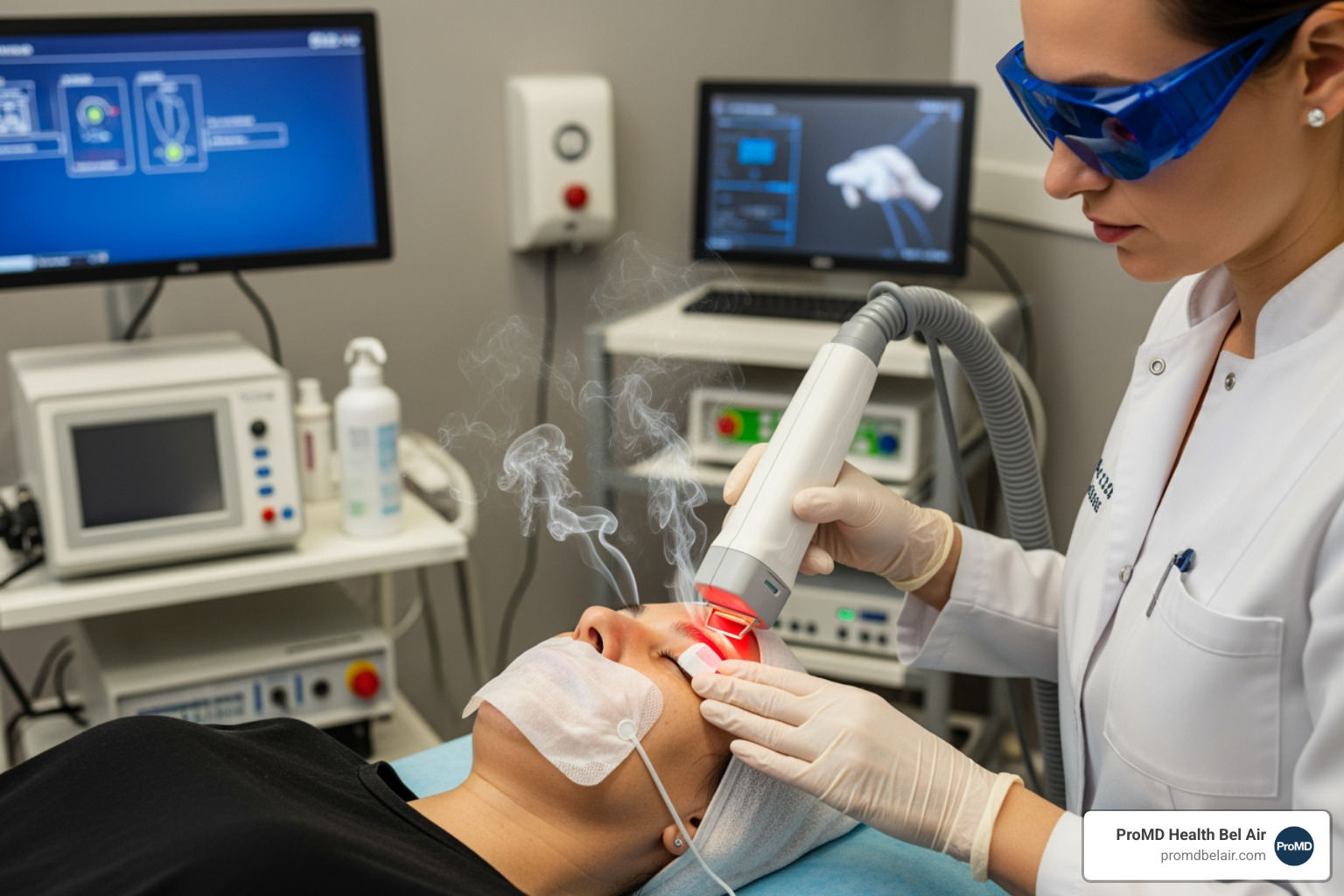
- Preparation: Your skin will be thoroughly cleansed, and your eyes will be protected with laser-safe shields.
- Anesthesia: Depending on the treatment area, we use topical numbing cream, local injections, or sedation. General anesthesia may be used for full-face procedures to ensure your comfort.
- The Laser Application: You may feel a prickly or snapping sensation as the provider passes the laser over your skin, precisely controlling its energy and depth.
- Procedure Duration: A partial-face treatment takes 30 to 45 minutes, while a full-face procedure can last up to two hours.
- Post-procedure Care: We use cooling compresses to soothe your skin immediately after treatment.
The Typical Recovery Timeline
Recovery requires patience, but the results are worth it. Here’s a general timeline:
- First 24-48 Hours: Expect a sensation like a severe sunburn, which resolves in 24-48 hours. Swelling is noticeable; sleeping with an extra pillow helps.
- Days 3-5: Skin will feel tight and swollen. Some weeping of yellowish fluid is a normal part of healing and may last up to 5 days. You will need to gently clean the area multiple times a day.
- Days 7-10: New skin covers the treated area as damaged layers peel off (re-epithelialization occurs around day 6-7). Many patients can return to work with makeup by the end of the week.
- Weeks 2-8: The most intense healing is over, but your new skin will be pink or red. This redness can persist for several weeks up to 3 months.
- Full Healing (3-6 Months): Your skin continues to remodel and improve for months. Redness gradually fades, and the full benefits of collagen remodeling become apparent, often taking 3 months to fully settle.
Results, Risks, and Long-Term Outlook
While you’ll notice an immediate difference after initial healing, the true magic of carbon dioxide laser skin resurfacing unfolds over several months as collagen remodeling continues. Optimal results are often visible around 3 to 6 months post-treatment.
Essential Post-Treatment Care for Optimal Healing
Following post-treatment instructions is crucial for maximizing results and minimizing complications.
- Strict Sun Avoidance: This is non-negotiable for at least four weeks before and several months after treatment. Use physical barriers like hats. Sunscreen (SPF 30+) should only be used once the skin has healed and your provider approves.
- Gentle Cleansing: Wash your face gently twice a day with lukewarm water and a mild cleanser. Some protocols may suggest a dilute vinegar solution, as recommended by Cleveland Clinic’s guide to laser resurfacing care.
- Apply Occlusive Ointments: Apply a thick layer of petroleum jelly (Vaseline®) or Aquaphor® for a month to prevent scabbing and keep the skin moist.
- Avoid Makeup: Do not wear makeup for the initial 10-14 days or until your skin has fully healed. When you resume, choose oil-free products.
- Other Important Advice: Avoid masks for 3 months, razor shaving for 1 month, and irritating skincare products (retinoids, acids) for at least 6 weeks. Manage swelling with cool compresses.
Potential Risks of carbon dioxide laser skin resurfacing
Though serious complications are rare in experienced hands, potential risks include:
- Swelling and Redness: These are expected. Redness can persist for 2-6 months.
- Itching: Common during healing; avoid scratching.
- Infection: The laser can trigger viral infections (like cold sores), for which we prescribe prophylactic medication. Bacterial and fungal infections are less common but possible.
- Changes in Skin Color: Hyperpigmentation (darkening) is a risk, especially for darker skin tones, but usually resolves. Hypopigmentation (lightening) is less common and can be slow to recover.
- Scarring: A rare risk, minimized by following post-care instructions.
- Acne Flare-ups (Milia): Small, temporary white bumps may appear.
- Ectropion: A rare complication where the lower eyelid turns outward, mitigated by careful patient selection.
How Long Do Results Last?
The results of carbon dioxide laser skin resurfacing are remarkably long-lasting, often enduring for several years. This is due to the new collagen generated in your skin. However, the natural aging process continues. Ongoing sun protection and a consistent skincare routine are crucial for preserving your results. Many patients report continued improvement for up to a year post-procedure.
Exploring Your Options and Finding a Provider
When considering carbon dioxide laser skin resurfacing, it’s helpful to understand the different approaches available. Choosing the right provider is the most critical decision you’ll make.
Fractional vs. Fully Ablative CO2 Lasers
CO2 lasers offer two primary modalities:
| Feature | Fully Ablative CO2 Laser Resurfacing | Fractional CO2 Laser Resurfacing |
|---|---|---|
| Mechanism | Removes the entire top layer (epidermis) of skin. | Creates microscopic columns of treated tissue, leaving surrounding skin intact. |
| Intensity | More aggressive, deeper penetration. | Less aggressive, shallower penetration, or targeted deep columns. |
| Downtime | Longer (10-21 days initial healing, up to 3 months for full redness resolution). | Shorter (typically 4-7 days for initial healing). |
| Results | More dramatic and comprehensive in a single session. | Achieves significant results, often requiring multiple sessions for optimal outcome. |
| Collagen Stim. | Strong, deep collagen remodeling. | Stimulates collagen in treated micro-zones. |
| Risk Profile | Higher risk of side effects (e.g., PIH) but manageable with expert care. | Lower risk of side effects due to healthy surrounding tissue. |
| Best For | Severe wrinkles, deep acne scars, significant sun damage, substantial tightening. | Moderate wrinkles, fine lines, mild acne scars, texture improvement, less downtime. |
| Examples | Traditional CO2 resurfacing. | ActiveFX™ with UltraPulse® Encore™ (latest advancement, minimal downtime). |
Fully ablative CO2 is the most powerful technique, while fractional systems treat the skin in micro-columns for quicker healing and a better side effect profile. For example, ActiveFX™ with UltraPulse® Encore™ is a fractional option with a downtime of just four to seven days.
Compared to other treatments, CO2 laser provides more consistent and deeper collagen remodeling than chemical peels, is more impactful for deep wrinkles than microneedling, and offers more skin tightening than the Erbium laser.
The cost of carbon dioxide laser skin resurfacing varies by treatment area, laser type, and provider expertise. At ProMD Health Bel Air, we provide a transparent cost breakdown and offer financing options, which you can explore at https://promdbelair.com/financing-offers/.
How to Find a Qualified Provider
This powerful treatment demands expertise. When searching for a provider in Bel Air, Fallston, or Forest Hill MD, look for:
- Board Certification: Choose a board-certified dermatologist or plastic surgeon.
- Experience with Laser Resurfacing: Ask about their specific experience with CO2 lasers and customizing treatments.
- Before-and-After Photos: Review their portfolio to see potential results.
- Patient Reviews: Check testimonials for insights into patient care and outcomes.
- In-person Consultation: Use this opportunity to assess the provider’s knowledge and ensure you feel comfortable.
At ProMD Health Bel Air, our team is committed to providing exceptional care. We encourage you to schedule a complimentary consultation to discuss your options.
Conclusion: Transform Your Skin with Expert Care
Carbon dioxide laser skin resurfacing is a game-changer in aesthetic medicine, offering a powerful solution for significant and lasting skin rejuvenation. It smooths deep wrinkles, refines acne scars, reverses sun damage, and tightens lax skin by initiating your skin’s natural healing and stimulating a surge of new collagen.
While the recovery requires dedication, the long-term improvement makes the journey worthwhile. The key to a successful outcome lies in choosing an experienced, qualified provider who understands this powerful technology.
At ProMD Health Bel Air, we combine cutting-edge carbon dioxide laser skin resurfacing technology with personalized care. We are proud to offer our unique AI Simulator, allowing you to preview your potential post-treatment results, giving you a clear vision of your change.
If you’re ready to explore how carbon dioxide laser skin resurfacing can help you achieve your aesthetic goals, we invite you to connect with us.
Schedule a consultation to see your potential change today!
Learn more about our services or book your consultation by visiting our website: