

Sagging Jowls? Here’s What Fillers Can Actually Do
If you’re researching fillers for sagging jowls, here’s the short answer:
Best filler options for sagging jowls (2026):
| Treatment Area | Filler Type | What It Does |
|---|---|---|
| Cheeks (mid-face) | Hyaluronic acid (e.g., Juvederm Voluma) | Lifts the lower face indirectly by restoring mid-face volume |
| Jawline | Juvederm Volux, Radiesse | Redefines the mandibular border, camouflages jowl bulge |
| Pre-jowl sulcus | HA filler | Fills the hollow beside the jowl to smooth the jawline |
| Chin | HA filler | Improves projection and overall lower-face balance |
| Collagen rebuilding | Sculptra (PLLA) | Gradually stimulates collagen for longer-lasting improvement |
Most patients need 2–6 syringes. Results last 9 months to 2 years depending on the filler used.
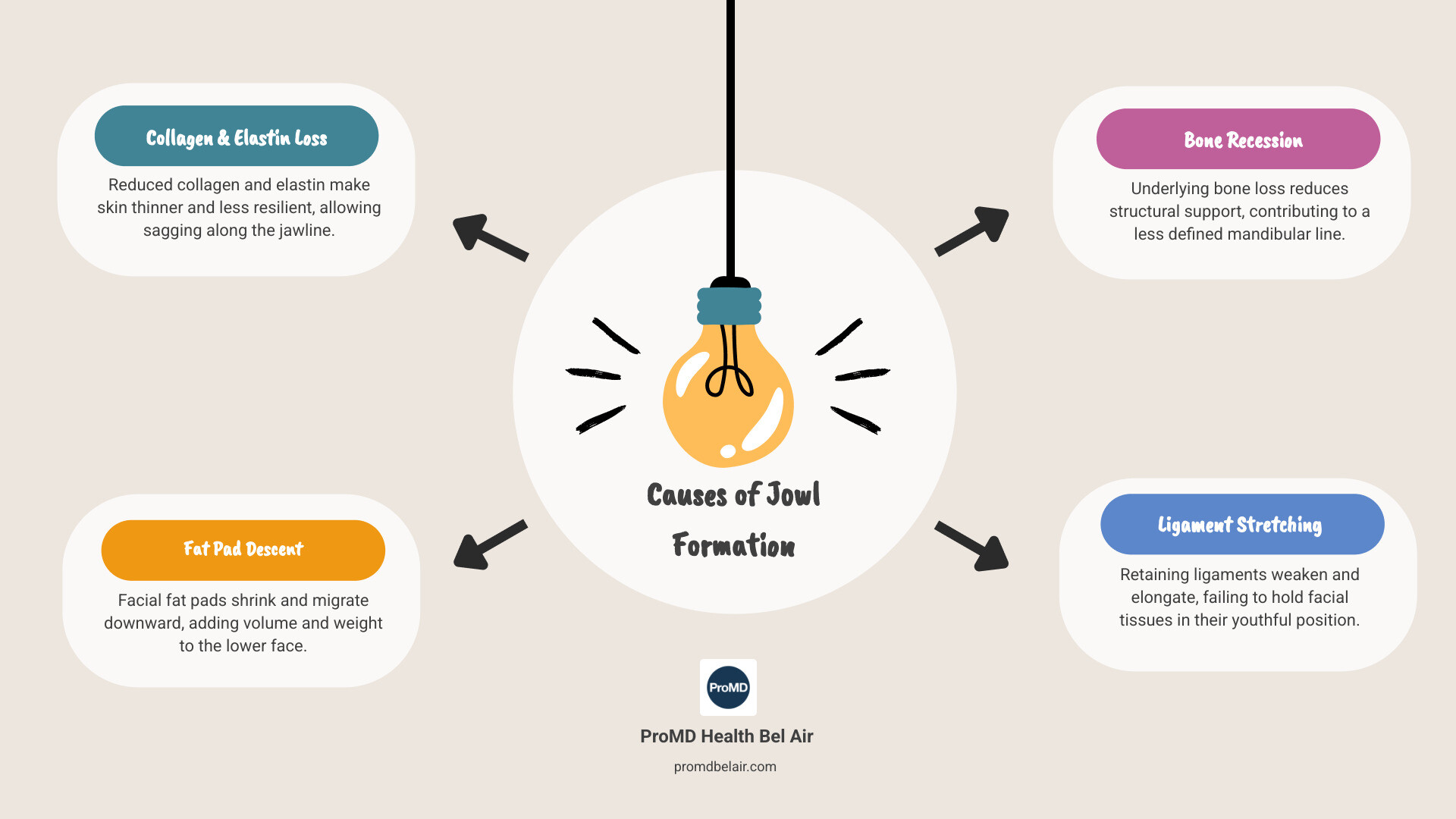
Here’s what most people don’t realize: jowls aren’t just about loose skin. They form because your face loses volume, structure, and support from the inside out — fat pads shift downward, bone recedes, and the ligaments that once held everything in place begin to stretch. By the time you notice the sag along your jawline, several layers of your facial anatomy have already changed.
The good news? Fillers don’t just mask the problem. When placed strategically — in the cheeks, along the jawline, and at the chin — they can restore the structural scaffold that keeps your lower face lifted and defined. You don’t need surgery to see a meaningful difference.
I’m Ryan Pittillo, a Franchise Owner at ProMD Health Bel Air, and while my background is in coaching and team leadership rather than aesthetics, I work closely with our expert team every day to help patients in the Bel Air area understand their options for treatments like fillers for sagging jowls. In the sections below, our team breaks down exactly how these treatments work, which fillers perform best, and what real results look like.
Why Jowls Form: The Science of Facial Aging
As we move through May 2026, our understanding of facial aging has evolved far beyond the idea of “just gravity.” Jowls — that heavy, sagging skin along the jawline — are the result of a complex cascade of events occurring beneath the surface.
First, there is the depletion of collagen and elastin. These are the proteins that provide our skin with its “snap-back” quality and internal strength. As production slows, the skin becomes thinner and less resilient. Simultaneously, the facial fat pads that once sat high on the cheekbones begin to shrink and descend. This shift is often compared to a “melting” effect, where volume from the upper and mid-face migrates toward the lower face.
Perhaps more importantly, we must consider the retaining ligaments. These are like strong fibrous cables that anchor your skin and soft tissue to the underlying bone. Over time, these ligaments can stretch or lose their tension. When the zygomatic and mandibular ligaments weaken, they can no longer hold the tissues in place, leading to the characteristic “jowl” bulge.
Recent scientific research on jowl correction highlights that jowling is a hallmark of the aging process that requires a multi-layered approach. It’s not just skin; even our facial bones recede as we age, specifically in the jaw and chin area, which means there is less “shelf” for the skin to sit on. This loss of bone mass creates a vacuum that allows the skin to fold and sag.
How Fillers for Sagging Jowls Restore a Youthful Contour
If you’ve ever looked in the mirror and used your fingers to pull your skin upward and back toward your ears, you’ve essentially simulated what dermal fillers aim to do. However, instead of just “pulling,” fillers work by restoring the lost volume and structural support that has disappeared over the years.
We use a combination of volume restoration and camouflage techniques. By placing filler in specific “anchor points,” we can recreate the tension that used to exist naturally. This isn’t about making your face look “puffy”; it’s about recreating the scaffold. You can find more info about fillers for jowls on our specialized service pages, but the core philosophy is simple: we put back what time took away.

Lifting the Mid-Face with Cheek Fillers for Sagging Jowls
It might seem counterintuitive to put filler in your cheeks when your problem is at your jawline, but this is the “secret sauce” of a non-surgical lift. By restoring malar projection (the forward part of your cheek) and zygomatic support (the cheekbone area), we create an indirect lift.
Think of it like a tent pole. If the pole in the middle of the tent (your cheekbone) is too short, the fabric at the edges (your jawline) will sag and pool on the ground. By “lengthening” that pole with filler, the fabric is pulled taut. This reduces the appearance of nasolabial folds and marionette lines while simultaneously pulling the jowl tissue upward. Our dermal filler services are designed to assess this mid-face support first, as it often provides the most natural-looking rejuvenation.
Defining the Mandibular Line with Jawline Fillers for Sagging Jowls
Once the mid-face is supported, we turn our attention to the jawline itself. This is where we use high-density fillers to “camouflage” the jowl.
The pre-jowl sulcus is the small dip or hollow that forms between the chin and the jowl. By filling this hollow, we create a straight, continuous line from the ear to the chin, effectively hiding the jowl. We also focus on the mandibular angle (the corner of your jaw below the ear) and chin projection. A strong chin and a defined jaw angle pull the skin tighter across the lower face, which you can read about in our guide to reclaiming your jawline.
Top Dermal Filler Options for Jowl Correction in 2026
In 2026, we have more specialized tools than ever before. Not all fillers are created equal; some are soft and meant for lips, while others are “structural” and meant to mimic bone or deep fat.
- Hyaluronic Acid (HA): These are the most common fillers (like Juvederm and Restylane). They are reversible and provide immediate results by binding to water.
- Juvederm Volux: This is a heavy-hitter specifically FDA-approved for the jawline. It is very firm, allowing it to hold its shape and mimic the look of a sharp jawbone. It is approved to last up to 2 years.
- Radiesse (CaHA): This is a calcium-based filler that provides immediate lift and also stimulates your body to produce its own collagen. It’s excellent for patients who need significant structural support.
- Sculptra (PLLA): Unlike HA fillers, Sculptra is a “biostimulator.” It doesn’t give you a “wow” result the day of the injection. Instead, it works over several months to rebuild the collagen foundation of the face.
Research on ligament thickening has shown that biostimulators like Poly-L-Lactic Acid can actually help strengthen the facial ligaments, providing a more “organic” lift over time.
Comparison of Jowl Filler Types:
| Feature | HA Fillers (Juvederm/Restylane) | Biostimulators (Radiesse/Sculptra) |
|---|---|---|
| Primary Goal | Instant Volume & Contour | Collagen Stimulation & Long-term Support |
| Texture | Gel-like, Soft to Firm | Mineral-like or Micro-particle |
| Reversibility | Yes (with Hyaluronidase) | No (must wear off naturally) |
| Best For | Immediate camouflage & hydration | Structural rebuilding & thinning skin |
| Longevity | 12–24 months | 18 months to 2+ years |
Comparing Fillers to Alternative Jowl Treatments
While fillers for sagging jowls are incredibly effective, they aren’t the only tool in our Bel Air office. Depending on your anatomy, we might recommend a combination of treatments.
- Botox/Dysport: We can use neuromodulators to relax the DAO (Depressor Anguli Oris) muscles. These are the muscles that pull the corners of your mouth down. By relaxing them, we allow the “lifting” muscles to work more effectively.
- Ultherapy: This is a gold-standard non-invasive treatment that uses ultrasound energy to heat the deep layers of the skin, causing them to contract and lift. Many patients choose Ultherapy for neck and jawline tightening before adding filler to get a “one-two punch” of tightening and volumizing.
- Thread Lifts: These involve placing dissolvable sutures under the skin to physically lift the tissue. While they provide a more directional “pull” than fillers, studies have shown that the lifting effect can diminish after 6 to 12 months, making them a shorter-term solution compared to a comprehensive filler plan.
Results, Longevity, and Investment
When you visit our team — including experts like Tyra Lindblad, Kate Maguire, Amanda Pittillo, PA-C, Lauren Mason, PA-C, MSHS, Paige Scott, or Natalie Shek — we will create a personalized plan.
What to expect:
- Cost: The investment for jowl correction varies depending on the number of syringes needed. On average, you might expect to spend between $1,200 and $4,500 for a full lower-face rejuvenation. For more details, check out our breakdown of how much fillers cost.
- Longevity: Products like Juvederm Volux can last up to 2 years. However, most patients come in for “refresh” sessions every 12 to 18 months to maintain their peak results.
- Recovery: There is very little downtime. You might experience some swelling or minor bruising for 3 to 7 days. Most patients return to work the same day or the following day.
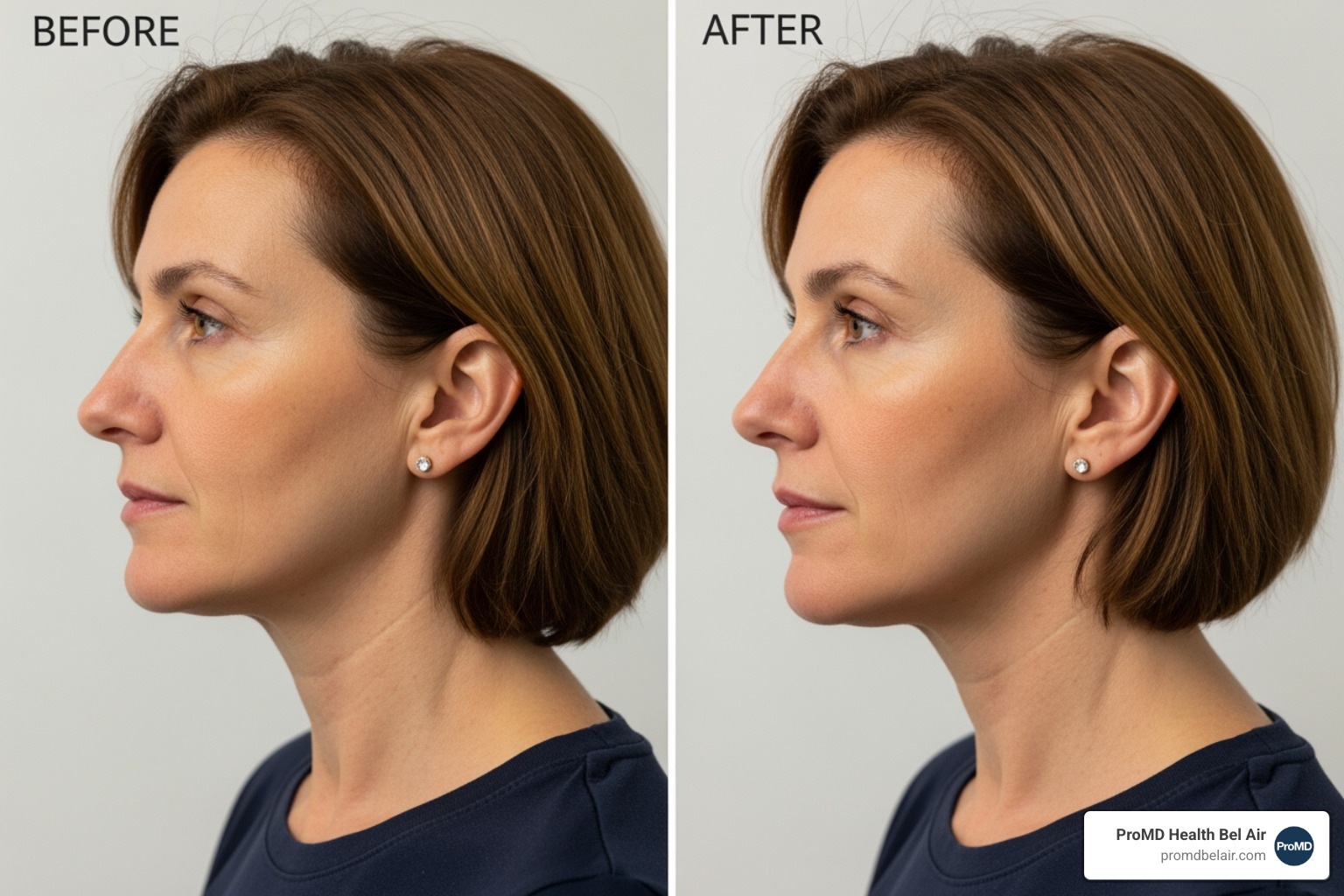
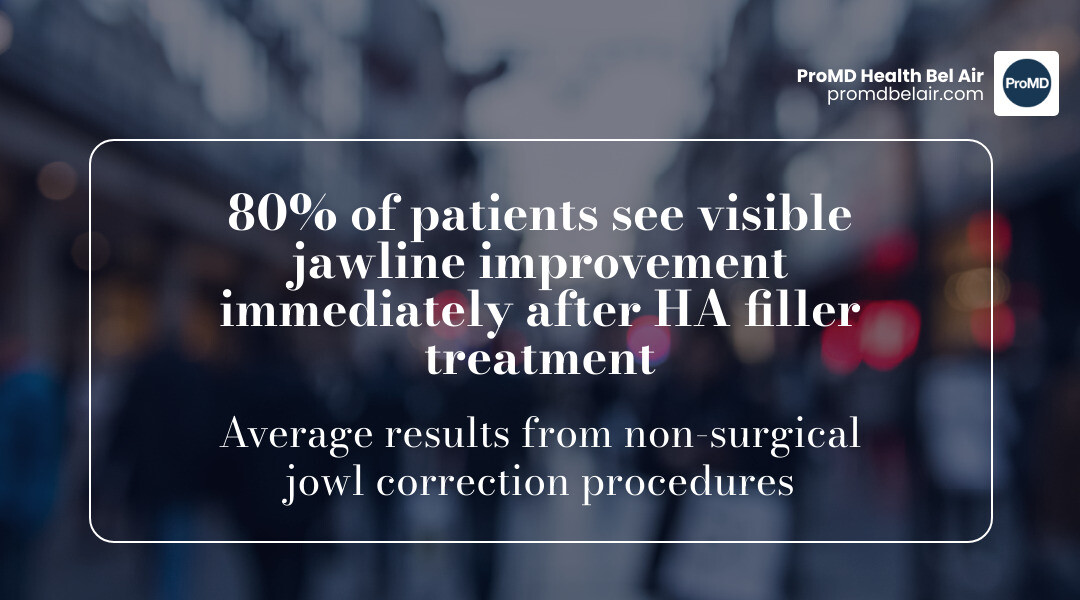
- The “Wow” Factor: With HA fillers, the results are immediate. You will walk out of the office with a more defined jawline than you had 30 minutes prior.
Frequently Asked Questions about Jowl Fillers
Can cheek fillers really lift my jowls?
Yes, but with a caveat: they provide an indirect lift. By restoring volume to the mid-face, the skin is pulled upward, which softens the appearance of the jowl. For moderate to severe sagging, we almost always combine cheek fillers with direct jawline and chin contouring for the best result.
How many syringes of filler will I need for my jawline?
Every face is unique. However, to see a significant “liquid facelift” effect that addresses sagging jowls, most patients require between 2 and 6 syringes. This allows us to address the cheeks, the pre-jowl sulcus, and the mandibular angle comprehensively.
Is there any downtime after jowl filler injections?
Downtime is minimal. You may have some tenderness at the injection sites and mild swelling. We recommend avoiding strenuous exercise, saunas, and heavy salt intake for the first 24–48 hours to keep swelling to a minimum.
Conclusion
At ProMD Health Bel Air, we believe that looking your best shouldn’t feel like a mystery. Whether you are visiting us from Fallston, Forest Hill, or right here in Bel Air, our goal is to provide natural-looking, sophisticated results that make you feel like the most refreshed version of yourself.
One of our most popular features is our AI Simulator. This allows you to see a personalized preview of your post-treatment results before we even begin. It takes the guesswork out of the process and helps you feel confident in your treatment plan.
If you’re ready to say goodbye to sagging and hello to a sharper, more youthful jawline, we invite you to book a consultation with our talented team. From Tyra Lindblad to our experienced PAs, we are here to help you lift and smooth your way to a more confident you.
Ready to see what’s possible? Contact ProMD Health Bel Air today to schedule your personalized consultation and AI simulation.
