You've just left the treatment room, and your skin feels hot, tight, and a little too alive. That's the moment when you might start second-guessing everything, from whether you can wash your face to whether a little redness means something went wrong. In Bel Air, the first week after microneedling is where good results are protected, or where avoidable irritation starts.
Table of Contents
- What Your Skin Is Doing Right After Microneedling
- Your First 24 to 48 Hours Step by Step
- Days 3 Through 7 of Microneedling Recovery
- Recommended Products From The Skin Shoppe
- Sun, Sweat, and Heat Restrictions
- Normal Healing Reactions Versus Warning Signs
- Follow-Up Timing and Booking Your Next Session
What Your Skin Is Doing Right After Microneedling
The moment you leave the treatment chair, your skin is already working through a very specific healing phase. Microneedling creates controlled microchannels, so the flushed look, warmth, pinpoint bleeding, and mild swelling that show up right away are expected. They are signs that the skin has been stimulated, not proof that the session went too hard. That controlled response is what starts the collagen process, which is why the first few hours matter more than a standard skincare routine.
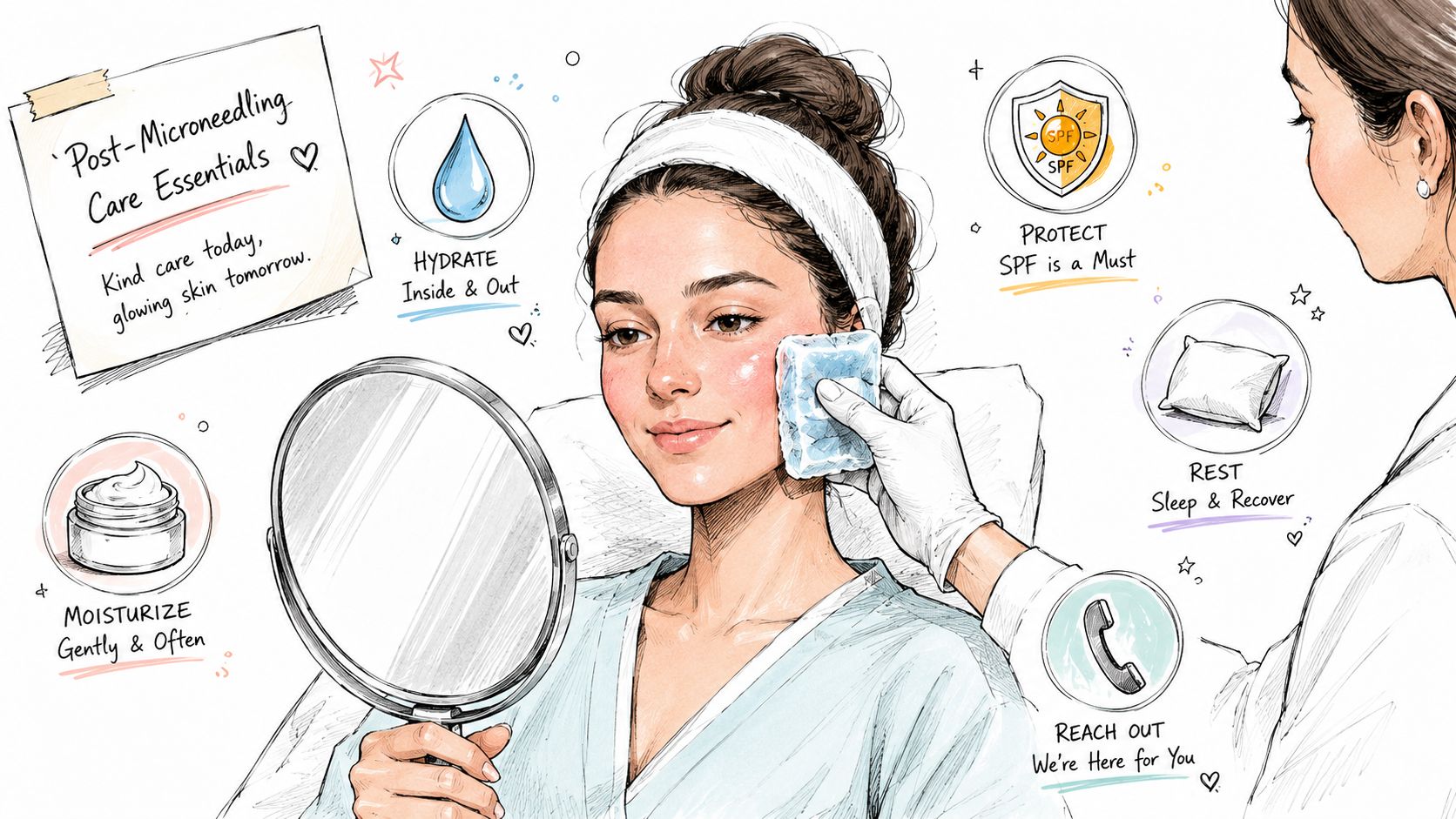
At ProMD Health Bel Air, the team usually settles the skin first, then gives you a mirror once soothing support is in place, often with medical-grade hydration and a cooling approach that helps the barrier calm down. That early handling matches the kind of aftercare that matters most during the first 24 to 48 hours, when redness and tightness are common and the skin reacts more easily than usual. For a more detailed post-microneedling skin care routine, post-microneedling skin care routine gives a clear at-home reference for the same barrier-support phase.
Practical rule: if the face looks sunburned and feels warm, that can still be a normal response. The job is to cut friction, heat, and actives, not to force the flush down with stronger products.
Tyra Lindblad, Kate Maguire, or Amanda Pittillo, PA-C will usually reinforce the same immediate priorities before you head out. Keep your hands off your face as much as possible, use cool compresses only if the clinician tells you to, and keep the first few hours quiet so the channels can close without extra irritation. If you want the treatment context behind the procedure itself, the office guide at ProMD Health Bel Air's collagen induction therapy overview fits naturally with this recovery plan.
What matters most is the biology. Redness is part of the healing response, not a failure, and the next several days are about protecting that response so the skin can do the remodeling work it was set up to do.
Your First 24 to 48 Hours Step by Step
The first day is about restraint and clean handling. Leave the skin alone for the opening hours, then wash only when it is time, using lukewarm water and a fragrance-free cleanser. Hold makeup, retinoids, vitamin C, AHAs, and BHAs while the barrier is still reactive, and keep sun exposure limited during this window. Healthline's microneedling aftercare guidance also points patients toward sun protection and a very simple routine in the early phase.
The first night matters most
Stay upright for the first few hours if you can, because lying flat right away can make swelling feel worse. Before bed, use a clean pillowcase, keep your hands off your face, and apply only the simplest hydration layer your clinician recommended.
Reducing friction is the point. Rubbing, scrubbing, and checking the skin every hour usually create more irritation than the treatment itself.
When you cleanse, pat the skin dry instead of wiping it. A gentle hydrating cleanser and a hyaluronic acid serum are the kind of Skin Shoppe staples the Bel Air team often points patients toward for this window, because they support water retention without adding acids or fragrance-heavy extras.
What to avoid while the channels are still fresh
Skip makeup, exercise, and any active ingredients that can sting a compromised barrier. That includes retinoids, vitamin C, AHAs, and BHAs, especially while the skin is still pink and sensitive. The first 24 to 48 hours are for controlling heat, friction, and chemical irritation, not chasing a faster-looking finish.
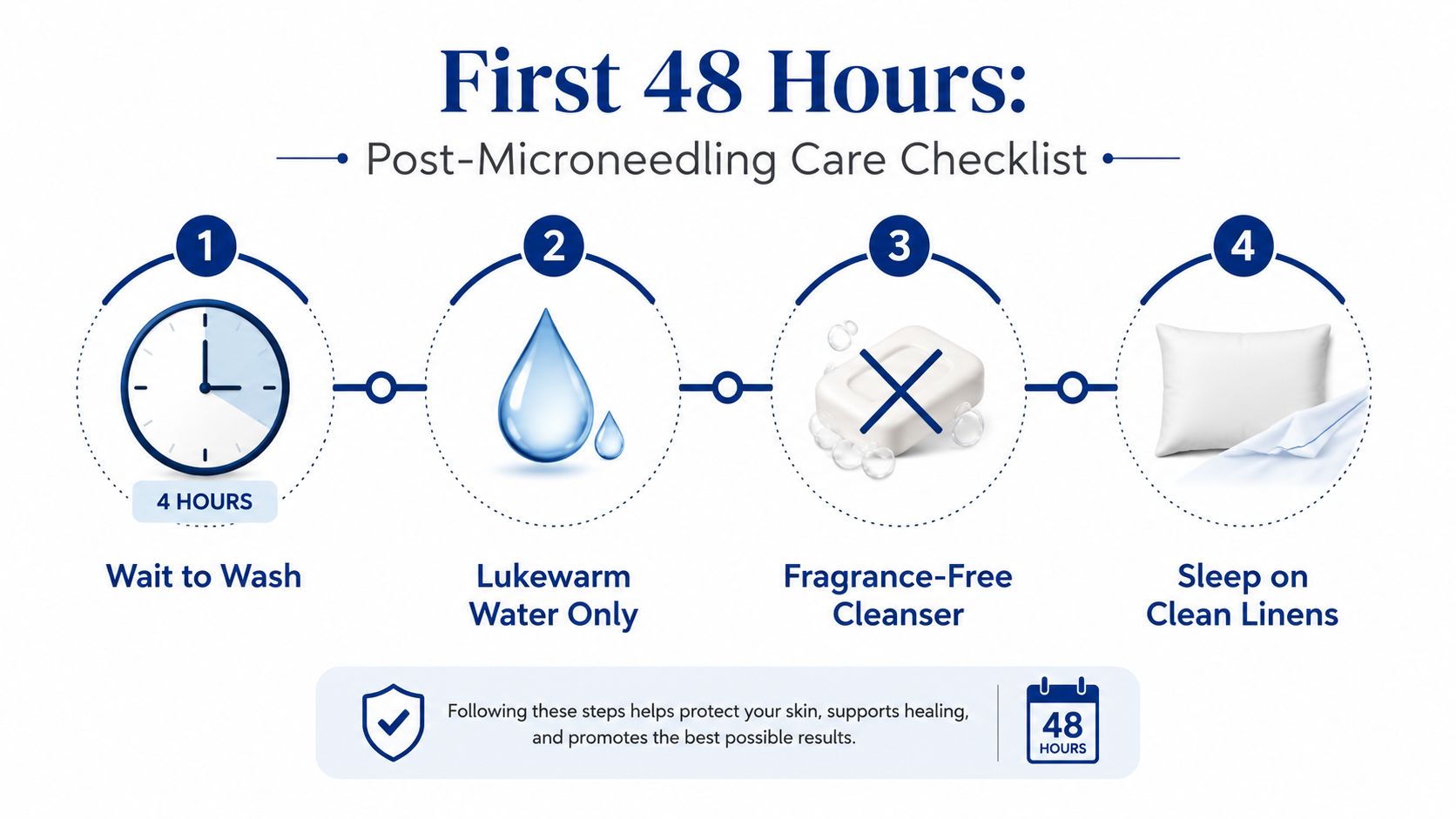
A simple day-one and day-two mirror checklist is enough:
- Wait to wash: give the skin the quiet time it needs before the first rinse.
- Use lukewarm water only: hot water can make the flush feel worse.
- Choose fragrance-free cleanser: keep the formula plain and low-irritation.
- Sleep on clean linens: protect the skin from bacteria and friction overnight.
If the skin feels tight but calm, you're usually on track.
Days 3 Through 7 of Microneedling Recovery
By day 3, the face often shifts from red and hot to dry, tight, and a little rough. That sandpaper-like feel is common, and mild crusting or flaking can show up for 1 to 5 days after treatment before it clears on its own, which is why this is still a no-scrub phase even when the skin looks dull. The skin is still rebuilding under the surface, so texture changes usually lag behind how it looks in the mirror.
Rebuilding without irritating the barrier
Morning should stay simple. Use a gentle cleanse, follow with antioxidant-free hydration, then apply SPF 30 or higher if you're going outdoors, especially if you're going to be in the car, walking outside, or spending any time in the sun around Bel Air or the trails nearby. A richer moisturizer can come back in once the skin feels less hot, but exfoliating acids still need to wait because the barrier is only gradually rebuilding.
The temptation at this point is to clean up the texture with a scrub or a peel. That usually backfires. Flaking skin is supposed to shed naturally, and pulling it off too early can create unnecessary inflammation and uneven healing.
A realistic day in Bel Air
A typical morning in this window looks like this, cleanse gently, hydrate, apply mineral sunscreen, then add a hat if you're heading out for a walk or errands. At night, cleanse again, then use a ceramide-rich repair cream to support the barrier while you sleep.
The products from the ProMD skincare line used at Bel Air check-ins are chosen with that routine in mind, simple textures, low sting, and formulas that do not add extra exfoliation while the skin is still sensitive. That is the kind of support that fits this recovery week better than anything aggressive.
If the skin is flaking, the best move is usually less, not more. Let the dead skin release on its own.
If the texture feels odd but the redness is fading, that's usually part of the transition. Lauren Mason, PA-C, MSHS or Paige Scott can help talk through texture questions if something seems off, especially if the skin starts feeling more inflamed instead of less so.
Recommended Products From The Skin Shoppe
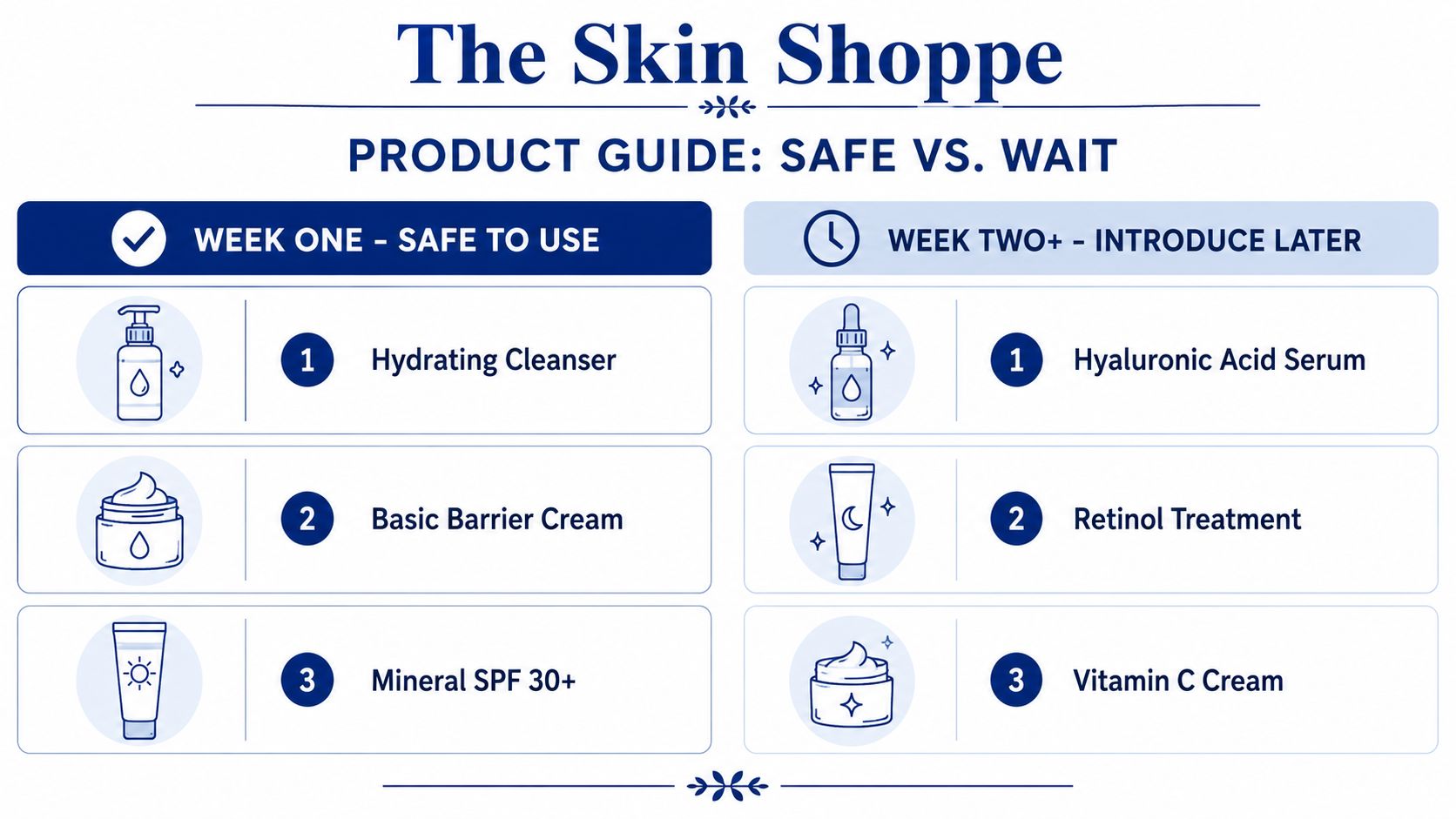
The easiest way to overcomplicate microneedling aftercare is to shop for the wrong textures too soon. In week one, the skin needs barrier repair, hydration, and low-friction support, not brightening acids or strong resurfacing formulas. That's why the safest products are usually the plainest ones, a gentle cleanser, a basic moisturizer, and a mineral sunscreen that doesn't sting.
What belongs in week one
A hydrating cleanser and a barrier cream are the right starting point because they protect the skin without adding extra variables. Hyaluronic acid can be useful once the skin has settled, since it draws in water, but I prefer to keep the formula simple and fragrance-free when the channels are still fresh.
The same logic applies to SPF. A mineral sunscreen, especially SPF 30 or higher, is a better fit for early recovery than anything that feels heavy, stings on application, or tempts you to rub the face repeatedly.
What waits until the skin is calmer
Retinol, vitamin C creams, glycolic acid, salicylic acid, benzoyl peroxide, and physical scrubs belong on pause while the barrier is healing. Several post-care guides extend that caution to 1 week to 2 weeks for exfoliating actives, and that buffer protects the collagen-stimulating work you just paid for.
A simple way to think about it is this. Week one is for support, week two and beyond is when you can start adding back more active products if your clinician says the skin is ready. The office retail guidance at what skincare line ProMD uses can help you sort what fits that timeline without guessing at home.
If a product tingles in a way that feels sharp, hot, or persistent, that's not a sign it's “working.” It's usually a sign to stop and go gentler.
Sun, Sweat, and Heat Restrictions
The sun is one of the easiest ways to undo a good microneedling result. In the early healing window, the skin is more vulnerable to irritation and pigmentation changes, so the safer approach is broad-spectrum protection plus deliberate avoidance of direct exposure whenever you can. One aftercare guide recommends broad-spectrum sunscreen for the first 2 weeks, while another specifies SPF 30 or higher and avoiding direct sun for 5 to 7 days. Healthline's aftercare guidance and the Park Dermatology post-care sheet support that same sun-first mindset.
Heat and sweat can be just as disruptive
Hot yoga, saunas, steam rooms, and intense cardio all push heat and sweat into skin that's still closing and normalizing. A common rule of thumb is to keep those off the calendar for about 1 week, especially if the face still feels flushed or tender, and to be cautious with chlorinated water for longer if the skin is still irritated.
Bel Air weather adds another wrinkle. Summer humidity can make skin feel sweatier than it really is, and the UV index can change the way a short walk or quick errand feels on freshly treated skin. That matters for commuters, gardeners, and anyone heading out toward the Ma and Pa Trail, because “just a few minutes outside” can still be enough to aggravate a healing face.
A practical outdoor plan
Use a mineral SPF 30 or higher, reapply as directed if you're out for extended periods, and add a hat when you can. If you're going to be outdoors, keep the exposure short, avoid direct sun when possible, and treat the first week as a protection phase rather than a normal skincare week.
Heat doesn't just make the face red. It can make the skin feel more inflamed than it actually is, which leads people to overcleanse or over-treat it.
That's usually where trouble starts. The better move is to lower the heat load, keep sweat off the skin when you can, and let the surface recover at its own pace.
Normal Healing Reactions Versus Warning Signs
A lot of post-treatment anxiety comes from staring at the mirror and assuming every change is a problem. In reality, uniform pinkness, mild swelling, tightness, itching, and light flaking are all part of expected recovery after microneedling, especially in the first several days. The key is whether those reactions are easing or escalating.
What usually fits the normal pattern
If the skin is gradually less red, slightly dry, and shedding tiny flakes without pain, that's a normal course. Mild crusting can happen in the first several days, and it should lift naturally without picking or scrubbing.
- Let flaking release naturally: forcing it off can create more irritation than it removes.
- Skip exfoliation: scrubs and acids can turn a normal recovery into a prolonged one.
- Avoid scratching: even a small nail scratch can leave the skin more reactive.
Picking matters more than people think, especially for patients with deeper skin tones or mature skin that can hold onto pigment longer after inflammation. Post-inflammatory hyperpigmentation is harder to manage than temporary flaking, so the safest move is to leave the skin intact while it heals.
When to call the office
If pain increases after day 3, if you see yellow crusting, blistering, hives, or any sign that looks infected, that's no longer normal recovery. The same goes for worsening redness instead of fading redness, or anything that feels like the skin is moving backward instead of forward.
Natalie Shek or the on-call ProMD Health Bel Air team should be contacted if symptoms are getting sharper, not quieter, or if you're unsure whether a reaction is within the expected range. Treatments should stay on hold until the skin is fully cleared, because adding another procedure too soon can make the irritation harder to settle.
Normal healing gets calmer as the week goes on. Warning signs usually get more uncomfortable, not less.
Follow-Up Timing and Booking Your Next Session
You can tell a lot about microneedling recovery by the first few days, but the next appointment still needs to wait until the skin has settled. In Bel Air, that usually means giving the barrier time to calm down, then booking the next session on a rhythm that matches the healing response, not the calendar. Spacing treatments properly helps the skin finish what the needles started, and it keeps you from treating over irritation that has not fully resolved.
The usual follow-up window is at least 3 weeks, with 4 to 6 weeks often used between sessions. That range gives the skin time to remodel before the next pass. If your skin stays pink longer than expected, feels tight for too long, or still reacts to basic products, the timeline should be adjusted instead of forced.
How to plan the next appointment
Texture change, tone refinement, and mild scar softening usually take more than one visit. A single treatment can start the process, but the follow-up visit is where the skin's response tells us whether the next session should stay conservative or be adjusted. I tell patients to watch the week after treatment closely, because that recovery pattern gives more useful information than the treatment day itself.
If you want a steady treatment series, schedule the next check-in before you leave. That simple step helps reduce post-op no-shows, and it keeps the plan moving while your skin is still in the proper healing window. For a Bel Air patient balancing work, errands, and recovery, it is easier to hold a slot than to try to find one later when the skin is ready.
Use the office between visits
If a new product stings, a breakout appears, or one area keeps looking rougher than the rest, contact the office before changing your routine on your own. The ProMD team can help you decide whether the skin is still within the normal healing range, whether home care needs to be simplified, or whether the next appointment should wait a bit longer.
If you want to review the treatment itself before booking again, the microneedling page at ProMD Health Bel Air is a practical place to start. That same team can also help you fit skincare or a later facial around recovery so you are not stacking services too close together while the skin is still reactive.
If your skin is calmer by the end of the week, that usually points in the right direction. If symptoms are getting sharper instead of quieter, the office should hear about it before another session is set.