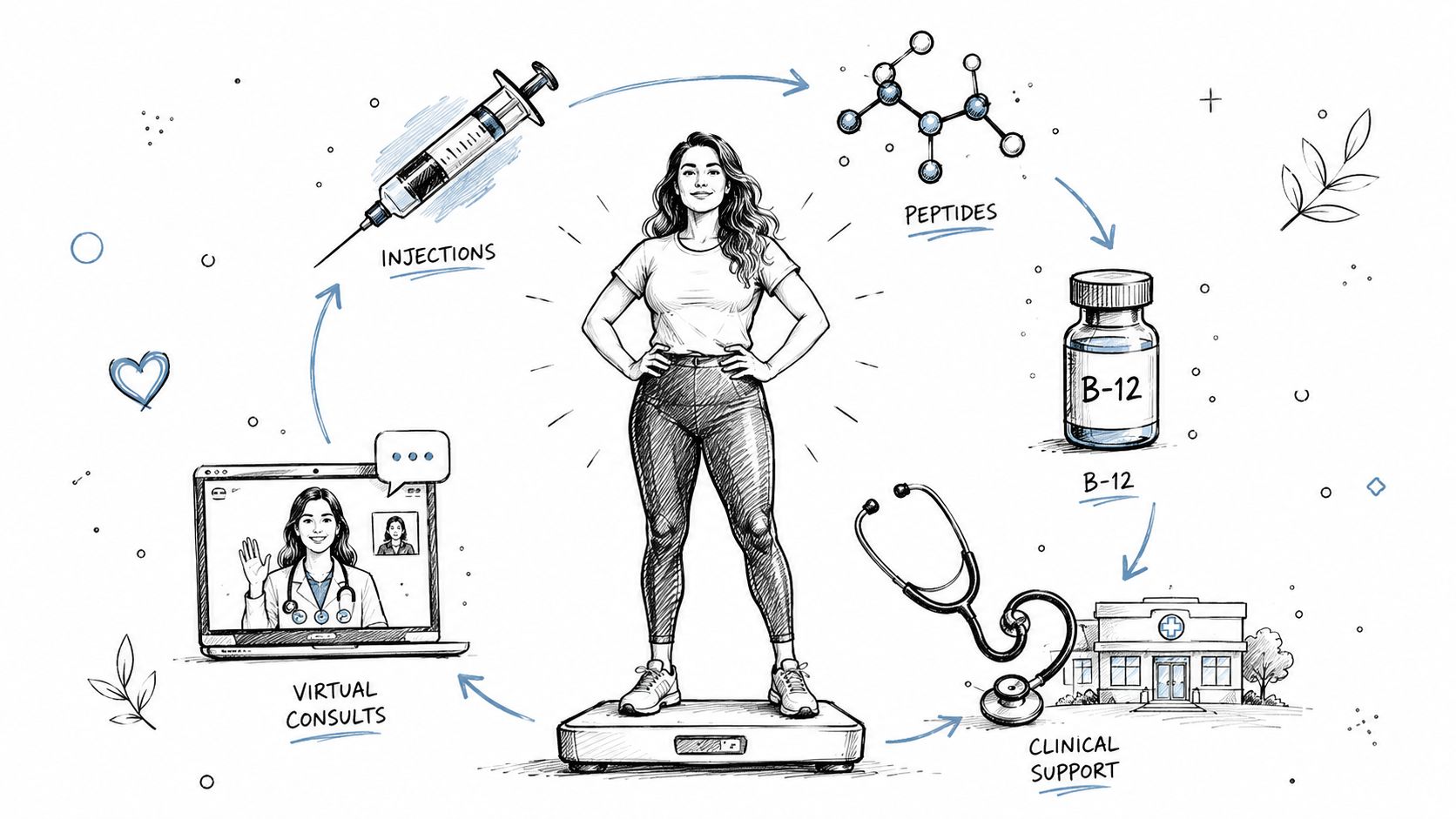
You've probably had this moment already. You've been walking more, tightening up meals, maybe trying an app or two, and the scale still keeps inching the wrong way. In Bel Air, that often shows up after a stressful stretch, around hormone shifts, or when your routine looks fine on paper but your body doesn't seem to respond the way it used to. That's usually the point where people start wondering whether they need more than advice and willpower.
Medical weight loss solutions exist for exactly that reason. They bring a clinician into the process so weight isn't treated like a moral test, but like a health issue that deserves assessment, monitoring, and a plan that can be adjusted over time. If you've ever felt dismissed or told to just eat less and move more, the rest of this may feel a lot more relevant than another generic diet article.
Table of Contents
- When Dieting Alone Stops Working
- What Medical Weight Loss Actually Means
- The Core Tools Used in a Medically Supervised Plan
- How Care Is Delivered at the Bel Air Clinic
- Who Is a Good Candidate and Who Should Pause
- Timeline and Realistic Results
- Trade-Offs Most Articles Skip
- Booking Your Consultation at ProMD Health Bel Air
When Dieting Alone Stops Working
A common Bel Air story sounds like this. A person is busy, generally healthy, and not overeating in any obvious way, yet their clothes fit differently every year. They may have tried cutting carbs, joining a gym, tracking calories, or starting over every Monday, only to feel like the progress never lasts.
That's where medically supervised care starts to make sense. The body doesn't always respond to weight loss the way people expect, and scale weight can hide what's really changing underneath. If you want a plain-language explanation of that mismatch, why the scale misleads is a helpful resource because it separates fat loss from simple changes in water, food volume, and lean tissue.
In a clinic setting, the conversation changes from blame to pattern recognition. A clinician looks at whether the issue is appetite, hormones, medication side effects, sleep, stress, or an actual metabolic barrier. That doesn't mean every patient needs prescription treatment, but it does mean the next step is more thoughtful than another restrictive plan.
Practical rule: If your effort has been steady but your results keep slipping away, the problem may not be effort. It may be that your body needs a different tool.
For many adults, that shift is the relief. Medical weight loss solutions give structure to a problem that too often gets treated like a personality flaw. At a local clinic, the goal isn't to shame someone into smaller portions. It's to find out what's driving the weight change and what kind of support is realistic, safe, and sustainable.
What Medical Weight Loss Actually Means
Medical weight loss is supervised weight management. In plain language, it means a clinician helps you reduce body weight using a combination of assessment, treatment, and follow-up instead of leaving you to figure it out alone. The FDA describes weight loss and weight management therapies as ranging from healthy eating and exercise to prescription medicine, medical devices, and surgery, which shows how broad the field has become as a medical specialty rather than a one-size-fits-all program. That broader toolkit also reflects the way care has moved into multiple settings, including primary care, clinics, community programs, dietitian-led support, and web-based programs, as noted by the Obesity Action Coalition.
A useful way to think about it is this. Going it alone is like trying to find your way with a map and no help when the road changes. A supervised plan is more like having a pit crew, someone checks the numbers, adjusts the plan, and keeps you moving toward the goal instead of guessing after every setback.
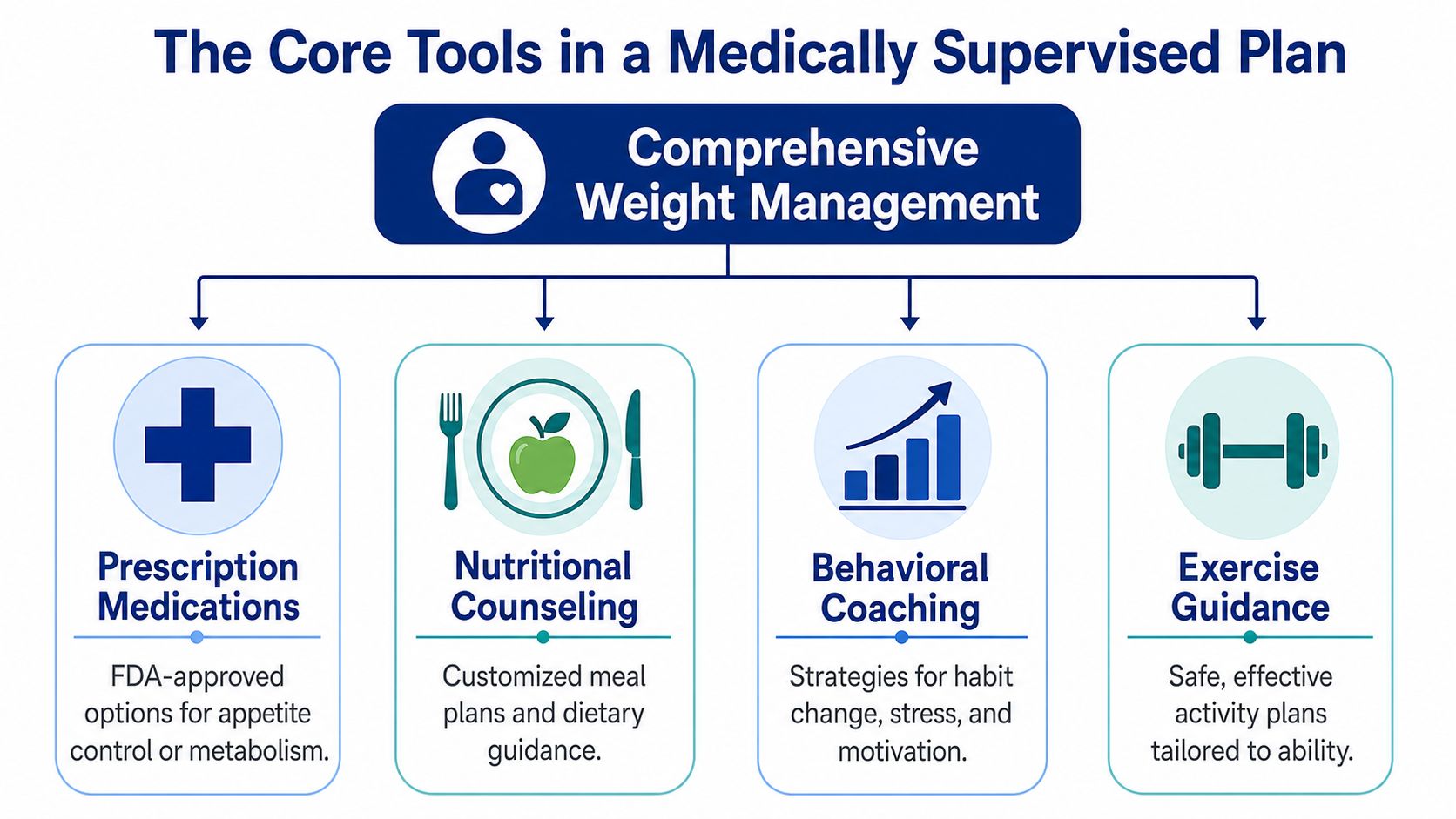
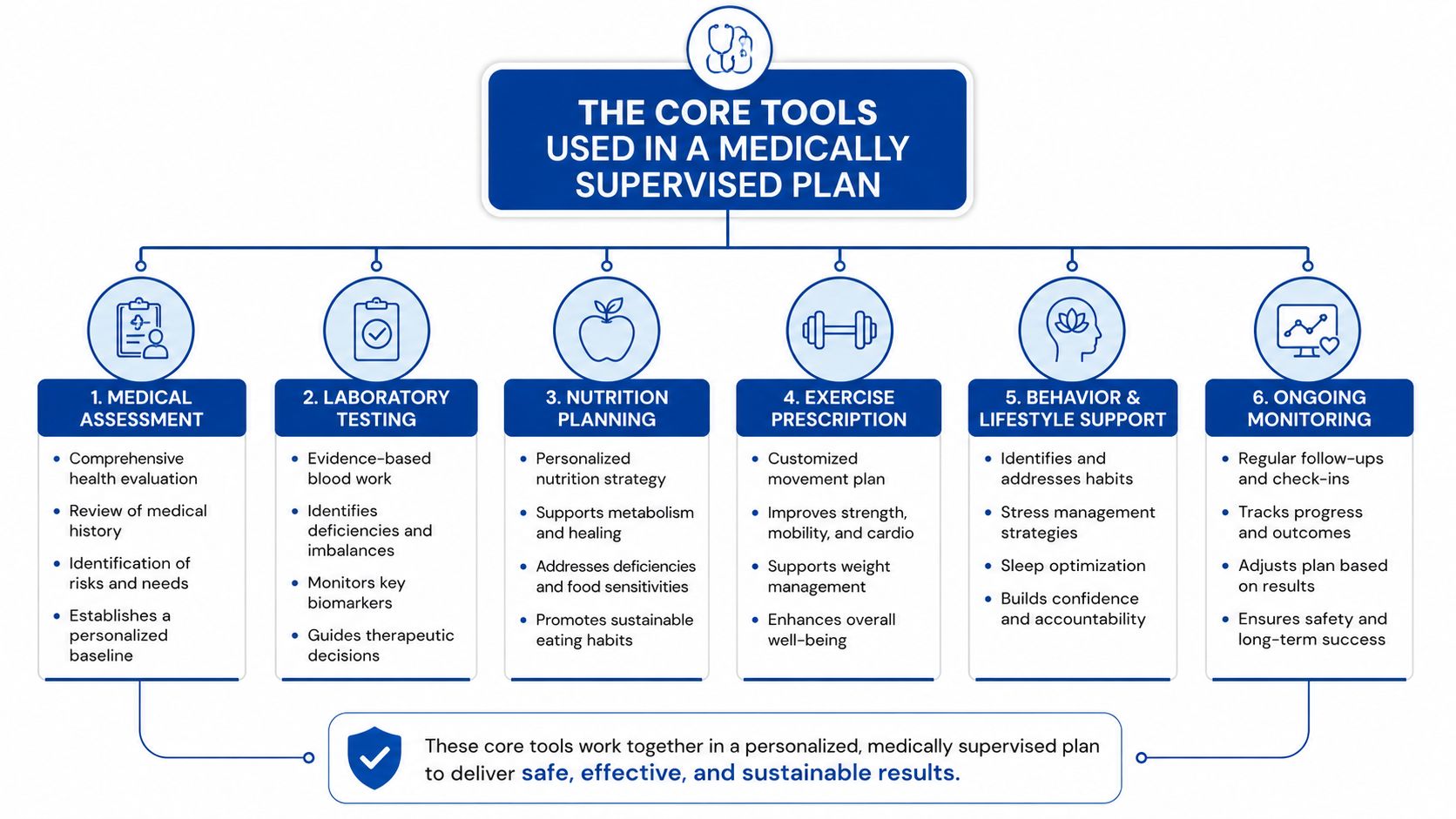
That usually includes four building blocks. First is the clinical assessment, where your history, medications, weight pattern, and goals are reviewed. Second is lab work when it's appropriate, because weight gain can overlap with blood sugar issues, lipid changes, liver strain, or hormone concerns. Third is the actual treatment plan, which may include medication, nutrition guidance, exercise support, or other tools. Fourth is accountability, meaning follow-up visits that let the team adjust the plan instead of waiting until things drift off course.
Weight management works better when it's treated like chronic care, not a motivation contest.
This is also why medical weight management is different from cosmetic body contouring or an unregulated online program. A clinic is watching for safety, side effects, and whether the weight coming off is the kind of change you want. The EMA guideline recommends measuring body weight reduction as the main efficacy endpoint, while also checking waist circumference or waist-to-hip ratio and using tools such as DEXA, MRI, or CT when body composition matters, because the scale alone can be misleading EMA guideline.
The Core Tools Used in a Medically Supervised Plan
The most important thing to understand about medical weight loss solutions is that they work best in combination. No single tool does all the work, and the best plan often layers medication with nutrition support, lab monitoring, and ongoing visits.
Prescription injections and appetite control
The newest prescription therapies have changed what's possible. A 2025 systematic review in Nature Medicine found that obesity medications were more likely than placebo to produce at least 5% total body weight loss, and that reductions above 20% were seen only with semaglutide and tirzepatide Nature Medicine review. That doesn't mean everyone reaches those numbers, but it does show why injections are such a big part of current care.
At a local clinic, these therapies are usually added when someone needs more appetite control than lifestyle changes alone can provide. They're not used as a magic fix, and they're not prescribed in isolation. They're part of a monitored plan where dose, tolerance, and progress are reviewed over time.
Peptides, B-12, and hormone-aware planning
Supportive options matter too. In ProMD Health Bel Air, that may include peptide therapy, B-12 treatments, and hormone replacement therapy when weight, energy, and hormone balance overlap. These pieces don't replace weight-loss medication, but they can fit around it when a patient's history or lab picture suggests they should.
If you're curious about one part of that support piece, the clinic's own page on B-12 shot side effects is a practical place to start because it explains what patients usually ask before deciding whether that part belongs in their plan.
For people who want to understand the role of metabolism testing in a broader program, metabolic testing for weight loss can help frame why clinicians often look beyond the bathroom scale. The point isn't to chase numbers for their own sake, it's to match the plan to the patient.
Why these tools are never used alone
A medication may reduce appetite, but the clinic still has to check whether protein intake, hydration, and activity are keeping up. A hormone plan may improve energy or stability, but that doesn't automatically change eating habits. A good program keeps the parts connected so the patient isn't left trying to manage each piece alone.
Medical weight management is strongest when the plan is coordinated. That's the advantage of a supervised clinic, the tools are paired with the follow-up needed to make them usable in real life.
How Care Is Delivered at the Bel Air Clinic
For most patients, the experience starts at home. A virtual consult makes it easier to talk through symptoms, goals, and health history without taking half a day off work, which matters for people in Bel Air and nearby communities who are juggling schedules, transportation, and family obligations. After that, the clinic uses the in-person visit for the parts of care that need hands-on attention, like exam findings, injections, and lab review.
The first month usually has a clear rhythm. A patient completes intake forms, meets with the team, gets labs ordered when needed, and receives a personalized plan. If medication is appropriate, the clinician explains how to start, what side effects to watch for, and when to check back.
At the 2023 Emmorton Rd location, the in-clinic piece gives the team a chance to see how the plan is landing in real life. That is where a weight loss injection, B-12 support, or another component can be coordinated with hormone-aware planning instead of being treated like a separate issue.
A simple example helps. A person may begin with a virtual consult, then come in for the first injection or follow-up visit, then check in again after a couple of weeks to review appetite, tolerance, and progress. Monthly reviews then give the team enough information to decide whether to continue, adjust, or pause a treatment.
The internal medical weight management page for the Bel Air office is here, medical weight management, and it fits the way this clinic blends virtual access with hands-on care. That combination matters because a plan can only work if the patient can stay connected to it.
Who Is a Good Candidate and Who Should Pause
The people who tend to benefit most are usually adults with weight that has resisted repeated lifestyle efforts, especially when the scale is paired with health markers like high HbA1c, blood pressure, or lipids. In that setting, the goal isn't just less weight. It's better clinical control and a plan the patient can live with.
The screening conversation also has to be honest about when to pause. Pregnancy changes the picture, and certain endocrine conditions, medication interactions, or a history of pancreatitis can make a supervised plan more complex. Uncontrolled mental health concerns also deserve attention before anything else is added.
A good consult should feel specific, not generic. If the questions are detailed, that's a good sign the team is screening for safety rather than selling a shortcut.
A clinician should also review current prescriptions, because some medicines can work against weight goals or complicate treatment decisions. That's where a medical team's role becomes practical, not theoretical. They can look at the full picture, including labs and history, and coordinate with a primary care provider if the case needs a shared approach.
If you're trying to self-screen before booking, ask yourself two questions. Has weight been stubborn despite real effort, and do I have any medical issues, medications, or life circumstances that should be discussed upfront? If the answer to either is yes, a consultation is probably worthwhile.
Timeline and Realistic Results
A patient sitting in a Bel Air consult often wants one clear answer first, how long until anything changes. The honest answer is that medical weight loss usually changes in layers. Appetite may calm before the scale moves much, then clothes fit differently, and only later do the longer-term body composition changes become easier to see. That pacing can feel slow at first, but it is often a sign that the plan is being adjusted rather than rushed.
Published benchmarks help set a realistic frame. Evidence summaries note that GLP-1 receptor agonists and dual incretin agonists can produce about 15% to 25% total body-weight loss, while older therapies are generally lower, around 5% to 10% NCBI Bookshelf summary. A separate review found tirzepatide averages about 20.2% weight loss, which is one reason newer injections have drawn so much attention. These figures give a clinic and patient a starting point for discussion, not a promise that every person will land on the same result.
That is also why the first few visits matter so much. A good early response is not just a smaller number on the scale. It can mean the appetite signal is easier to manage, the patient is able to follow the nutrition plan more consistently, and the treatment dose is being matched to tolerability instead of pushed too fast.
At ProMD Health Bel Air, success should be measured in more than pounds alone. Waist size, blood pressure, energy, and lab results all belong in the conversation, because a person can lose weight and still miss important metabolic changes if no one checks closely enough. The monitoring schedule recommended in the clinical summary includes weight, BMI, blood pressure, and heart rate at months 1, 3, and 6, with labs such as lipids, liver and renal function, HbA1c when indicated, and lipase for GLP-1 therapy repeated as needed NCBI Bookshelf summary. In a clinic that also coordinates weight loss injections, peptides, B-12 support, and HRT interaction, those checkpoints help the team see whether the plan is helping or needs to be adjusted.
For a detailed breakdown of what to expect, including costs and clinic logistics, see our guide on physician-supervised weight loss costs and clinics.
Trade-Offs Most Articles Skip
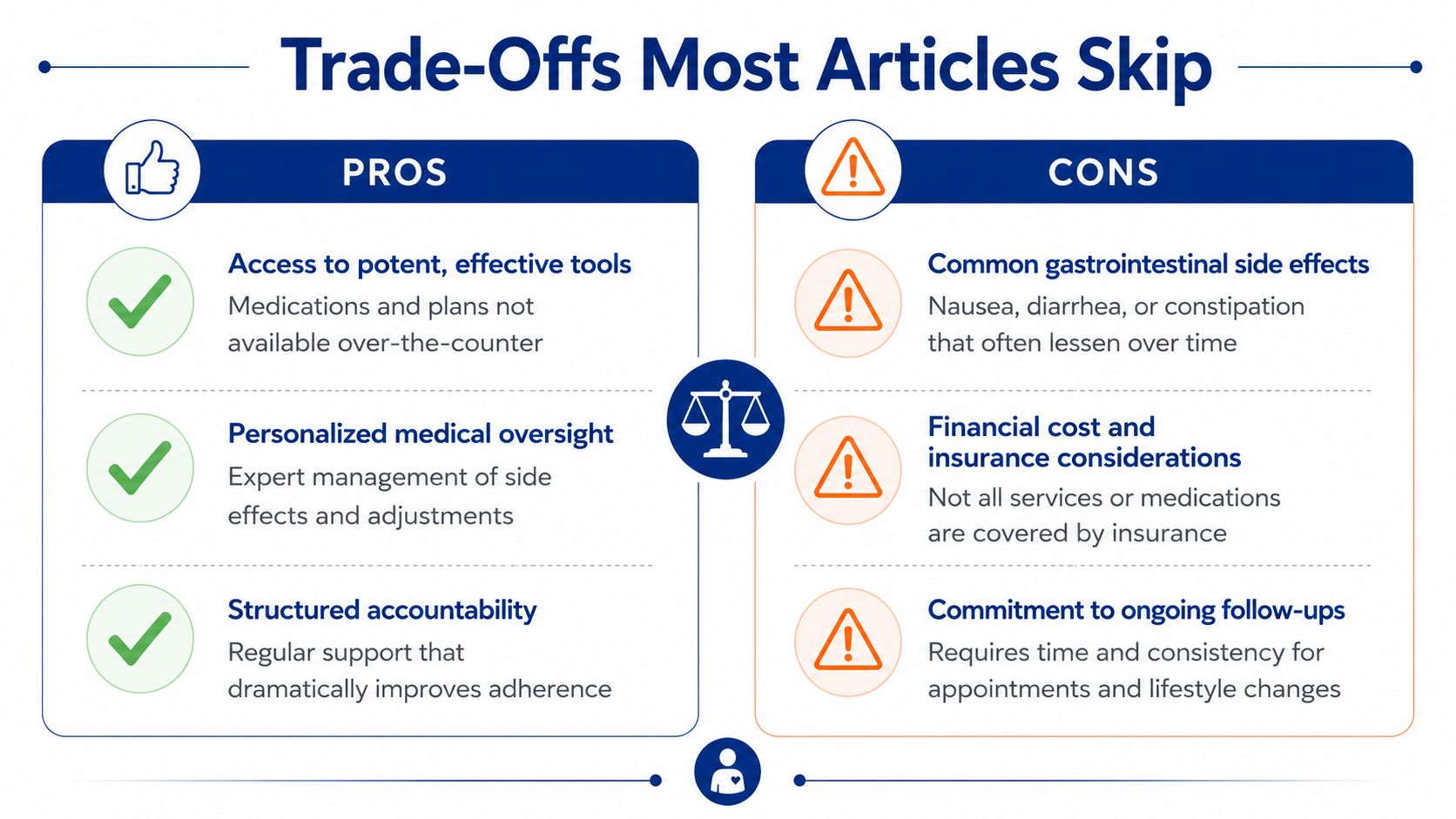
The benefit side is easy to sell. The trade-offs are what people want explained before they commit. The first issue is side effects, especially nausea, diarrhea, or constipation with GLP-1 style injections. Those symptoms often improve, but they can still be enough to make someone stop if the dose is pushed too quickly or if food choices do not match the medication.
The second issue is muscle loss. Rapid weight loss can trim lean tissue along with fat if protein intake, resistance work, and follow-up are not part of the plan. A supervised clinic should keep encouraging strength training and nutrition that supports muscle, not just appetite reduction.
The third issue is durability. Clinical reviews and guidance make it clear that stopping therapy often leads to regain, which is why obesity care is increasingly treated as long-term management rather than a short project Nature Medicine review. That does not mean a person must stay on medication forever, but it does mean discontinuation should be a planned decision, not an impulsive one.
Some programs also add a taper or step-down plan when appropriate. That can make sense if the patient has reached a stable point and the team wants to see whether the result holds with less medication support. In other cases, continued treatment is the safer path because the body starts to defend the lost weight.
Medical weight loss solutions are not right for everyone at every moment. If a patient needs a different medical pathway, has untreated contraindications, or is not ready for follow-up and lifestyle change, the more honest answer is to wait or choose another approach. The value of a good clinic is that it tells you that directly instead of overpromising.
Booking Your Consultation at ProMD Health Bel Air
If this sounds like the kind of structure you've been missing, the next step is straightforward. Book a virtual or in-clinic consultation, complete the intake paperwork, and bring a short list of your current medications, past weight-loss attempts, and any recent lab results you already have. That gives the team enough to start a real plan instead of guessing.
At ProMD Health Bel Air, the conversation can include weight loss injections, peptide therapy, B-12 support, and hormone-aware planning within a medically supervised visit at 2023 Emmorton Rd, Suite A, Bel Air, Maryland. It's a local program, not a distant brand promise, and the point is to build a plan that fits the way you live.
A CTA for ProMD Health Bel Air.