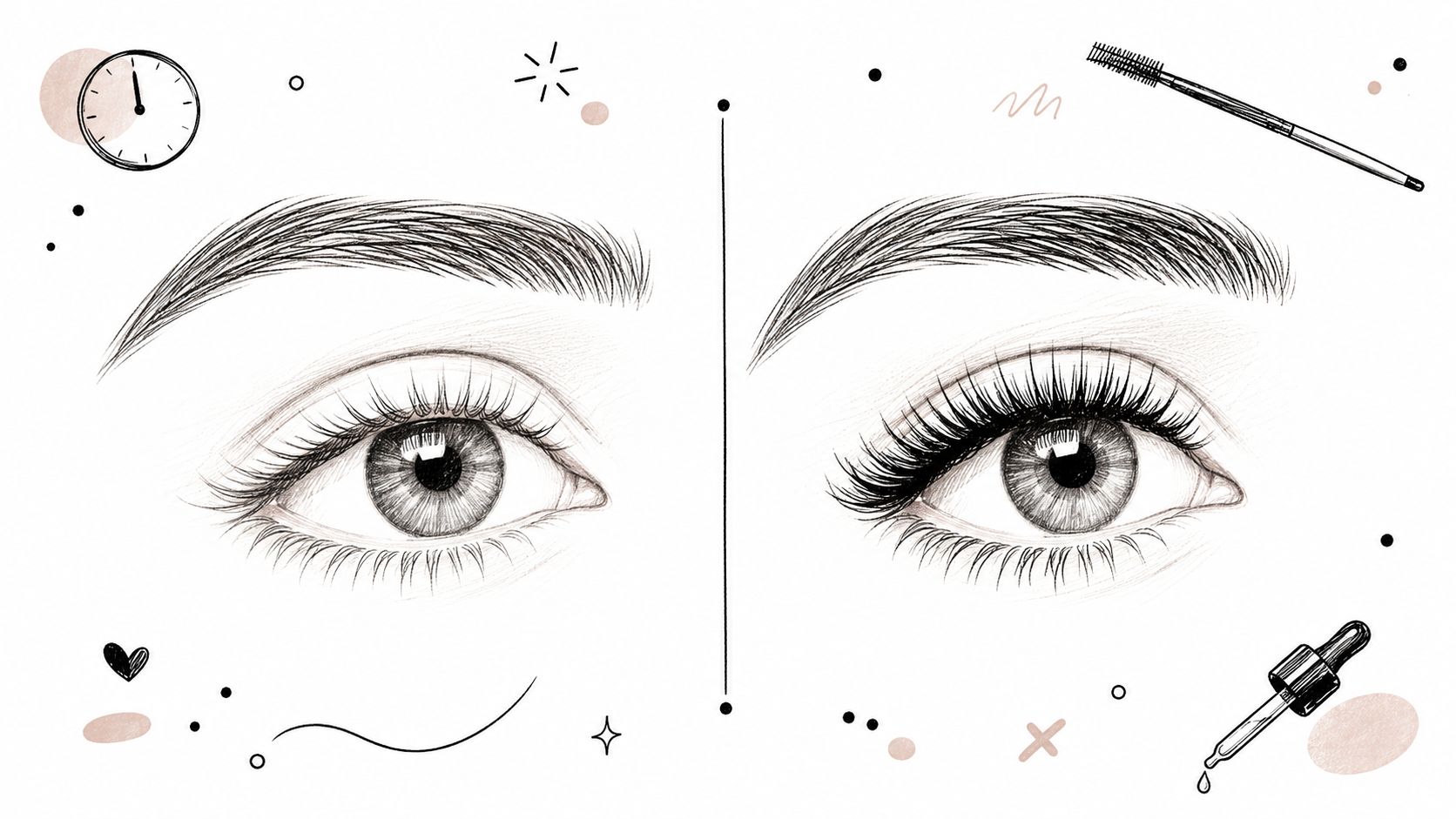
A lash tint darkens natural lashes for about 3 to 5 weeks, and the strongest change is color, not length or fullness. The most dramatic before and after usually shows up right after the appointment, then softens as new lashes grow in and the tinted ones shed.
That's the part many people in Bel Air are trying to figure out when they sit down for the appointment, usually with mascara fatigue, fair lashes, or the hope that their eyes will look more defined without daily makeup. The question isn't whether a lash tint works. It's what it can realistically do for your starting lashes, and what it can't.
Table of Contents
- The Mirror Moment Before a Lash Tint
- What Lash Tinting Actually Does to Your Lashes
- Realistic Lash Tinting Before and After by Starting Lash Type
- How the Appointment Actually Works at ProMD Health Bel Air
- Lash Tinting vs Lash Lifting and When to Combine Them
- Aftercare That Protects Your Tint for the Full Wear Time
- Candidacy, Risks, Pricing, and Booking in Bel Air
The Mirror Moment Before a Lash Tint
The patients who benefit most from a tint usually know the feeling already. They look in the mirror in the morning, see lashes that disappear without mascara, and want something cleaner than makeup but less committed than extensions. In the chair, that usually sounds like one of two things, either “I want my lashes to show up on their own,” or “I'm tired of doing this every day.”
A good lash tint appointment starts with that honest expectation, not with the glossy photo on someone else's feed. Online lash tinting before and after pictures often flatten the difference between darkening and changing the actual structure of the lash. A tint can make lashes read more clearly from a normal viewing distance, but it won't suddenly create length, curl, or density that wasn't there.
Practical rule: If the lashes are very light, the contrast can look striking right after treatment. If the lashes are already dark, the improvement is often more about definition and polish.
That distinction matters in Bel Air because many patients come in hoping for a mascara-free version of a full glam look. What they usually get instead is a cleaner lash line, a more visible upper fringe, and less daily effort. That can be exactly right, but only if the goal is understood correctly.
For patients comparing services and reading about brow care at the same time, it helps to think in terms of maintenance and contrast, not just aesthetics. A tint has its own rhythm, and so do brows, which is why a practical planning guide like the eyebrow threading cost complete guide can be useful if you're organizing a full face refresh.
The best mindset is simple. Come in looking at the lashes you have, not the lashes you wish you had. That keeps the appointment grounded, and it makes the result feel better when you see the mirror after the tint sets.
What Lash Tinting Actually Does to Your Lashes
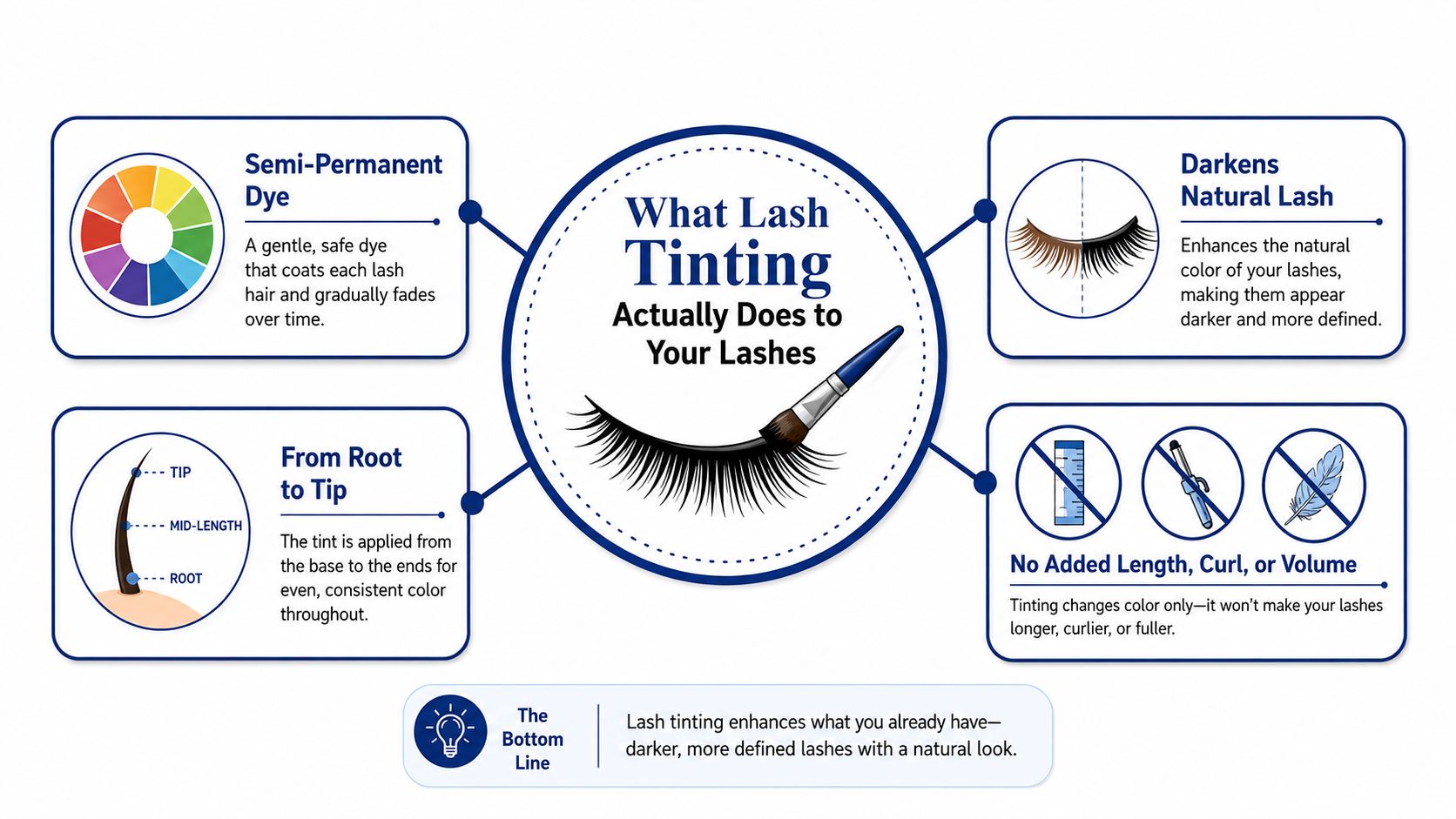
Lash tinting is a semi-permanent dye service for the natural eyelashes. The color coats the lash shaft from root to tip, so the lashes look darker and more defined without adding extra fibers, curl, or thickness. It's a color service, not a structural one.
The change happens on the hair, not the face
That's why the result looks cleaner than mascara smudging, but less dramatic than extensions. The dye sits on the lash itself, which is why the effect depends on the person's natural lash color and how much contrast they need. Very light lashes usually show the biggest visual shift, while dark lashes tend to get a subtler polish.
The chemistry matters too. Professional guidance shows that oxidant strength and processing time affect both color payoff and lash safety. One training guide recommends an oxidant of 1.8% to avoid drying natural lashes, while another specifies a 3% oxidant cream with about 10 minutes of application time for intense results (lash lift and tint training guide). The trade-off is straightforward, stronger processing can deepen the color, but it also raises the risk of irritation or dryness if it's pushed too far.
What it is not
A tint doesn't replace mascara's volume-building effect, and it doesn't curl lashes the way a lift does. It also doesn't make the lash line denser in a literal sense. What it does well is create the look of a more finished natural lash, especially when the client already has enough length to benefit from extra visibility.
A tint should make the lashes easier to see, not make them look like a different type of lash.
In practice, that's why the strongest results are often described as “clean,” “defined,” or “awake” rather than “dramatic.” That's also why a thoughtful consultation matters more than choosing the darkest possible shade. The right tint is the one that enhances the lashes you have.
Realistic Lash Tinting Before and After by Starting Lash Type
A tint is easiest to judge when you look at the starting lash type first. That's where so many generic before-and-after galleries miss the point. Two patients can get the same service and walk away with very different-looking results because one started with pale, straight lashes and the other started with already-dark lashes that only needed sharper definition.
How different lash types usually respond
| Starting Lash Type | Visible Color Shift | Realistic Intensity | Best Paired With |
|---|---|---|---|
| Very light or blond lashes | High contrast, lashes become much easier to see | Most noticeable change | Mascara-free routine, brow grooming |
| Medium brown lashes | Clearer lash line, richer tone | Moderate, polished result | Everyday no-makeup look |
| Naturally dark lashes | Subtle deepening and cleaner edge | Refined rather than dramatic | Lash lift if extra openness is desired |
| Sparse lashes | Darker strands can make the line look more present | Modest boost, not true fullness | Brow shaping or regular mascara use |
| Short lashes | Color helps what's there stand out | Best when the goal is definition, not length | Lash lift for more upward visibility |
For blond or very fair lashes, the change can feel surprisingly dramatic because the eye suddenly has an outline. That's the group most likely to say they look more awake with no mascara at all. For medium brown lashes, the shift is often softer, but still useful because the lashes read more uniformly from root to tip.
What sparse, short, or post-extension lashes need to hear
Sparse lashes are tricky because a tint can't manufacture density. It can darken individual hairs so the eye sees them more easily, but the gaps are still gaps. Short lashes are similar, a tint makes the lashes visible, not longer.
Helpful expectation: Tinting changes the appearance of lashes, not the number of lashes you have.
The wear pattern also matters. A professional eyelash tint typically lasts 3 to 5 weeks, with many references describing the effect as roughly one month before natural shedding makes the color look lighter, and some noting visibility for up to 6 weeks in slower-growing lashes (Cosmopolitan). That fading doesn't usually look like a sudden washout. It's gradual, because the tinted lashes shed and get replaced by new, untinted growth.
That's why the first day can look very crisp, then the next few weeks feel softer, and by the end of the cycle the contrast has eased. The result is still useful, just less intense than the first mirror check after the appointment.
How the Appointment Actually Works at ProMD Health Bel Air
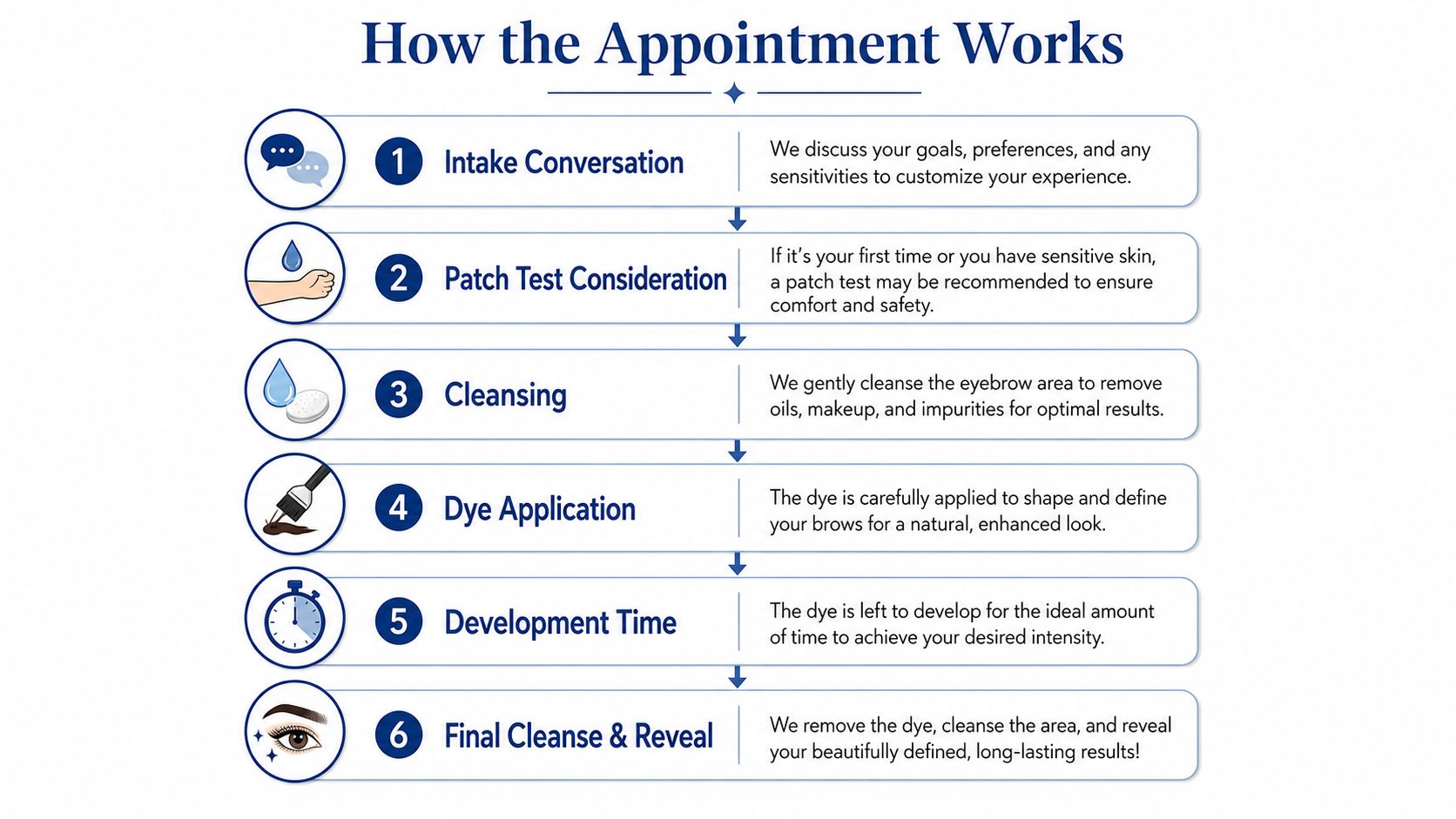
A lash tint appointment is usually quicker and calmer than first-time patients expect. A full lash tint typically takes about 40 minutes maximum, and related lash lift-and-tint guidance says the tinting step itself may take only a few minutes plus roughly 10 to 15 minutes of processing time (ELLE UK). That timing matters because people can plan lunch break appointments without guessing.
What happens from start to finish
The visit starts with a short intake conversation about your lash goals, your sensitivity history, and whether your lashes have been tinted before. If there's any concern about irritation or recent product use near the eyes, that gets addressed before anything is applied. Good prep makes the rest of the appointment smoother.
The lashes are then cleansed so the tint can sit on clean hair. The skin around the eyes is protected, the tint is applied carefully, and the processing window begins. During that time, you might feel very little, maybe a mild awareness of product near the lash line, but not the kind of discomfort that should be ignored.
After processing, the lashes are cleaned again and the result is checked in good light. That last mirror moment is usually where patients notice the shift most clearly, especially if they came in with pale lashes or a lot of mascara reliance.
What to do before you arrive
Come with clean lashes and no eye makeup. Skip mascara, lash serums, oils around the eye area, and anything that leaves residue on the lashes. If your eyes tend to react easily, tell the provider that before the tint starts, because the way the skin is protected and the product is chosen should reflect that.
For patients who like to understand the team before booking, it can also help to read more about the people providing care at the practice. The meet our team page gives a clear sense of the Bel Air clinic setting and the staff behind the service.
A calm appointment usually comes down to clean lashes, clear expectations, and enough time to let the tint develop properly. That's what turns the visit from a beauty errand into a predictable result.
Lash Tinting vs Lash Lifting and When to Combine Them
A lash tint darkens, while a lash lift changes shape. That's the simplest way to separate the two, and it's the distinction that matters most when a patient is trying to decide between them. Tinting creates a darker lash line, while lifting curls the natural lashes upward for a more open look.
Side by side, the goals are different
A tint is best when the issue is visibility. It helps light lashes show up and gives dark lashes a richer finish. A lift is best when the lashes are straight, downward-pointing, or stubbornly flat, because the upward curl changes how much lash is exposed to view.
Guides that compare the two services consistently note that tinting usually lasts about 3 to 4 weeks while the lift tends to last 6 to 8 weeks, and the combined result can be especially useful for patients who want more definition without extensions. The wear pattern is different because each service affects a different part of the lash. One changes color, the other changes shape.
When combining them makes sense
The combined service creates the strongest visual payoff when lashes are both light and straight. That's where the color and curl work together, so the eye reads more open and the lash line reads darker at the same time. If the lashes are already dark and curled, adding a tint alone may be enough.
If both services are done together, the lift should happen first. Multiple professional guides agree on that sequence, because lifting chemistry can weaken or remove pigment if tint goes on first. That order protects the color result and keeps the service efficient.
If the lashes need both color and lift, do the shape first, then the tint.
There's also a maintenance trade-off. A tint alone is a simpler refresh for clients who mainly want definition. A lift plus tint gives more noticeable change, but it also asks for a bit more planning when the result starts to soften over time.
For patients who like a more polished but still natural lash look, the decision often comes down to this. If the issue is “my lashes disappear,” tinting is usually the answer. If the issue is “my lashes disappear and point down,” the combination is often the better call.
Aftercare That Protects Your Tint for the Full Wear Time
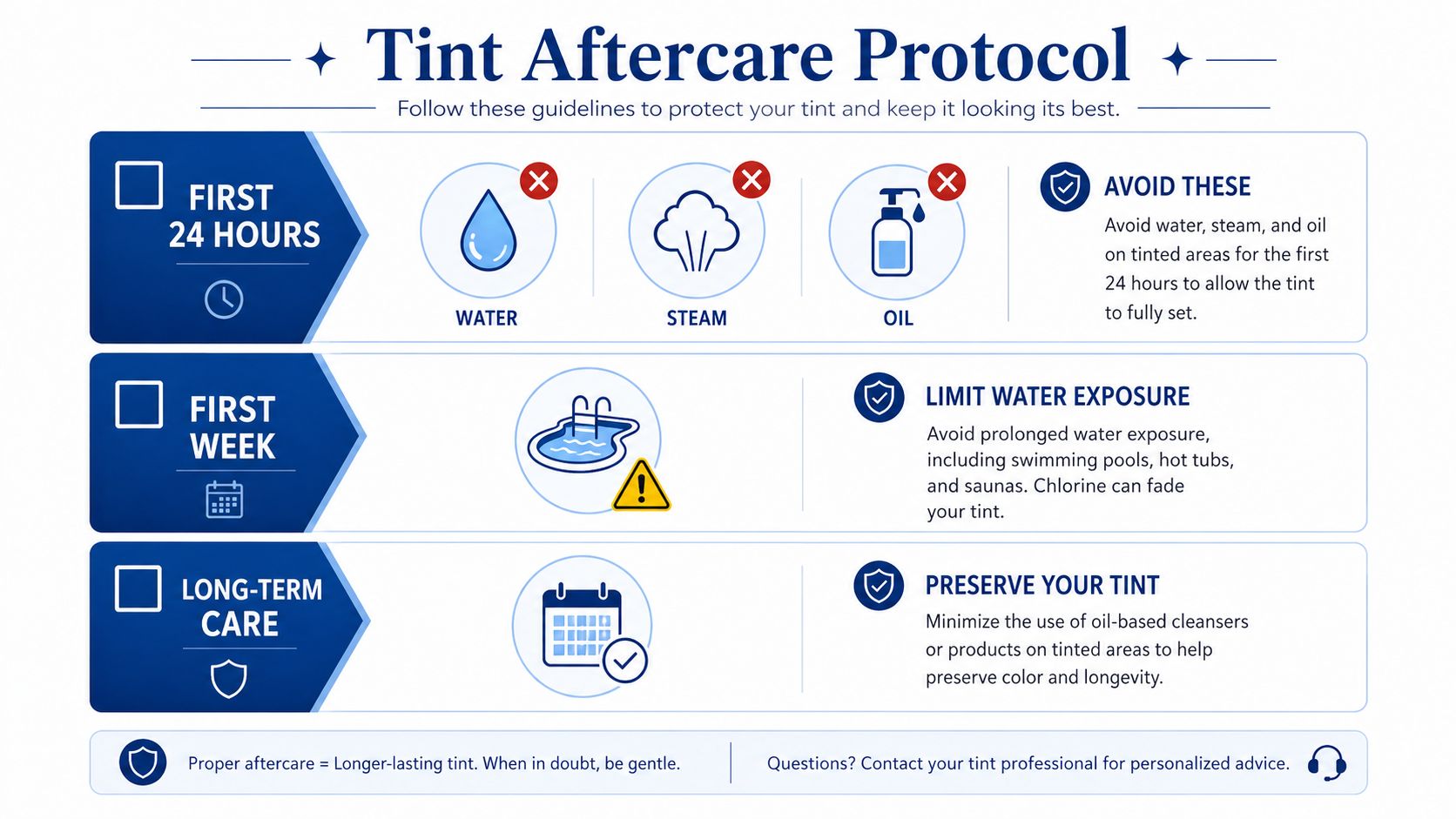
The first day after a tint matters more than the rest of the week. Independent guidance for tint and lift services agrees that water, steam, oil-based products, and eye makeup should be avoided for the first 24 hours, and some sources extend the caution window to 24 to 48 hours after a combined service (lash and brow tinting guide).
The first day protects the set
That first window is about letting the color settle without being broken down too early. Water and steam can interfere with the immediate post-service finish, and oil can make the tint fade faster. Eye makeup adds friction and cleanup that the lashes don't need yet.
The first week is about avoiding habits that speed fading
Prolonged water exposure and chlorine can shorten the life of the tint, which is why swimming right after the service usually isn't the best plan. Once normal routines resume, an oil-free makeup remover is the safer everyday choice because oil-based cleansers can strip color sooner than you'd expect.
After the first week, the goal shifts from strict protection to smart maintenance. That means removing makeup gently, avoiding harsh rubbing, and paying attention to how quickly your own lashes shed. Someone with fast turnover may need a refresh sooner than someone whose lashes hang onto pigment longer.
The simplest rule is the one patients remember best.
Protect the tint early, then stop doing the things that make you scrub at it later.
For readers who are also trying to simplify the rest of their skin routine, a practical overview of product categories can help narrow down what belongs near the eyes and what doesn't. The skincare products 101 page is a useful place to start when you want to make the eye area less reactive.
Good aftercare doesn't make the tint last forever. It just keeps the result looking clean for as much of the wear cycle as possible, which is the goal.
Candidacy, Risks, Pricing, and Booking in Bel Air
Lash tinting suits people who want more visible natural lashes without building a full makeup routine around them. It's a strong option for patients with light lashes, busy mornings, or a preference for low-maintenance grooming. It's also a good fit for someone who likes subtle improvement more than a dramatic lash transformation.
Who should be cautious
Patients with very sensitive eyes should ask questions before booking, especially if they've reacted to eye products in the past. Recent lash extension wear can also complicate things because the lash line may still be recovering from adhesive, removal, or repeated mechanical stress. In those cases, a consultation is smarter than guessing.
The risk profile is usually more about irritation and product compatibility than dramatic downtime. That said, the eye area is delicate, so a cautious approach is appropriate if there's any history of sensitivity. The safest result comes from matching the service to the client's current lash condition, not from pushing for the darkest possible tint.
Pricing conversations should be straightforward. If you're comparing service types or planning a beauty budget, a general pricing plans resource can help you think about how recurring services are usually organized, especially when you're deciding whether to pair lashes with brows or a lift. At ProMD Health Bel Air, the actual recommendation should still come from the consultation, because lash type and desired intensity affect what makes sense.
For patients in Bel Air who want a more noticeable finish, a tint can also be paired with a lash lift or brow service when the goal is a fuller overall frame. Specials and gift cards can be part of that planning for brows and lashes services when available, which makes routine maintenance easier to schedule without overcomplicating the visit.
Booking should feel practical, not intimidating. If you know you want darker, cleaner-looking lashes, the next step is a conversation about your lash type, your sensitivity history, and how much change you want.
ProMD Health Bel Air offers brows and lashes services in a medically supervised clinic setting, including lash tinting and lash lifts for patients who want a more defined natural look. If you're deciding whether a tint is enough or whether a combined approach makes more sense for your lashes, visit ProMD Health Bel Air and book a consultation that fits your schedule.