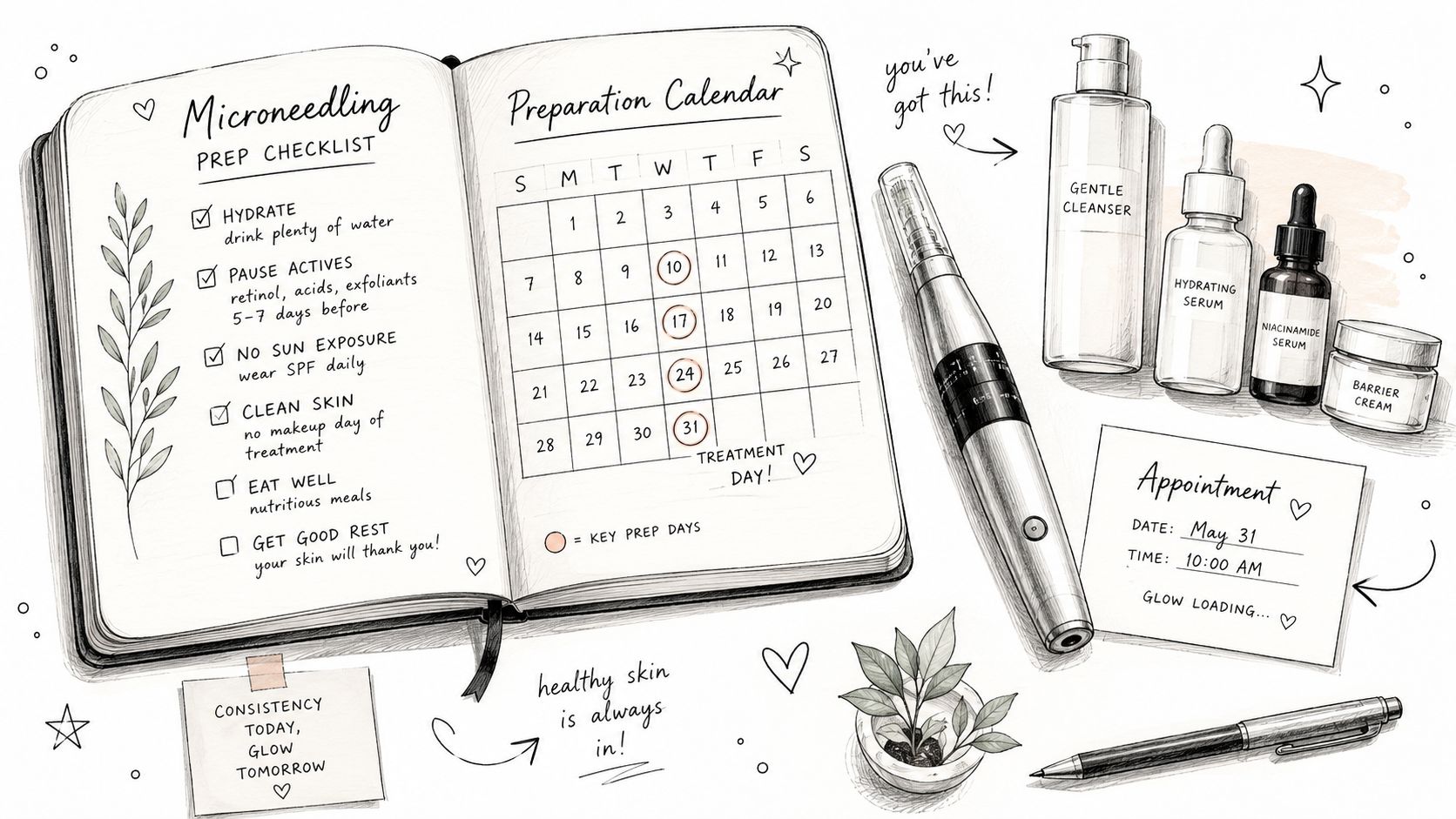
You've got a microneedling appointment on the calendar, your skin is usually doing fine, and now you're staring at the question that matters most, what should you do before you come in? At ProMD Health Bel Air, the answer is more specific than “show up with clean skin.” How to prepare for microneedling depends on barrier health, bleeding risk, and the details of your medical history, because the treatment works by creating controlled microchannels in the skin. A calmer, better-prepared skin barrier usually means less irritation and a smoother visit.
If you're coming in for your first session, the practical goal is simple, arrive with the right information, the right timing, and the right expectations. That includes medication review, skincare changes, sun protection, and knowing when to reschedule rather than push through. For a local overview of the service itself, you can also review this collagen induction therapy guide from ProMD Health Bel Air.
Table of Contents
- Begin Your Microneedling Preparation
- ProMD Health Bel Air Consultation Checklist
- Medications and Skincare Adjustments
- Your Microneedling Preparation Timeline
- What to Bring and Clinic Experience
- Contraindications and Rescheduling Guidance
- Common Microneedling Prep Questions
Begin Your Microneedling Preparation
A typical first-time patient in Bel Air is usually not worried about the treatment itself. The bigger concern is whether their skin is ready for it. That's the right question to ask, because microneedling is intentionally a controlled injury procedure, and the prep around it is meant to lower irritation and reduce bleeding risk.
The most useful way to think about preparation is not as a cosmetic checklist, but as a safety and tolerance step. Clinical references note that patients are often asked to pause topical retinoids and other exfoliating agents, and to avoid anti-inflammatory medications such as ibuprofen before treatment. One review also notes that topical vitamin A and C formulations may be used for about a month beforehand to support collagen formation, although that kind of plan should be individualized rather than copied blindly. The timing matters too, since at least one dermatology study protocol used a 2-week retinoid pause, which makes 14 days a real benchmark, not an arbitrary rule. Healthline's microneedling preparation summary reflects that same clinical pattern.
Practical rule: if your skin feels inflamed before the appointment, that's not the time to “power through.” It's the time to slow the routine down.
At ProMD Health Bel Air, the value of prep is that it turns a vague appointment into a medically supervised process. You're not just arriving for a skin treatment, you're bringing your medication history, skin history, and any concerns that could affect healing. That's what keeps the visit efficient and helps the team decide whether you're a good candidate that day.
ProMD Health Bel Air Consultation Checklist
The consultation is where microneedling gets individualized. That matters because modern guidance has moved away from a one-size-fits-all skincare script and toward screening for what could make the skin more reactive. A full medication and allergy history is part of that process, along with disclosure of any active skin conditions or life-stage factors that may affect eligibility. A recent review also emphasized contraindications such as active acne, herpes, keloid tendency, pregnancy, and breastfeeding.
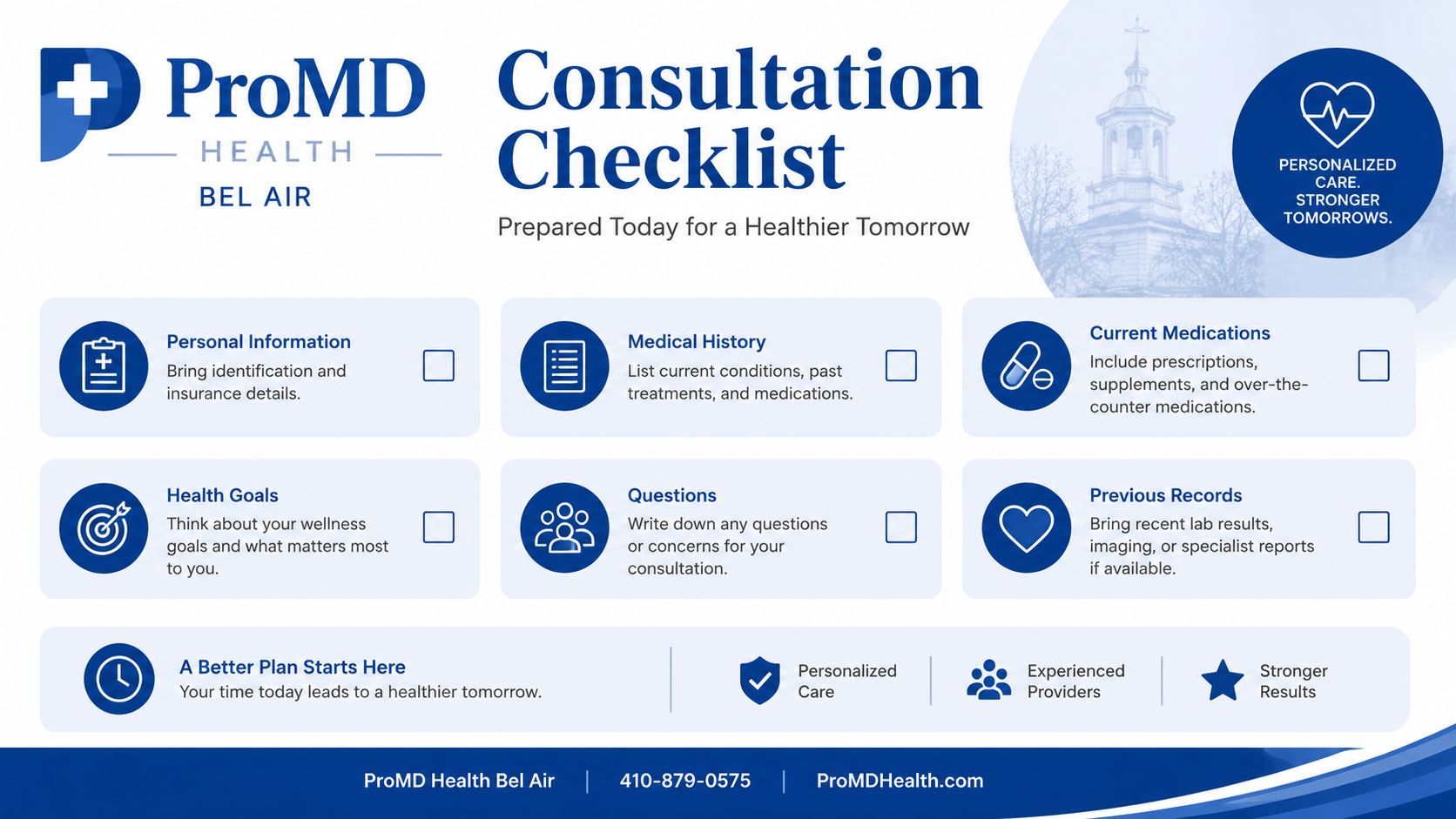
Bring a current list of everything you use on your skin, including prescription topicals, over-the-counter actives, and supplements. If you're using acne products, rosacea routines, or layered serums, the details matter more than the brand names. The same goes for past reactions to procedures, because those details help the clinician judge irritation risk before a device ever touches the face.
A good consultation checklist also includes honesty about recent cosmetic work. If you've had peeling, waxing, threading, dermaplaning, or any other facial procedure, say so. The point isn't to delay treatment for no reason, it's to prevent a visit from becoming a cancellation because the skin barrier wasn't ready.
For patients who like to read up on product categories before the visit, this skincare products overview can help you recognize what belongs in a prep conversation. The clinical team still needs the exact names of what you're using, but knowing the basic product families makes that conversation faster and cleaner.
Bring the details, not guesses. If you're unsure whether a product counts as an active, tell the team the ingredient name or bring the bottle.
Medications and Skincare Adjustments
The safest pre-microneedling plan usually comes down to two questions, what can irritate the barrier, and what can raise bleeding risk. That's why the advice is never just “stop everything.” It's about pausing the products and medications that make the skin more reactive without stripping your routine down more than necessary.
| Product Type | Pause Duration |
|---|---|
| Retinoids, AHAs, BHAs, high-strength vitamin C, exfoliants | 3 to 7 days before treatment |
| Chemical peels | 2 to 4 weeks before treatment |
| Waxing, threading, depilatory hair removal | 5 to 7 days before treatment |
| NSAIDs such as ibuprofen or naproxen, unless medically necessary | 3 days before treatment |
| Retinoids in some protocols | 2 weeks before treatment benchmark |
| Sunscreen-free sun exposure on already irritated skin | Avoid, protect daily with broad-spectrum SPF |
That table gives you the practical windows most patients can use as a starting point. Coastal Medical Spa's pre-appointment guide recommends stopping retinoids, AHAs/BHAs, benzoyl peroxide, facial scrubs, and at-home peels 7 days before microneedling, and it also advises avoiding waxing, threading, dermaplaning, and hair-removal creams in the treatment area. It further suggests pausing certain bleeding-risk supplements like fish oil/omega-3s, high-dose vitamin E, ginkgo, garlic, ginseng, and turmeric unless your clinician says otherwise. ALODERMA's clean skincare ingredient guide is useful if you want a broader reference for spotting common exfoliating or irritating ingredients, but your actual prep should still be based on what your provider recommends for your skin.
The trade-off is straightforward. If you keep using actives right up to the appointment, the skin may sting more and react more unevenly. If you stop too many things too early, you may overcorrect and end up with a dull, dry barrier that also feels uncomfortable. That's why a medically supervised clinic plan beats a generic ban list.
Microneedling prep at ProMD Health Bel Air is also where local skincare habits matter. If you use a prescription acne regimen or a rotating mix of serums, don't assume every product has to stop on the same day. The team can sort what's relevant from what's just routine clutter.
Your Microneedling Preparation Timeline
A simple countdown is easier to follow than a loose list of don'ts. The practical timeline below is built around the most consistent clinical benchmarks, including the 14-day retinoid pause used in one dermatology protocol and the day-of numbing window commonly used in treatment prep.
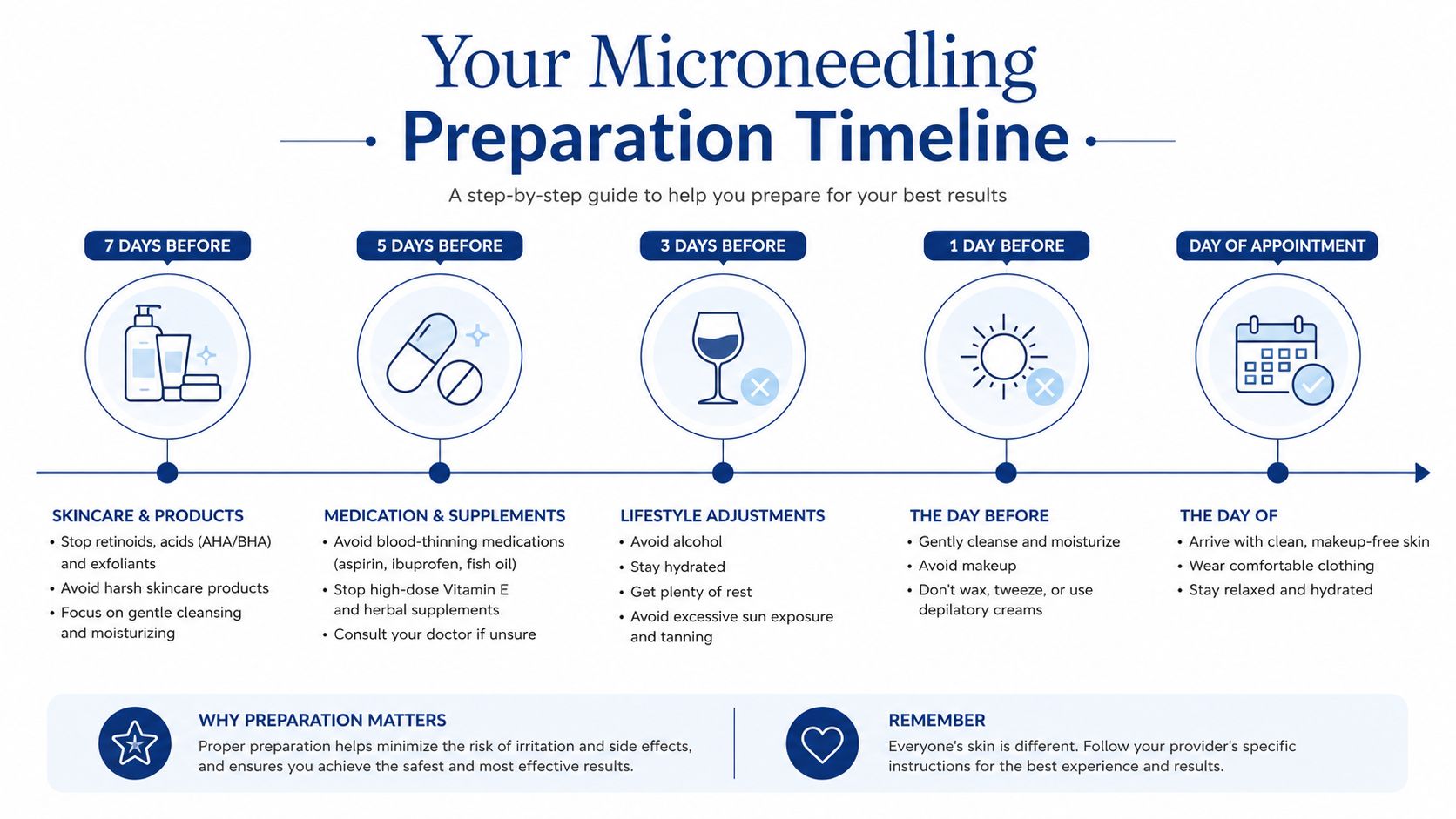
Two weeks before
This is the point to look at the bigger picture. If your provider wants a longer pause on retinoids, this is the safest window to start. It's also the right time to stop scheduling other skin-stressing procedures close together, since the goal is to come in with an intact barrier rather than an already irritated face. For patients who recently had a peel, this chemical peel recovery guide can help you avoid overlapping recovery windows.
One week before
Use this week to simplify. Stop exfoliating products, pause any harsh scrubs, and avoid hair removal that could leave the treatment area inflamed. Daily broad-spectrum SPF 30+ is important here, because clinical prep guides advise avoiding sunburned or recently tanned skin. Chelsea and Westminster Hospital NHS Foundation Trust is explicit that microneedling cannot be carried out on suntanned skin, and patients should avoid fake tan, sunbathing, or unprotected sun exposure for 7 days before treatment. Chelsea and Westminster Hospital NHS Foundation Trust's pre-treatment guidance makes the sun issue very clear.
Forty-eight to twenty-four hours before
This is not the time to experiment with a new serum, facial oil, or scrub. Keep the routine plain, gentle cleanser, moisturizer if tolerated, and sun protection. If you bruise easily or you take medications that affect clotting, flag that with the clinic rather than trying to self-adjust at the last minute.
Day of treatment
Show up with a fully clean face, no makeup, no sunscreen, no lotion, and no aftershave on the treatment area. A topical anesthetic such as EMLA may be applied for 15 to 45 minutes before the procedure starts, and the skin is usually cleansed again before needling begins. This practical prep guide also notes that a numbing cream is often applied 20 to 30 minutes before treatment, which matches the general clinic workflow.
If you keep the timeline simple, you're far less likely to forget something important. The skin doesn't need a complicated ritual. It needs to be calm, clean, and ready.
What to Bring and Clinic Experience
Most patients overpack for a microneedling visit, then forget the one thing that actually helps, a clear medical history. Bring your ID, any completed paperwork, a current list of prescriptions and supplements, and arrive with a bare face. That sounds basic, but it prevents delays and helps the visit stay focused on treatment rather than intake.
At the clinic, the workflow should feel methodical. Expert training sources emphasize a new sterile needle cartridge, correct device calibration, and dividing the face into sections so one area isn't overworked. They also stress light pressure and systematic passes rather than chasing redness with repeated force. A published stepwise protocol also points to a 90-degree device angle, which helps standardize insertion depth and reduce user error. This microneedling procedure guide is especially useful for understanding the technical side of that process.
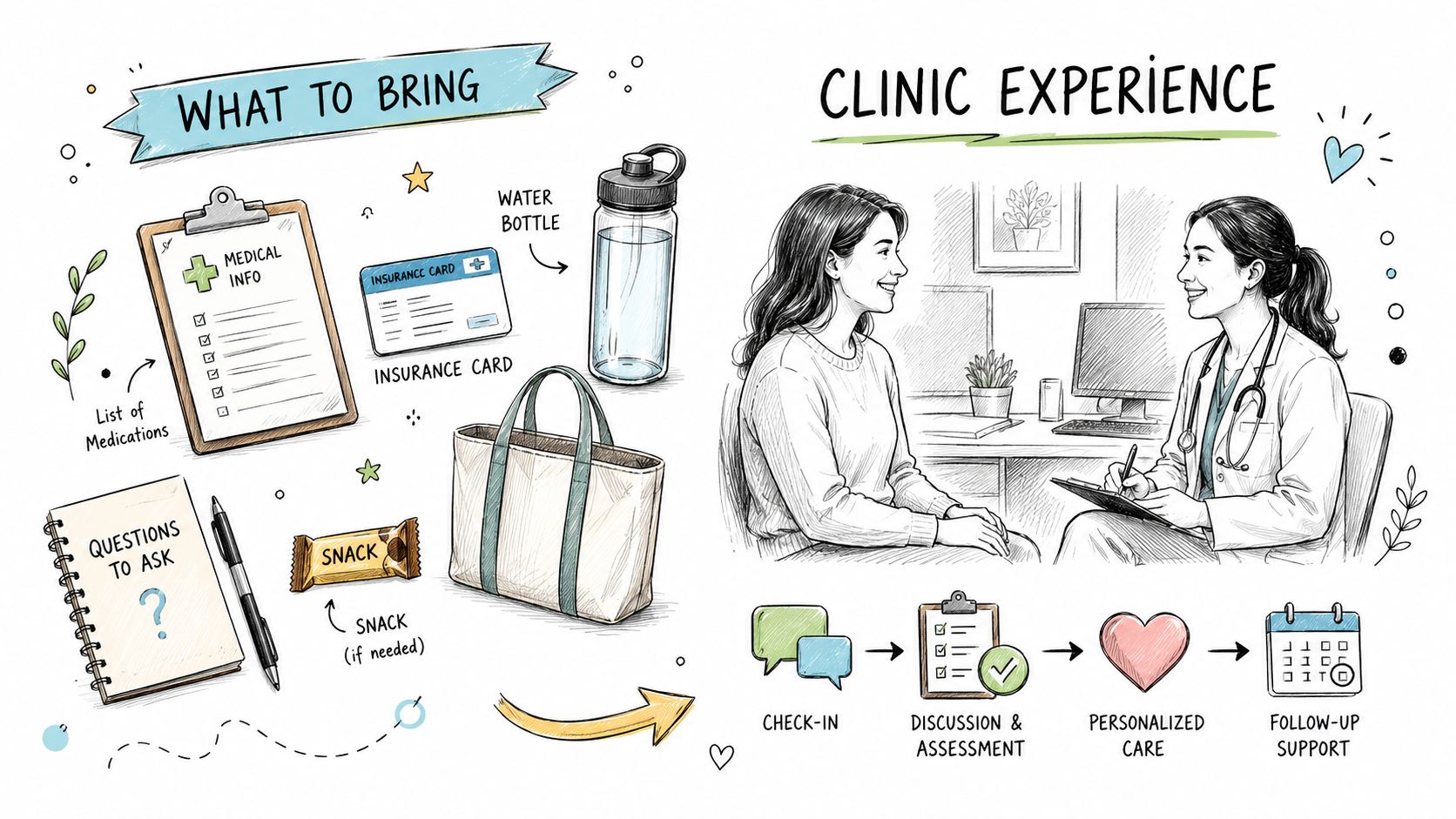
The patient experience usually starts with cleansing, sometimes followed by numbing cream, then the actual treatment, and finally calming skincare. Some workflows also use chlorhexidine-based antisepsis with full drying time before needling. The common thread is not speed, it's control. A good session should feel organized, not rushed.
Clinic standard to remember: a lighter, more methodical pass pattern is safer than trying to force more redness.
If you're nervous about the chair time, that's normal. The visit is usually easier when you've already paused the right actives and arrived with a calm barrier, because numbing works better and the skin tends to tolerate the treatment more evenly.
Contraindications and Rescheduling Guidance
Some situations mean microneedling should wait. The clearest one is suntanned skin. Chelsea and Westminster Hospital NHS Foundation Trust says the procedure cannot be carried out on suntanned skin, and patients should avoid fake tan, sunbathing, or unprotected sun exposure for 7 days before treatment. That isn't a cosmetic preference, it's about avoiding a more reactive barrier that heals poorly.
Pregnancy and breastfeeding are also common reasons to delay until a clinician confirms the plan is appropriate. The same goes for active herpes, keloid tendency, and active acne in the treatment area, all of which can affect safety or healing. If you have a fresh rash, open wound, or visible irritation, rescheduling is usually smarter than hoping the skin will “settle down” overnight.
If you know you've been in the sun, had a reaction, or started a new prescription, tell the clinic before you leave home. That saves time and protects you from walking into a visit that can't safely proceed. It also keeps the conversation professional, because a good medically supervised practice would rather adjust the plan than push treatment through a bad setup.
The cleanest rule is this. If the skin is inflamed, irritated, or recently exposed to enough UV to change its color or texture, it's not ready. Waiting is often the better clinical decision.
Common Microneedling Prep Questions
A lot of patients ask whether microneedling has to happen in isolation. The short answer is no, but the timing has to make sense. If you're planning facials, peels, dermaplaning, or other skin services around the same period, the safest move is to separate them so the barrier isn't being pushed in multiple directions at once. That same logic applies if you use an at-home routine that already includes retinoids, acids, or a strong vitamin C serum.
What about nerves around the needle aspect itself? That's common, and it usually improves once people understand the clinic workflow. A properly numbed, sectioned treatment with clean technique is a very different experience from the word “needling” might suggest. The discomfort concern is real, but it's often reduced by the preparation choices made in the week before the visit.
Patients also ask when they can restart skincare. In general, the answer depends on how the skin looks and feels after treatment, not on a rigid rule. If the barrier still feels tight or irritated, jumping back into actives too quickly can undo the comfort you were trying to preserve in the first place.
If you're reading about collagen support and skin structure, it can help to understand why treatment prep is so focused on skin health rather than just the appointment itself. This overview on how collagen helps prevent skin sagging is a useful background read, but remember that microneedling prep is about protecting the barrier first so the skin can tolerate the procedure.
For patients at ProMD Health Bel Air, the best prep is still individualized. Some people need a very short skincare pause. Others need a longer medication review. That's the advantage of a medically supervised visit, the plan can match the skin in front of you instead of forcing everyone into the same script.
If you're getting ready for microneedling in Bel Air, ProMD Health Bel Air can review your skin, medications, and timing before treatment so you're not guessing on the day of your appointment. Visit ProMD Health Bel Air to explore microneedling and schedule a consultation that's customized to your skin barrier, your history, and your goals.