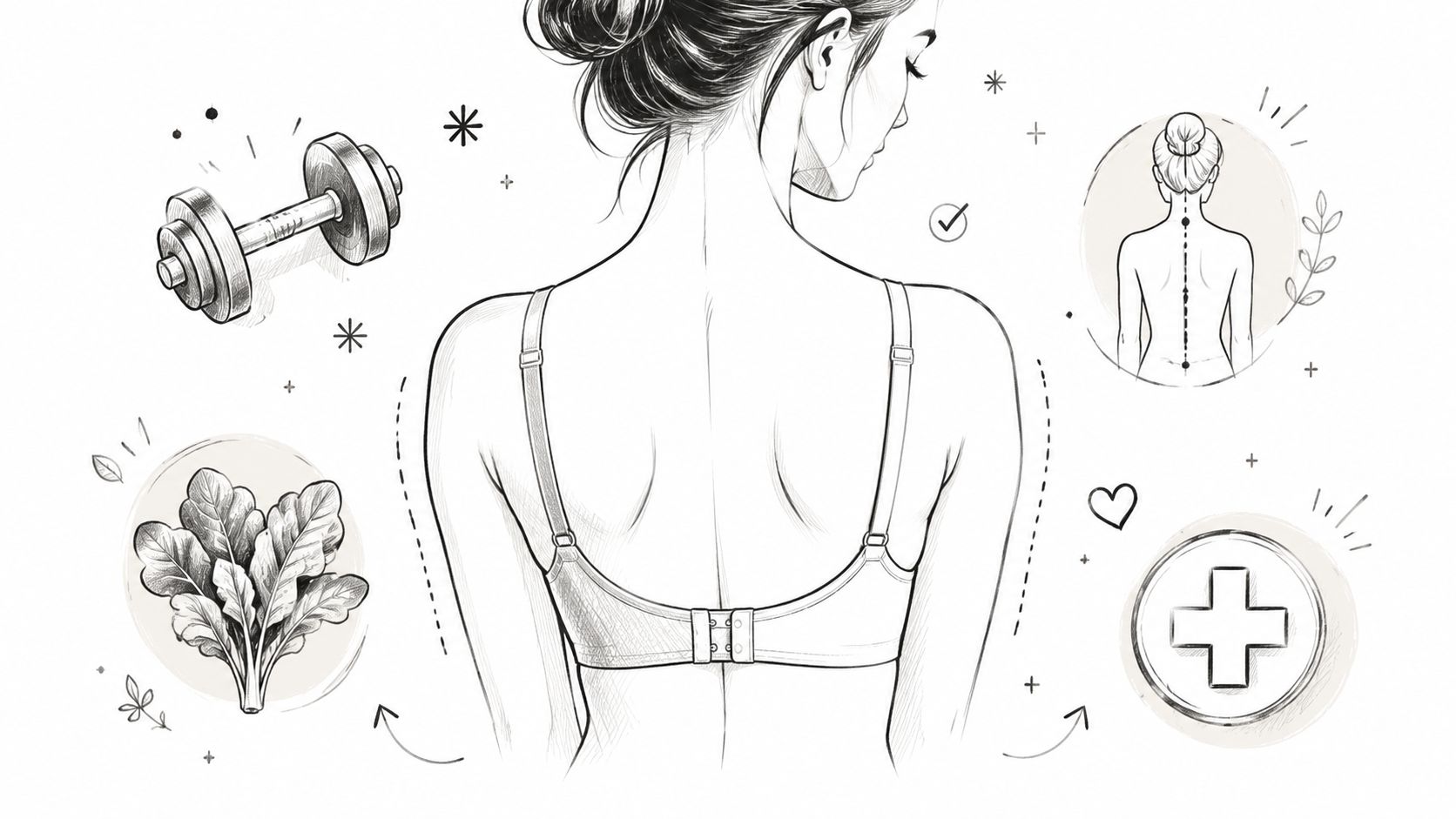
You catch it when you fasten a bra or slip into a fitted top. The area near the upper back and underarm looks fuller than you want, even though you've been trying to eat well and stay active. That frustration is common, and it doesn't automatically mean you're doing anything wrong.
Bra fat, often called bra bulge, can be stubborn because it sits in an area where fat distribution, muscle tone, posture, and even bra fit all affect what you see in the mirror. The good news is that there isn't just one option. The most effective approach usually combines foundational habits, targeted strengthening, and, when appropriate, medical support that addresses the bigger picture.
Table of Contents
- What Is Bra Fat and Why Is It So Stubborn
- Building Your Foundation with Nutrition and Cardio
- Exercises to Tone and Strengthen Your Upper Body
- The Immediate Impact of Posture and Proper Bra Fit
- When Lifestyle Changes Are Not Enough
- Medical Support for Bra Fat at ProMD Health Bel Air
- Frequently Asked Questions About Reducing Bra Fat
What Is Bra Fat and Why Is It So Stubborn
Bra fat usually refers to pockets of subcutaneous fat along the upper back and underarm area. Some people notice it mostly at the bra line. Others see fullness closer to the armpit or along the back of the shoulder. Either way, it's a very normal body concern.
Part of what makes it frustrating is that this area doesn't respond to wishful thinking or quick fixes. Body fat doesn't disappear from one exact spot just because you're doing extra side bends or wearing shapewear. Shape in this region also depends on how much total body fat you carry, how much upper-body muscle support you have, how your shoulders sit, and whether your bra is compressing tissue in a way that creates a bulge.
Why this area often resists simple fixes
A few factors tend to overlap:
- Genetics: Some people naturally store more fat through the upper back and underarm area.
- Hormonal shifts: Changes related to aging and other metabolic patterns can influence where the body prefers to store fat.
- Body composition: Less muscle support in the upper back can make the area look softer.
- Posture and clothing: Rounded shoulders and a tight band can make the contour look more pronounced.
Clinical perspective: Bra bulge is often a contour issue, not a character flaw. The right plan usually needs more than one lever.
There's also an important distinction between fullness caused mostly by fat and fullness made worse by skin compression, posture, or poor garment fit. That's why the answer to how do you get rid of bra fat isn't one exercise, one diet, or one treatment. It's a sequence. Improve the foundation first, strengthen the area second, then decide whether medical support makes sense for the amount and type of fullness that remains.
Building Your Foundation with Nutrition and Cardio
A common pattern in clinic looks like this: someone starts doing extra upper-body workouts, sees a little muscle tone, and still feels frustrated by the bra line. The missing piece is usually the foundation. If overall body fat is not trending down, that area often changes very slowly.
Nutrition and cardio are the base layer because bra fat responds to whole-body fat loss, not isolated effort. In practice, the patients who do best treat food quality, calorie intake, daily movement, sleep, and exercise consistency as one plan instead of separate projects.
Build meals you can repeat
Extreme dieting creates fast fatigue. It also makes it harder to train well, recover well, and stay consistent long enough to see a contour change.
A better starting point is simple:
- Center meals around protein: Protein supports fullness and helps preserve lean mass while you lose fat.
- Use mostly whole, minimally processed foods: These make calorie control easier without tracking every bite.
- Repeat a few dependable breakfasts and lunches: Structure reduces decision fatigue.
- Cut back on liquid calories and unplanned snacking: These are common reasons progress stalls.
- Drink enough water throughout the day: Hydration helps appetite control and workout performance.
If meal structure is what trips you up, a practical tool like an AI Meal Planner for weight loss can make a calorie-deficit plan easier to follow without turning every meal into guesswork.
The trade-off is straightforward. Highly flexible eating can work, but many people eat more than they realize without some structure. Highly rigid eating can produce short-term motivation, but it is harder to sustain. The middle ground usually works better.
Use cardio to increase total energy burn
Cardio helps create the calorie deficit needed for fat loss, and it improves conditioning, recovery, and daily energy. It does not need to be punishing to be effective.
Walking is often the most underused option. A brisk walk done regularly is more useful than an intense plan you quit after ten days. Cycling, incline treadmill sessions, rowing, swimming, and intervals can all work if they match your joints, schedule, and fitness level.
A practical weekly rhythm often looks like this:
| Focus | What to aim for |
|---|---|
| Walking | Brisk, repeatable sessions you'll maintain |
| Higher effort cardio | Shorter sessions on days you have more energy |
| Daily movement | More steps, stairs, and less sitting |
I usually advise patients to choose the form of cardio they dislike the least. Adherence matters more than novelty.
Make the foundation strong enough to support medical treatment
This is the part many articles skip. Lifestyle habits are not separate from medical aesthetics. They make medical care work better.
If appetite is hard to control, weight has been resistant, or body composition is changing with age, a provider-guided plan can help address the reasons progress feels stalled. At ProMD Health Bel Air's medical weight management program, the goal is to reduce overall body fat through a personalized strategy that may include nutrition coaching, metabolic support, and medical oversight. That matters because stubborn bra fat is often the last place to change, and it usually responds best when the whole system is improving at the same time.
Recovery habits affect results more than people expect
Poor sleep tends to increase hunger, lower training quality, and make food decisions worse the next day. High stress can push people toward inconsistent eating and missed workouts.
For bra-line fullness, that means the best plan is rarely just “eat less and do more cardio.” The better plan is integrated. Improve nutrition, choose cardio you can repeat, protect sleep, manage stress, and then assess what remains. That sequence gives lifestyle changes a fair chance and makes the next level of treatment more precise if you still need it.
Exercises to Tone and Strengthen Your Upper Body
You clean up your nutrition, stay consistent with cardio, and the bra line still looks unchanged. That usually means it is time to build more muscle under the area, because body fat loss and upper-body shape improve best together.
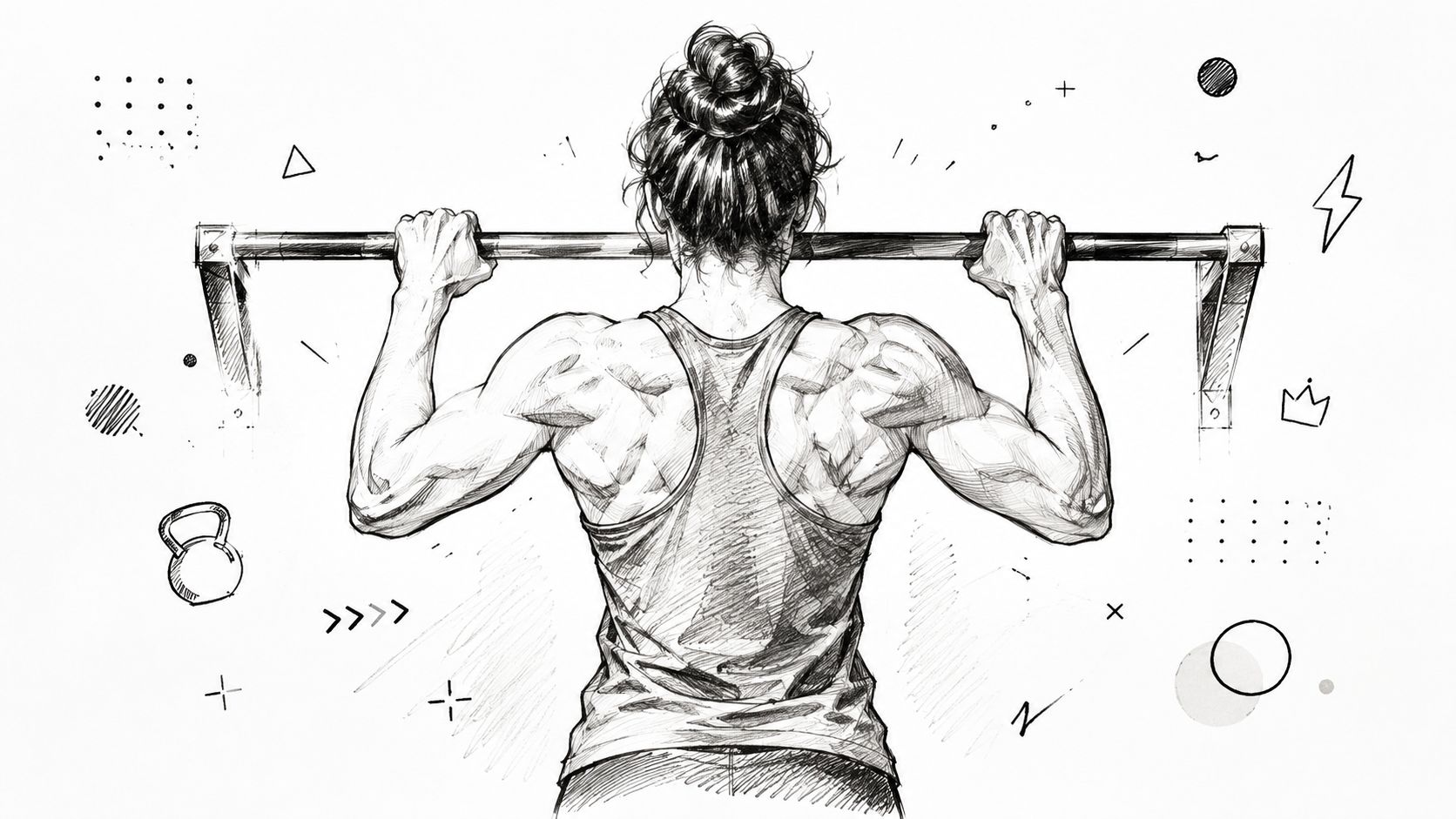
Exercise changes contour by strengthening the muscles that support the bra line, especially the lats, rhomboids, rear shoulders, and spinal stabilizers. It does not reduce fat from one small area on command. What it does do, and what I see in practice, is improve the shape underneath stubborn fullness so the upper back looks firmer and more balanced as overall body composition improves.
A simple circuit works well for many patients and beginners because it trains the major pulling and support patterns without overcomplicating the routine. Start with 2 to 3 rounds of 8 to 12 controlled repetitions for each movement:
- Assisted pull-ups to train vertical pulling strength and lat engagement
- Bent-over dumbbell rows to build the middle back
- Superman postures to strengthen the posterior chain
- Seated overhead presses to improve shoulder strength and stability
This combination works because bra-line contour is rarely improved by arm exercises alone. The upper back needs enough tension and consistency to change shape over time.
Form matters more than variety. A smaller menu of exercises done well usually beats a long list done with momentum and poor control.
Use these cues to get more from the routine:
- Slow the lowering phase: Control helps the back muscles stay engaged.
- Keep your neck relaxed: Tension in the upper traps can take work away from the target muscles.
- Drive through the elbows: This often helps patients feel rows in the back instead of the biceps.
- Choose a load you can control: If posture shifts or you have to swing the weight, it is too heavy.
Form cue: If you only feel rows and pull work in your arms, lower the weight and reset your shoulder position before adding more resistance.
A few accessory drills can improve results. Wall slides, band pull-aparts, and chest-opening mobility work support better shoulder mechanics. Push-ups can help with upper-body balance too, but they are a secondary addition here, not the main tool for changing the bra line.
If you want a practical overview of how training and food intake work together, PlateBird's approach to fat loss and muscle explains that relationship clearly.
Starting point matters. Someone new to exercise may do better with machine rows, resistance bands, and short sessions done consistently. Someone who already lifts may need progressive overload, better exercise execution, or more weekly pulling volume to see visible change. If neck or shoulder pain is part of the picture, use pain-free ranges and adjust the program before pushing intensity.
This is also where the larger plan matters. Strength training gives you the structure. Nutrition, cardio, sleep, and recovery make that work show up. When those pieces are aligned, medical support for stubborn fat tends to work better too, because the body is already moving in the right direction.
The Immediate Impact of Posture and Proper Bra Fit
A common pattern in clinic is this: someone has already cleaned up their nutrition, started training, and still feels discouraged by what they see at the bra line. Sometimes part of that frustration comes from appearance mechanics, not just body fat. Rounded shoulders can bunch soft tissue across the upper back, and a poorly fitted bra can press tissue into a more visible roll.
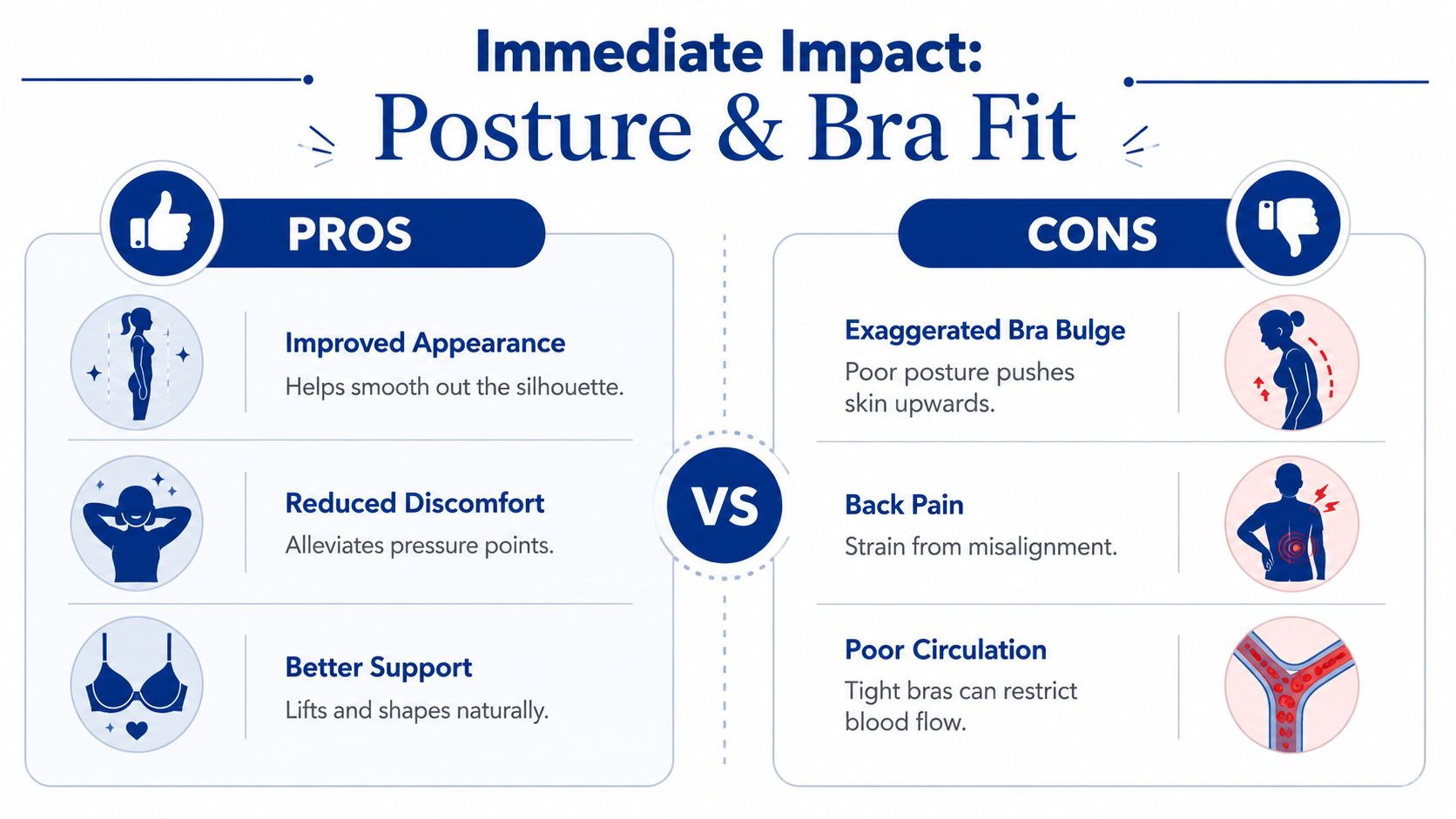
That matters because patients often want two things at once. They want a better silhouette now, and they want real body-composition change over time. Posture and bra fit help with the first goal immediately. They also support the larger plan, because comfort during daily life and exercise makes consistency easier.
Posture changes what the mirror shows
When the chest drops and the shoulders roll forward, the upper back widens visually and the bra band tends to cut in harder. The tissue itself has not suddenly increased, but the way it is positioned changes what you see in clothing and in the mirror.
Start with simple corrections that you can maintain:
- Lift through the sternum: Aim for tall and relaxed, not stiff.
- Set the shoulders slightly back and down: Avoid pinching hard.
- Open the chest daily: Gentle pec stretching can reduce the forward pull at the shoulders.
- Use your posture during the day: Desk setup, driving position, and phone use all affect the bra line.
In practice, posture work is a visual improvement tool, not a fat-loss treatment. It helps right away, but it works best when paired with the nutrition, cardio, and strength plan already in place.
Bra fit can create bulge that looks worse than it is
A bra that fits poorly can exaggerate fullness at the band, side chest, and underarm. I see this often with bands that are too tight, cups that cut into side tissue, or straps that are carrying more load than they should.
Use this quick check:
| Sign | What it may mean |
|---|---|
| Band digs sharply into the back | Band may be too tight |
| Side spillage near the underarm | Cup size or shape may be wrong |
| Straps leave deep marks | Support may be poorly distributed |
A better fit can improve your silhouette the same day. It will not remove fat, but it can reduce compression lines and make clothing sit more smoothly.
For active patients, support matters even more. Running or high-impact training in the wrong bra can increase chafing, discomfort, and visible compression. Guidance on how to prevent running bra discomfort can help you choose support that works for both movement and appearance.
There is also an important trade-off here. A tighter bra may feel more supportive during workouts, but too much compression can create sharper bulges along the band and underarm. The right choice depends on your anatomy, activity level, and where you notice pressure points.
At ProMD Health Bel Air, I usually frame this as a foundation step. Posture correction and better bra fit do not replace fat-loss strategies or body contouring. They make the area look better now, and they make a personalized treatment plan easier to judge accurately. If skin texture is part of the concern along the bra line or upper back, options for cellulite reduction and skin-smoothing treatments may also be worth discussing as part of the full picture.
When Lifestyle Changes Are Not Enough
Some fat pockets stay put even when your habits are solid. That's especially true in the upper back and underarm region, where the body can hold onto subcutaneous fat in a very specific pattern. That doesn't mean your efforts failed. It means physiology sometimes beats willpower.
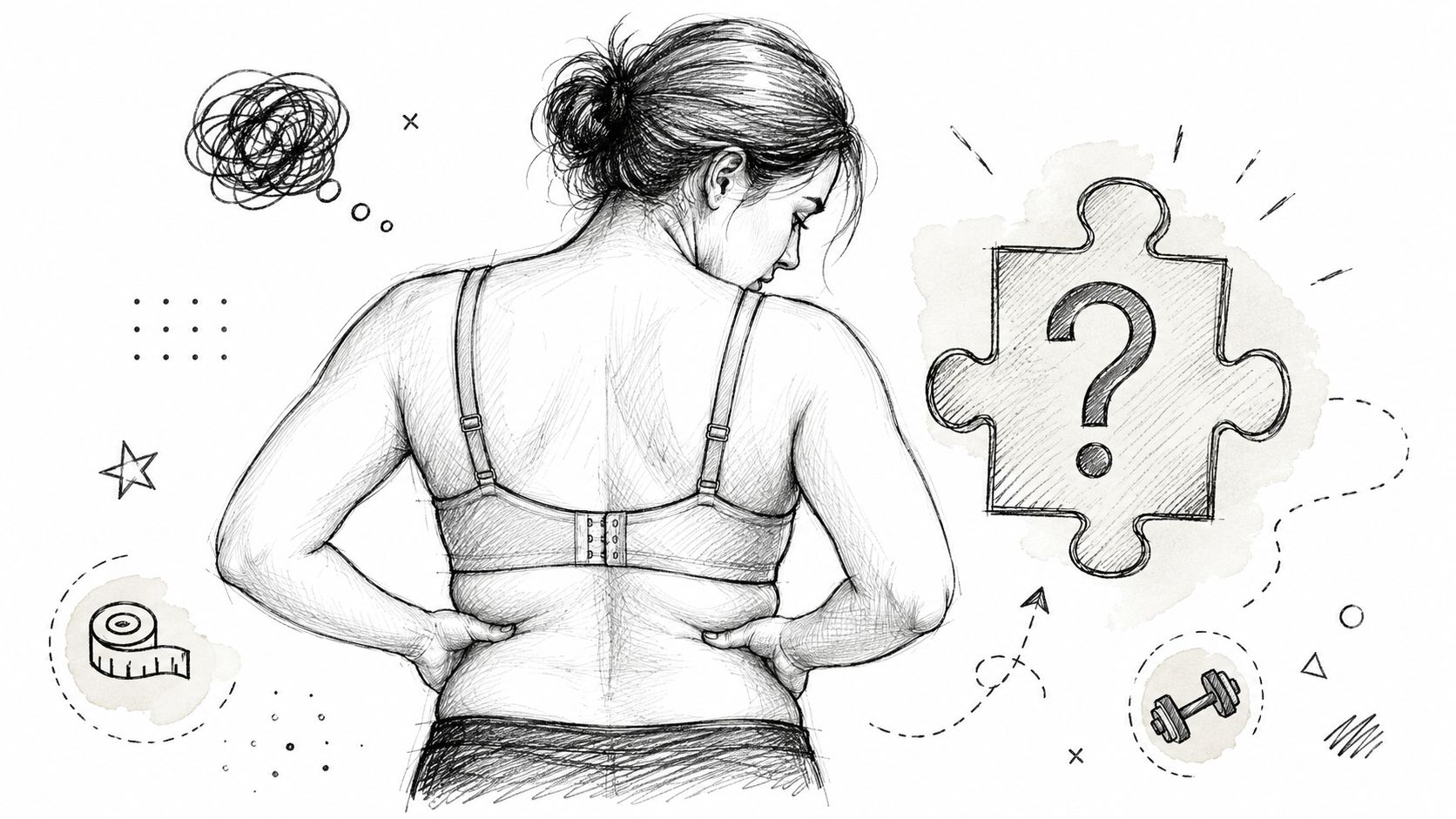
Hormonal shifts can be part of that picture. People often notice changes in fat distribution during perimenopause, after prolonged stress, or during other metabolic transitions. In those cases, continuing to push harder with diet and exercise alone can become discouraging because the issue isn't only effort. It may also involve how your body is storing fat, how easily you build muscle, and whether your recovery and appetite signals are working in your favor.
What stubborn fat usually means in practice
When I talk with patients about this concern, the pattern is familiar. They're doing many of the right things, but the last area they want to change doesn't respond in proportion to the effort they're putting in.
That's the point where evaluation matters more than self-blame.
- Persistent fullness after weight loss can point to localized fat resistance.
- Changes with age may suggest a hormonal component.
- Loose texture or dimpling nearby can affect contour even if fat volume improves.
For patients who are also noticing texture concerns elsewhere on the body, cellulite-focused treatment options can be part of a broader body-contouring conversation, even though cellulite and bra-line fullness aren't the same issue.
If you've made real lifestyle changes and the area still isn't moving, it's reasonable to look at medical support.
That's usually where a more personalized plan starts to make sense. Instead of asking one tool to solve everything, the better question becomes: do you need overall fat reduction, hormone support, targeted treatment for a small residual pocket, or some combination of those?
Medical Support for Bra Fat at ProMD Health Bel Air
By the time patients reach this stage, they usually do not need more generic advice. They need a plan that matches what is driving the fullness.
At ProMD Health Bel Air, we look at bra-line fullness as a body-composition and contour question, not just a cosmetic frustration. For some patients, the area improves once weight trends down overall. For others, the sticking point is hormonal change, soft-tissue quality, or a small residual pocket that stays visible even after consistent effort. The right approach depends on which of those factors is present.
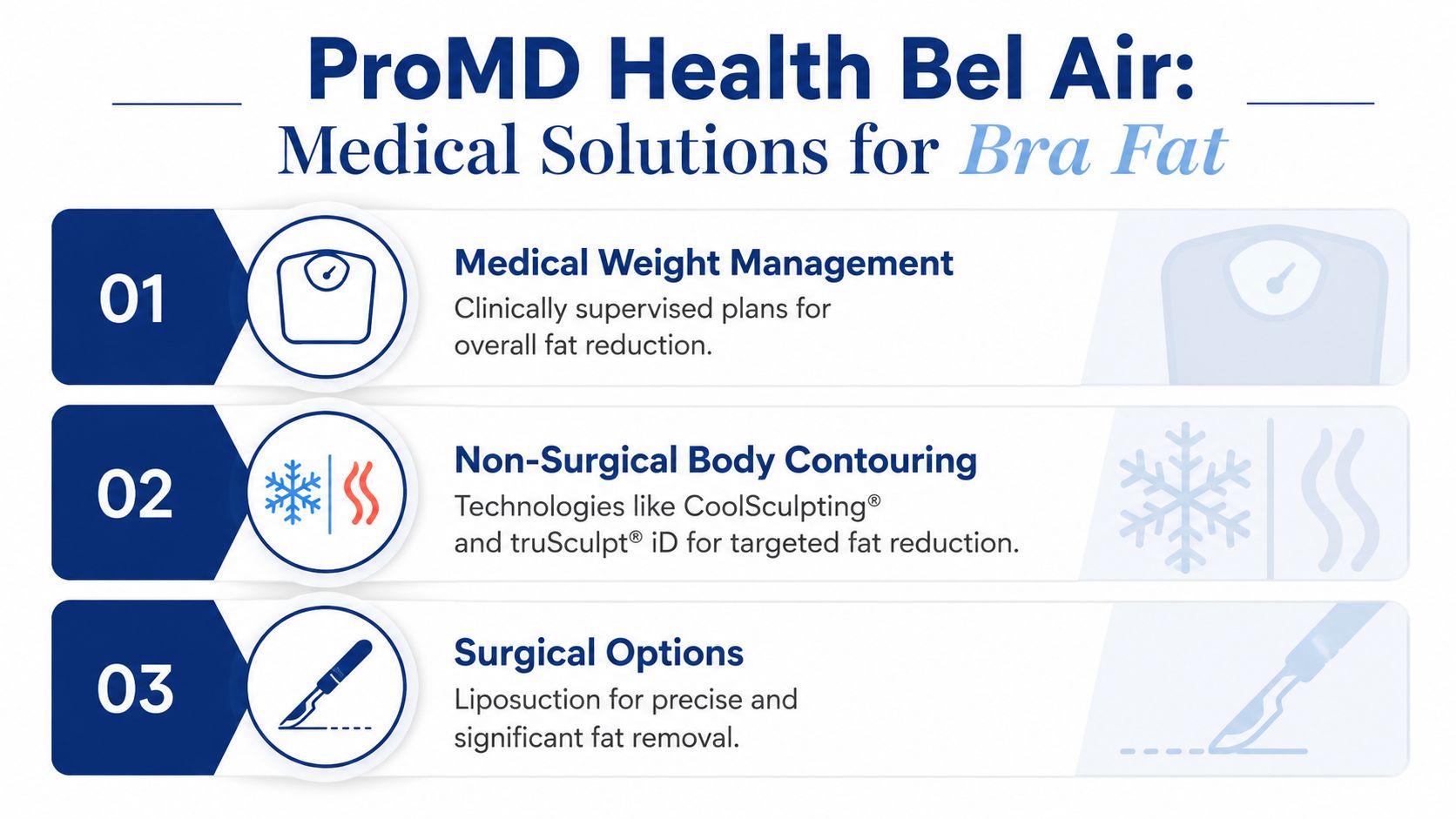
Medical weight management first
If bra fat is part of a broader pattern of weight gain or a stalled body-composition change, medical weight management is often the most productive place to start. Treating a small area before addressing the larger metabolic picture can leave patients disappointed, because the contour concern often softens once overall fat mass comes down.
A provider-guided plan can support:
- Appetite control
- Consistency with nutrition habits
- Preservation of lean mass during weight loss
- Adjustment based on progress, side effects, and plateaus
This approach also fits the bigger goal of the article. Lifestyle work lays the groundwork. Medical support can strengthen that groundwork when hunger, plateaus, or metabolic resistance keep good habits from translating into visible change.
Hormone support when the history points in that direction
Some patients notice bra-line fullness developing alongside fatigue, sleep disruption, reduced muscle tone, or age-related body-composition changes. In those cases, hormone evaluation may be part of the discussion.
Hormones affect fat distribution, recovery, and muscle maintenance. If that piece is ignored, patients can end up doing many of the right things and still feel stuck. Hormone optimization is not a universal answer, and it should never be treated as a shortcut. It is one part of an integrated plan when symptoms and history support it.
Targeted treatment for residual fullness
Once the foundation is in place, targeted treatment may be reasonable for a smaller leftover pocket. Careful treatment selection matters here, because different areas of the body have different safety considerations.
Patients often ask about Kybella. Kybella (deoxycholic acid) is the only FDA-approved nonsurgical injectable treatment specifically indicated for reducing moderate to severe submental fat, or double chin as described in this clinical review.
That approval matters. Kybella is approved for submental fullness under the chin, not for bra fat. Any discussion about using it outside that indication requires a conservative, anatomy-based assessment of risk, expected benefit, and whether a different strategy would make more sense. A consultation for Kybella treatment at ProMD Health Bel Air can help clarify whether the concern is true submental fullness, bra-line contour, or a case where another option should be considered first.
In practice, the best results usually come from sequencing care well. Build the foundation with nutrition, movement, and strength work. Add medical weight management or hormone support if the pattern calls for it. Then consider targeted aesthetic treatment only if a specific residual area remains and the treatment is appropriate for that anatomy.
Frequently Asked Questions About Reducing Bra Fat
A lot of patients reach this point after doing many of the right things. They are exercising, eating better, and still noticing fullness at the bra line when they get dressed. That usually means the next step is not guessing harder. It is identifying what is contributing to the contour, whether that is body fat distribution, muscle tone, posture, bra fit, hormonal change, or a combination.
Does bra fat ever go away completely with exercise alone
Exercise can improve the area, especially when it is paired with nutrition habits that support overall fat loss. Strength training also helps by building the upper back, shoulders, and postural muscles, which can make the bra line look smoother.
Results vary. Some people respond well to lifestyle changes alone, while others still keep a small pocket of fullness because fat loss does not happen evenly across the body.
Is bra fat mostly genetic
Genetics often influence where the body prefers to store fat. That is why two women with similar routines can have very different bra-line contours.
Hormones, age, and prior weight changes can add to that pattern. In practice, this is one of the clearest reasons a personalized plan works better than copying someone else's workout list.
How long does it take to see changes
The timeline depends on what is driving the concern. A better-fitting bra or improved posture can change the appearance right away. Body composition changes take longer and usually require several weeks of consistency before the area starts to look different.
If treatment is being considered for fullness under the chin, timing depends on the product used and the treatment plan your injector recommends. For bra fat, the timeline depends more on whether the issue is general fat distribution, a small resistant pocket, or a broader metabolic or hormonal pattern.
Are permanent results only possible with surgery
Some non-surgical body contouring methods can reduce fat cells in a treated area, and those cells do not grow back once removed by the body. Weight gain can still enlarge the remaining fat cells, so long-term results depend on maintaining a stable weight and realistic expectations.
That trade-off matters. A procedure may help with a specific residual pocket, but it does not replace the foundation of nutrition, activity, and metabolic health.
When should I book a consultation
Book a consultation if you have been consistent with lifestyle changes and the area still is not responding. It is also a good idea if the fullness appeared with other changes such as weight fluctuation, menopause symptoms, reduced muscle mass, or shifts in energy, sleep, or recovery.
At ProMD Health Bel Air, I look at the full picture first. The right plan may be better bra support and posture work, a more structured fat-loss strategy, medical weight management, hormone evaluation, or a targeted in-office treatment for a small remaining area.
If you're tired of guessing and want a plan built around your body, goals, and medical history, schedule a consultation with ProMD Health Bel Air. The right next step may be foundational lifestyle support, medical weight management, hormone evaluation, or a targeted treatment discussion. The important part is choosing based on what's causing the bra-line fullness, not just what sounds fastest.