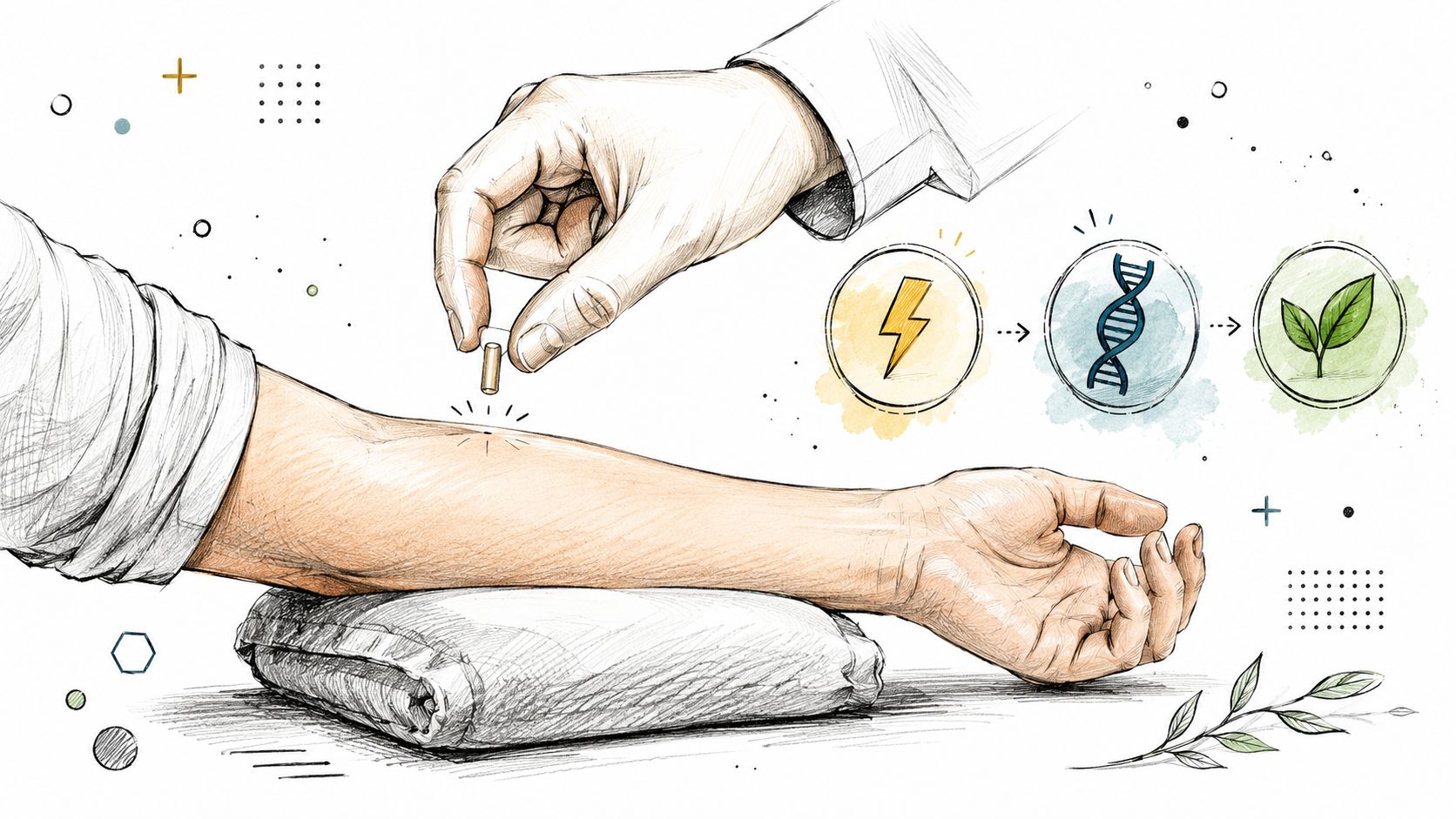
Some people arrive at our clinic feeling like they're running on a low battery they can't recharge. They're sleeping, but not waking up rested. They're working, but struggling with focus. They're eating carefully, yet still noticing body composition changes, stubborn fatigue, mood shifts, or a version of themselves that feels less sharp, less steady, and less familiar.
That experience is common with hormone imbalance, especially during midlife, but it's also often misunderstood. Many adults in Bel Air, Fallston, and Forest Hill wonder whether what they're feeling is “just stress,” “just aging,” or something they should push through. In practice, that mindset delays care. When hormones are no longer signaling the body consistently, the effects can show up in energy, sleep, mood, concentration, weight regulation, and day-to-day resilience.
Hormone pellet therapy is one option for addressing that pattern in a more stable, longer-lasting way. Instead of requiring daily effort, it uses a steady delivery method designed around your lab work, symptoms, and treatment goals. For many patients, that consistency is the difference between chasing temporary relief and building a plan that fits real life.
Table of Contents
- Reclaiming Your Vitality with Hormone Pellet Therapy
- What Are Bioidentical Hormone Pellets
- The Benefits of Restoring Hormonal Balance
- Candidacy and Safety Considerations
- Your Pellet Therapy Journey at ProMD Health Bel Air
- Aftercare Results and Follow-Up Schedule
- Your Hormone Pellet Therapy Questions Answered
Reclaiming Your Vitality with Hormone Pellet Therapy
If you've been telling yourself you're just tired because life is busy, you're not alone. Hormone changes often begin subtly. At first, it may feel like a little more fatigue, a little less motivation, a little more irritability, or a body that doesn't respond the way it used to.
Over time, those small changes can affect nearly every part of the day. Work feels heavier. Exercise feels harder to recover from. Sleep stops feeling restorative. Mental clarity slips. Many people don't realize how much hormonal signaling influences stamina, mood, and body regulation until those systems stop working smoothly.

Why people look for a steadier solution
The appeal of hormone pellet therapy is straightforward. It's designed to deliver hormones gradually rather than asking you to remember a daily cream, patch, or repeated dosing schedule. For patients who want a structured medical plan with less day-to-day maintenance, that matters.
A good treatment plan also doesn't stop at hormones alone. Sleep, nutrition, movement, stress load, and recovery habits still shape how you feel. Some patients find it helpful to pair clinical care with outside reading on evidence-based tips for vitality, especially when they're trying to understand why energy and resilience can feel so different during hormone shifts.
Practical rule: If your symptoms are persistent, affecting daily function, and no longer explained by a short rough patch, it's worth evaluating the biology behind them instead of normalizing them.
What makes this treatment conversation different
Not everyone with fatigue needs hormones. That's an important point. Fatigue, brain fog, weight gain, and mood changes can also overlap with sleep disruption, stress, medication effects, thyroid concerns, and other medical issues.
That's why hormone pellet therapy should never start with guesswork. The right process begins with symptoms, medical history, and lab work, then moves to an individualized plan. When it's done carefully, the goal isn't to “boost” you into feeling artificial. The goal is to restore balance so you feel more like yourself again.
What Are Bioidentical Hormone Pellets
Bioidentical hormone pellets are small pellets placed beneath the skin that release a customized amount of hormone over time. The term “bioidentical” means the hormone is made to match the molecular structure of the hormones your body naturally recognizes and uses.
Patients often ask whether that means “natural” in the casual wellness sense. Clinically, the more useful distinction is compatibility. These hormones are formulated to mirror the body's own hormone structure, which is why many people find the concept easier to understand and more reassuring than a vague promise of hormone support.
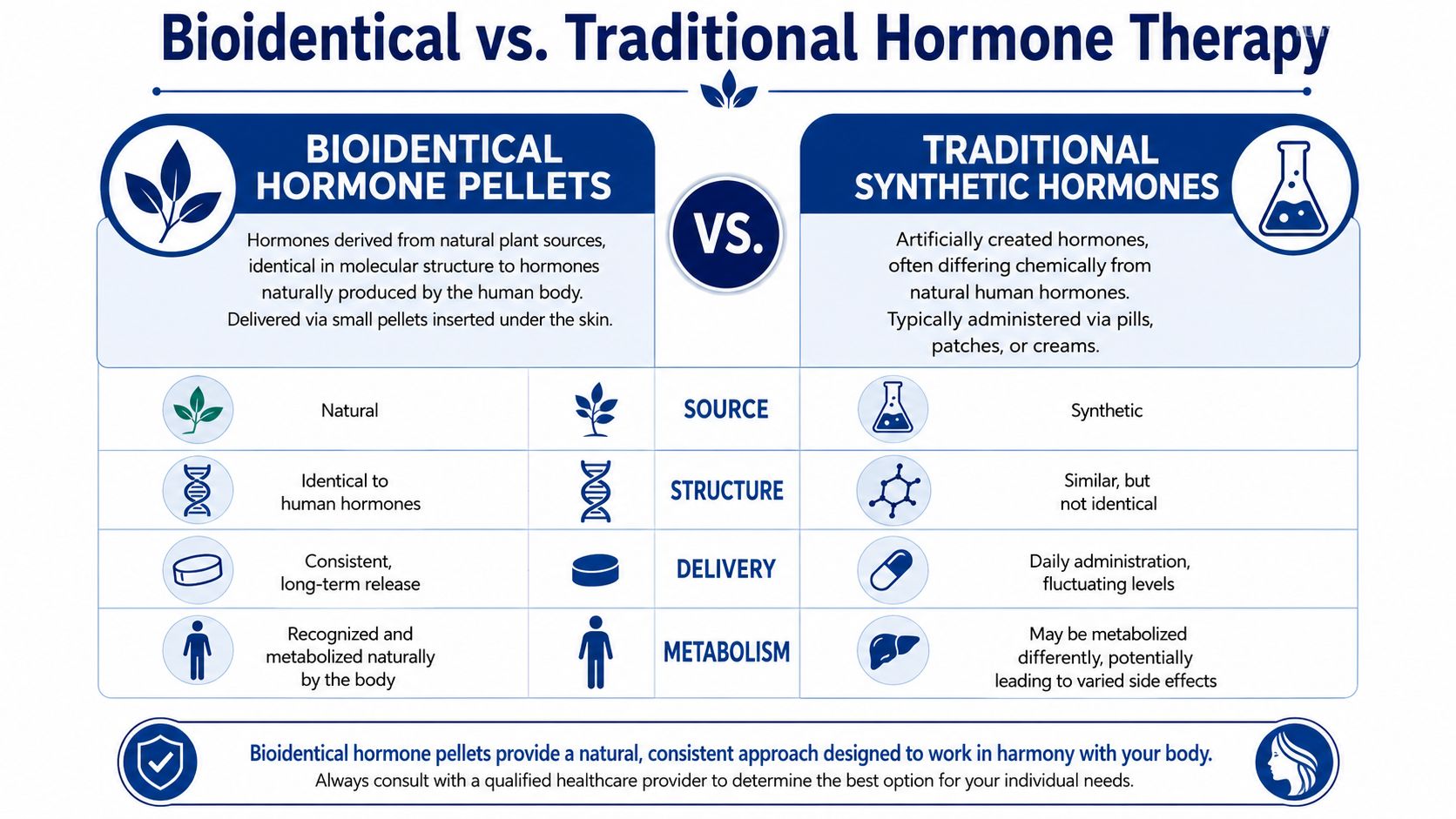
For readers who want a direct overview of the service itself, bioidentical hormone replacement therapy at this Bel Air practice outlines the treatment category in patient-friendly terms.
How the pellets work
A simple analogy helps. Think of pellets like a smart-release battery rather than a quick charge. A cream or patch may depend on daily use and can be affected by timing, absorption variability, skin contact, or missed applications. An injection may create a stronger rise followed by a decline. Pellets are intended to provide a steadier release pattern.
That steadiness is one of the biggest reasons people choose hormone pellet therapy. Instead of feeling like you're repeatedly correcting a dip, the body receives a more consistent signal. In practice, that can make treatment feel smoother and easier to live with.
Why delivery method matters
Hormones don't just influence one symptom. They help regulate systems that affect energy, muscle maintenance, sleep quality, mood, focus, and metabolic rhythm. When delivery is inconsistent, patients may feel that inconsistency.
Here's the practical difference many patients notice:
| Approach | Common challenge | Pellet advantage |
|---|---|---|
| Daily creams or patches | Requires routine adherence and consistent absorption | Less daily maintenance |
| Periodic injections | Can feel cyclical for some people | More even release pattern |
| Oral options | Not ideal for every patient or goal | Bypasses the need for daily pills |
A good hormone plan should fit the patient's life, not create another task they have to manage every day.
Another key point is customization. Pellets aren't one-size-fits-all. Dosing is based on symptoms, medical history, lab findings, and clinical judgment. Two patients can describe the same fatigue and still need very different plans. That individualized approach is part of what separates responsible hormone care from casual hormone marketing.
The Benefits of Restoring Hormonal Balance
When hormones are low, unstable, or out of proportion, the body often feels like it's working harder than it should. Restoring balance isn't just about reducing one complaint. It's about improving the quality of daily life in a way that feels sustainable.
Patients usually don't come in asking for a lab value. They come in because they want to get through the afternoon without crashing, think clearly during meetings, sleep more soundly, feel more emotionally steady, or stop feeling disconnected from their usual drive and momentum.
What patients often hope to regain
A lot of the benefit conversation falls into a few practical categories:
Energy and stamina
People often want their baseline energy back. Not a wired feeling, but the ability to move through the day with more resilience and less dragging fatigue.Mental clarity and mood stability
Hormonal imbalance can show up as irritability, low motivation, poor concentration, or a sense of brain fog that's difficult to explain. When hormones are better aligned, many patients describe feeling more mentally present and emotionally even.Sleep and recovery
Better hormonal signaling can support more restorative sleep patterns and better recovery after normal daily demands.Body composition support
Hormones influence muscle maintenance, fat distribution, and how efficiently the body responds to healthy routines. This doesn't replace nutrition or exercise, but it can make those efforts feel more productive again.
What improvement usually looks like in real life
The most meaningful changes are often ordinary. A patient sticks with workouts instead of skipping them from exhaustion. They stop needing constant caffeine to function. Their patience improves at home. Their motivation returns. They feel less like they're forcing every task.
That's why I encourage patients to think beyond a single symptom. Hormones operate like conductors in an orchestra. If the timing is off, many sections sound strained at once. When the timing improves, the whole system tends to work more smoothly.
Some people also benefit from complementary education around menopause-related changes. For example, managing menopause with collagen can be a useful read for women thinking more broadly about skin, connective tissue, and wellness during hormonal transition. For readers exploring related concerns about arousal and sexual response, female libido support and treatment context may also answer questions that often come up alongside hormone discussions.
The real win isn't feeling “different.” It's feeling functional, clear, and more like the version of yourself you recognize.
The right expectation is progress, not perfection. Hormone pellet therapy can be a valuable tool, but the best outcomes usually happen when treatment is monitored carefully and paired with realistic habits that support the body rather than fight it.
Candidacy and Safety Considerations
Hormone pellet therapy isn't for everyone, and that's exactly how it should be. Safe care starts with identifying who's likely to benefit, who needs more evaluation first, and who shouldn't move forward with this treatment at all.
Who may be a good candidate
A strong candidate usually has a pattern, not just one vague complaint. Symptoms may include persistent fatigue, reduced stamina, mood shifts, poor concentration, sleep disruption, difficulty maintaining muscle, or body composition changes that don't match a person's usual habits.
Candidates also need the right mindset. This treatment works best for adults who want a medical evaluation, understand that dosing must be personalized, and are willing to follow through with lab work and follow-up visits. Pellet therapy is not a shortcut, and it isn't a substitute for addressing sleep, stress, and nutrition.
A useful framework is this:
Symptom fit
The symptoms should reasonably match a possible hormone imbalance.Medical fit
History, medications, and overall health have to support safe treatment.Monitoring fit
The patient has to be willing to check response over time instead of treating hormones like a one-time fix.
For women who are still trying to sort out whether hormone symptoms may be part of a larger picture, this guide to root-cause answers for women can help frame the kinds of questions worth asking before any treatment begins.
When pellet therapy may not be appropriate
This part matters as much as candidacy. A patient may not be a good pellet candidate if they have certain hormone-sensitive conditions, a medical history that raises concern, unexplained symptoms that need diagnosis first, or treatment goals that don't match what pellets can realistically do.
That evaluation has to be individualized, but some common reasons to pause or avoid treatment include:
Need for further diagnostic workup
If symptoms could reflect another untreated condition, that needs attention first.Relevant cancer history or hormone-sensitive risk
Certain histories may make hormone therapy inappropriate or require specialist guidance.Pregnancy-related considerations
Hormone therapy planning must account for reproductive status and safety.Unrealistic expectations
If someone expects immediate transformation or wants hormones without monitoring, pellet therapy is the wrong fit.
Safety in hormone care often comes down to what a provider is willing to say no to.
Ethical hormone treatment is selective. The goal isn't to put everyone on pellets. The goal is to identify when hormone pellet therapy makes clinical sense, when another approach is better, and when the safest plan is further evaluation before any treatment starts.
Your Pellet Therapy Journey at ProMD Health Bel Air
For most patients, anxiety drops once they understand the actual sequence. The process is structured, medical, and much simpler than many people expect.
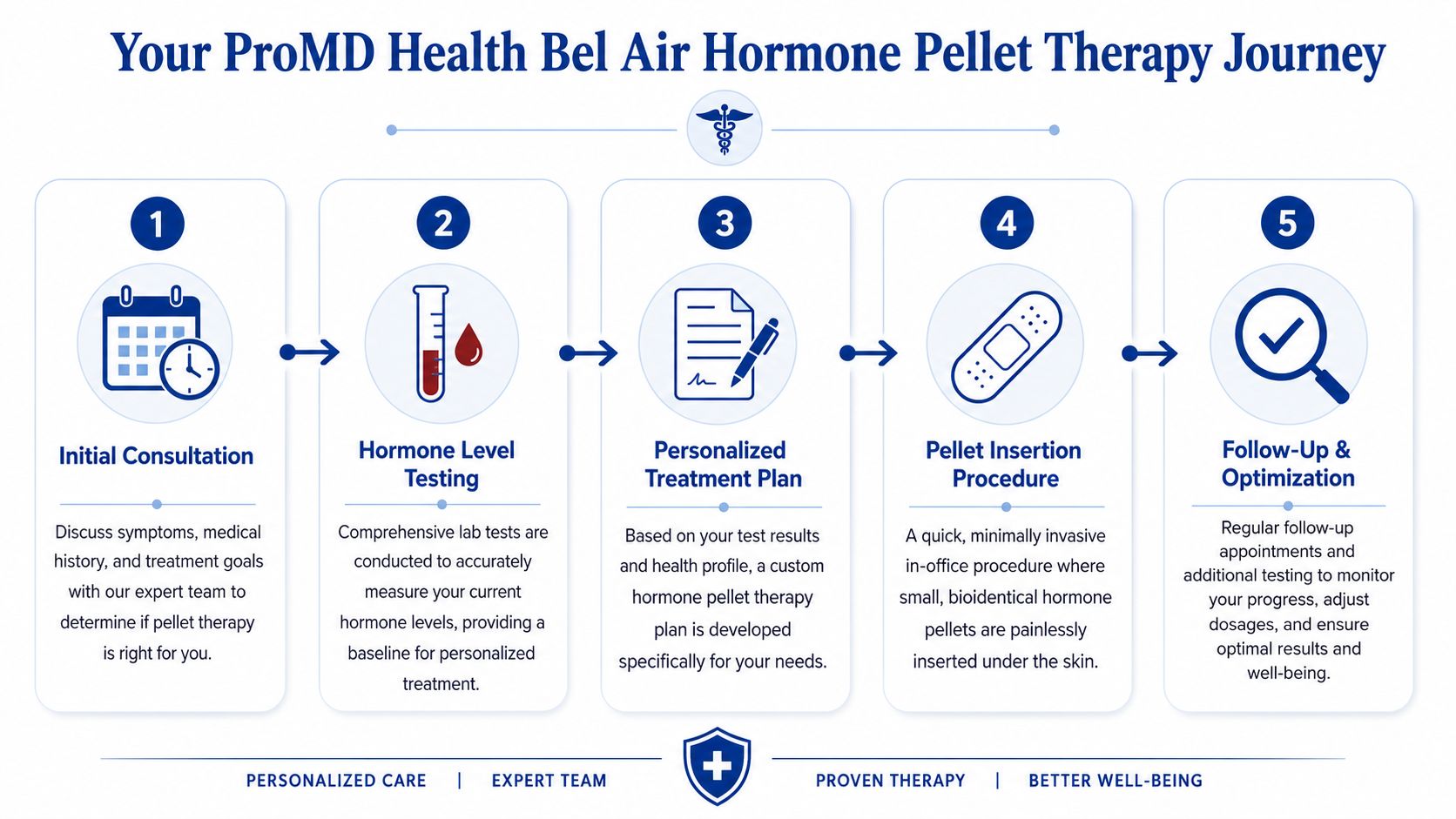
The consultation and lab review
The first step is a consultation focused on symptoms, medical history, current medications, and treatment goals. That conversation matters because hormone care should be based on the full picture, not a checklist alone.
Lab testing follows so the provider can review current hormone status in context. At this stage, symptoms and bloodwork are interpreted together. A person can have symptoms with one pattern, a different symptom cluster with another, or findings that suggest a different issue altogether.
Providers such as Amanda Pittillo, PA-C, and Lauren Mason, PA-C, MSHS use that information to guide individualized planning. The plan is customized rather than prepackaged, which is one of the most important safety features in this kind of care.
If you're ready to move from questions to an appointment, the next practical step is to get started with a consultation request.
What happens on insertion day
Once a patient is cleared and the dosing plan is set, the insertion visit is done in the office. The appointment is typically brief, and the procedure itself is usually completed in well under a full office visit. Most patients are surprised by how straightforward it is.
A local anesthetic is used to numb the insertion area, commonly near the upper hip. After the skin is prepared in a sterile manner, a very small opening is made so the pellets can be placed beneath the skin. A dressing is then applied.
Here's what patients usually want to know in plain terms:
Pain level
The experience is typically described as pressure or minor discomfort rather than significant pain.Visible wound
The opening is small and covered after the procedure.Downtime
You can usually return to normal light activity quickly, with temporary restrictions to protect healing.
Most of the stress around pellet insertion comes from not knowing what will happen. Once patients see how controlled and brief the visit is, the procedure feels much less intimidating.
How follow-up is personalized
The insertion isn't the whole treatment. Follow-up is where optimization happens. Providers assess how the patient feels, how the insertion site healed, and whether the hormone response matches the intended plan.
This is also where real-world feedback matters. If energy improves but sleep still needs work, that changes the conversation. If mood lifts but the timing of symptom return suggests dose adjustment later, that gets factored into future planning. Good hormone care is responsive, not rigid.
That's the patient journey in its most useful form. Careful evaluation, precise insertion, then thoughtful follow-up based on response.
Aftercare Results and Follow-Up Schedule
The aftercare for hormone pellet therapy is usually simple, but simple doesn't mean optional. The goal is to protect the insertion site while the area seals and heals cleanly.
Simple aftercare that protects the insertion site
After the procedure, patients are generally advised to avoid activities that put excess strain or friction on the insertion area for a short period. That often includes intense lower-body exercise, prolonged soaking, and anything likely to irritate the dressing or increase local inflammation.
A practical aftercare checklist usually includes:
Keep the area clean and dry as directed
Follow site-specific instructions for dressing care and bathing.Avoid strenuous activity for the recommended window
This helps reduce irritation, bleeding, or pellet displacement risk.Skip pools, baths, and hot tubs until cleared
The aim is to lower infection risk and support uncomplicated healing.Watch for unusual changes
Increasing redness, drainage, or worsening tenderness should prompt a call to the office.
Most patients don't find aftercare difficult. The key is not treating the procedure like it requires no respect at all. A little care in the first several days helps prevent the kind of minor issues that can turn into avoidable frustration.
When you may notice changes
Results don't arrive like a switch being flipped. Pellets release gradually, and the body still needs time to respond. Some patients notice early improvement within a relatively short period, especially in energy or mental clarity, while others feel changes unfold more gradually over several weeks.
That slower build is normal. Hormonal optimization is less about instant sensation and more about reestablishing a stable signal. Patients often do best when they track trends rather than evaluating the therapy hour by hour.
Follow-up visits and repeat lab assessment are part of maintaining that balance. Replacement timing varies by patient because metabolism, symptom pattern, and absorption differ. In many cases, patients return for reassessment and future pellet planning on a schedule measured in months rather than weeks, which is one reason the treatment feels manageable for people who don't want a daily regimen.
Your Hormone Pellet Therapy Questions Answered
How are pellets different from creams or injections
The main difference is delivery pattern. Pellets are inserted under the skin and release hormones gradually over time. Creams depend on daily application and can be affected by routine consistency and skin absorption. Injections may suit some patients well, but some people prefer not to cycle through rises and declines between doses.
From a practical standpoint, pellets often appeal to adults who want less day-to-day maintenance and a steadier treatment rhythm. That doesn't make them automatically right for everyone. It means the delivery model is different, and for the right patient, that difference matters.
Are side effects the same for men and women
Not exactly. Some side effects can overlap because any hormone therapy must be matched carefully to the individual. But men and women may experience different concerns depending on the hormone used, baseline levels, medical history, and treatment goals.
The more useful way to think about side effects is this: they're not just about the pellet itself. They're about whether the patient was properly selected, whether dosing was individualized, and whether follow-up happens when it should. That's why qualified monitoring is part of safe care, not an optional add-on.
Is hormone pellet therapy covered by insurance
Coverage varies. Many patients find that pellet therapy falls outside standard insurance reimbursement, but the exact answer depends on the plan, the diagnosis framework, and how specific services are handled. Lab work and visits may be treated differently from the pellet procedure itself.
The best next step is to ask about fees, follow-up expectations, and payment details during scheduling or consultation. Clear financial expectations are part of good treatment planning.
How do I get started in Bel Air
Start with a consultation, not with self-diagnosis. If you live in Bel Air, Fallston, Forest Hill, Abingdon, or nearby communities, the first move is to book a visit where your symptoms, health history, and labs can be reviewed together.
Bring a concise symptom history. Note energy changes, sleep quality, mood patterns, body composition concerns, menstrual or menopausal context if relevant, and any prior hormone treatment. That makes the evaluation much more useful.
A good consultation should answer these questions:
- Do my symptoms fit a hormone pattern
- Is pellet therapy appropriate for my health history
- What labs or follow-up will I need
- What should I realistically expect from treatment
Patients often feel relief by having a structured path forward. Even if pellets aren't the right fit, a proper evaluation usually gives clarity about what should happen next.
If you're ready to explore hormone pellet therapy with a medically supervised team, schedule a consultation with ProMD Health Bel Air. The clinic is located at 2023 Emmorton Rd, Suite A, Bel Air, Maryland, and serves adults throughout Bel Air, Fallston, Forest Hill, and surrounding Harford County communities. Booking is simple through the website, and your visit can focus on symptoms, lab evaluation, candidacy, and what a personalized treatment plan would look like for you.