What the Hair Restoration Treatment Process Actually Involves (And What to Expect)
The hair restoration treatment process is a surgical journey that moves healthy, permanent hair follicles from one part of your scalp to areas where hair has thinned or stopped growing.
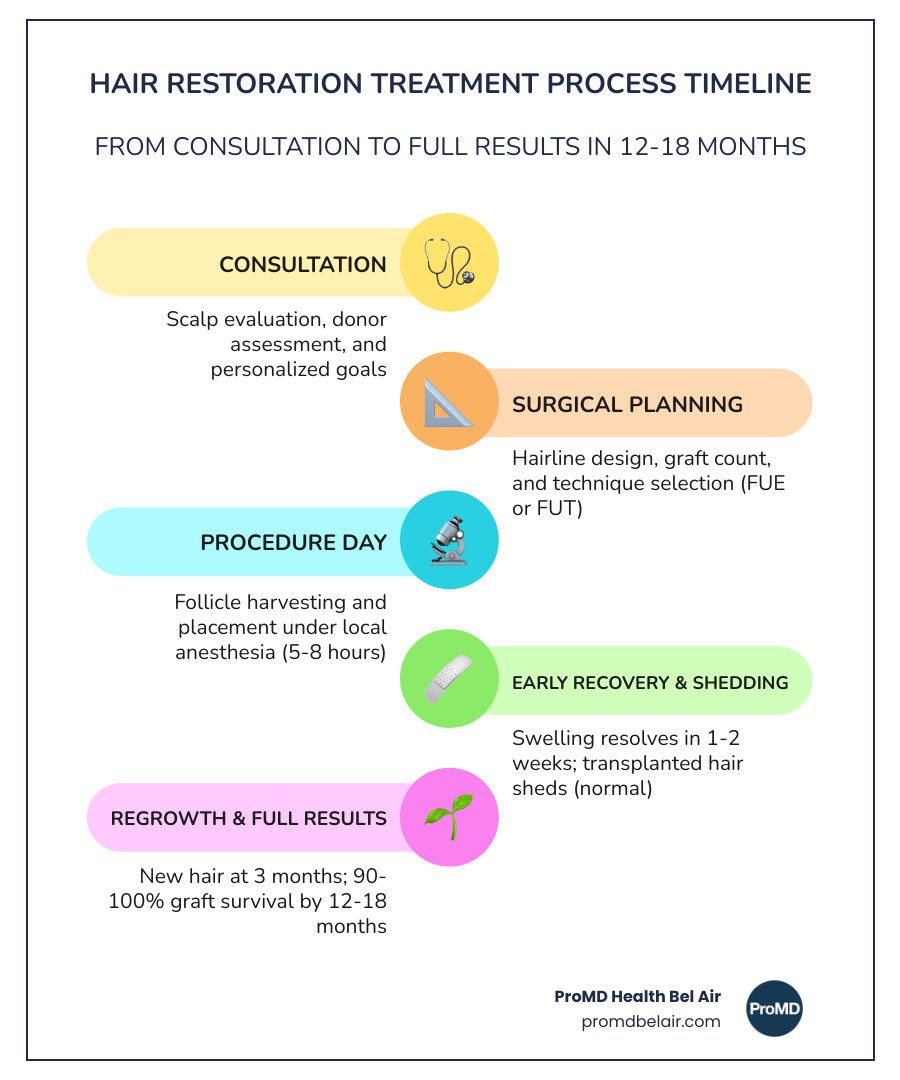
Here is a quick overview of the key stages:
- Consultation — A specialist evaluates your scalp, donor supply, and goals
- Surgical planning — Hairline design, graft count estimate, and technique selection
- Procedure day — Local anesthesia, follicle harvesting, and graft placement (5–8 hours)
- Early recovery — Swelling and scabbing resolve within 1–2 weeks
- Shedding phase — Transplanted hair falls out temporarily (normal and expected)
- Regrowth begins — New hair emerges around month 3
- Full results — Final density and texture visible at 12–18 months
Graft survival rates are high — between 90% and 100% when performed by a qualified, experienced team. But results depend heavily on planning, technique, and aftercare.
Hair loss can feel isolating. Whether you’re noticing a receding hairline, a thinning crown, or patchy areas that have been bothering you for years, knowing exactly what the process looks like — from your first consultation to your 12-month results — makes the decision far less overwhelming.
This guide walks you through every stage of the process clearly and honestly, so you know what to expect before, during, and after surgery.
I’m Ryan Pittillo, Franchise Owner at ProMD Health Bel Air, where I’ve supported hundreds of patients in the Bel Air area as they navigate the hair restoration treatment process and explore the right path for their goals. My team-first background — shaped by years of coaching and community involvement right here in Maryland — means we approach every patient’s plan the same way: with clear communication, realistic expectations, and genuine care.
Hair restoration treatment process: how hair transplantation works
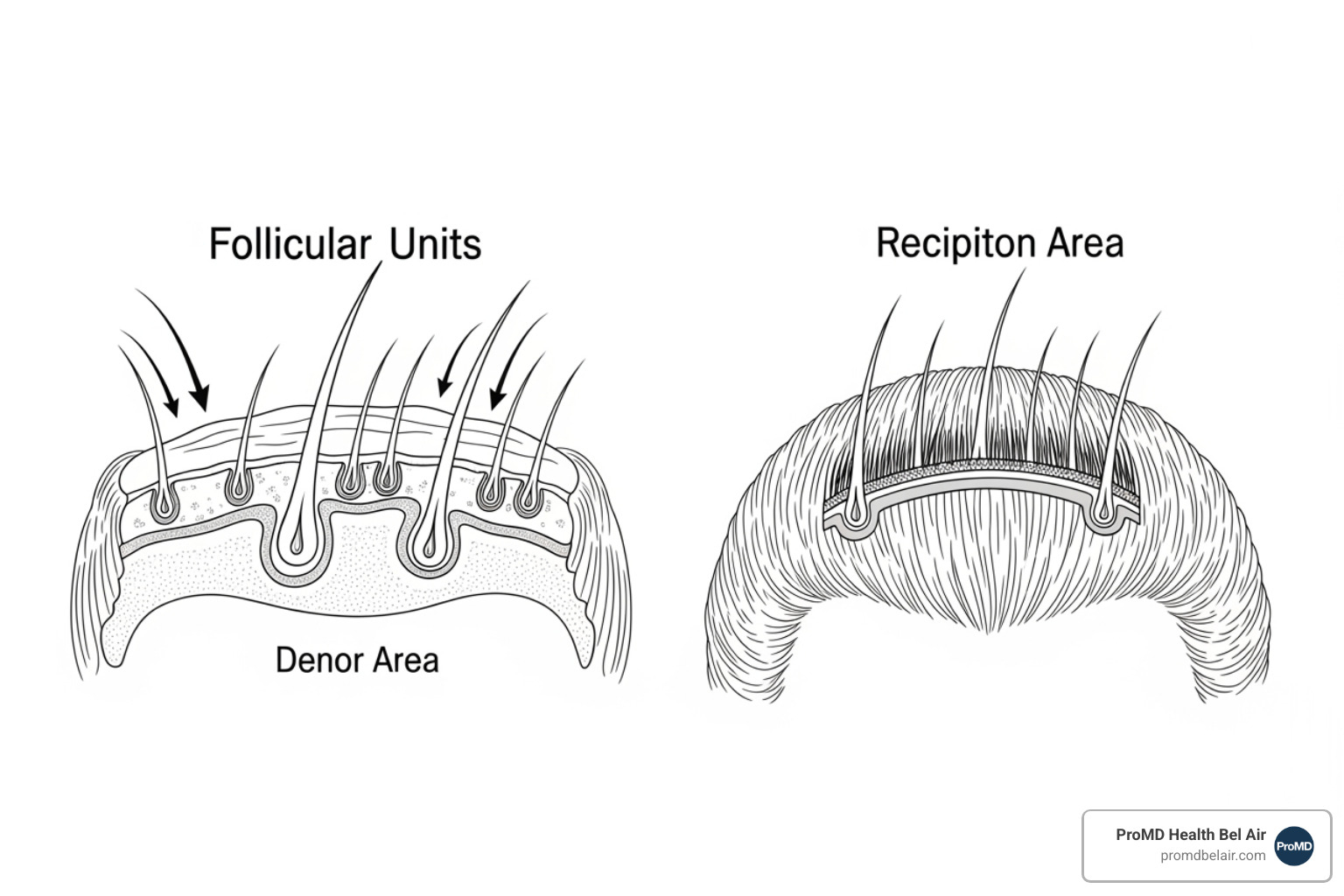
At its core, the hair restoration treatment process is about redistribution. We aren’t creating “new” hair out of thin air; rather, we are moving your existing, permanent hair follicles from a “donor site” to a “recipient site.”
Think of it like moving a hardy perennial plant from a crowded part of your garden to a bare patch. If the soil is prepared and the roots are handled with care, that plant will take root and continue to grow in its new home just as it did before.
What a hair transplant is and what it treats
A hair transplant is a surgical procedure that addresses various forms of permanent hair loss. While most commonly used for male-pattern baldness (androgenic alopecia), it is also an effective solution for female-pattern thinning, receding hairlines, and thinning at the crown.
Beyond genetics, hair transplantation can treat:
- Traction alopecia: Hair loss caused by years of tight hairstyles.
- Scarring alopecia: Hair loss resulting from certain skin conditions or injuries.
- Trauma-related loss: Thinning caused by burns or surgical scars.
Our goal is to restore density and create a natural-looking hairline that complements your facial features.
Why donor hair can keep growing after transfer
You might wonder: if my hair is falling out, why won’t the transplanted hair fall out too? The answer lies in the biology of the “donor area,” which is typically the back and sides of the scalp.
Hair in these regions is genetically resistant to Dihydrotestosterone (DHT), the hormone responsible for shrinking follicles in pattern baldness. When we move these DHT-resistant follicles to the top of the head, they retain their genetic “memory.” They continue to grow for a lifetime because they aren’t susceptible to the same thinning triggers as the hair they replaced. Once the graft heals and establishes a blood supply, follicle survival rates are remarkably high—often between 90% and 100%.
Common causes of hair loss before surgery is considered
Before we dive into the hair restoration treatment process, we always look at the “why” behind the hair loss. Surgery is a fantastic solution for permanent loss, but it isn’t always the first step for every condition. Common causes include:
- Genetics and Hormones: The most frequent culprits for both men and women.
- Stress and Lifestyle: Significant physical or emotional stress can trigger temporary shedding (telogen effluvium).
- Medical Conditions: Thyroid issues, autoimmune disorders like alopecia areata, or nutritional deficiencies can all impact hair health.
Identifying the cause ensures we aren’t performing surgery on a condition that might be better managed with medical therapy or lifestyle changes.
Who is a good candidate for the Hair restoration treatment process?
Not everyone experiencing hair loss is an immediate candidate for surgery. During a consultation in Bel Air, we look at several factors to ensure you’ll be happy with your long-term results.
Signs you may be a strong candidate
A great candidate generally meets these criteria:
- Adequate Donor Hair: You need enough healthy hair on the back and sides of your head to cover the thinning areas.
- Stable Hair Loss: If you are still in the middle of a rapid shedding phase, it may be better to wait until the pattern stabilizes.
- Good Overall Health: As with any outpatient procedure, being in good health helps with the healing process.
- Realistic Expectations: Understanding that a transplant adds density but may not recreate the exact hair you had at sixteen.
When surgery may not be the first step
We might recommend delaying the hair restoration treatment process if you have active, inflammatory scalp conditions or if your hair loss is diffuse (thinning everywhere, including the donor area). In cases of alopecia areata—an autoimmune condition—surgery is often avoided because the body may attack the new grafts just as it did the old ones. You can learn more about our specific approach on our Hair Restoration service page.
Non-surgical options that may support or delay surgery
For many patients in Fallston or Forest Hill, non-surgical treatments are a vital part of the journey.
- PRP (Platelet-Rich Plasma): This uses your own blood’s growth factors to stimulate thinning follicles. It’s often used as a standalone treatment or a post-op boost. Read more about why your own blood might be the best hair tonic or a plasma hair regrowth solution.
- Medical Maintenance: Medications can help preserve the “native” hair you still have, preventing further recession.
Hair restoration treatment process step by step: from consultation to graft placement
The journey from “I want more hair” to “I have more hair” involves several technical steps.
Consultation, diagnosis, and surgical planning
This is where we get to know you. We use our AI Simulator to help you preview personalized post-treatment results—a favorite feature for our Maryland patients. We map your scalp, estimate the number of grafts needed, and design a hairline that looks natural for your age and ethnicity.
FUE vs FUT and how each procedure is performed
There are two primary ways to harvest hair:
- FUE (Follicular Unit Extraction): We extract individual follicles one by one using a tiny punch tool (usually 0.6mm to 1mm). This leaves tiny dot scars that are virtually invisible, even with short hair.
- FUT (Follicular Unit Transplantation): Also known as “strip surgery,” a narrow strip of skin is removed from the donor area. The follicles are then dissected under a microscope. This is often used for larger sessions but leaves a linear scar that is easily hidden by longer hair.
| Feature | FUE | FUT |
|---|---|---|
| Scarring | Tiny dots (minimal) | Linear scar |
| Recovery | Faster (5-7 days) | Slightly longer (10-14 days) |
| Best For | Short hairstyles, smaller areas | Large areas, maximum graft count |
| Procedure Time | Longer (6-10 hours) | Shorter (4-6 hours) |
For more technical details, you can view this detailed procedure information.
Older techniques and where flap surgery or scalp reduction fit
While grafting is the modern gold standard, you may hear about “flap surgery” or “scalp reduction.” These are older techniques used primarily for reconstructive purposes—such as covering a large scar from a burn—rather than routine cosmetic hair restoration.
What happens on procedure day
A typical day for the hair restoration treatment process lasts between 5 and 8 hours.
- Anesthesia: We use local numbing so you stay awake and comfortable. You might feel a slight pinch during the initial numbing, but the rest of the day is usually spent watching movies or relaxing.
- Harvesting: Whether FUE or FUT, our team carefully collects the follicles.
- Site Creation: This is the “art” phase. The surgeon creates tiny “slits” in the recipient area, carefully controlling the angle and direction so the new hair grows in a natural pattern.
- Implantation: The grafts are placed into the sites with precision.

Is a hair transplant painful and how long does it take?
Most patients describe the sensation as “pressure” rather than pain. Once the local anesthetic kicks in, you shouldn’t feel much of anything. For very large “gigasessions” (over 4,000 grafts), the process might even be split over two days to ensure both the patient and the surgical team remain fresh and precise.
Recovery, side effects, and results timeline after the Hair restoration treatment process
Patience is the most important part of your aftercare kit. Healing happens in stages.
The first 72 hours: what to do and what to avoid
During the first few days, your main job is to protect the new grafts.
- Sleep Elevated: Keep your head at a 45-degree angle to minimize swelling.
- Hands Off: Do not touch, rub, or scratch the recipient area.
- Avoid Strain: No heavy lifting or intense exercise.
Week 1 to week 4: normal healing signs and side effects
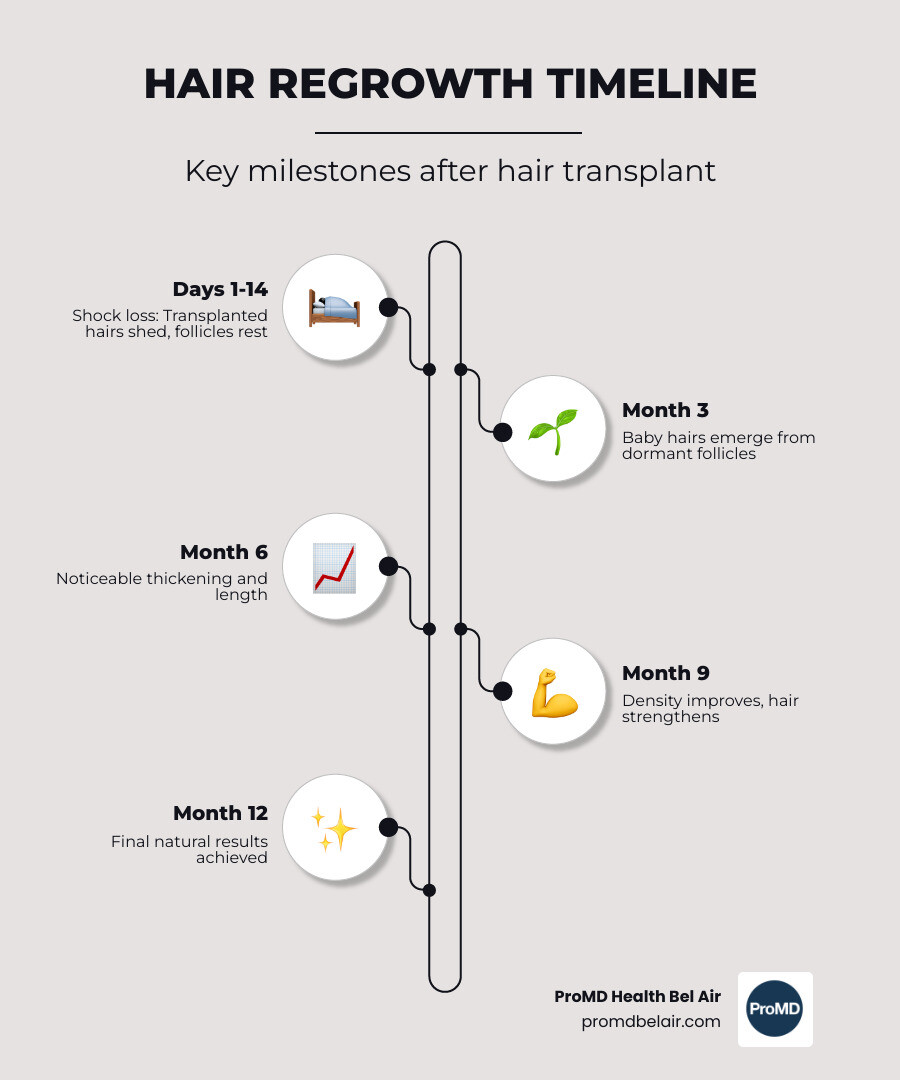
You will see tiny scabs forming around each graft; these usually fall off by day 7 to 10. You might experience some facial swelling that migrates down toward your eyes before disappearing. Around week 2 or 3, you may notice something alarming: the newly transplanted hair starts falling out. Don’t panic! This is called “shock loss.” The hair shaft falls out, but the follicle is safe and sound underground, preparing to grow a new, stronger hair.
Month 3 to month 12: when new growth becomes visible
- Month 3: Fine, “baby” hairs begin to sprout.
- Month 6: Significant thickening is noticeable.
- Month 12: You’ll see the final result. The texture may initially be a bit wiry or curly, but it will soften and match your natural hair over time.
Do hair transplants look natural and how long do they last?
When performed correctly, a hair transplant is virtually indistinguishable from your natural hair. Because we use your own permanent follicles, the results are designed to last a lifetime. However, your non-transplanted hair may still be subject to natural thinning, which is why maintenance treatments are often recommended.
Risks, success rates, cost, and when to call a doctor
We want you to be fully informed about the practical side of the hair restoration treatment process.
What affects success rates and final density
Success depends on:
- Graft Handling: Keeping the follicles hydrated and cool during the transfer.
- Blood Supply: Ensuring the scalp is healthy enough to nourish the new grafts.
- Aftercare: Following our instructions to the letter during the first week.
Possible risks and complications to know
While rare, risks include:
- Infection: Managed with antibiotics.
- Folliculitis: Small bumps (like ingrown hairs) that occur as new hair breaks through the skin.
- Poor Growth: If the grafts are damaged or the blood supply is insufficient.
How much a hair transplant costs on average in 2026
In 2026, the average cost for a hair transplant typically ranges from $4,400 to $12,000. The final price depends on the number of grafts required, the technique used (FUE is often more expensive due to the labor-intensive extraction), and the complexity of your specific case.
When to consult a doctor about hair loss or post-surgery issues
You should reach out to your provider if you experience:
- A fever or chills after surgery.
- Excessive bleeding that doesn’t stop with light pressure.
- Pus or spreading redness at the surgical site.
- Severe pain that isn’t managed by prescribed medication.
Frequently Asked Questions about Hair Restoration Treatment Process
Can transplanted hair fall out before it regrows?
Yes, and it’s completely normal! This “shock loss” happens because the follicle temporarily enters a resting phase after the trauma of being moved. You’ll see the hair shed within the first month, but the root remains alive. New growth typically starts around the three-month mark.
Will I need more than one hair restoration session?
It depends on your goals and the extent of your hair loss. Some patients achieve their desired look in one session. Others, especially those with significant balding or those who continue to lose their original hair, may choose a second session a few years later to add more density.
How soon can I go back to work and exercise?
Most of our patients in Bel Air return to desk jobs within 3 to 5 days. However, you should wait at least 3 weeks before resuming strenuous exercise or contact sports to ensure the grafts are fully anchored and the blood pressure in your scalp remains stable.
Conclusion
The hair restoration treatment process is a powerful way to reclaim your confidence and your reflection. From the high-tech precision of FUE to the long-term success of FUT, modern science has made regrowing your hair safer and more natural-looking than ever before.
At ProMD Health Bel Air, we combine medical expertise with the latest technology, like our AI Simulator, to ensure your plan is as unique as you are. Whether you’re considering surgery or want to explore advanced options like Acell Hair Transplant Success, we are here to guide you every step of the way.
Ready to see what’s possible for your hair? Explore our full range of aesthetic and wellness services and take the first step toward a fuller head of hair today.