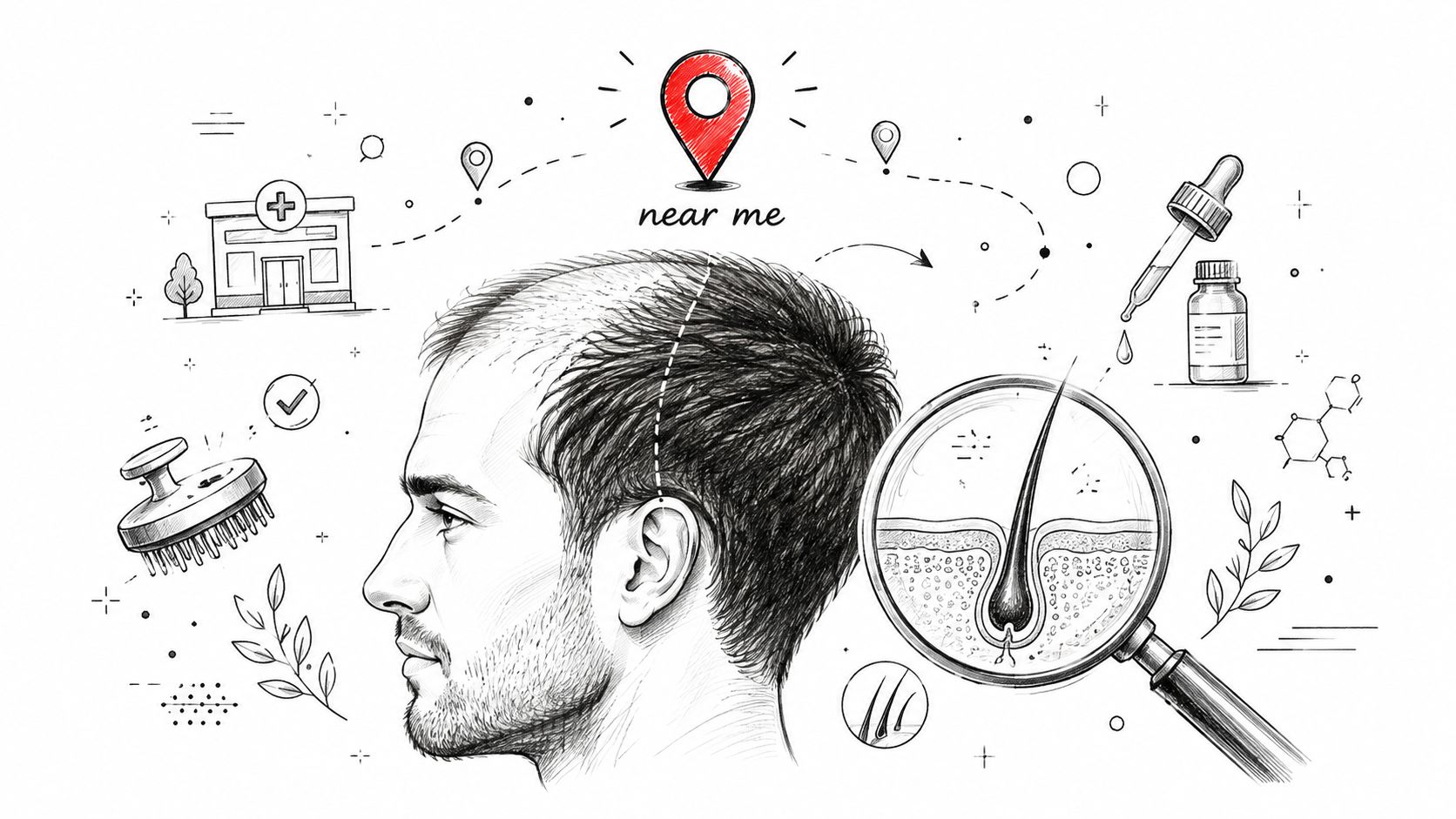
You notice more hair in the shower drain, then more on your brush, then a part that seems a little wider in bright bathroom light. That's usually when the search begins, because “hair restoration near me” isn't really about shopping, it's about figuring out whether a local clinic can help before thinning becomes harder to ignore.
For many people, that search happens at the exact moment they're trying to separate real medical treatment from marketing language. The good news is that hair restoration is a mature medical category, not an experimental one, with 735,312 procedures worldwide in 2019 and a global surgical market estimated at $4.6 billion that same year, both reflecting steady demand rather than a passing trend (ISHRS data summary). If you're looking locally, that context matters, because it helps frame why nearby consultations focus on candidacy, timeline, and realistic outcomes instead of quick fixes.
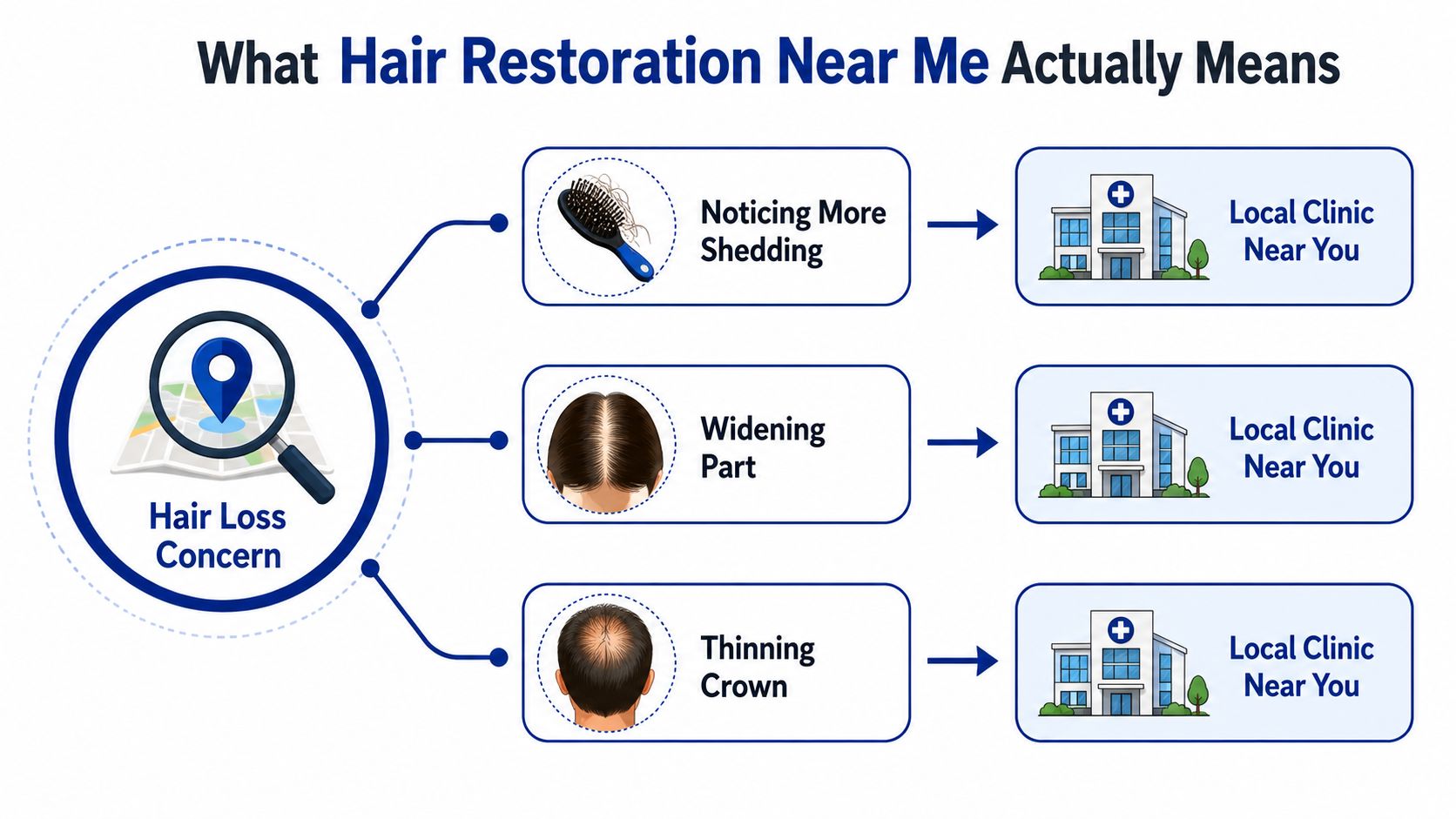
Table of Contents
- What Hair Restoration Near Me Actually Means
- Non-Surgical Hair Restoration Options Explained
- Who Is a Good Candidate for Non-Surgical Hair Restoration
- What Results Look Like and How Long They Take
- Your Visit at ProMD Health Bel Air Step by Step
- How to Choose the Right Local Hair Restoration Provider
- Local Logistics, Financing, and Your Next Step
What Hair Restoration Near Me Actually Means
A first-time patient usually starts with a simple question, “Can anything local help this?” That's a fair question, because hair restoration can mean very different things depending on whether the clinic is talking about non-surgical care, surgical transplantation, or a mix of both. A widening part, a thinner crown, or extra shedding in the drain doesn't automatically point to one treatment, it points to the need for an evaluation.
The phrase covers more than one path
In everyday terms, hair restoration is the umbrella for treatments meant to slow loss, improve density, or move healthy follicles into thinner areas. The newer ISHRS census data shows that treatment is no longer just for older men, since 95% of first-time surgical patients began treatment between ages 20 and 35, and the share of female surgical patients increased 16.5% from 2021 to 2024 (ISHRS Practice Census). That shift matters, because many people now seek help earlier, before thinning is advanced.
For a local searcher, the useful mental model is simple. Some treatments work with follicles that are still there, some replace follicles that are gone, and some do both in different ways. A medically supervised clinic will sort that out first instead of starting with a device or package.
Practical rule: if a page says “hair restoration” but never explains whether it's surgical or non-surgical, you're still missing the most important detail.
If you're comparing nearby options, a smart place to start is with a guide to best local SEO strategies for 2026, because the same clarity that helps people find a clinic also helps them understand what the clinic offers. The rest of this guide breaks the topic into plain language, starting with what non-surgical care can and can't do, then moving into candidacy, results, and what a visit in Bel Air looks like.
Non-Surgical Hair Restoration Options Explained
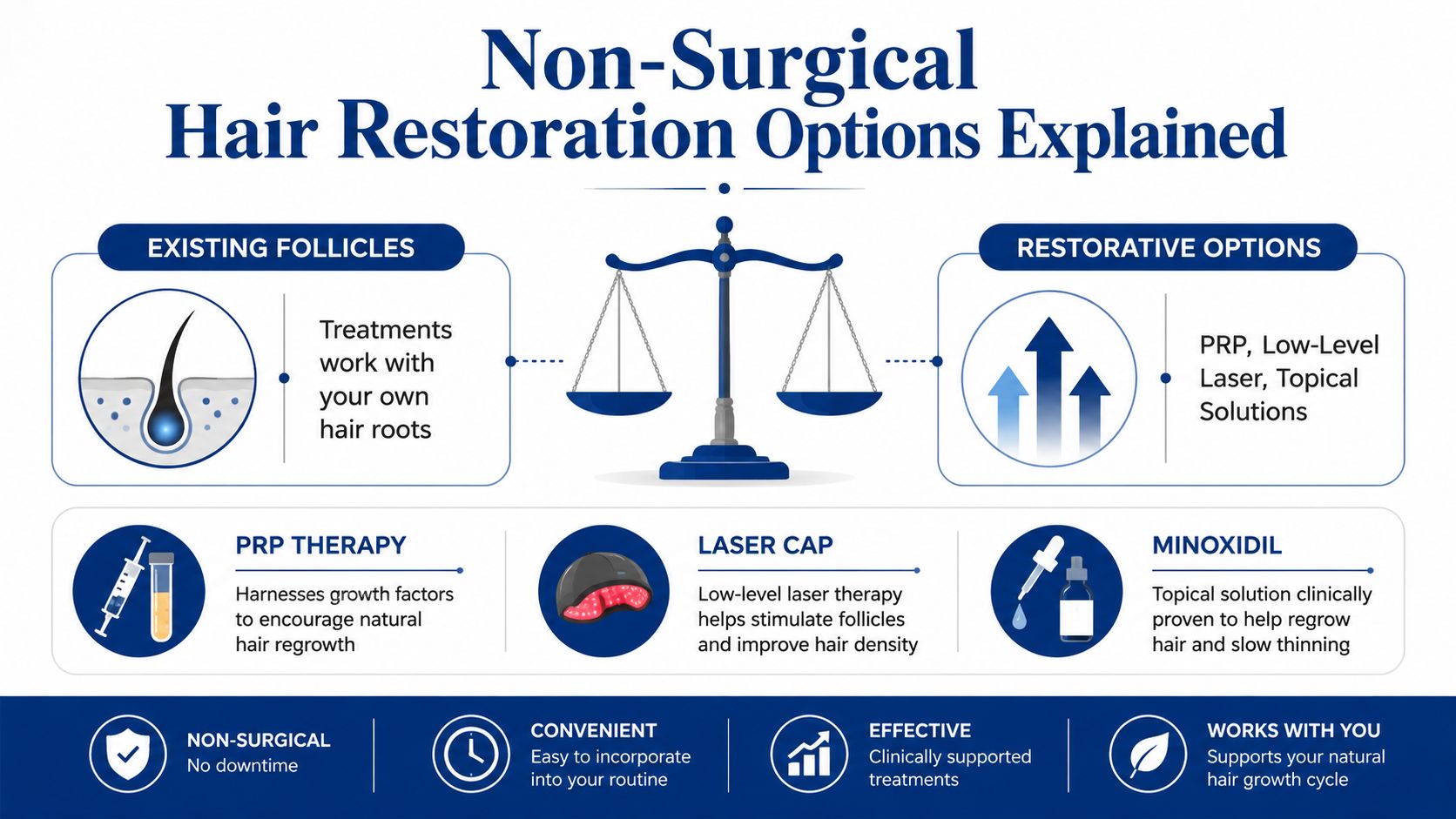
A first consult can feel a little like opening a toolbox without labels. Non-surgical hair restoration is the group of treatments that work with existing follicles instead of moving hair from one part of the scalp to another. That difference changes the goal. The focus is usually on supporting weak follicles, slowing further loss, and improving the look of thickness over time.
Three common categories
Platelet-rich plasma, or PRP, uses a concentrated part of your own blood and places it back into the scalp. Cleveland Clinic notes that PRP may help restore some hair and help prevent further loss, which is why it is often discussed for early thinning where follicles are still alive and responding. In plain language, it is more like helping stressed follicles do their job than creating brand-new ones.
Low-level laser therapy, or LLLT, uses light energy in a biologic way rather than a surgical one. A different clinical overview explains that this type of light-based care is used to support follicle activity and may help extend the growth phase, so it is usually framed as a maintenance-style option rather than a replacement for transplantation. It gives follicles a gentle nudge instead of a rebuild. For readers who want a broader explanation of how a clinic may present this type of care, the Northwestern Medicine hair loss clinic overview is a useful reference point.
Medication-based care can include physician-directed topical or oral support. These options are usually part of a longer plan, especially when shedding is tied to ongoing pattern loss. They do not move hair around, they help manage the process that is causing loss in the first place.
Key distinction: PRP and laser-based care can support follicles that still exist, while transplant procedures are used when follicles are no longer producing hair in a given area.
If you want a deeper look at PRP specifically, ProMD Health Bel Air's page on platelet-rich plasma and hair restoration is a helpful reference point for how growth-factor-based treatment fits into a broader plan. A practical summary from the medical literature is that PRP outcomes vary because protocols are not standardized, so local pages should explain the process clearly instead of implying a single universal result.
For readers who want a broader men's-oriented explanation of non-surgical restoration, the overview at PRP For HairLoss men's hair guide is also useful for understanding how these options are usually discussed in practice.
Who Is a Good Candidate for Non-Surgical Hair Restoration
Candidacy starts with a basic question, is the hair still miniaturizing, or is the area already bare? That difference matters more than the mirror test people use at home. PRP and similar treatments tend to work best where follicles are still active, just weaker, because they can support function rather than replace what's gone.
What a clinician actually looks at
A trained provider usually thinks in a few layers. First is the pattern of loss, because diffuse thinning behaves differently from a receding hairline or crown loss. Next is stability, since ongoing shedding can change the plan even if the hair looks similar today. Age matters too, not as a barrier, but as context, because someone early in the process may be better suited to a conservative maintenance plan than someone who needs fuller restoration.
The same logic applies to the scalp itself. Density in donor areas, the condition of the skin, and whether there's an underlying medical cause all shape what makes sense. A clinic should ask about history, not just hand out a package. If the exam never includes the scalp or a discussion of why hair loss started, that's a sign the plan may be too generic.
Practical rule: if an area is fully smooth and has been bare for a long time, non-surgical options usually have a smaller role there.
Matching the option to the situation
PRP is often discussed for patients who want biologic support for thinning areas. LLLT may be used when the goal is maintenance and the patient can stick with repeated sessions. Medication-based care makes sense when the underlying cause still needs medical control. Those approaches can overlap, but they're not interchangeable.
A good local consult should leave you with an honest answer about whether you're in an early, moderate, or later stage of loss. The right provider won't force a non-surgical plan just because it's convenient to sell. They'll tell you when you're a better fit for maintenance, when you're a candidate for procedural support, and when another path is more realistic.
What Results Look Like and How Long They Take
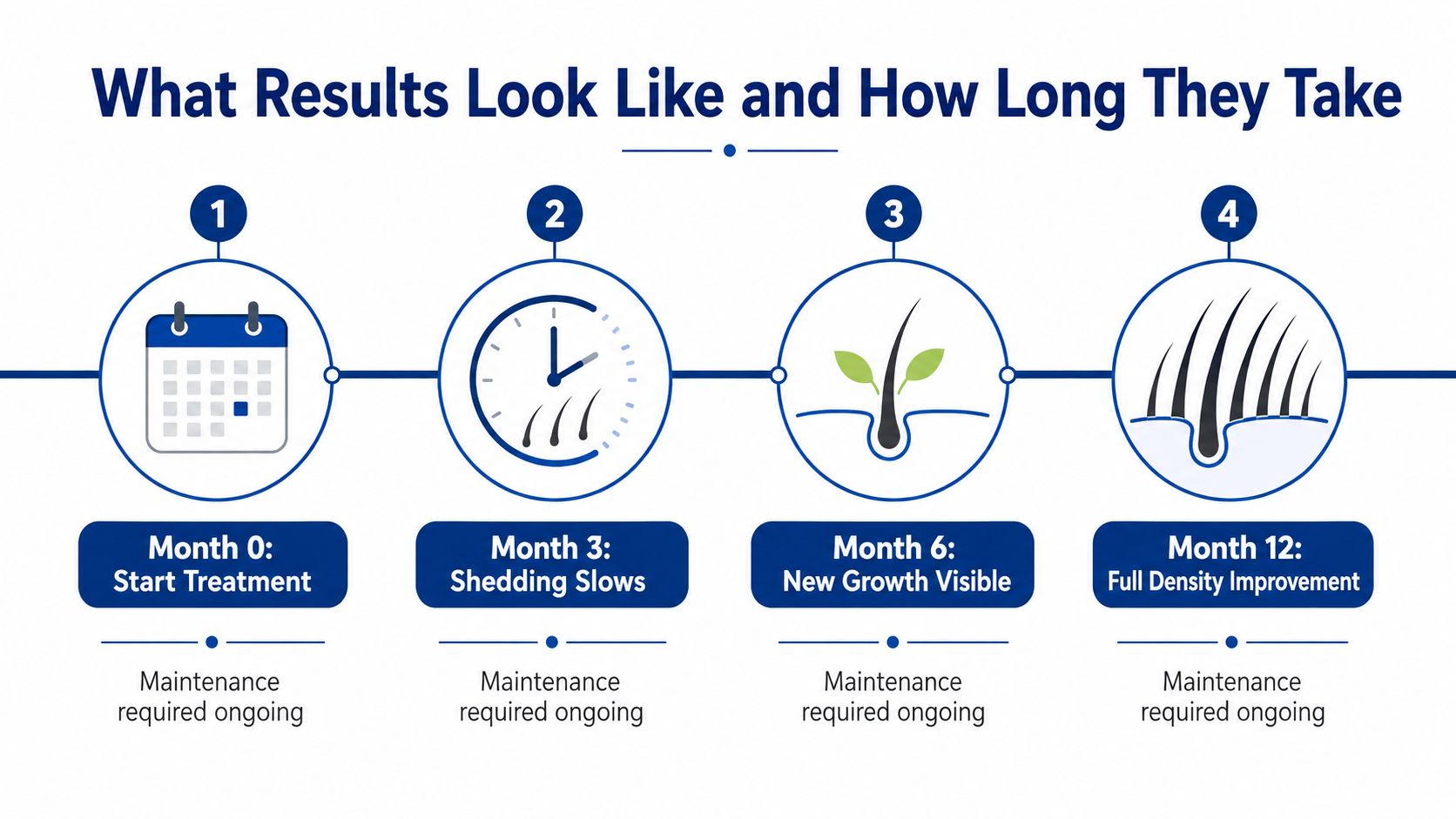
Non-surgical hair restoration is gradual. That can feel frustrating at first, especially if you're hoping for a visible change after one visit, but gradual is also what makes the process medically sensible for early thinning. The aim is not instant fullness, it's to support follicles over time so changes build before they become obvious in the mirror.
What patients usually track
The process is often noticed in small steps rather than one dramatic jump. Early on, you're usually looking for changes in shedding, scalp feel, and how hair behaves when styled. Later, the more meaningful markers are texture, thickness, and how much the thinning area blends with the rest of the scalp.
The best way to judge progress is with photos and measurements, not just daily reflection in a bathroom mirror. Hair changes can be subtle enough that your own eye misses them until they're compared side by side. That's one reason clinics often build follow-up into the plan instead of treating the first appointment like the whole story.
Why maintenance matters
Non-surgical care is usually maintenance-oriented, not one-and-done. That means repeated sessions, adherence to the plan, and patience while follicles respond. If the underlying cause of hair loss continues, the treatment has to keep up with it. If the patient stops too early, the benefits can fade before they've fully settled in.
Helpful benchmark: if a clinic promises a quick finish but never discusses follow-up, it's skipping the part that actually protects long-term results.
For a plain-language walkthrough of the treatment arc, ProMD Health Bel Air's hair restoration treatment process guide is a good companion piece. The main point is simple, non-surgical restoration works best when you think in months, not days, and when your provider makes time for repeated check-ins instead of a single sale.
Your Visit at ProMD Health Bel Air Step by Step
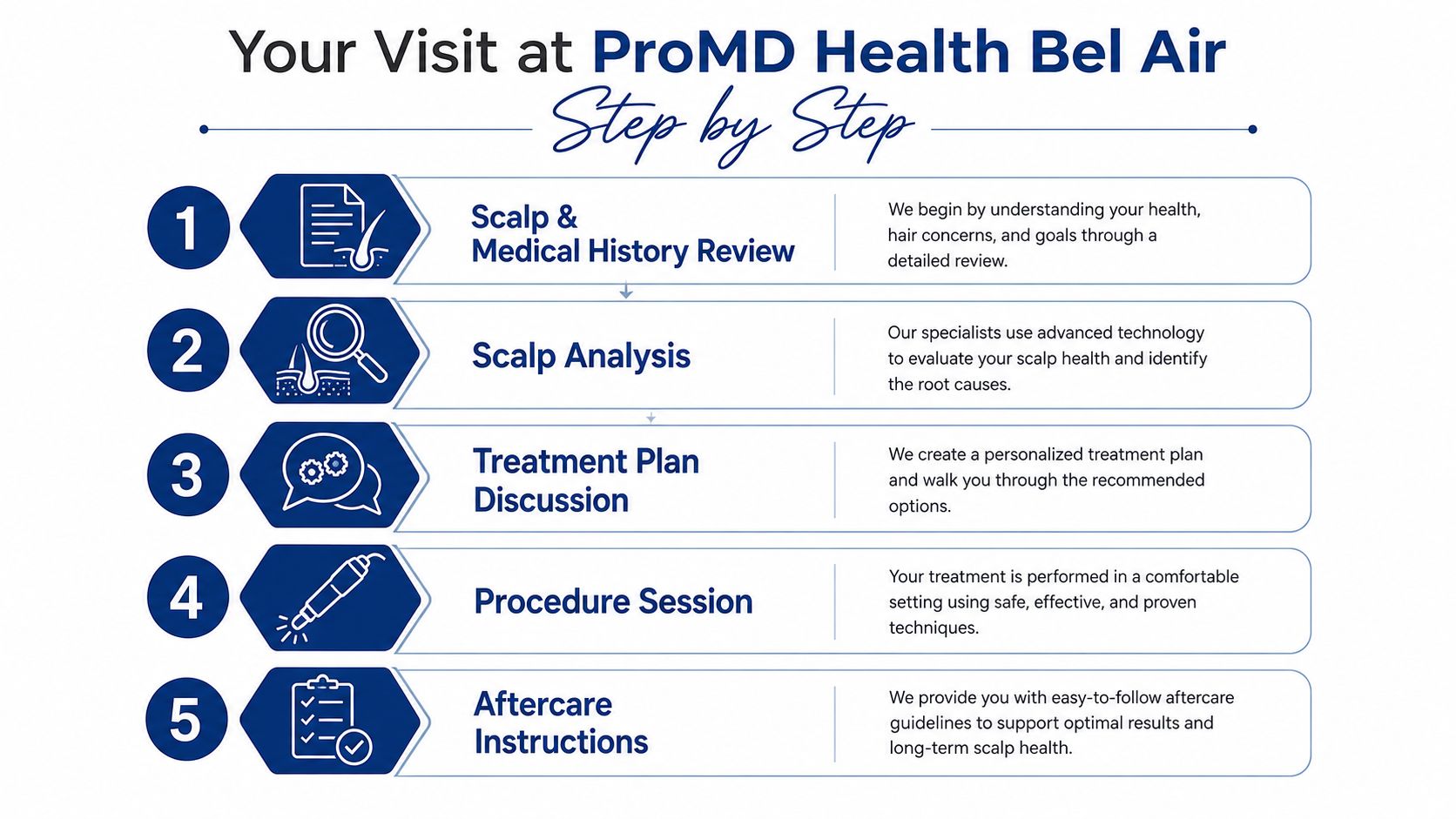
A first visit should feel structured, not rushed. At ProMD Health Bel Air, the conversation starts with a scalp and medical history review, because hair loss can be tied to pattern thinning, hormones, stress, medications, or a mix of causes. A good consult has to sort through those pieces before anyone talks seriously about treatment.
What the appointment usually includes
The clinic's hair-restoration process is built around a medically supervised consult, then a personalized treatment discussion. That's where non-surgical options get reviewed in plain terms, including approaches such as PRP, other scalp-focused therapies, and supportive care when it fits the patient's situation. ProMD Health Bel Air also notes that it uses the Entity Med AI Simulator to preview potential post-treatment outcomes, which can help patients visualize what a plan might look like without replacing medical judgment.
After the plan is set, the treatment session itself is handled in clinic with aftercare instructions that fit the selected approach. The point isn't to sell a universal routine, it's to match the scalp, the pattern of loss, and the patient's comfort level with a treatment they can realistically maintain.
How the local experience is different
The practice says virtual consultations are available alongside in-person appointments, which can make the first conversation easier if you're still comparing options or have a packed schedule. That matters because a lot of people want a low-pressure way to start before committing to an office visit. It also helps patients arrive with a shorter list of unknowns.
If you want to see the clinic's service framing before you book, the main hair restoration page gives you a straightforward look at how the service is presented. The experience should feel like this, review the scalp, discuss the options, choose a plan, then check in over time. If any clinic jumps straight to treatment without that sequence, it's leaving out the part that protects good decisions.
How to Choose the Right Local Hair Restoration Provider
The easiest mistake is choosing the nearest clinic before asking whether they evaluate hair loss well. A good provider should explain who is assessing you, what they're looking for, and which non-surgical options are available for your pattern of thinning. If every consult sounds the same, the clinic may be selling a package instead of building a plan.
Questions worth asking
- Who reviews candidacy: Ask whether the person meeting you is the same person who interprets the scalp pattern and recommends the plan.
- Which options are offered: Make sure the clinic can explain whether it uses PRP, laser-based care, or medication-based support.
- How the plan is personalized: A real plan should reflect the scalp exam, the loss pattern, and the stage of thinning.
- What maintenance looks like: Good care doesn't end at the first visit, so ask what follow-up typically involves.
- How realistic the outcome is: You want a provider who talks about improvement, not certainty.
A red flag is any clinic that promises fuller density without a scalp exam, donor-area discussion, or honest explanation of limits. Another warning sign is pushing one device for every patient, even when the cause and pattern of loss are clearly different. Hair restoration works best when the clinic adapts the plan to the patient, not the other way around.
Short version: if the consult feels like a sales pitch, keep looking.
The same standard applies whether you're evaluating a single nearby office or comparing a few local options. In practice, the best clinics explain what they can treat, what they can't, and why. That transparency is more valuable than a polished brochure, because hair loss decisions are personal and usually unfold over time.
Local Logistics, Financing, and Your Next Step
ProMD Health Bel Air is located at 2023 Emmorton Rd, Suite A, Bel Air, Maryland, and it serves patients from Bel Air, Fallston, Forest Hill, Abingdon, and Havre de Grace. The clinic also offers virtual consultations, which is useful if you want to talk through symptoms before making the drive or if you're trying to narrow your options first.
| Option | How It Works | Typical Commitment | Best Fit |
|---|---|---|---|
| PRP | Uses growth factors from your own blood to support existing follicles | Repeated visits and ongoing maintenance | Early thinning with viable follicles |
| Low-level laser therapy | Uses light-based stimulation for follicle support | Regular sessions over time | Patients who want a maintenance-oriented option |
| Physician-directed topical or oral care | Helps manage the process causing ongoing loss | Ongoing routine and follow-up | People with diffuse or pattern-related thinning |
If you're comparing providers, it helps to think about access the same way clinics think about scheduling. A clear booking process, like the kind outlined in the HIPAA-compliant scheduling software guide, reduces friction for patients who are already nervous about taking the first step. That matters in hair restoration, because people are more likely to act when the next step feels private, simple, and well organized.
ProMD Health Bel Air also notes access to financing, gift cards, and periodic specials and events, which can make a consultation easier to start even if you're still planning. The cleanest next step is simple, bring a short hair-loss history, note when the thinning started, and ask what non-surgical plan fits your stage of loss. That way, your visit starts with clarity instead of guesswork.
If you're ready to talk through thinning hair with a medically supervised team, visit ProMD Health Bel Air and book a consultation. The clinic can review your scalp, explain non-surgical hair restoration options, and help you understand what's realistic for your pattern of loss before you commit to anything.