Why Smooth Skin Texture Matters for Your Confidence
If you want to improve skin texture, you’re not alone—uneven, rough, or bumpy skin is one of the most common concerns people face. Here’s what actually works:
Quick Steps to Improve Skin Texture:
- Exfoliate regularly with gentle chemical exfoliants (AHAs or BHAs) to remove dead skin cells
- Use retinoids at night to boost collagen production and speed cell turnover
- Apply Vitamin C serum daily to brighten and protect against damage
- Moisturize consistently with ingredients like hyaluronic acid and ceramides
- Wear SPF 30+ daily to prevent collagen breakdown and premature aging
- Consider professional treatments like chemical peels or microneedling for deeper concerns
The journey from dull to dazzling skin isn’t just about vanity—it’s about feeling confident in your own skin. Whether you’re dealing with acne scars, fine lines, enlarged pores, or rough patches, the path to smoother skin is more achievable than you might think. While social media may have you believe that “glass skin” is effortless, the reality is that factors like sun exposure, aging, genetics, dehydration, and even your daily skincare habits all play a role in your skin’s texture.
The good news? You have more control than you realize. By understanding what causes uneven texture and implementing the right combination of at-home care and professional treatments, you can make real, visible improvements. This isn’t about chasing perfection—it’s about revealing healthier, more radiant skin that reflects how you feel inside.
As Ryan Pittillo, Franchise Owner at ProMD Health Bel Air, I’ve seen how the right approach can help patients improve skin texture and regain their confidence through personalized, science-backed treatments. My team-first mindset from coaching translates directly to supporting our community in achieving their aesthetic goals.
Understanding the Root Causes of Uneven Skin Texture
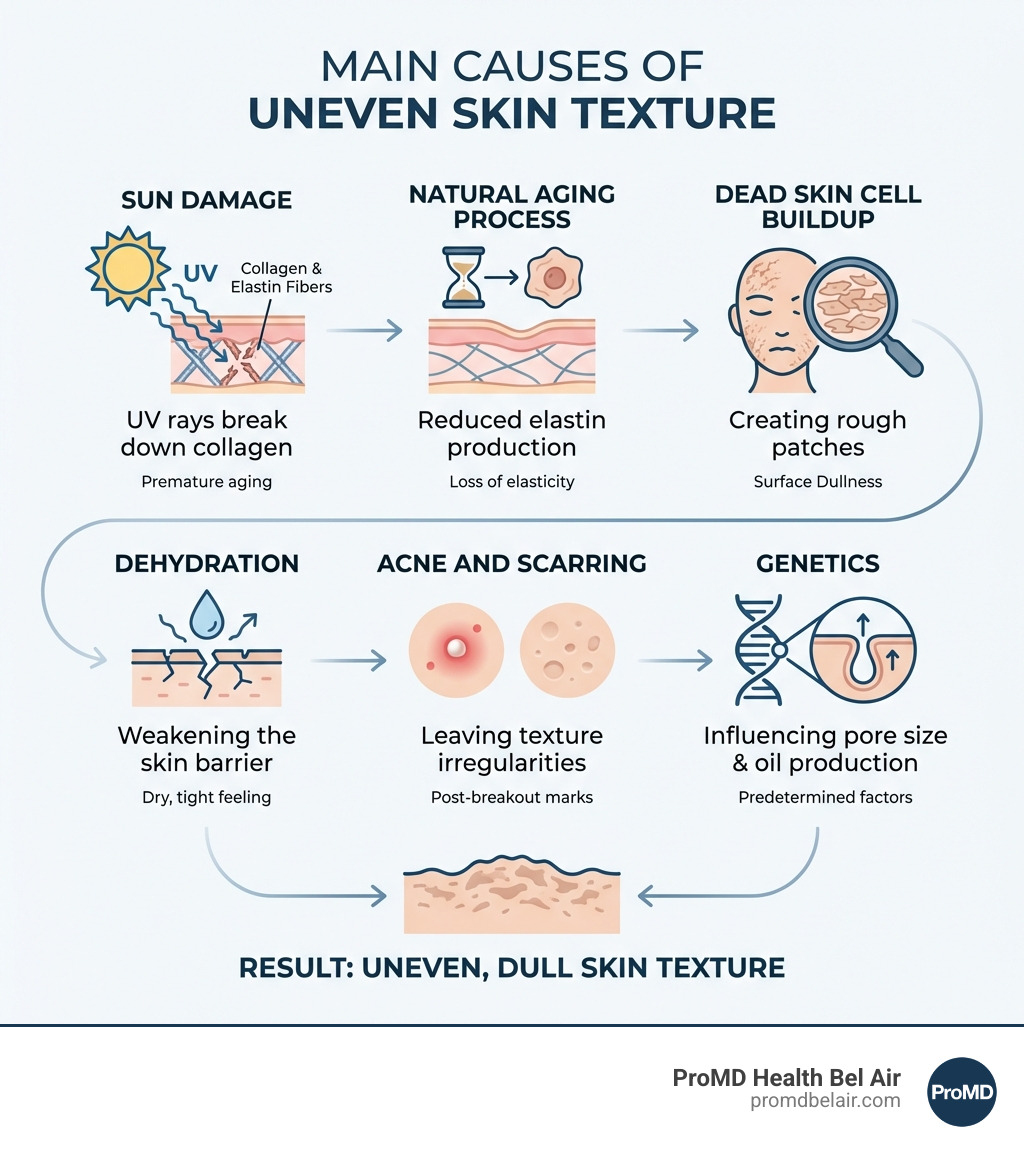
Uneven skin texture is a very common concern, and if you’ve ever found yourself wondering why your skin feels rough, bumpy, or just not as smooth as you’d like, you’re certainly not alone. Our skin’s texture refers to its surface condition—how it feels to the touch and how light reflects off it. Ideally, we all aim for skin that is smooth, supple, and soft. However, various factors can disrupt this ideal, leading to textured skin.
These factors can range from the natural aging process and environmental aggressors to specific skin conditions and even our daily habits. Understanding these underlying causes is the first crucial step in developing an effective strategy to improve skin texture.
How Aging, Sun Damage, and Acne Scarring Impact Texture
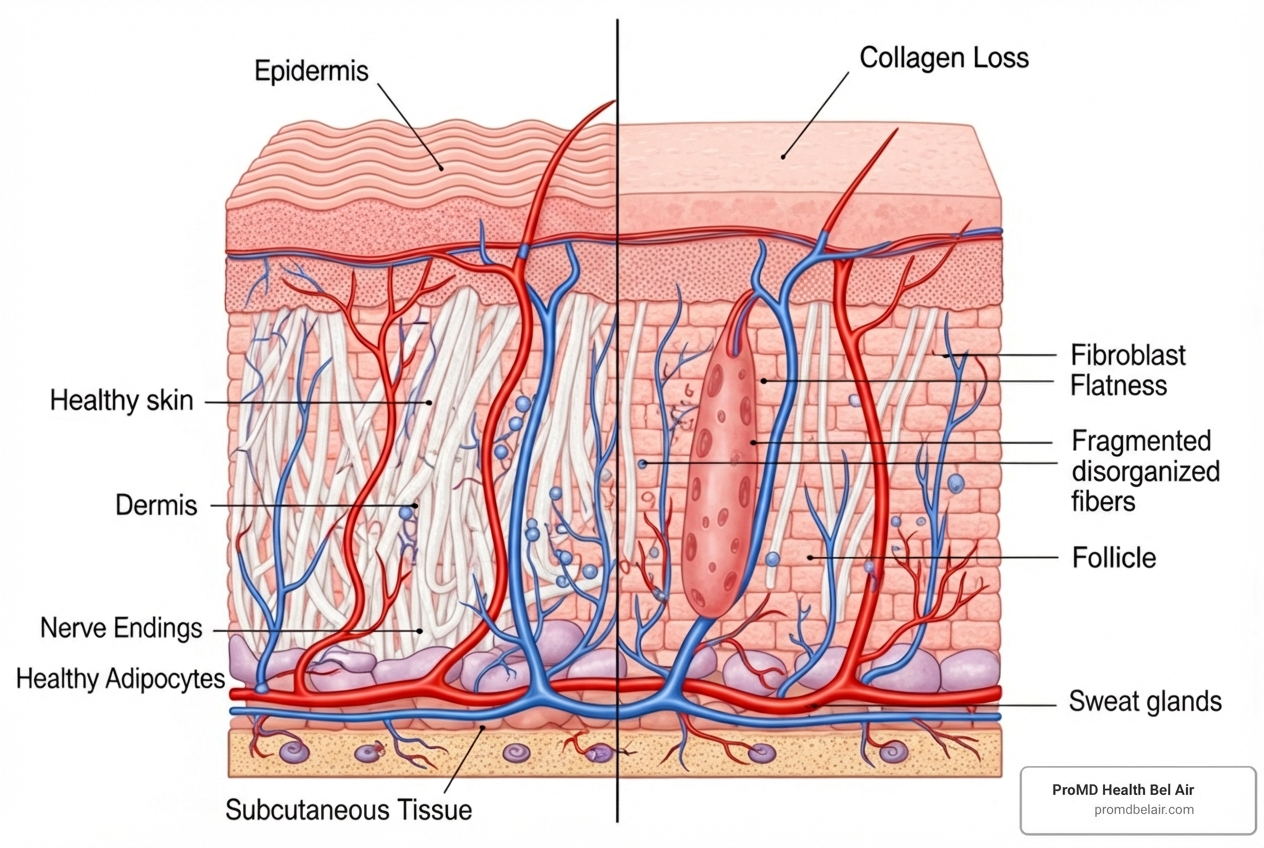
One of the most significant contributors to changes in skin texture is the natural aging process. As we age, our bodies produce less collagen and elastin—the vital proteins that provide our skin with its structure, firmness, and elasticity. This slowdown in production means our skin begins to lose its youthful plumpness and resilience, leading to fine lines, wrinkles, and an overall loss of firmness and moisture. As one study highlights, understanding the fight against skin aging often involves recognizing the decline in these crucial components. You can learn more about this process in Fighting against Skin Aging: The Way from Bench to Bedside.
Sun damage, or photoaging, is another major culprit. UV radiation is the number one cause of premature skin aging. Chronic exposure to the sun’s harmful rays breaks down collagen and elastin fibers at an accelerated rate, leading to rougher skin, enlarged pores, and a leathery appearance. This damage can also manifest as fine lines and wrinkles, contributing significantly to an uneven texture.
Acne scarring also leaves its mark on our skin’s texture. When acne lesions heal, they can disrupt the skin’s normal collagen production. This can result in various types of scars, including pitted scars (like icepick, boxcar, or rolling scars) which create depressions, or raised scars (hypertrophic or keloid scars) that sit above the skin’s surface. Post-inflammatory hyperpigmentation (PIH), though not strictly a textural issue, often accompanies acne scarring, making the skin appear even more uneven.
The Buildup of Dead Skin Cells and Dehydration
Our skin is constantly renewing itself, shedding old, dead skin cells to make way for fresh ones. However, sometimes this process slows down, leading to a buildup of dead skin cells on the surface. This accumulation can make our skin feel rough, look dull, and even clog pores, contributing to a bumpy texture. If you’ve ever felt your skin seems less radiant than usual, excess dead skin cells might be the reason.
Dehydration is another common enemy of smooth skin texture. Our skin needs adequate moisture to function optimally. When our skin lacks water, its natural barrier can become compromised, leading to increased transepidermal water loss (TEWL). This results in dry, flaky patches and a tight-feeling sensation. As research shows, dry skin isn’t just about a lack of moisture; it’s often “a mix of low skin lipids, reduced natural moisture factors, and even nerve sensitivity.” This complex interplay means the skin struggles to retain water, making it prone to irritation and an uneven feel.
Skin Type and Texture: Oily vs. Dry Skin Concerns
Different skin types often present with distinct texture challenges.
Oily Skin: If you have an oily skin type, you might frequently deal with enlarged pores, particularly around the nose, forehead, and chin. Excess sebum production can give the skin an “orange peel” appearance and lead to a generally bumpy texture from clogged pores. Additionally, some individuals with oily skin may experience sebaceous hyperplasia, where enlarged sebaceous glands create small, yellowish bumps.
Dry Skin: On the other hand, dry skin types are characterized by a lack of natural oils, making it difficult for the skin to retain moisture. This often results in rough, scaly patches, flakiness, and a dull complexion. As the American Academy of Dermatology explains, dry skin can present with visible signs like flaking, scaling, or roughness. You can read more about these common signs in Dry skin: signs and symptoms. Chronic skin conditions like eczema can also lead to significant textural changes, causing patches of inflamed, itchy, and rough skin.
Your At-Home Playbook to Improve Skin Texture
Now that we understand the culprits behind uneven skin texture, let’s dive into the practical steps you can take at home to improve skin texture. Think of your daily skincare routine as your personal playbook—consistency is key, and every step plays a vital role. We’re talking about foundational habits combined with targeted treatments to help you achieve that smooth, radiant complexion.
The Power of Exfoliation: Chemical vs. Physical
Exfoliation is about removing dead skin cells from the surface, which is crucial for revealing the fresh, smoother skin underneath. It helps promote cell regeneration, unclog pores, and refine the appearance of scars and dark spots. But not all exfoliation is created equal!
We generally categorize exfoliants into two main types: chemical and physical.
Chemical Exfoliants: These use acids to dissolve the bonds between dead skin cells, allowing them to slough off easily.
- Alpha-hydroxy acids (AHAs): Such as glycolic acid (great for overall resurfacing and reducing pore appearance) and lactic acid (milder, good for hydration and sensitive skin).
- Beta-hydroxy acids (BHAs): Primarily salicylic acid, which is oil-soluble and excellent for penetrating pores to clear congestion, making it ideal for oily and acne-prone skin. As Anna Chacon, MD, a board-certified dermatologist, notes, “Chemical exfoliation assists in removing dead skin cells from the surface of the skin.”
Physical Exfoliants: These use abrasive particles or tools to manually buff away dead skin cells.
- Scrubs: Contain small granules (sugar, salt, jojoba beads) that are rubbed onto the skin.
- Brushes: Devices like sonic cleansing brushes that physically sweep away dead cells.
While physical exfoliants can provide immediate smoothness, they can sometimes be too harsh, especially if the particles have jagged edges, potentially causing micro-tears or irritation. This is why dermatologists often lean towards chemical exfoliants, which offer a more controlled and even exfoliation. Marisa Garshick, MD, an assistant clinical professor of dermatology, suggests, “In general, it is best to exfoliate one to two times per week to avoid risks of over-exfoliation, which can lead to sensitivity and irritation of the skin.” To ensure you’re exfoliating safely, check out the American Academy of Dermatology’s guide on How to safely exfoliate at home.
| Chemical Exfoliants (AHAs, BHAs) | Physical Exfoliants (Scrubs, Brushes) |
|---|---|
| Mechanism: Dissolve dead skin cells with acids | Mechanism: Manually buff away dead skin cells |
| Examples: Glycolic acid, Lactic acid, Salicylic acid | Examples: Facial scrubs, cleansing brushes, microdermabrasion |
| Benefits: Even exfoliation, stimulate collagen, can be hydrating (lactic acid) | Benefits: Immediate smoothness, accessible |
| Risks: Sun sensitivity, irritation if overused | Risks: Micro-tears, irritation, uneven exfoliation, can strip skin |
| Recommendation: Generally preferred by dermatologists for controlled results | Recommendation: Use with caution, opt for fine, spherical particles |
How to improve skin texture with Retinoids and Vitamin C
These two ingredients are often hailed as skincare superheroes, and for good reason—they are incredibly effective at helping to improve skin texture.
Retinoids: These vitamin A derivatives are powerhouses for skin renewal. They work by accelerating cell turnover, bringing fresh, new skin cells to the surface more quickly. This process not only smooths rough patches but also stimulates collagen production, which is essential for firm, plump skin. Retinoids can help minimize the appearance of fine lines, wrinkles, and even acne scars. If you’re new to retinoids, start with a low concentration and gradually increase usage to avoid irritation. For a deeper dive into their benefits, read Retinoids: active molecules influencing skin structure formation in cosmetic and dermatological treatments.
Vitamin C: This potent antioxidant is a must-have in your routine. It neutralizes free radicals caused by environmental stressors, which can otherwise damage skin cells and contribute to uneven texture. Beyond protection, Vitamin C also plays a crucial role in collagen synthesis, helping to keep skin firm and smooth. Plus, it’s a fantastic brightener, helping to fade hyperpigmentation and give your skin a more even tone and radiant glow. As Mona Gohara, MD, a board-certified dermatologist, states, “Vitamin C is a potent antioxidant that’s been proven to help with skin texture and brighten the skin.” Explore its mechanisms and clinical applications in Topical vitamin C and the skin: mechanisms of action and clinical applications.
Hydration and Moisturization: The Foundation of Smoothness
Imagine a plump grape versus a raisin—that’s the difference proper hydration and moisturization can make for your skin texture! Keeping your skin well-hydrated is fundamental for a smooth, healthy appearance.
Hyaluronic Acid: This humectant is a superstar at attracting and retaining water, holding up to 1,000 times its weight in moisture. When applied topically, hyaluronic acid plumps up the skin, making fine lines and wrinkles less noticeable and giving the skin a smoother, more supple feel. The benefits of topical hyaluronic acid for skin quality and signs of aging are well-documented, as shown in Benefits of topical hyaluronic acid for skin quality and signs of skin aging: from literature review to clinical evidence.
Ceramides: These are lipids (fats) that are naturally found in our skin and are crucial components of our skin barrier. They act like the “mortar” between our skin cells, sealing in moisture and protecting against environmental aggressors. Research shows that ceramides are vital for a well-structured outer skin layer or stratum corneum (SC) where they work to keep the skin barrier intact and hydrated. When ceramide levels are low, the skin barrier weakens, leading to dryness, irritation, and rough texture. Studies, such as Another study by Spada, Barnes, and Greive published in the Clinical, Cosmetic and Investigational Dermatology, highlight the effectiveness of ceramide-enriched creams in significantly improving hydration.
Niacinamide (Vitamin B3): This versatile ingredient helps regulate oil production, reduces inflammation, minimizes the appearance of pores, and strengthens the skin barrier. By improving overall skin function, niacinamide contributes to a smoother, more even texture.
By incorporating products with these ingredients, we can significantly improve skin texture by keeping it plump, protected, and well-balanced.
The Non-Negotiable: Daily Sunscreen for Texture Maintenance
If there’s one product we absolutely cannot skip when trying to improve skin texture (and maintain overall skin health), it’s broad-spectrum sunscreen with an SPF of 30 or higher. Think of it as your daily shield against the forces that contribute to uneven texture and premature aging.
UV radiation is incredibly damaging. It’s the primary cause of collagen and elastin breakdown, leading to fine lines, wrinkles, and a loss of skin firmness—all factors that contribute to uneven texture. Sun exposure also exacerbates hyperpigmentation and can make pores appear larger. By consistently applying sunscreen, we protect our skin from this daily assault.
A study published in Dermatologic Surgery demonstrated that Daily Use of a Facial Broad Spectrum Sunscreen Over One-Year Significantly Improves Clinical Evaluation of Photoaging. This means that simply wearing sunscreen every day can actually reverse some signs of photoaging and help maintain a smoother complexion. Even on cloudy days or when indoors near windows, UV rays can penetrate and cause damage, so make it a non-negotiable part of your morning routine.

Professional Treatments for a Flawless Finish
While a consistent at-home skincare routine forms the backbone of beautiful skin, sometimes we need a little extra help to truly improve skin texture, especially when dealing with more stubborn concerns like deep acne scars, significant sun damage, or pronounced wrinkles. That’s when professional treatments, performed by skilled dermatologists and aestheticians, come into play. Combining our daily efforts with in-office procedures can accelerate results and address issues that topical products alone can’t fully resolve.
Low-Downtime Options: Chemical Peels and Microdermabrasion
If you’re looking for effective treatments with minimal interruption to your busy schedule, chemical peels and microdermabrasion are excellent choices.
Chemical Peels: These treatments involve applying a chemical solution to the skin, which exfoliates the top layers and stimulates cell turnover. The depth of the peel can vary:
- Light peels: Use milder acids (like AHAs) to gently exfoliate, brighten, and improve superficial texture and dullness. They typically have little to no downtime, perhaps just some redness or flaking for a few days. We offer various Chemical peels: FAQs for different concerns.
- Medium peels: Penetrate deeper, addressing more significant texture issues, sun damage, and fine lines. Downtime can be a bit longer, with more noticeable peeling.
Chemical peels not only remove dead skin cells but also stimulate collagen production, which helps to refine skin texture over time. A series of treatments is often recommended for optimal results. You can learn more about our options for More info about our Chemical Peels.
Microdermabrasion: This minimally invasive procedure uses a specialized device to gently exfoliate the outermost layer of dead skin cells. It’s a fantastic option for improving dullness, superficial roughness, and minimizing the appearance of enlarged pores. Microdermabrasion leaves your skin feeling incredibly smooth and looking more radiant, with virtually no downtime. It’s a great “lunchtime” treatment! Find more about Microdermabrasion for skin rejuvenation and our services for Microdermabrasion.
Advanced tips to improve skin texture: Microneedling and Laser Resurfacing
For more significant texture concerns, such as deep acne scars, advanced sun damage, or pronounced wrinkles, we often turn to more intensive professional treatments.
Microneedling: Also known as collagen induction therapy, microneedling uses a device with tiny, fine needles to create controlled micro-injuries in the skin. This process triggers the body’s natural wound-healing response, stimulating the production of new collagen and elastin. The result? A significant improvement in the appearance of acne scars, reduced pore size, and overall smoother, firmer skin. Microneedling is also excellent for fading uneven skin tone. The American Academy of Dermatology highlights that Microneedling can fade scars, uneven skin tone, and more. For a comprehensive overview, see Review of applications of microneedling in dermatology. Many patients also combine microneedling with Platelet-Rich Plasma (PRP) for improved results, as PRP harnesses your body’s own growth factors to further boost healing and collagen production. Learn more about our More info about Microneedling.
Laser Resurfacing: Laser treatments use targeted light energy to improve skin texture by either removing damaged outer layers of skin or stimulating collagen production deep within.
- Ablative lasers: These remove the very top layers of skin, providing dramatic results for deep wrinkles, severe sun damage, and significant scarring. They require more downtime but offer profound textural improvement.
- Non-ablative lasers: These work by heating the underlying skin tissue without removing the top layer, stimulating collagen production with less downtime. Fractional lasers, which create microscopic treatment zones, are particularly effective for improving texture with less recovery.
Lasers are incredibly versatile and can be customized to address a wide range of texture concerns. Find how we use these advanced technologies for More info about Laser Treatments.
Frequently Asked Questions about Improving Skin Texture
We understand you likely have questions about what to expect on your journey to improve skin texture. Here are some common inquiries we receive:
How long does it typically take to see results?
The timeline for seeing results can vary significantly depending on the treatment type, the severity of your skin concerns, and your individual skin’s response.
- Immediate effects: You might notice an immediate improvement in skin hydration and plumpness after applying a good moisturizer or hydrating serum.
- Weeks: Gentle exfoliation and consistent use of Vitamin C can start to show results like brighter, slightly smoother skin within a few weeks.
- Months: Retinoids, because they work by accelerating cell turnover and stimulating collagen, typically require 3-6 months of consistent use to show significant improvements in texture and fine lines. For professional treatments like microneedling, it can take three to six months to see full results.
- Professional Treatments: While some low-downtime procedures like light chemical peels or microdermabrasion can offer noticeable improvements after just one session, a series of treatments is usually recommended for optimal and lasting change. Deeper treatments like laser resurfacing might show results after about 30 days, with continued improvement over several months as collagen rebuilds.
The key takeaway? Consistency and patience are your best friends. Your skin didn’t develop its current texture overnight, and changing it takes time and dedication.
Is having textured skin normal?
Yes, absolutely! It’s completely normal to have textured skin. No one’s skin is perfectly smooth like a pane of glass. Our skin naturally has pores, fine lines, and subtle variations that contribute to its unique character. Factors like genetics inherently influence things like pore size.
The goal isn’t to erase all texture, but rather to address concerns that bother you, such as roughness, bumps, acne scars, or pronounced wrinkles that detract from your skin’s health and radiance. Distinguishing between normal, healthy skin texture and issues that can be improved is important for setting realistic expectations.
What lifestyle factors have the biggest impact on skin texture?
Our lifestyle choices significantly influence our skin’s health and texture. Here are some of the biggest players:
- Diet and Nutrition: What we eat literally feeds our skin. A diet rich in omega-3 fatty acids (found in fatty fish, flaxseeds, and walnuts) can strengthen our skin’s barrier and help it retain moisture. Probiotics (like yogurt and kefir) and prebiotics (garlic, onions, bananas) promote a balanced gut microbiome, which is linked to better hydration and reduced dryness. Conversely, diets high in sugar and processed foods can lead to inflammation, which negatively impacts skin health. For more insights, refer to Diet and skin aging-from the perspective of food nutrition.
- Hydration: Drinking enough water throughout the day is crucial. Well-hydrated cells function better, and this translates to plumper, more resilient skin.
- Sleep Quality: “Beauty sleep” is a real thing! During sleep, our skin goes into repair mode, regenerating cells and producing collagen. Lack of sleep can lead to dullness and exacerbate texture issues.
- Stress Management: Chronic stress can trigger inflammation and hormonal imbalances, both of which can manifest as acne breakouts, dryness, and an overall rougher skin texture.
- Avoiding Smoking: Smoking is one of the worst things for your skin. It dramatically accelerates collagen breakdown, constricts blood vessels (reducing oxygen and nutrient delivery), and leads to premature wrinkles and a sallow, uneven complexion.
- Bathing Habits: While a hot shower feels amazing, Dr. Emily McKenzie points out that longer, hotter showers can strip our skin of its natural oils and moisture. Opt for lukewarm water and mild soaps to keep your skin hydrated.
Your Path to Radiant, Smooth Skin
Achieving smoother, more radiant skin is a journey, not a destination. It involves understanding the unique needs of your skin, adopting consistent at-home practices, and knowing when to seek professional guidance. From daily essentials like gentle cleansing, targeted exfoliation, and diligent sun protection, to powerhouse ingredients like retinoids and Vitamin C, your at-home routine lays the groundwork for success.
When those stubborn texture concerns persist, our team at ProMD Health Bel Air is here to help. With advanced professional treatments like chemical peels, microdermabrasion, microneedling, and laser resurfacing, we can address deeper issues and accelerate your progress towards a truly dazzling complexion. Our AI Simulator even allows us to help you preview personalized post-treatment results, so you can envision your change!
We empower you to take control of your skin health, combining the best of daily care with cutting-edge medical aesthetics. For a personalized treatment plan designed to improve skin texture and help you achieve your skin goals, the experts at ProMD Health Bel Air are ready to explore your options with you. Don’t wait to start your journey to healthier, smoother skin.
View our current specials and events to see how you can begin your change today!