You catch your profile on a video call, glance at a photo someone took at dinner, or try a new angle in the mirror and notice the same thing every time. Fullness under the chin. Sometimes it looks like extra fat. Sometimes it feels more like loose skin. Sometimes your jawline just doesn't look as crisp as it used to.
That frustration is common, and it isn't limited to one age group or body type. A double chin can show up in people who exercise regularly, people who've recently lost weight, and people who inherited a softer profile. What matters most is identifying what is causing it, because that determines what will help and what won't.
At ProMD Health Bel Air, double chin sculpting isn't approached as a one-size-fits-all problem. Some patients need targeted fat reduction. Others need more definition at the chin or jawline. Some need support for mild laxity. Many need a thoughtful combination. The right plan depends on anatomy, skin quality, and goals, not trends.
Table of Contents
- Your Guide to a Sleeker Jawline in Bel Air
- Understanding What Causes a Double Chin
- Solution 1 Kybella for Targeted Fat Reduction
- Solution 2 Fillers and Threads for Contour and Lift
- Solution 3 Lasers and Weight Management for Overall Improvement
- Building Your Custom Sculpting Plan at ProMD Health
- Frequently Asked Questions About Double Chin Sculpting
Your Guide to a Sleeker Jawline in Bel Air
Individuals rarely walk in saying the same exact thing. One person says, "I hate how I look in side-profile photos." Another says, "I've lost weight, but my chin still looks heavy." Another says, "My neck isn't terrible, but my jawline has disappeared." They sound different, but they're often talking about the same visible concern.
What's underneath that concern can vary quite a bit. A younger patient may have a small, stubborn pocket of submental fat with otherwise firm skin. Someone in midlife may have a softer chin projection and early laxity that blurs the jawline. Another patient may have both. That's why single-solution messaging can be misleading. If the problem has three components, treating only one usually produces a partial result.
At ProMD Health Bel Air, the most helpful consultation isn't the one that jumps straight to an injectable. It's the one that separates the issue into parts. Is this mainly fat, skin laxity, or structural support? Once those pieces are clear, the treatment path becomes much more logical.
A slimmer area under the chin doesn't automatically create a stronger jawline. Definition comes from how fat, skin, and facial structure work together.
Non-surgical options can be useful. Kybella can reduce a specific central fat pocket. Dermal fillers can sharpen chin and jawline contours. Thread lifts can offer a subtle lift when tissue descent is part of the problem. Laser-based treatments can support skin quality. Medical weight management can help when fullness reflects broader body composition rather than one isolated pocket.
Patients usually feel more confident once they understand that double chin sculpting isn't one treatment. It's a strategy.
Understanding What Causes a Double Chin
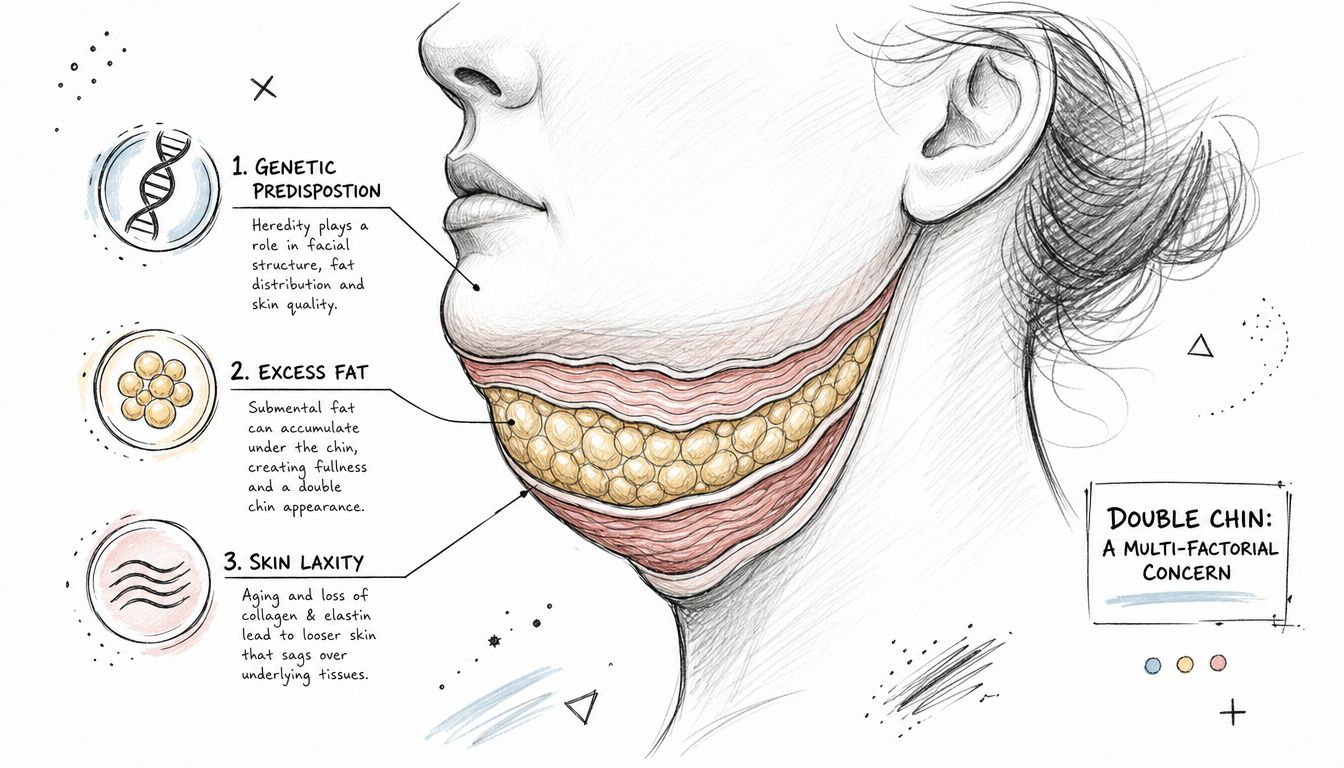
A double chin is often described as one issue, but it usually develops from a mix of anatomy and time. The visible fullness beneath the chin is called submental fullness, and the reason it appears matters just as much as the size of the area itself.
Fat is only one piece of the picture
Some people are predisposed to store fat beneath the chin. They may be otherwise lean and still notice fullness in profile. Genetics plays a real role here, which is why the area can feel especially stubborn.
Aging adds another layer. Skin gradually loses firmness, and tissues don't hold the same shape they did earlier in life. Even a modest amount of laxity can soften the transition from chin to neck and make the lower face look heavier than it is.
Weight fluctuation can also change the area. Some patients notice more fullness after weight gain. Others lose weight and are surprised that the jawline still looks blurred. In those cases, fat may be part of the story, but not the whole story.
A practical way to think about it is this:
- If the tissue feels full and dense, excess submental fat may be driving the concern.
- If the skin looks loose or crepey, laxity may be more important than fat.
- If the chin looks retrusive or the jawline lacks shape, structural support may be the missing element.
Why jawline definition can still fall short
One of the biggest misunderstandings in double chin sculpting is assuming that reducing fat automatically creates a sculpted jawline. It often helps, but it doesn't always finish the job.
A key limitation is that Kybella is FDA-approved only for central fat and cannot be used laterally, which helps explain why some patients see less jawline improvement than they expected, even when under-chin fullness decreases, as noted in this clinical discussion of treatment limits for submental fullness.
If the area bothering you extends along the jaw or into the lateral neck, a fat-dissolving approach alone may leave part of the contour unchanged.
That matters because patients don't usually look at their neck in isolated zones. They look at the full silhouette. A central reduction can be helpful, but if the lateral contour still looks soft, the overall result may feel incomplete.
This is why anatomy has to lead the treatment plan. The cause determines the tool.
Solution 1 Kybella for Targeted Fat Reduction
Kybella is the most specific non-surgical option for patients whose main issue is a localized pocket of fat under the chin. It is not a skin-tightening treatment, and it isn't a jawline filler replacement. Its job is narrower than that, which is exactly why it can be useful in the right patient.
How Kybella works under the chin
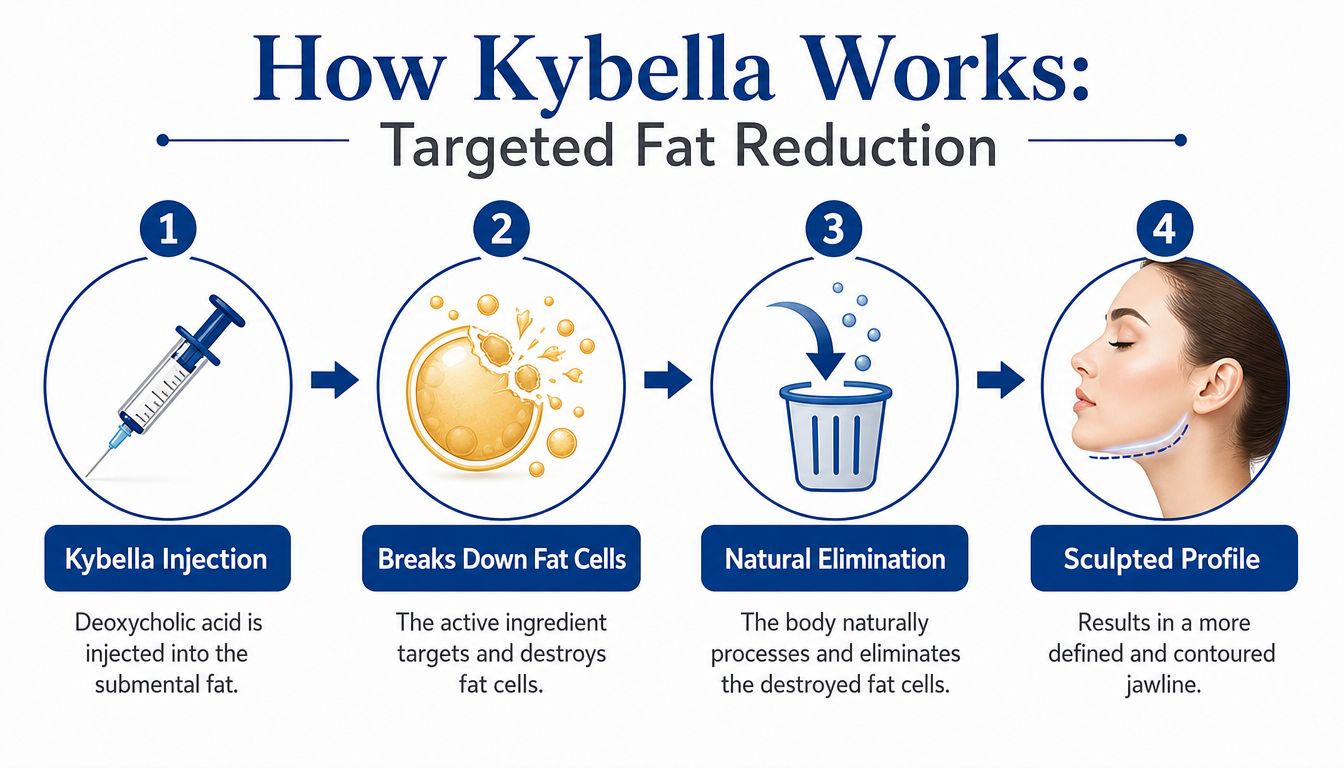
Kybella is the first and only FDA-approved injectable containing deoxycholic acid specifically indicated to reduce moderate-to-severe submental fat by chemically lysing fat cell membranes, leading to permanent fat-cell elimination, according to WebMD's overview of Kybella for double chin removal.
In practical terms, that means the product is injected directly into the fat beneath the chin, where it breaks down fat cell membranes. The body then clears those destroyed cells over time. The goal is a gradual reduction in fullness, not an immediate dramatic change.
For patients researching this option, the Kybella treatment page at ProMD Health Bel Air is a useful place to review how the service fits into submental contouring.
Who tends to be a strong candidate
The best candidate usually has moderate under-chin fat with fairly good skin elasticity. That combination matters. If the skin can contract reasonably well after fat reduction, the area tends to look cleaner as fullness improves.
Kybella is less satisfying when the primary complaint is loose skin, a weak chin, or a broad lack of jawline definition. In those situations, patients may still benefit from Kybella, but usually not by itself.
A strong consultation looks for these details:
- Location of fullness: Central fullness is more aligned with how Kybella is used.
- Skin quality: Firmer skin generally supports a better contour response.
- Facial balance: If the chin lacks projection, adding structure may matter as much as removing fat.
What treatment and recovery usually feel like
Treatment is straightforward, but it does require planning and patience. Standard Kybella protocols typically require two to six sessions spaced at least one month apart, and each session usually lasts about 15 to 20 minutes, based on this clinical summary of Kybella treatment timing.
During treatment, the area is mapped carefully so injections stay focused within the submental fat pocket. Most patients feel brief stinging or burning during the injections, followed by swelling that can be pronounced for several days. That swelling is expected. It doesn't mean something is going wrong.
Clinical data also shows meaningful patient satisfaction. In studies, 79% of Kybella subjects reported improved satisfaction with their submental appearance, compared with 34% of placebo subjects, and the average fat layer reduction measured at four months was 22.4%, as reported on the manufacturer's clinical results page for Kybella.
Practical rule: Kybella is often worth considering when you're bothered by a distinct under-chin fat pocket and you're comfortable with gradual improvement rather than instant contouring.
The patients happiest with Kybella usually understand its trade-offs before they start. It can work well for the right anatomy. It also asks for patience, multiple visits, and realistic expectations about swelling and timing.
Solution 2 Fillers and Threads for Contour and Lift
Not every softer jawline is caused by excess fat. In many faces, the bigger issue is that the framework isn't strong enough or the tissues have started to descend. That's where contouring and lift become more relevant than fat reduction.
When definition is the missing piece
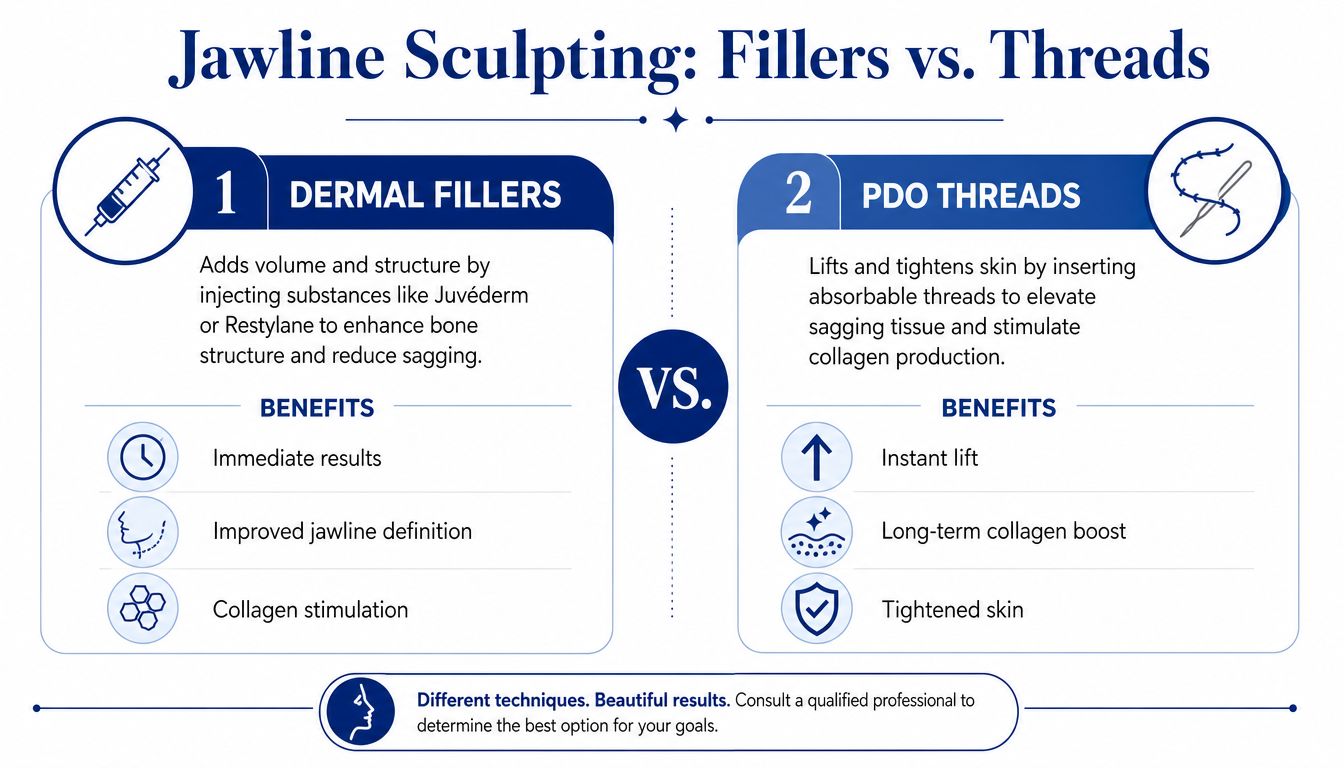
Dermal fillers can create a sharper lower-face outline by improving chin projection and strengthening the jawline contour. This is especially helpful in patients whose profile looks soft because the chin sits slightly back or the jawline lacks angular support.
A small amount of strategic structure can change how the entire area reads. The neck may not look as full once the chin-jaw transition is stronger. That's not because filler dissolves fat. It doesn't. It changes the proportions and support around the area.
Fillers make the most sense when:
- The chin appears recessed: Better projection can improve side profile balance.
- The jawline lacks definition: Added contour can sharpen the lower face.
- The fullness is mild: Camouflage can be more useful than fat reduction in selected cases.
When mild sagging softens the jawline
PDO threads address a different problem. They are used when tissue descent and early laxity contribute to the loss of definition under the chin or along the jaw. Their purpose is subtle repositioning and support, not volume replacement.
This can be valuable for patients who say, "I don't think it's just fat. Everything feels like it's dropping." That observation is often accurate. When the skin and soft tissue have shifted, reducing volume alone may not restore a clean contour.
For patients who want to understand how lifting strategies fit into non-surgical contouring, this thread lift procedure guide offers additional context on what thread-based support can and can't do.
A simple comparison helps:
| Approach | Best suited for | What it changes |
|---|---|---|
| Dermal fillers | Weak chin or limited jawline structure | Projection and contour |
| PDO threads | Mild tissue descent or early laxity | Lift and support |
Fillers build shape. Threads reposition tissue. Neither one removes fat, but both can make the lower face look more intentional and refined.
The most natural outcomes usually come from using these tools for the problem they solve. A patient with excellent bone structure and extra central fat may not need filler at all. A patient with minimal fat and a receding chin may see more benefit from contour than reduction. When those distinctions are missed, treatment feels underwhelming.
Solution 3 Lasers and Weight Management for Overall Improvement
Some patients don't need another contouring product. They need better skin quality, less overall facial fullness, or both. That's where supportive treatments often make the biggest difference in double chin sculpting.
Where laser treatments fit
If the skin under the chin looks loose, crepey, or slow to bounce back, fat reduction alone may leave the area looking deflated rather than defined. That is why skin-focused treatments matter.
A key point that gets overlooked is this: neither Kybella nor CoolSculpting firms lax skin, and energy-based options like laser or radiofrequency are the treatments used for laxity, as explained in this FAQ on double chin reduction and skin tightening.
Laser treatments can support the overall result by improving skin tone, texture, and tightness in the lower face and neck area. They are especially useful when the profile problem isn't large-volume fat, but rather skin quality that makes the jawline look less crisp.
Patients often do better with lasers when:
- The skin is the weak link: Mild laxity can blunt otherwise good bone structure.
- The area needs refinement after contouring: Skin support can make other treatments look more polished.
- The goal is subtle refreshment: Some people want improvement without adding volume or dissolving fat.
When body composition affects the lower face
There are also patients whose under-chin fullness isn't isolated. Their face and neck look heavier overall, and that pattern often improves when weight management is part of the plan. In those cases, a targeted aesthetic procedure may still help later, but it isn't always the first move.
A thoughtful, physician-supervised program can help patients understand whether the face is carrying generalized fullness or whether there is still a stubborn submental pocket after broader progress. For a helpful outside overview, this guide to physician-guided weight loss explains how medically supervised weight loss differs from trying to manage it alone.
Patients considering that route can also review the clinic's medical weight management program to see how a wellness-based approach may support facial contour goals as part of a broader plan.
This approach works best when expectations are clear:
- Weight management can improve overall fullness. It may slim the lower face and neck in a way that makes targeted treatment less necessary.
- It doesn't replace structural work. If the chin is recessed or skin is lax, those issues can remain.
- It can improve timing. Some patients get better results by addressing generalized fullness first, then refining the area later.
Building Your Custom Sculpting Plan at ProMD Health
The best double chin sculpting plan usually isn't built around one product. It's built around the reason your profile looks soft in the first place. When that distinction is made early, the treatment plan tends to be more efficient and the result looks more balanced.
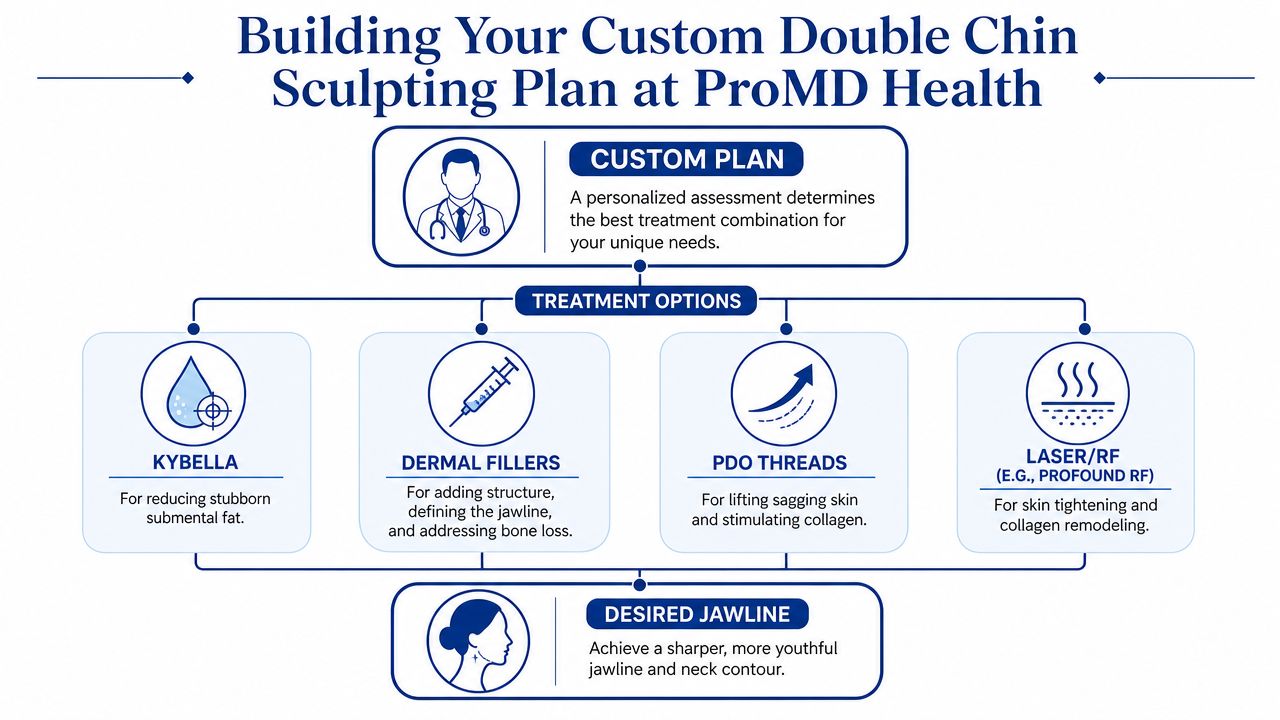
A side by side look at common options
Here is a simple comparison of what different non-surgical paths are designed to address.
Double Chin Sculpting Options at a Glance
| Treatment | Primary Target | Typical Sessions | Downtime | Results Timeline |
|---|---|---|---|---|
| Kybella | Central submental fat | Multiple sessions are common | Swelling is expected after treatment | Gradual improvement over several weeks |
| Dermal Fillers | Chin and jawline structure | Often based on contour goals and maintenance needs | Usually limited and manageable | Shape change is visible soon after treatment |
| Thread Lift | Mild laxity and tissue descent | Based on anatomy and lift needed | Mild recovery varies by treatment plan | Early lift with ongoing tissue support |
| Lasers | Skin quality and mild laxity | Series-based treatment is common | Depends on laser approach | Gradual skin improvement over time |
What this table can't show is how often those categories overlap. Many patients have more than one driver. A person may have central fat plus early laxity. Another may have a soft jawline because of limited chin projection plus mild skin looseness.
Why combination treatment often looks more natural
A multi-modal plan often creates the most believable result because it respects facial anatomy. Reduce fat where fat is the problem. Add contour where support is lacking. Tighten skin where laxity blurs the border. That tends to look cleaner than pushing one treatment to solve everything.
For example, a patient with a small but stubborn under-chin pocket and decent skin may do well with Kybella alone. A patient with mild submental fullness, a recessed chin, and early tissue descent may get a more satisfying result from a combination of contour and lift. Someone after weight loss may need skin-focused care more than fat reduction.
The most common reason patients feel underwhelmed is not that treatment failed. It's that the chosen treatment only addressed one layer of the problem.
Amanda Pittillo, PA-C and Lauren Mason, PA-C, MSHS evaluate these patterns every day in consultation. The value of that visit is not just deciding whether you qualify for a treatment. It's identifying which anatomy is driving the result you see in the mirror, then mapping a plan that fits your timeline and comfort level.
A strong plan is personal. It doesn't need to be aggressive. It needs to be accurate.
Frequently Asked Questions About Double Chin Sculpting
Does double chin sculpting hurt
The experience depends on the treatment and on your anatomy. Kybella usually causes the most swelling and tenderness afterward because it is designed to break down fat. Fillers and threads tend to involve pressure, pulling, or temporary soreness instead of the same kind of post-treatment fullness.
In practice, the appointment is usually manageable. The recovery is what patients need to plan for. I tell patients to think less about the treatment chair and more about the next several days, especially if under-chin swelling would affect work, social plans, or comfort.
Are the results permanent
Fat reduction can be long lasting when the right patient is treated appropriately. For Kybella, the treated fat cells are intended to be removed by the body and not return in the same way, as explained in WebMD's overview of Kybella injection results.
The larger point is that a jawline changes for more than one reason. Skin can loosen. Support can soften. Weight can fluctuate. That is why some patients keep their fat reduction result but still choose later treatment for tightening, contour, or structural support.
How do I know which option is worth the investment
Start with the feature that bothers you most in profile and in photos. A small, localized fat pocket may respond well to fat reduction. A weak chin or poorly supported jawline may improve more with contouring support. Loose skin after weight loss often needs a skin-focused plan.
The most cost-effective choice is the one that addresses the main driver of the problem. If fat is treated but the underlying issue is laxity or chin projection, the result may look partial. At ProMD Health Bel Air, this is why we often recommend a combination plan instead of pushing one treatment harder than it should be pushed.
Can one treatment fix everything under the chin
Usually, no. Under-chin fullness can come from fat, skin laxity, muscle activity, or limited bony support. Those problems can look similar in the mirror, but they do not respond the same way.
A better result often comes from treating more than one layer. Kybella may reduce fullness. Fillers can improve chin projection and jawline definition. Threads or energy-based treatment may help when tissue descent or skin quality is part of the picture. The goal is not to do more treatment. The goal is to choose the right mix.
What happens during a consultation
A good consultation starts with anatomy, not with a preset menu of treatments. We assess where the fullness sits, how the skin behaves, whether the chin supports the lower face well, and how the jawline blends into the neck.
Then we match the plan to your priorities. Some patients want the strongest possible definition. Others want subtle refinement with little downtime. Both are reasonable goals, but they lead to different treatment plans.
If you're considering ProMD Health Bel Air for double chin sculpting, the most useful next step is a personalized consultation. A medically supervised plan can determine whether your best path involves Kybella, contouring support, skin-focused treatment, medical weight management, or a combination designed around your anatomy and goals.