
You may be reading reviews because you don't feel like yourself anymore, but it's also hard to point to one single problem. Maybe your energy has flattened out. Maybe your sleep is lighter, your patience is shorter, your workouts aren't working the same way, or the scale has changed despite doing what used to work. For many adults, that “off” feeling is what starts the search for answers.
Then the confusion begins. Some reviews make bioidentical hormone therapy sound like a miracle. Others make it sound risky across the board. A lot of online content blurs together very different types of treatment, especially when it uses the word “bioidentical” without explaining what that means. If you're trying to figure out whether hormone therapy deserves a serious look, the reviews only help if you know how to read them.
A careful approach usually works best. Lifestyle factors still matter, and some people benefit from learning more about natural ways to support hormone health alongside medical evaluation. But when symptoms are persistent, disruptive, and clearly affecting quality of life, it makes sense to look at treatment options with better structure and follow-up than online anecdotes can provide. If you want a clinic-specific overview of pellet therapy, this look at hormone replacement and tiny pellets is a helpful starting point.
Table of Contents
- Tired of Feeling 'Off'? Understanding the Search for Balance
- What Exactly Is Bioidentical Hormone Therapy
- Decoding the Reviews What the Evidence Actually Says
- The BioTe Method How Pellet Therapy Works at ProMD Health
- Your Treatment Journey Timeline, Side Effects, and Results
- How to Choose a BHRT Provider in the Bel Air Area
- BHRT FAQs and Your Next Steps at ProMD Health Bel Air
Tired of Feeling 'Off'? Understanding the Search for Balance
A lot of hormone conversations start the same way. Someone says, “I'm exhausted, but I'm not sure why.” Then come the details. Brain fog during the workday. Weight changes that don't match eating habits. Mood swings that feel unfamiliar. Poor sleep, lower motivation, less resilience, and a general sense that the body isn't responding normally anymore.
That experience is real, and it's one reason searches for bioidentical hormone therapy reviews have become so common. People want to know whether others felt better, how long it took, and whether the treatment felt manageable in day-to-day life. They also want a straight answer about safety, because the internet tends to bundle careful medical treatment together with aggressive marketing.
Why reviews matter so much
Reviews often fill the gap before a medical visit. They can reveal whether patients felt heard, whether follow-up was organized, and whether care felt personalized instead of rushed. That part is useful.
What reviews don't do well is separate symptom relief from product quality, regulation, and long-term monitoring. A person can have a good short-term experience and still not understand what type of hormone product they received.
Reviews are most helpful when they describe the care process. They're less reliable when they make broad claims about safety without explaining what was prescribed.
The symptoms that push people to look deeper
The pattern usually isn't one dramatic issue. It's several smaller changes stacking up over time.
- Energy changes: You wake up tired, hit a midday crash, or stop recovering the way you used to.
- Mental effects: Focus slips. Word-finding gets harder. Motivation feels inconsistent.
- Body composition shifts: Weight changes show up even when your routine hasn't changed much.
- Mood and sleep disruption: Irritability, lighter sleep, and feeling emotionally less steady often travel together.
When that picture is persistent, it makes sense to look beyond generic wellness advice and ask whether hormones are part of the story.
What Exactly Is Bioidentical Hormone Therapy
The word bioidentical sounds straightforward, but it gets used loosely. That's where a lot of confusion begins. In simple terms, a bioidentical hormone is designed to be molecularly identical to a hormone your body naturally produces.
The simplest way to understand bioidentical
A practical analogy is a lock and key. Your cells have receptors, which act like locks. Hormones are the keys. When the shape matches, the key fits the lock and the cell gets the intended signal.
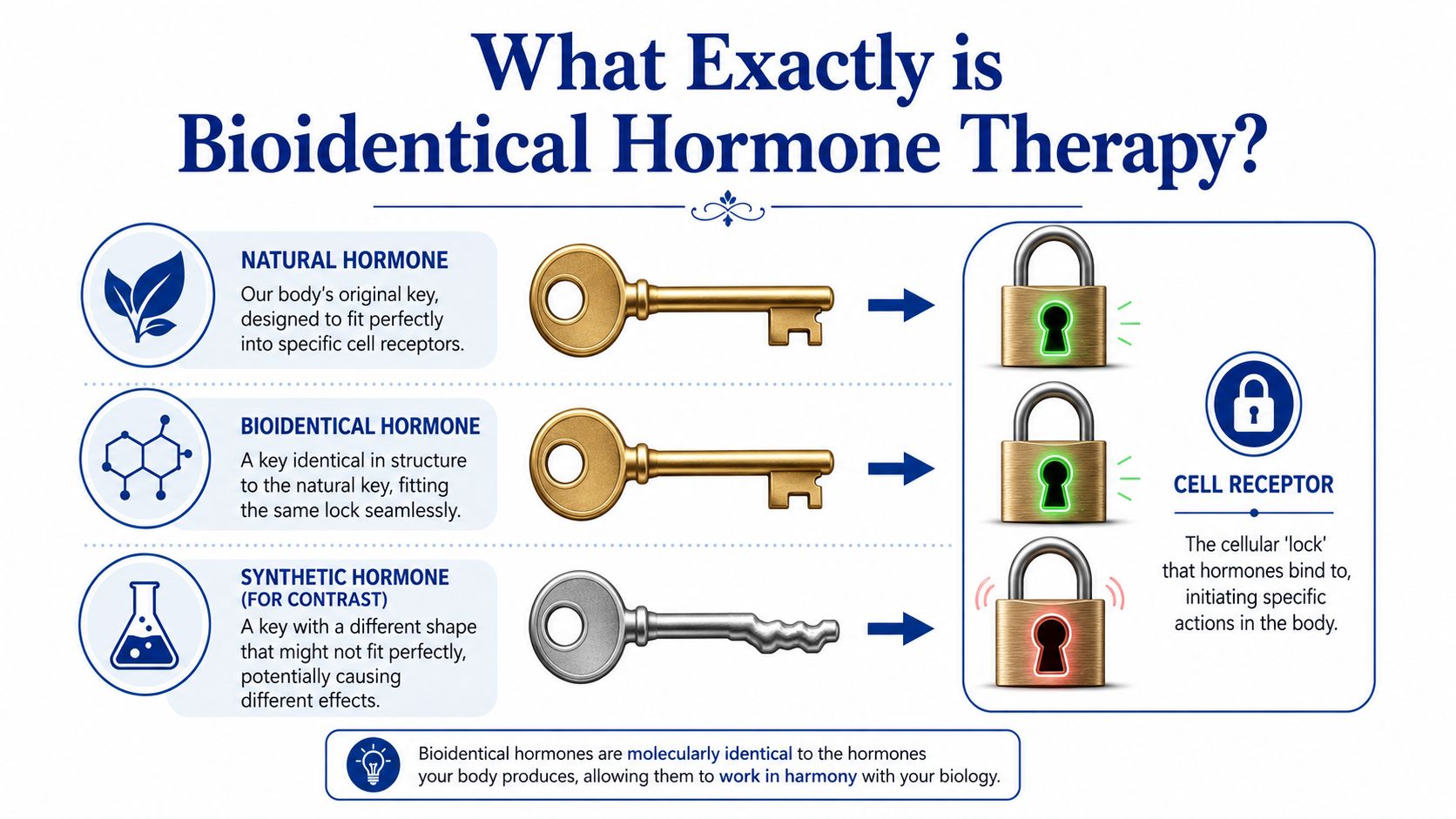
A natural hormone is the original key your body makes. A bioidentical hormone is built to match that key's structure. A synthetic hormone is different in structure, even if it produces some similar effects.
That doesn't mean “bioidentical” automatically means better, safer, or right for everyone. It means the molecule is structured like the hormone your body makes. That's an important distinction, but it's only one part of the decision.
Three categories patients often mix together
Most confusion comes from grouping these together as if they were the same thing:
| Category | What it means | Why it matters |
|---|---|---|
| FDA-approved bioidentical hormones | Regulated hormone products using bioidentical ingredients | These have defined manufacturing standards and clinical data behind specific products |
| Traditional synthetic hormones | Hormones that are not molecularly identical to your body's own | These may still be effective, but they are not the same thing as bioidentical |
| Compounded bioidentical hormones | Customized formulations prepared by compounding pharmacies | These may be bioidentical in structure, but they are not the same as FDA-approved products |
That last category matters because many glowing online reviews never clarify whether the treatment was FDA-approved or compounded. Patients often hear “bioidentical” and assume they're hearing a safety guarantee. They aren't.
Practical rule: “Bioidentical” describes structure. It does not tell you whether the product is FDA-approved, how consistently it was made, or how strong the evidence is for that formulation.
When patients understand that distinction, the rest of the research becomes much easier to interpret.
Decoding the Reviews What the Evidence Actually Says
A patient may read twenty glowing reviews and still miss the question that matters most. Which specific product was used, and how closely was the treatment monitored?
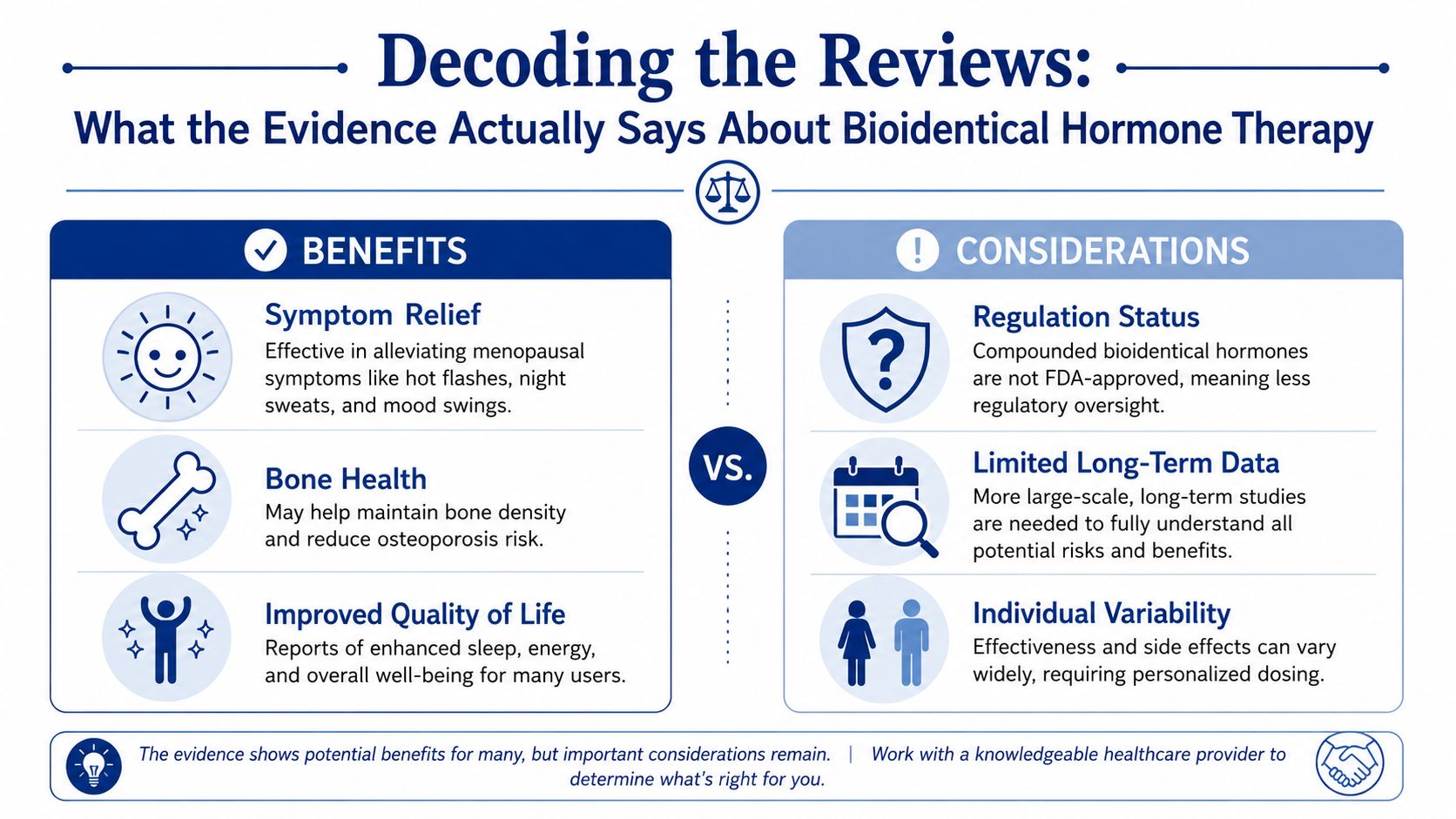
Published evidence is more useful than star ratings for that reason. Some bioidentical hormone therapies have good evidence for symptom relief. Compounded products, including some pellet-based approaches, have a much thinner evidence base and larger gaps around long-term safety.
Where the evidence is stronger
The best-supported data in this category is for certain FDA-approved bioidentical estradiol products, especially for menopausal vasomotor symptoms such as hot flashes and night sweats. A review summarizing randomized trial data found these products performed better than placebo and similarly to synthetic hormone options for symptom control. That same evidence review also concluded that high-quality research on compounded bioidentical hormone therapy is limited, with no large long-term study establishing adverse-effect rates for those compounded formulations, as discussed in this review of the evidence on compounded bioidentical hormone therapy.
For patients reading reviews, that distinction changes the whole conversation. A positive review may reflect real symptom improvement. It does not confirm that every version of “bioidentical” hormone therapy has the same manufacturing standards, consistency, or safety profile.
Where reviews can mislead people
Short-term findings on compounded therapy are often presented more confidently than they should be. According to ACOG's clinical consensus on compounded bioidentical menopausal hormone therapy, a systematic review of randomized trials did not show concerning short-term changes in lipid measures, glucose metabolism, or endometrial thickness compared with placebo or FDA-approved products. ACOG also states that the available studies were not enough to judge long-term risks such as breast cancer, endometrial cancer, or cardiovascular disease.
That is an important trade-off to understand in clinic. Short-term reassurance is not the same as long-term safety certainty.
The same ACOG consensus statement also summarizes a retrospective cohort study in menopausal women that found substantially higher rates of bothersome side effects and adverse events among users of compounded estradiol and testosterone pellets than among women using FDA-approved therapies. Reported problems included anxiety, breast tenderness, acne, abnormal uterine bleeding, and higher concerning mammogram scores. This does not mean every patient will have a poor experience with pellets. It does mean online reviews can understate the downside if they focus only on convenience or early symptom relief.
A more useful way to read reviews is to ask a few practical questions:
- Is the product identified clearly? Reviews are more informative when they specify FDA-approved versus compounded treatment.
- Was follow-up part of care? Good hormone management includes symptom checks, dose review, and ongoing monitoring.
- Do the reviews mention drawbacks? Balanced reviews are usually more trustworthy than ones that describe only dramatic improvement.
- Is the timeline realistic? Reliable reviews often describe adjustment periods, not instant perfection.
Patients comparing options often do better with a structured medical overview than with review sites alone. Our page on hormone replacement therapy options at ProMD Health Bel Air explains how supervised treatment decisions are made in practice.
The BioTe Method How Pellet Therapy Works at ProMD Health
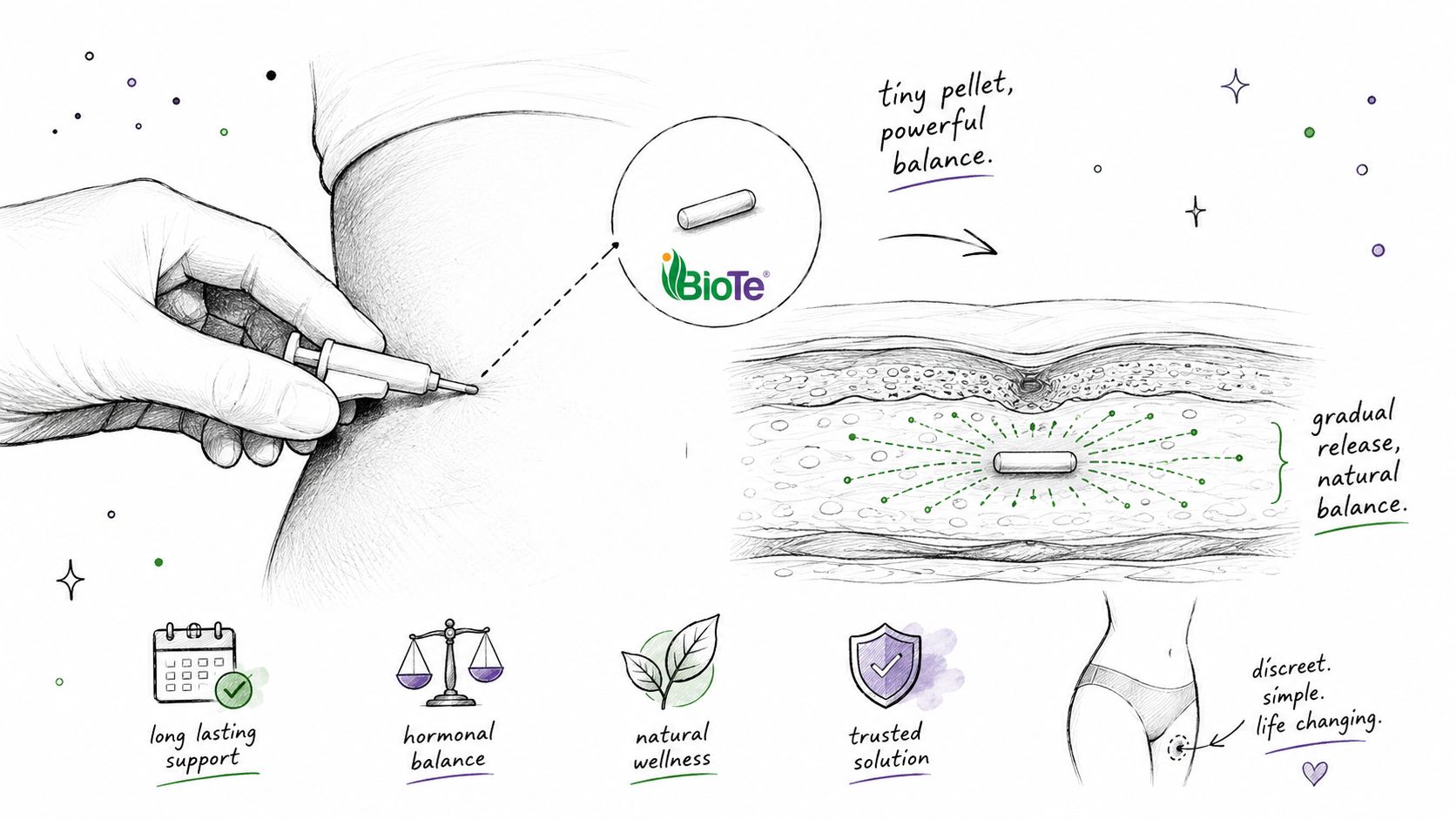
Pellet therapy appeals to patients for one practical reason. It doesn't require daily dosing. Instead of remembering a pill, cream, or patch schedule, the hormone is delivered through a small pellet placed under the skin during an in-office procedure.
How pellets are placed and why patients choose them
The pellet is commonly described as being about the size of a grain of rice. It's inserted subcutaneously, usually in the hip or buttock area, in a simple office setting. After placement, the pellet releases hormones gradually over time.
That delivery style is why many patients are interested in it. They don't want the up-and-down feeling that can come with missed doses or inconsistent absorption. They want steadier delivery and less daily management.
For people specifically researching pellet therapy, this overview of BioTe hormone pellets explains the service in more detail.
What published data suggests about symptom relief
One clinical trial comparing delivery methods found that women receiving pellet therapy had a significantly greater reduction in vasomotor symptoms than women using transdermal applications. The mean reduction was −2.08 in pellet users compared with −1.03 in transdermal users, with p<0.003, according to the published findings in this comparison of two delivery methods of bioidentical hormone replacement therapy.
The same study reported that 51% of patients completed long-term follow-up and described good symptom satisfaction across both groups. It also found no differences in adverse symptoms related to estradiol or testosterone between the two delivery methods in that study population, while noting that some pellet users had testosterone levels above typical physiologic ranges without increased adverse events in that analysis.
That's a more balanced interpretation than most online summaries provide. Pellet therapy may offer stronger symptom relief for some patients, particularly for vasomotor and energy-related complaints, but it also sits inside a larger conversation about formulation type, regulation, and individualized dosing.
Pellet therapy is not “good” or “bad” in the abstract. The right question is whether the formulation, monitoring plan, and patient selection make sense for the person sitting in front of you.
Your Treatment Journey Timeline, Side Effects, and Results
Individuals often want the same honest answer at the start. How long until I feel better? The answer is that hormone therapy usually doesn't behave like a switch. It's more like a process of adjustment, response, and dose refinement.
What the first stretch of treatment can feel like
Some patients notice changes quickly. According to authoritative guidance summarized here, many patients begin to feel major improvements within a few days, although individual response varies, as discussed in this Q&A on bioidentical hormones, treatment timing, and discontinuation.
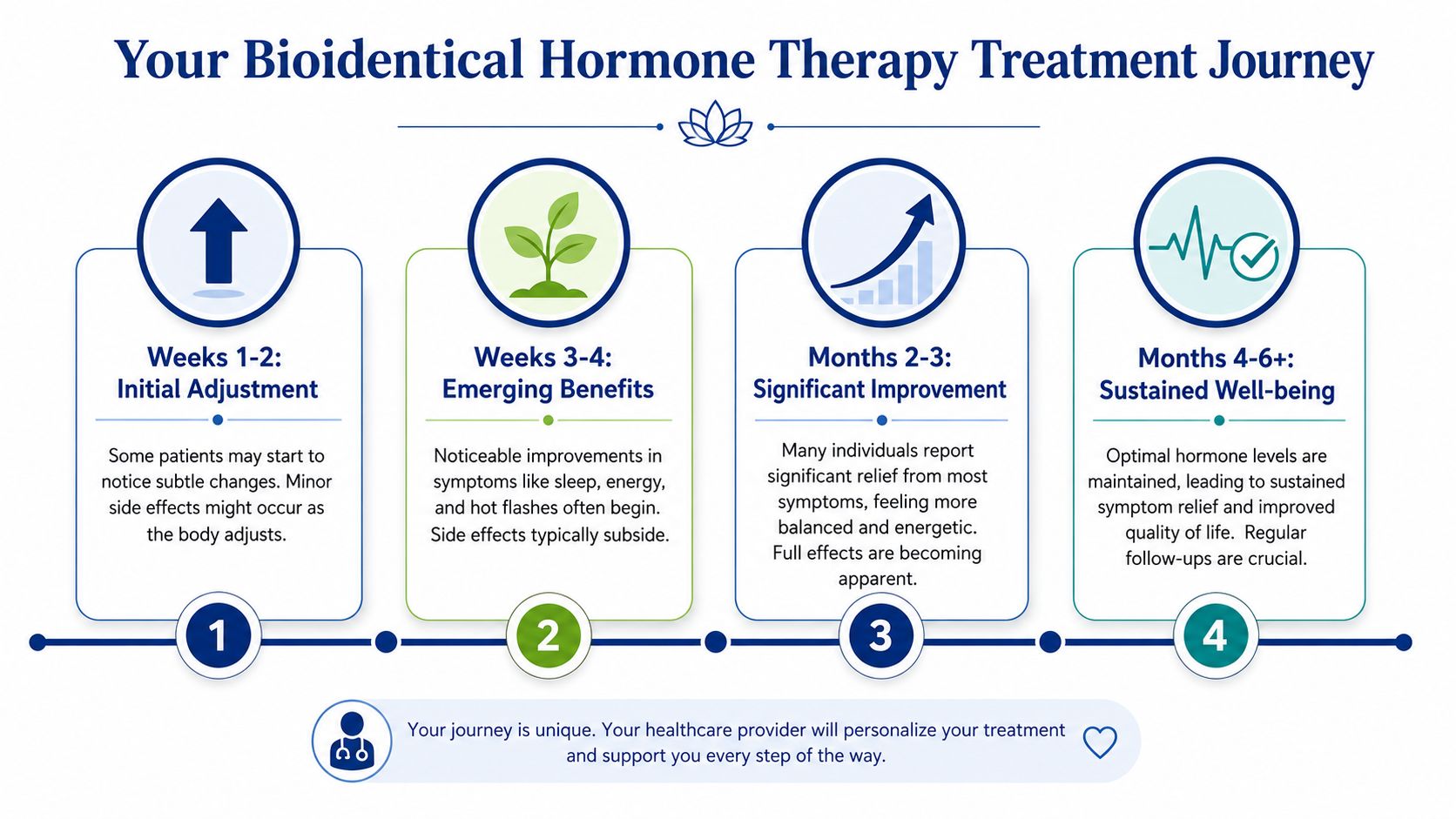
That doesn't mean every symptom resolves right away. A more typical course looks like this:
- Early adjustment: Some people notice subtle changes first, such as better sleep or a little more stable energy.
- Emerging response: Hot flashes, brain fog, or mood variability may begin to ease as the body adapts.
- Further optimization: Follow-up matters because symptom relief and side effects often depend on dose balance, not just starting therapy.
A patient may say, “I felt more like myself before I could explain exactly what changed.” That's common. Improvements are often first noticed in daily function, not in a dramatic headline symptom.
Side effects and stopping therapy
It's also normal to discuss temporary side effects thoroughly. Depending on the person and the dosing approach, adjustment can include headaches, mood changes, breast tenderness, or other symptoms that need review rather than guesswork. “Natural” does not mean side-effect free.
The other concern is permanence. Many people worry that once they start, they're committed forever. That isn't true. The same guidance above makes clear that hormone therapy is not a lifelong mandate, and some patients choose to stop. A slow weaning process may help when discontinuing.
Starting hormone therapy should feel like a monitored medical decision, not a one-way door.
That perspective matters because patients often feel calmer once they understand two things. First, they don't need to decide the rest of their life at the first visit. Second, good care includes reassessment, not blind continuation.
How to Choose a BHRT Provider in the Bel Air Area
If you're comparing providers, the biggest issue isn't who has the most persuasive marketing. It's who explains the treatment clearly enough for you to give informed consent. Hormone therapy can help the right patient. It also requires more precision than many online reviews reflect.
What to ask before you start
A good consultation should leave you with fewer assumptions and more clarity. Ask direct questions.
- What kind of product is being prescribed? Patients should know whether the therapy is FDA-approved, compounded, or a combination approach.
- How will symptoms be tracked? Good care includes follow-up based on how you feel, not just a one-time prescription.
- How are side effects handled? You want a plan for adjustment, not reassurance without specifics.
- What would make me a poor candidate? A careful provider should be willing to say when therapy isn't appropriate.
One issue deserves special attention. The safety distinction between FDA-approved bioidentical hormones and unregulated compounded versions is often blurred online. Authoritative bodies such as the North American Menopause Society caution against compounded versions because of insufficient evidence of safety and efficacy and because they lack rigorous testing and regulation, as reviewed in this article on myths and misconceptions about bioidentical hormones.
How to read online reviews more carefully
Reviews can still help, but read them with a filter.
Look for comments about communication, follow-up, and whether patients felt listened to when symptoms changed. Those details say more about the care environment than broad statements like “completely safe” or “works for everyone.”
A useful review often includes practical details such as:
- Responsiveness: Did the office answer questions after treatment started?
- Expectation setting: Did the provider explain that results can vary?
- Monitoring: Was there a process for reviewing symptoms and adjusting the plan?
- Transparency: Did the patient understand what they were receiving and why?
If a review sounds like product marketing rather than a patient experience, treat it cautiously.
BHRT FAQs and Your Next Steps at ProMD Health Bel Air
A patient often reaches this point with a simple question: “I've read the reviews, but what do I do next?”
The answer should be clear. Start with a medical conversation, not a sales pitch. Reviews can tell you whether patients felt heard and supported. They cannot tell you whether a hormone plan is appropriate for your history, symptoms, goals, and risk factors.
Common questions patients ask
Is bioidentical hormone therapy safer just because it is called “natural”?
No. Safety depends on the specific hormone, the dose, the delivery method, your medical history, and how carefully treatment is monitored. The word “bioidentical” describes structure. It does not guarantee better outcomes.
Are all bioidentical hormones the same?
No. This is one of the biggest sources of confusion. Some bioidentical hormones are FDA-approved and made under regulated manufacturing standards. Others are compounded preparations that do not go through the same approval and consistency process. That difference matters when patients read reviews, especially if a review praises “bioidentical hormones” without saying exactly what was used.
Do I have to stay on therapy forever?
Treatment length is individualized. Some patients stay on therapy for an extended period because the symptom relief and quality-of-life benefits remain meaningful. Others pause or stop after reassessment. The right plan depends on symptoms, labs, response, and ongoing risk review.
How soon can I expect changes?
Some patients notice improvement early. Others need more time, and some need dose adjustments before treatment feels right. Pellet therapy also has a different timing pattern than creams, patches, or pills, so expectations should be set before treatment starts.
What should happen at the first appointment?
A good first visit includes a symptom review, medical history, medication review, and discussion of treatment options. It should also include an honest explanation of trade-offs, including potential side effects, limits of therapy, and whether pellet therapy is a reasonable fit.
ProMD Health Bel Air is located at 2023 Emmorton Road, Suite A, Bel Air, MD and provides medically supervised bioidentical hormone replacement therapy for local patients who want a structured evaluation and follow-up plan.
If you are sorting through bioidentical hormone therapy reviews and want answers specific to your symptoms, ProMD Health Bel Air offers a practical next step. A consultation gives you the chance to review testing, symptoms, treatment choices, and whether a supervised plan makes sense for you.