Why So Many People Are Turning to Microdermabrasion for Skin Tone
Microdermabrasion for skin tone is one of the most popular nonsurgical treatments available today — and for good reason. It uses controlled mechanical exfoliation to remove dead, pigmented surface cells, revealing brighter, more even skin underneath. No acids. No downtime. No needles.
Here’s what microdermabrasion can do for uneven skin tone at a glance:
- Removes dull, pigmented surface cells to reveal fresher skin
- Fades dark spots and post-acne marks with consistent sessions
- Improves skin radiance — 70–85% of patients notice better overall uniformity
- Boosts skincare absorption by up to 50% after each session
- Stimulates collagen to gradually firm and refresh skin texture
- Minimal downtime — most people return to normal activity the same day
Whether you’re dealing with sun damage, post-acne discoloration, or a complexion that just looks tired and patchy, this guide breaks down exactly how microdermabrasion works, who it’s right for, and what real results look like.
Few things are as frustrating as looking in the mirror and seeing a complexion that feels dull, patchy, or uneven — especially when your skincare routine isn’t moving the needle. That’s where microdermabrasion comes in. It’s a non-invasive, mechanical exfoliation treatment that works by gently resurfacing the outermost layer of skin to accelerate cell turnover and bring newer, less pigmented cells to the surface.
It’s not a miracle fix, but it is one of the most well-researched, widely performed nonsurgical procedures available — and when done consistently by a skilled provider, the results speak for themselves.
I’m Ryan Pittillo, Franchise Owner at ProMD Health Bel Air, and through my work supporting our team of experienced aesthetic providers, I’ve seen how microdermabrasion for skin tone can be a genuine confidence-changer for the right candidate. Read on to find out if it’s the right fit for you.
What Is Microdermabrasion for Skin Tone and How Does It Work?
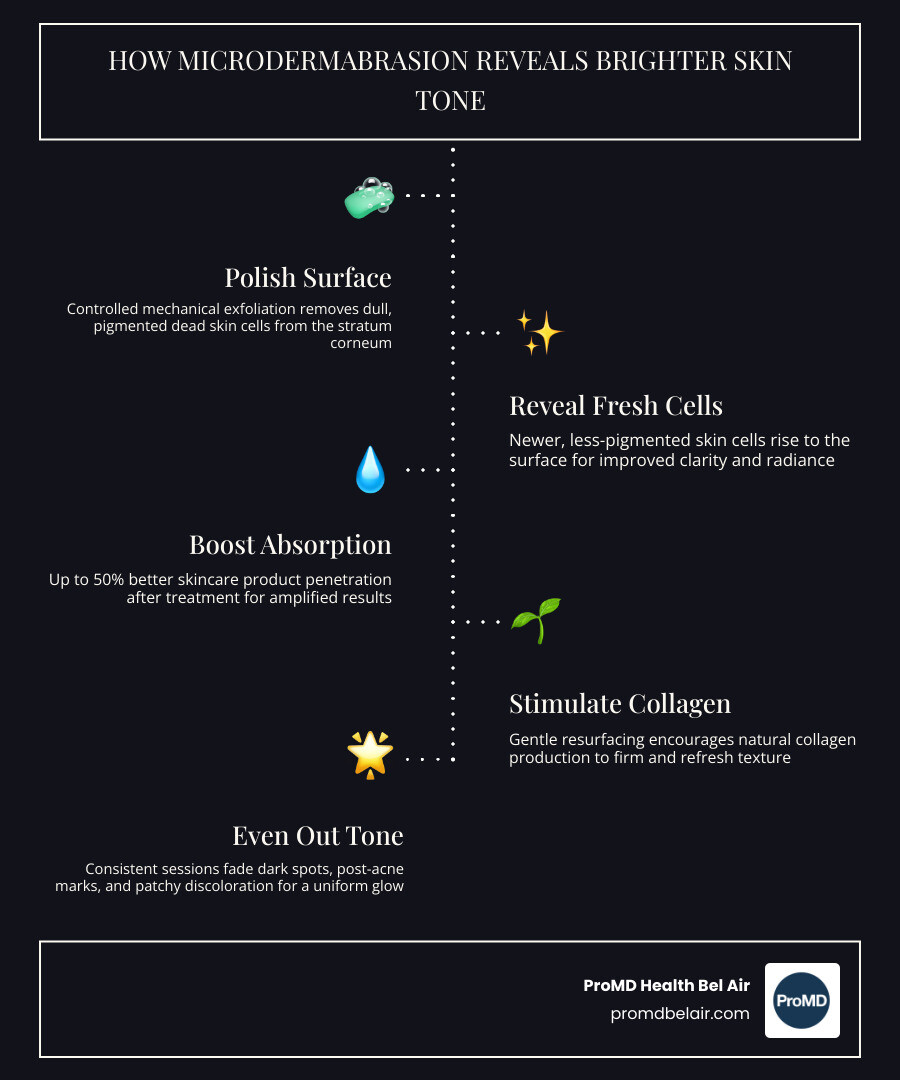
Microdermabrasion is a minimally invasive exfoliation treatment that removes the outermost layer of dead skin cells, also called the stratum corneum. In simple terms: we polish away the tired top layer so fresher skin can step into the spotlight.
This matters for tone because many common discoloration issues live, at least in part, near the skin’s surface. That includes mild sun damage, post-acne marks, and dull, patchy texture. By resurfacing the epidermis, microdermabrasion helps skin look smoother, brighter, and more even.
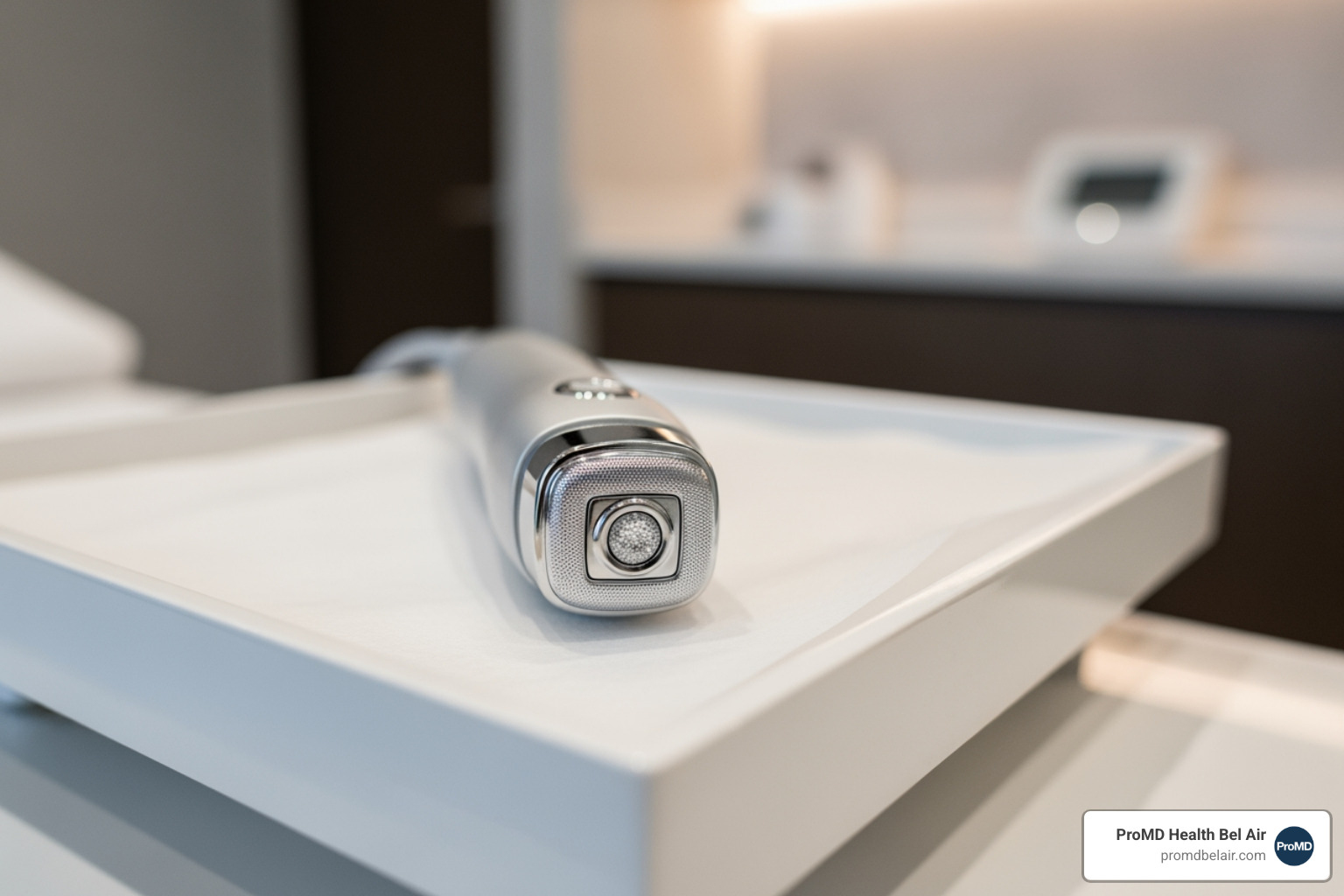
It is also a mechanical treatment, not a chemical one. That means it uses controlled physical exfoliation rather than acids. Professional systems typically use either crystals or a diamond-tipped handpiece with suction to lift away debris.
Research and dermatology references describe microdermabrasion as one of the most common nonsurgical cosmetic procedures performed. It is popular because it is quick, customizable, and usually easy to fit into real life.
How Microdermabrasion for Skin Tone Improves Dull, Patchy Complexion
When dead cells build up, skin can look flat, rough, and uneven. Microdermabrasion improves tone in a few ways:
- It removes accumulated surface cells that make skin look ashy or dull
- It helps fade superficial pigmented cells over time
- It smooths rough texture so light reflects more evenly off the skin
- It enhances product penetration after treatment
That last point is a big one. Research in your source set notes that skincare products may absorb up to 50% better after microdermabrasion because the barrier of dead surface buildup has been reduced. In plain English: your brightening serum finally gets a clearer path to do its job.
Crystal vs Diamond-Tip Microdermabrasion
Both methods aim to exfoliate the skin, but they do it a little differently.
- Crystal microdermabrasion sprays fine abrasive crystals across the skin, then vacuums them away with loosened debris.
- Diamond-tip microdermabrasion uses a textured wand to buff the skin while suction clears dead cells.
Diamond-tip systems are often preferred for precision and control, especially around delicate facial areas. Crystal systems can still be effective, but the best choice depends on skin goals, provider preference, and how reactive your skin is.
For a more clinical overview of technique, indications, and contraindications, see this Scientific research on microdermabrasion.
Why Skin Tone Changes With Age and Sun Exposure
Uneven skin tone usually does not appear out of nowhere just to annoy us before brunch. It tends to build over time.
Common causes include:
- Slower cell turnover with age
- Sun exposure and photoaging
- Post-inflammatory hyperpigmentation from acne or irritation
- Hormonal changes that can contribute to melasma
- Dryness and surface buildup that make skin look less radiant
As we get older, skin does not renew itself as quickly as it did in our 20s. That slower turnover can leave damaged and pigmented cells sitting on the surface longer. Microdermabrasion helps nudge the process along.
Benefits of Microdermabrasion for Uneven Tone, Dark Spots, and Texture
Microdermabrasion is best known for brightening and smoothing, but its benefits go beyond a basic “fresh face” effect. It can support improvement in:
- Uneven skin tone
- Mild hyperpigmentation
- Dark spots from acne
- Sun spots and early age spots
- Rough texture
- Enlarged pores
- Fine lines
- Mild superficial acne scars
Many patients notice skin looks more refreshed after a single session, but the strongest changes usually come with a series. According to the research provided, 70-85% of patients notice improvement in overall radiance and uniformity.
Microdermabrasion for Skin Tone, Hyperpigmentation, and Dark Spots
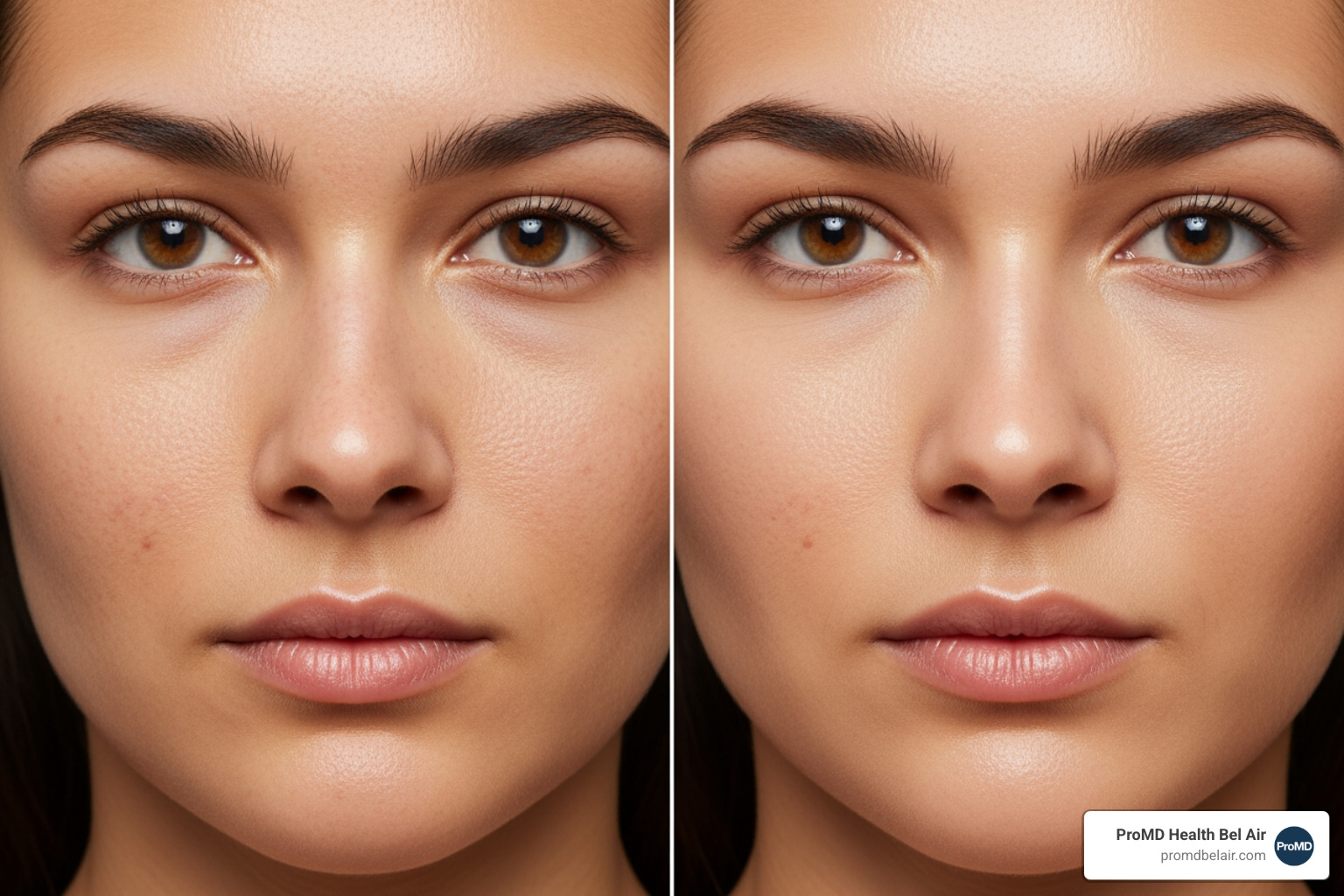
Microdermabrasion tends to work best for superficial pigment, meaning discoloration closer to the top of the skin. This includes many post-acne marks and sun-related spots.
Here is where expectations matter:
- Post-inflammatory hyperpigmentation often responds well
- Mild, superficial discoloration usually improves more than deeper pigment
- Melasma can improve in some cases, but it requires caution and a customized plan
Your research includes encouraging figures:
- 60-75% of patients experience significant improvement in post-inflammatory hyperpigmentation from acne
- A 12-week study using biweekly diamond-tip treatments reported 94% participant satisfaction with visible hyperpigmentation improvement
Microdermabrasion may also help by improving the distribution of surface pigment and speeding the arrival of newer cells to the surface. It is not bleaching the skin. It is helping remove uneven, damaged surface layers more efficiently.
How It Helps Acne Scars, Rough Texture, and Enlarged Pores
For texture, microdermabrasion is often a crowd-pleaser.
It can help:
- Soften the appearance of mild superficial acne scars
- Smooth rough or flaky areas
- Reduce the look of enlarged pores
- Improve the feel of the skin almost immediately
It is especially useful for shallow textural issues and raised scar edges. Deeper, pitted scars usually need a combination approach. Still, for mild to moderate texture concerns, microdermabrasion can be a great first-line option.
If you want details about the treatment itself, visit our microdermabrasion service page.
Anti-Aging Benefits: Fine Lines, Brightness, and Skin Refresh
Microdermabrasion is not a facelift in wand form, but it can absolutely support anti-aging goals.
Benefits may include:
- Softer appearance of fine lines
- Brighter, less tired-looking skin
- Improved smoothness
- Better support for collagen activity over time
- Fresher makeup application because texture is improved
Some medical references note that microdermabrasion can support collagen thickening and skin firmness with repeated treatments. That makes it a useful maintenance option for patients who want a refreshed look without significant downtime.
To explore other options that pair well with a glow-focused plan, see our skin rejuvenation treatments.
Microdermabrasion vs Chemical Peels and Other Exfoliation Methods
There is no single “best” exfoliation treatment for everyone. The right choice depends on your skin tone, sensitivity, goals, and tolerance for downtime.
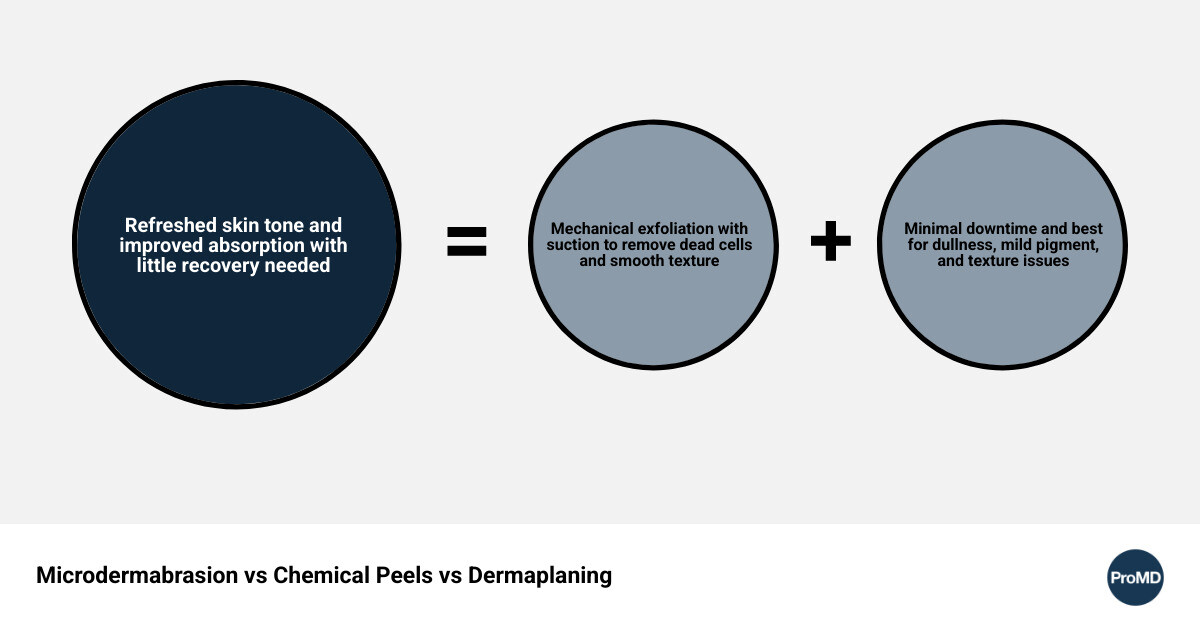
Here is the simple breakdown:
| Treatment | How it works | Best for | Downtime |
|---|---|---|---|
| Microdermabrasion | Mechanical exfoliation with suction | Dullness, mild pigment, texture | Minimal |
| Chemical peel | Acid-based exfoliation | Pigment, acne, deeper resurfacing depending on peel | Varies |
| Dermaplaning | Manual scraping of vellus hair and dead skin | Smoothness, peach fuzz, light exfoliation | Minimal |
| Dermabrasion | Much deeper mechanical resurfacing | More severe scars/wrinkles | Significant |
| At-home scrubs/devices | Low-intensity exfoliation | Maintenance only | Minimal but variable risk |
When Microdermabrasion Is the Better Choice
Microdermabrasion may be the better fit when you want:
- Little to no downtime
- A gradual approach to brightening
- Help with mild discoloration or roughness
- A treatment that fits into a lunch break better than a weekend recovery plan
- Ongoing maintenance for healthy-looking skin
It is a great option for busy schedules and for patients who want visible refreshment without the intensity of a deeper peel.
When Another Treatment May Be Better
Microdermabrasion is not always the right hero.
Another treatment may be better for:
- Deep melasma
- Active acne breakouts
- Moderate to severe acne scarring
- More advanced photoaging
- Patients needing deeper resurfacing or targeted pigment correction
In these cases, combination care may work best. Sometimes we start with skin-barrier support or choose peels, lasers, or microneedling depending on the concern. If texture is your main issue, our guide on improving skin texture is a helpful next read.
Professional Treatment vs At-Home Devices
At-home devices exist, but they are not the same as professional treatment.
Professional treatment offers:
- Calibrated suction and controlled abrasion
- Better customization for sensitive or pigment-prone skin
- Safer technique around the eyes, nose, and reactive areas
- Real assessment of whether your discoloration is superficial or something deeper
At-home tools may provide light maintenance, but they can also lead to over-exfoliation if used too aggressively. With pigmentation concerns, “more” is not always “better.” Sometimes “more” just means “more irritation.”
Who Is a Good Candidate, What Treatment Feels Like, and What Risks to Know
Microdermabrasion can be appropriate for a wide range of skin types and tones, but candidacy should always be based on a consultation, not a guess and a mirror selfie.
Best Candidates for Microdermabrasion for Skin Tone
Good candidates often include people with:
- Dull or tired-looking skin
- Uneven texture
- Mild discoloration
- Superficial acne marks
- Early sun damage
- Busy lifestyles that do not allow much downtime
It can also be a useful maintenance treatment for patients who want to keep skin looking polished and clear between other services.
Who Should Avoid or Delay Treatment
Microdermabrasion should usually be avoided or postponed if you have:
- Active acne breakouts
- Rosacea flare-ups
- Eczema or psoriasis in the treatment area
- Open sores or skin infections
- Active cold sores unless medically managed
- Warts in the treatment area
- Very fragile capillaries
- Recent isotretinoin use
- Uncontrolled diabetes
- A history of problematic scarring that needs medical review
This is one reason a professional evaluation matters. Not every dark spot should be exfoliated, and not every red patch wants to be exfoliated either.
What a Session Feels Like and How Long Recovery Takes
Most people describe treatment as comfortable. Common comparisons include:
- A gritty facial massage
- A mild scratching sensation
- The famous “cat licking your skin” feeling
Yes, oddly specific. Also surprisingly accurate.
A typical session takes about 30 to 60 minutes. No anesthesia is usually needed. Afterward, your skin may look pink or feel a little tight, warm, or sensitive for several hours and sometimes up to 24 hours. Mild flaking can happen.
For most patients, downtime is minimal and normal activities can resume the same day.
Risks and Side Effects for Different Skin Tones
Possible side effects include:
- Temporary redness
- Mild swelling
- Flaking or dryness
- Sensitivity
- Minor bruising or petechiae from suction
- Increased sun sensitivity
The biggest caution for tone-focused treatment is post-inflammatory hyperpigmentation, especially in darker skin tones or in patients whose skin is easily irritated. While microdermabrasion can be used on many skin tones, conservative settings and experienced technique matter. Aggressive treatment can create the very problem you came in to fix.
For general dermatology guidance, see the AAD overview of microdermabrasion.
Treatment Schedule, Aftercare, and Combining Microdermabrasion With Other Treatments
Like many skin treatments, microdermabrasion works best as a process, not a one-and-done event.
How Many Sessions You Need and How Often to Schedule Them
For tone and texture concerns, a common plan is:
- 4 to 6 treatments
- Spaced every 2 to 4 weeks
Some medical references also note that weekly or monthly intervals may be used depending on goals, but for pigmentation and recovery balance, 2 to 4 weeks is a common sweet spot.
Many people notice an immediate smoother feel after one treatment. Tone changes usually build gradually over 8 to 12 weeks. After your initial series, maintenance visits can help preserve results.
Aftercare to Protect Results and Prevent New Pigmentation
Aftercare is where good results either stay good or wander off.
For the first few days after treatment, we generally recommend:
- Broad-spectrum SPF 30+ every day, ideally higher if you are pigment-prone
- Gentle cleanser only
- Hyaluronic acid or ceramide-rich moisturizer
- Avoid retinol, acids, and benzoyl peroxide for at least 48 hours
- Avoid scratching, picking, or using scrubs
- Avoid hot showers, saunas, and excess heat for a day or two
- Keep skin hydrated
- Limit direct sun exposure
If hyperpigmentation is your concern, sunscreen is non-negotiable. Freshly exfoliated skin is more vulnerable to UV-triggered pigment rebound. Daily SPF is not the boring ending of the story. It is the plot.
Can Microdermabrasion Be Combined With Serums, Facials, or Peels?
Yes, often very effectively.
Microdermabrasion may be combined with:
- Brightening serums such as vitamin C or niacinamide
- Hydrating facials
- Barrier-supporting skincare
- Carefully selected light peels
- Other rejuvenation plans based on your skin goals
Research in your source set suggests combination therapy can outperform standalone treatment in some pigmentation cases. For example, pairing microdermabrasion with brightening products or selected peels may improve outcomes more than either alone.
The key is sequencing. We do not want to stack too much exfoliation at once, especially in skin that is reactive or pigment-prone. A personalized plan matters more than trying every glow treatment on the menu in one week.
If you are exploring facial options that may fit into a broader skin-refresh plan, see our facial treatment content here.
Frequently Asked Questions About Microdermabrasion for Skin Tone
Is microdermabrasion painful?
Usually no. Most patients find it very tolerable and do not need numbing. It feels more like a rough exfoliating massage than a painful procedure. Some areas, like around the nose, may feel a little more intense, but most people go right back to normal activities afterward.
How long do results last, and how do you maintain them?
The smoother, fresher feel after one session may last several days to a week. More meaningful improvement in tone typically requires a series of treatments plus good home care.
To maintain results:
- Keep up with sunscreen daily
- Use a gentle, consistent skincare routine
- Add provider-recommended brightening products if appropriate
- Schedule maintenance sessions as advised
Without sun protection and smart home care, new pigmentation can return quickly.
How do you choose the right provider in Bel Air for tone concerns?
Look for a practice with licensed professionals, experience treating discoloration, and a customized consultation process. Tone concerns are not one-size-fits-all. Sun spots, post-acne marks, melasma, and irritation-related pigment all behave differently.
At ProMD Health Bel Air, we take a personalized approach and can also use our AI Simulator to help patients preview treatment possibilities as part of a broader aesthetic plan. That kind of planning can be especially helpful when deciding whether microdermabrasion should stand alone or be part of a combined strategy.
Conclusion
Microdermabrasion for skin tone can be an excellent option for brightening dull skin, softening superficial dark spots, and improving overall texture with little downtime. It works best when expectations are realistic, treatment settings are appropriate for your skin, and aftercare is taken seriously.
For many patients, the real magic is not just the exfoliation. It is the consistency:
- Regular sessions
- Daily sun protection
- Smart skincare
- A treatment plan matched to your actual skin concern
If you are in Bel Air, MD and want a personalized plan for uneven tone, post-acne marks, or texture concerns, we invite you to explore our full range of aesthetic services at ProMD Health Bel Air. We can help you decide whether microdermabrasion is the right fit, whether another treatment would serve you better, or whether a combination approach makes the most sense for your skin goals.