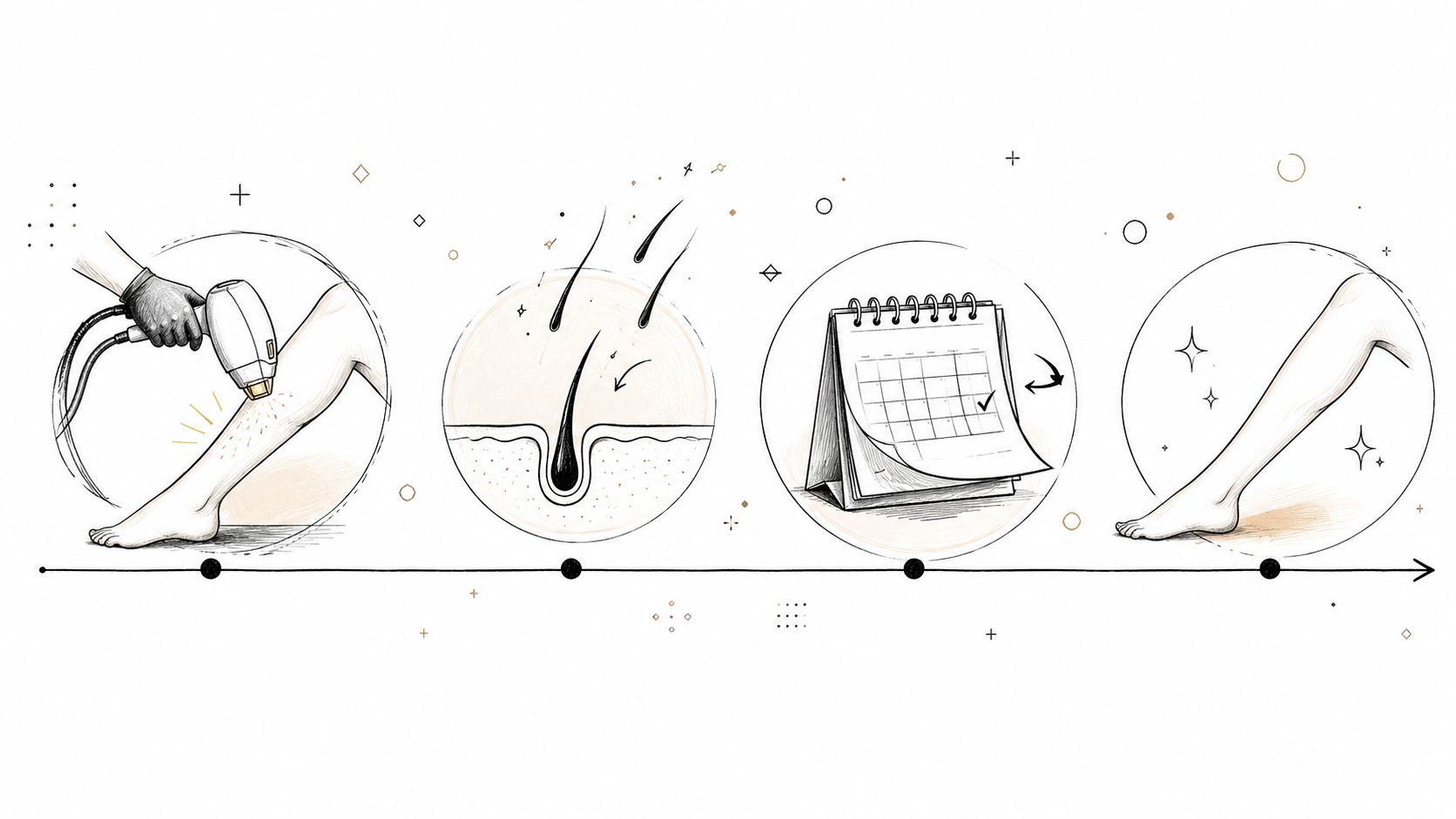
If you've been shaving the same spots every few days and still wondering when laser hair removal starts to look worth it, you're not alone. Before booking, individuals commonly want to understand a realistic laser hair removal timeline and a clear sense of how many visits they're signing up for. The good news is that the process is predictable once you understand how hair grows, why sessions are spaced out, and why some areas finish sooner than others.
Laser hair removal has come a long way from its roots in laser physics. Theodore Maiman built the first solid-state laser in 1960, and the FDA cleared the first hair removal laser in 1995, which helped move the treatment into mainstream medical aesthetics history of laser hair removal development. If you're comparing treatment timelines with other services, a useful wellness resource is this guide on duration of red light therapy treatment, since it also helps people understand how different therapies unfold over time.
Table of Contents
- Why Laser Hair Removal Timeline Matters
- Understanding Laser Hair Removal and Growth Cycle
- Session Schedule by Body Area and Expected Results
- Short Term Timeline after Each Treatment
- Long Term Maintenance for Lasting Results
- Factors That Affect Your Treatment Timeline
- Next Steps at ProMD Health Bel Air
- Frequently Asked Questions
Why Laser Hair Removal Timeline Matters
A first appointment can feel like the finish line, but laser hair removal works more like a treatment series than a one-time fix. Hair has to be present in the right growth stage for the laser to target it well, so results build gradually instead of all at once. Knowing the laser hair removal timeline before you start helps you set realistic expectations, plan around events, and stay calm when the first visit does not change everything right away.
Practical rule: the first session starts the process, it does not finish it.
That clarity helps in two ways. Medically, it keeps you from mistaking early shedding for a lack of progress. Practically, it makes it easier to schedule around vacations, workouts, weddings, and the rest of your routine without guessing when smoother skin will show up. A timeline also matters more on the face for some patients, because hormonal shifts can keep activating new facial hairs even as other areas respond faster. At ProMD Health Bel Air, that is why the treatment plan is discussed as a series, not a single appointment.
For some patients, the pacing feels similar to the duration of red light therapy treatment process, where progress shows up in stages rather than in one sudden change. A good timeline prevents frustration and makes the whole plan easier to follow.
Understanding Laser Hair Removal and Growth Cycle
Why the laser doesn't treat every follicle at once
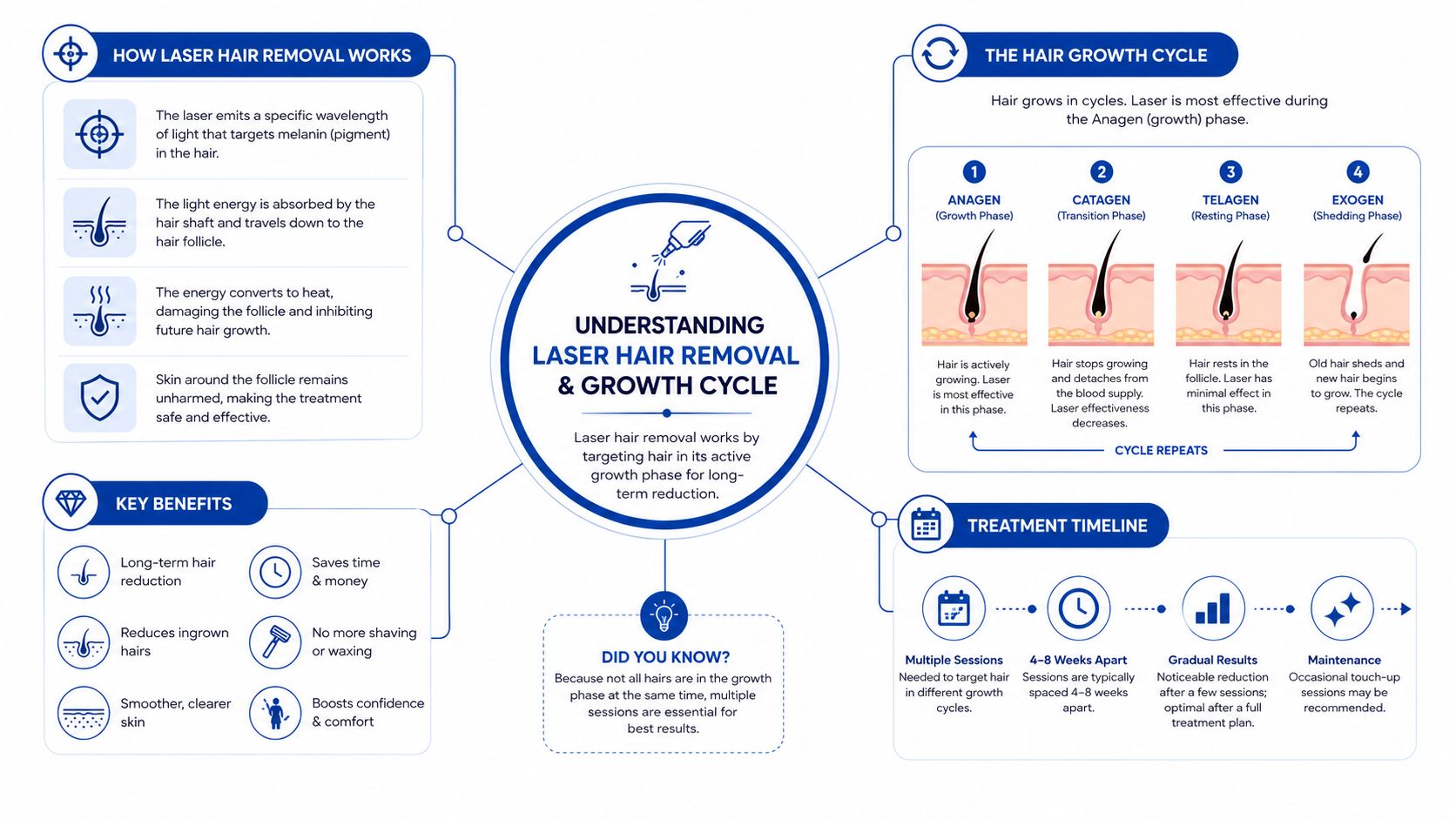
Laser energy works best on follicles in the anagen phase, the active growth stage. The process is similar to harvesting fruit: one can only pick the apples that are ripe, not the ones that are still growing, resting, or hidden from view. Hair follicles cycle through anagen, catagen, and telogen, so at any given visit, only a portion of follicles are ready to respond.
That's the reason a single session gives partial clearance, not total clearance. Cleveland Clinic notes that many patients see about 10% to 25% hair reduction after the first session, and a full course commonly takes 4 to 8 treatments spaced weeks apart laser hair removal overview. The laser can damage active follicles, but it can't reliably disable the ones that aren't in the right phase yet.
Hair grows in cycles, and treatment has to follow the cycle.
Why spacing matters
Spacing sessions weeks apart gives follicles time to cycle back into anagen. If visits happen too close together, some of the hair you want to target isn't ready. That's why the schedule feels slower than shaving or waxing, but the tradeoff is cumulative reduction rather than short-lived removal.
A standard course usually stretches across several months, not because anything is being delayed unnecessarily, but because the laser is working with biology instead of against it. The first few sessions start thinning and patching out growth, then later visits build on that foundation. Over time, the treated areas tend to show less density, slower regrowth, and finer leftover hairs.
What “progress” really looks like early on
The earliest win is often not total baldness, it's less frequent maintenance. Hair may look patchy before it looks smooth, and that's normal. Once you know the cycle, that patchiness stops feeling like a problem and starts looking like the expected middle stage of the process.
Session Schedule by Body Area and Expected Results
A practical way to read the laser hair removal timeline is by body area, because each zone follows its own rhythm. Legs and underarms usually respond on a fairly steady schedule, while the face can behave more like a clock with a loose spring, especially when hormones keep nudging new growth into view. For that reason, many patients need 6 to 8 sessions spaced 4 to 6 weeks apart, and the exact plan may shift based on how the follicles respond.
| Typical Session Schedule by Body Area | Sessions | Spacing | Expected Reduction After Course |
|---|---|---|---|
| Legs | Commonly 6 to 8 | About 4 to 6 weeks | Noticeable long-term reduction, often with much less day-to-day shaving |
| Underarms | Commonly 6 to 8 | About 4 to 6 weeks | Strong reduction in regrowth and grooming time |
| Bikini area | Commonly 6 to 8, sometimes more depending on response | About 4 to 6 weeks | Significant reduction, with touch-ups sometimes needed later |
| Upper lip | Often needs a more individualized series | About 4 to 6 weeks | Good reduction, but fine facial hair can be more persistent |
| Chin | Often needs a more individualized series | About 4 to 6 weeks | Improvement is common, but hormones can make maintenance important |
For underarms, the pattern is usually easy for patients to understand. The area is small, the hair is often coarser, and the routine can be straightforward enough to fit into everyday grooming habits. If you want a closer look at that area specifically, this guide on laser underarm treatments explains what patients usually experience there.
The face needs a different frame of reference. Upper lip and chin hair often have more hormonal influence than leg or underarm hair, so the timeline can look less tidy even when the laser is doing its job. That is why facial areas may need a more individualized series and, later on, occasional maintenance visits to keep stray growth from becoming a bigger issue again.
At ProMD Health Bel Air, the clinic process is built around that reality. The plan is not just about checking off sessions, it is about watching how your skin and hair pattern respond over time, then adjusting the schedule if facial regrowth or other areas need a little more support. That approach matters because a patient with stable body hair may follow a more predictable course, while someone dealing with chin or upper lip growth may need closer follow-up as hormones continue to influence the follicles.
Short Term Timeline after Each Treatment
The first few hours
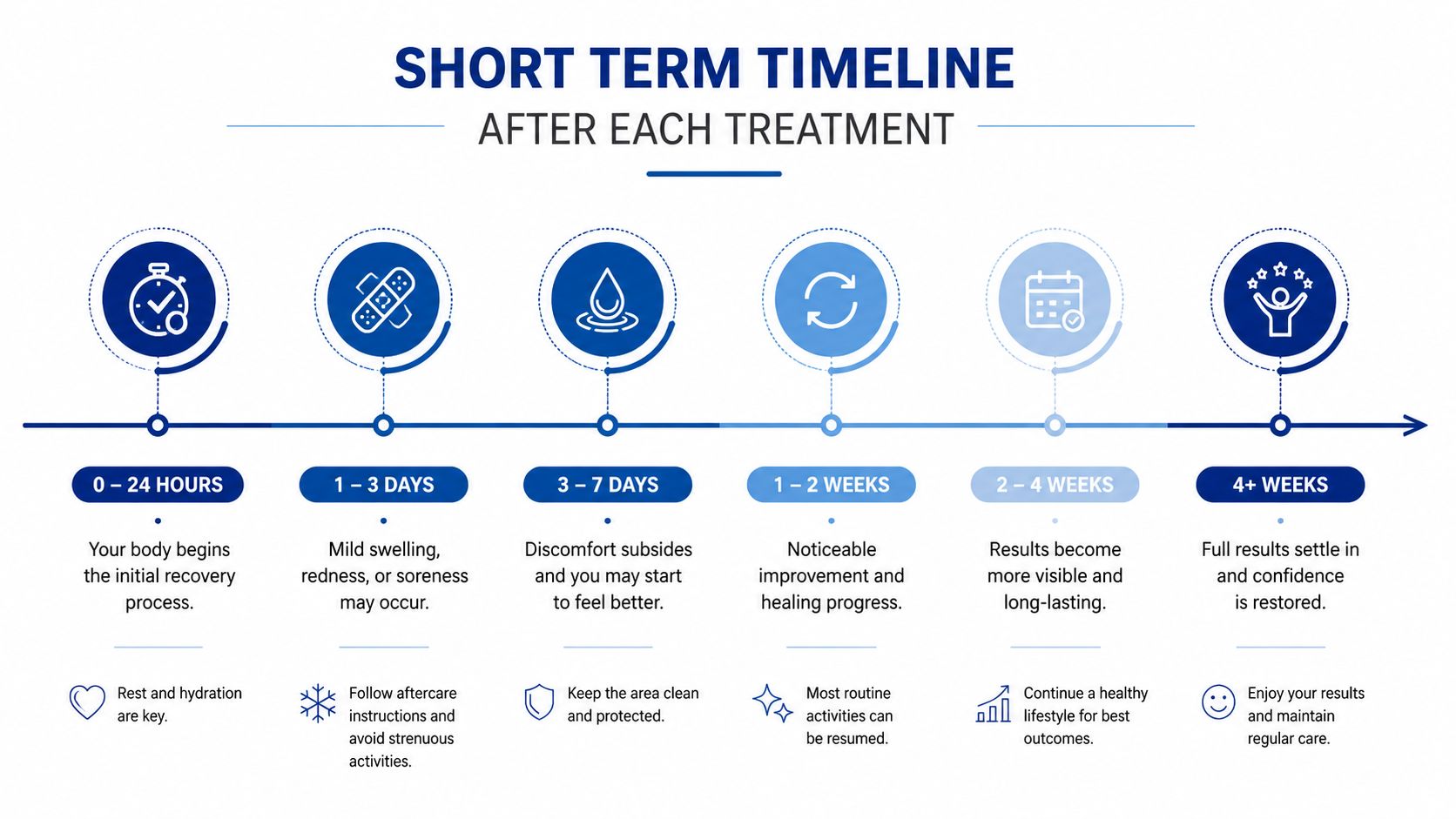
Right after treatment, the skin often feels warm and looks a little pink. That response usually settles as the day goes on, so many people can return to normal low-key activities fairly quickly. A cool compress can help if the area feels irritated, and gentle cleansing is usually the easiest way to keep the skin calm.
The immediate aftercare should stay simple. Skip scrubbing, use mild products, and keep the treated skin out of direct sun. For a broader reference on how to soothe post-laser skin, this supplemental guide can help.
Days 1 through 14
During the first couple of weeks, treated hairs often look as if they are still growing. What is usually happening is shedding, not new growth. Treated hairs commonly shed during this period after each session.
That is the part many patients misread. It can feel like the treatment did not work because hair is still visible, but the follicle is often pushing out the damaged hair shaft. Shaving is usually the safer way to manage the area during this phase, since pulling hairs out can interfere with the process.
Weeks 2 through 4
By the later part of the cycle, the treated area should start to feel smoother and look less dense. Some hairs will seem finer, and some spots may appear more bare than others. That unevenness is normal, because not every follicle responds on the same day.
Practical rule: plan your social calendar around the idea that the skin may look best after shedding, not immediately after treatment.
Workouts, hot tubs, and anything else that irritates the skin are usually easier to schedule with a little cushion. The safer route is to keep the treated area cool, clean, and protected while the skin settles. At ProMD Health Bel Air, that short-term check-in also helps the team see whether facial areas are behaving differently from body areas, especially when hormones make upper lip or chin regrowth less predictable.
Long Term Maintenance for Lasting Results

Why maintenance is part of the plan
Laser hair removal is best understood as long-term reduction, not a one-and-done cure. StatPearls says patients often need 4 to 6 initial sessions spaced 4 to 6 weeks apart, followed by maintenance treatments every 6 to 12 months to manage regrowth clinical review. That long view matters because even strong early results can change over time.
Some patients get months of very easy grooming. Others enjoy years of reduced hair growth with only occasional touch-ups. The difference usually comes down to area, hormones, and how completely the initial series captured the active follicles.
How long results tend to feel stable
The more consistent your course, the more durable the outcome tends to be. Treated follicles that were successfully disabled don't usually come back, but new hairs can appear from follicles that weren't active during the original series or that respond later to hormonal change. That's why maintenance is framed as upkeep, not failure.
A useful way to think about it is the same way people think about regular home maintenance. You're not rebuilding the whole house, you're handling the small things before they become bigger tasks. The treatment works best when the initial series is completed and the touch-ups are done before regrowth becomes dense again.
What patients should expect over time
The long-term goal is a smaller, easier-to-manage hair pattern. For many people that means fewer shaving sessions, softer regrowth, and less irritation from constant hair removal. Some will still need periodic appointments, but those visits are usually brief compared with the original series.
If you're looking for a clinic-based option, ProMD Health Bel Air offers laser hair removal as part of its medically supervised service menu. The right long-term plan should still be personalized, because the maintenance rhythm that works for legs may not match what a facial area needs.
Factors That Affect Your Treatment Timeline
Hair and skin characteristics
Dark, coarse hair usually responds faster because the laser has a clearer target. Fine or light hair can take more sessions and may not clear as quickly, which is why the early timeline can look different from one person to the next. Skin type also matters, since treatment settings have to be matched carefully to the person in the chair.
That's where patience becomes practical, not just philosophical. Two people can start on the same day and still end up with different pacing because their follicles aren't identical. The right expectation is not “Will I follow someone else's schedule?”, it's “How does my hair respond over my own first few visits?”
Hormones and facial areas
Mayo Clinic notes that many guides overlook how facial and hormonally driven hair often needs a longer maintenance plan, since areas like the chin and upper lip are influenced by endocrine factors laser hair removal overview. That's why the face can be more stubborn than the legs or underarms. If hormones are driving the growth, the timeline can stretch out even after a strong initial response.
For a more device-focused look at how this treatment is delivered, this internal guide on Alma laser hair removal equipment fits well alongside the timeline discussion. The important point is that technology, hair biology, and hormone patterns all affect how fast you see change.
Why some people need more touch-ups
If regrowth keeps appearing in the same area, the answer isn't usually that the treatment failed. It more often means the area is biologically active enough to need periodic upkeep. That's especially true for facial zones, where hormonal shifts can keep creating new targets after the initial series is over.
Next Steps at ProMD Health Bel Air
If you're ready to move from researching to planning, the next step is a consultation with a licensed provider who can review your hair type, skin type, and treatment goals. At ProMD Health Bel Air, that conversation can be virtual or in person, and it should include your medical history, any sensitive areas, and what kind of maintenance schedule makes sense for you. The clinic's laser hair removal service is described here for reference: laser hair removal at ProMD Health Bel Air.
The appointment is also the right time to ask about preparation, timing, and what to expect between visits. Bring a list of medications, mention any hormone-related concerns, and be honest about how much downtime you can handle. A clear first visit makes the rest of the timeline easier to follow.
If you'd like a personalized plan, schedule a consultation with Tyra Lindblad, Kate Maguire, Amanda Pittillo, PA-C, Lauren Mason, PA-C, MSHS, Paige Scott, or Natalie Shek at ProMD Health Bel Air. A direct conversation with the team is the easiest way to turn a general treatment timeline into a plan that fits your skin, your schedule, and your goals.
Frequently Asked Questions
Does laser hair removal hurt?
Most patients describe it as quick snaps or heat rather than severe pain. Cooling and good technique help a lot.
Can darker skin tones be treated?
Yes, but the settings and device choice need to be matched carefully to skin type. That's why consultation matters.
When can I shower after treatment?
A gentle shower is usually easier than hot water or heavy scrubbing. Keep it lukewarm and mild.
What should I avoid before a session?
Don't wax or pluck, and avoid anything that irritates the skin right before your appointment. Shaving is typically the preferred prep.
A CTA for ProMD Health Bel Air. Schedule a consultation with the team to get a personalized laser hair removal timeline, ask about the areas you want treated, and build a session plan that fits your skin, your schedule, and your long-term maintenance goals.