
At ProMD Health Bel Air, medically supervised Semaglutide starts at $299 per month, and that price includes the initial consultation, medication, and regular check-ins. That's a useful starting point, but weight loss injections prices can vary a lot depending on the medication itself, your dose, required lab work, and how much medical support is included.
If you're reading this, there's a good chance you've already seen a wide mix of prices online and felt more confused than informed. One site shows a low monthly number. Another lists a brand-name medication at a much higher rate. A local clinic may include visits and follow-up, while another quote may only reflect the medication.
That's where many people get stuck. They think they're comparing the same thing, when they're often comparing very different levels of care.
A better way to look at weight loss injections prices is to ask a simple question: What is included in the number? The vial matters, of course. But so do screening, provider oversight, dose adjustments, and the follow-up that helps treatment stay safe and realistic. When you understand those pieces, the pricing starts to make sense.
Table of Contents
- Understanding Different Types of Weight Loss Injections
- The 5 Key Factors That Determine Your Monthly Cost
- How to Estimate Your Total Treatment Investment
- Pricing and Programs at ProMD Health Bel Air
- Your Next Step Getting a Personalized Quote
- Frequently Asked Questions About Weight Loss Injection Costs
Understanding Different Types of Weight Loss Injections
GLP-1 medications and supportive injections are not the same thing
Weight loss injections prices can refer to a range of very different treatments that are often mistakenly categorized together. That creates confusion right away.
The first category is GLP-1-based medical weight management, such as Semaglutide, which is the active ingredient in Wegovy. These medications are prescribed to help regulate appetite and blood sugar. They're used as part of a structured medical plan for meaningful weight loss.
The second category is supportive wellness injections, such as B-12 treatments. Those can support energy and general wellness, but they're not the same as a GLP-1 treatment program. They don't serve the same role, and they shouldn't be expected to produce the same scale of weight loss.
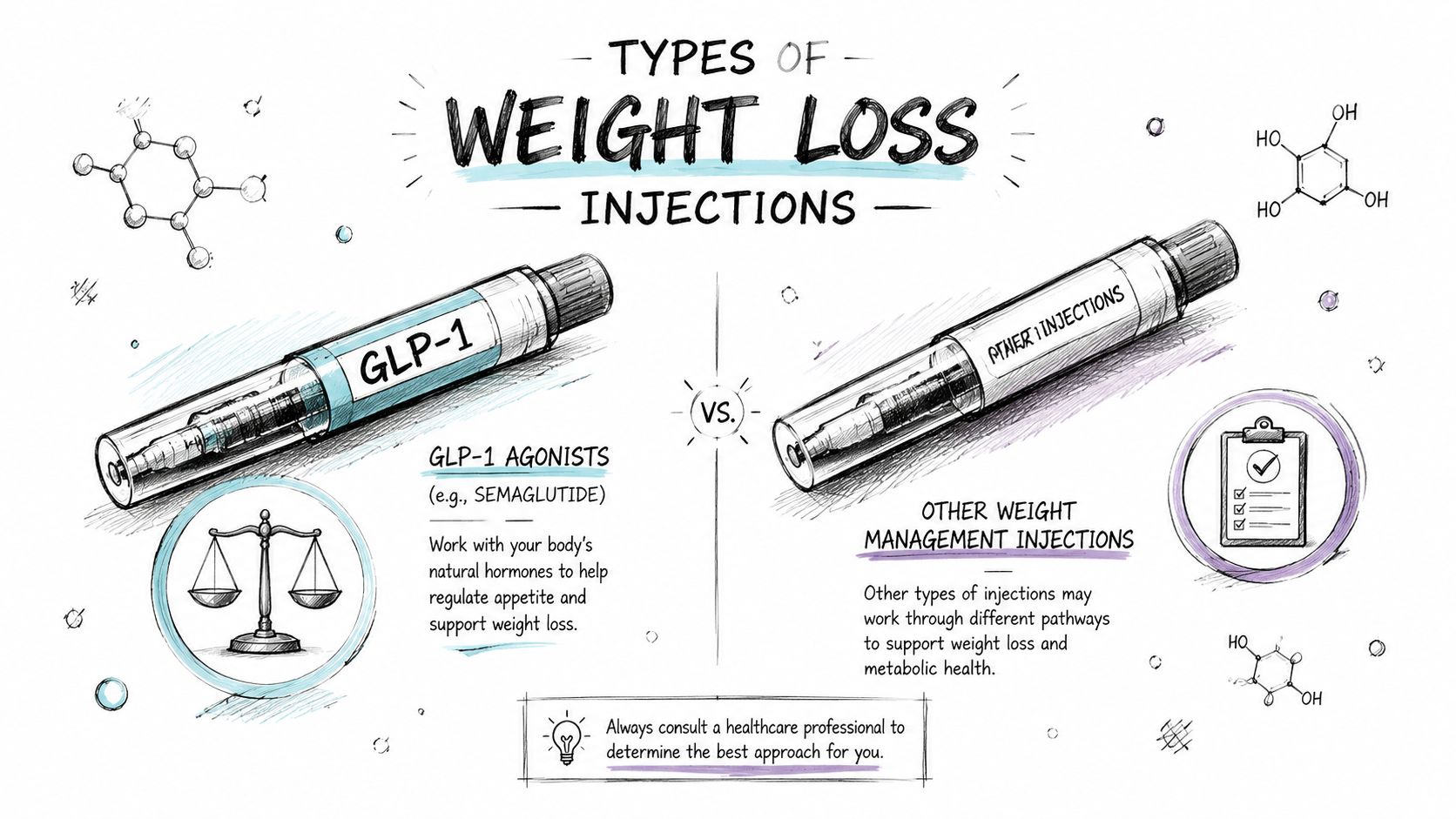
That distinction matters because people sometimes compare a wellness shot price to a GLP-1 program price and assume one office is “overcharging.” In reality, they may be comparing a vitamin support service to a prescription medication with clinical screening, dose management, and follow-up care.
Practical rule: If two injection prices look dramatically different, first make sure they are actually the same type of treatment.
If you want a broader outside perspective on how prescription options are discussed in another market, this guidance on UK prescription weight loss drugs offers a helpful overview of how patients sort through categories and expectations. For a look at the local service itself, ProMD's medical weight management program shows how a supervised plan is framed in practice.
Why the price difference makes sense
Consider the difference between buying walking shoes and enrolling in a coached fitness program. Both relate to health. They are not the same purchase.
With GLP-1 treatment, you're paying for more than the injection. You're paying for evaluation, prescribing, monitoring, and adjustment. At ProMD Health Bel Air, blood work is required before starting GLP-1 therapies so the clinical team can review medical history and current medications, as explained in this clinic video about weight loss prescriptions and blood work.
A supportive shot like B-12 doesn't require that same prescribing pathway. That alone changes the structure of the visit, the safety steps, and the final cost.
Here's the simplest takeaway:
- GLP-1 injections: Prescription medical treatment for weight management.
- Supportive injections: Wellness support that may help energy, but not a substitute for a medical weight loss protocol.
- Price comparison: Only meaningful when you compare the same category of care.
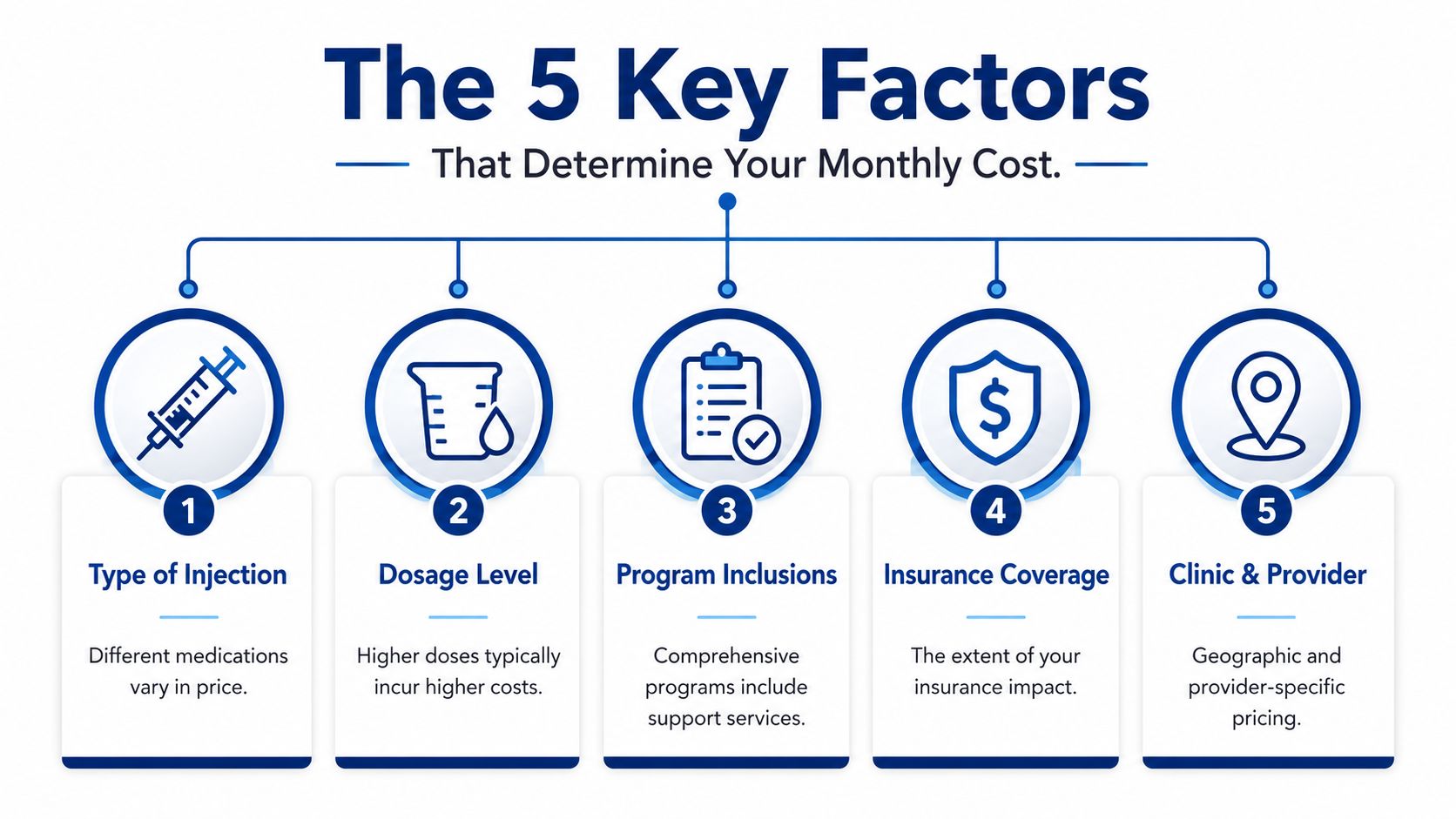
The 5 Key Factors That Determine Your Monthly Cost
Many people want one clear number for weight loss injections. The harder truth is that the medication is only one part of what you may pay each month.
A useful quote should answer a bigger question: what are you getting for that price? In a medically supervised program, the monthly cost can reflect the prescription itself, the clinician's review of your health history, lab work, follow-up visits, dose changes, and ongoing monitoring. That is why two prices that look similar on paper can lead to very different experiences.
Patients often notice the same pattern in other markets. This overview of Mounjaro prices UK shows how dose, prescribing setup, and program structure can change the final number. If you want a local explanation of what may be included in supervised care, this guide to physician supervised weight loss costs and what to expect breaks down the parts of the visit more clearly.
Five things that change the number
1. The medication you are prescribed
This is usually the biggest pricing difference. Brand-name GLP-1 medications often cost more than compounded options for cash-pay patients. The gap can be large enough that two patients asking about "weight loss injections" may be talking about very different monthly budgets.
That is also why price shopping by medication name alone can be confusing.
2. Your dose over time
Treatment often starts low and changes gradually. That process helps your provider balance effectiveness and tolerability, but it also means your cost may shift as the dose changes.
A low introductory price can be real and still be incomplete. It may reflect a starter dose rather than the dose you use later in treatment.
3. How the program is structured
Some practices quote medication only. Others bundle the prescription with follow-up visits, progress reviews, and adjustments.
A simple way to think about it is this: one price may buy only the vial, while another price may cover the care that helps the medication work safely and consistently. At ProMD Health Bel Air, that distinction matters because medically supervised weight loss is not just a product pickup. It is an ongoing treatment plan.
The better pricing question is: "What is included in my month of care?"
4. Screening and lab work
This part is easy to overlook because it may happen before the first injection. Screening helps identify whether a GLP-1 medication is appropriate, whether another health issue needs attention first, and how treatment should be monitored.
That adds cost in some cases, but it also adds clarity. It is similar to getting the full map before starting a long drive. You are less likely to make an expensive wrong turn.
5. The level of follow-up support
Two clinics can advertise similar monthly rates and still provide very different levels of care. One may offer brief refill-based visits. Another may include regular check-ins, side effect review, progress tracking, and dose changes when needed.
Those details affect value in a practical way. If your appetite, energy, or side effects change during treatment, access to a clinician can matter as much as the medication itself.
A quick checklist can help you compare quotes more accurately:
- Medication included: Does the monthly fee include the prescription itself?
- Visits included: Are follow-up appointments part of the quoted price?
- Lab work included: Will testing be billed separately?
- Dose adjustments included: If your plan changes, does the price change too?
- Clinical support included: Can you check in about side effects, progress, or next steps?
The goal is to compare total care, not just the sticker price on the injection. That shift helps the numbers make more sense and helps you judge whether a lower quote is a better value.
How to Estimate Your Total Treatment Investment
Monthly price is only the first layer
A monthly number is helpful, but it can also be misleading if you stop there. Medical weight management usually isn't a one-month project.
Many pricing guides skip the longer view, even though patients often need a 6 to 12 month treatment period, and out-of-pocket patients using brand-name drugs may face a true annual cost of $12,000 to $16,000+, according to this Reuters report on the cost of long-term weight loss drug care.
That doesn't mean every patient will follow the same path. It means the smarter question is not “Can I afford month one?” but “Can I afford the treatment plan long enough to give it a fair chance?”
A simple way to budget realistically
Think in phases instead of in single payments.
The first phase is evaluation and startup. The second phase is dose adjustment and active weight loss. The third phase is ongoing management, which may involve continuing treatment, changing dose, or reassessing the plan with your provider.
A short-term budget for a long-term treatment usually leads to stress halfway through the process.
Here are a few practical budgeting questions to ask during a consultation:
- How long is the initial treatment phase likely to be for me
- What services are included in the monthly fee
- Will I need separate follow-up visits or labs
- If my dose changes, does my cost change too
- What happens financially if I need to pause
This approach shifts the conversation from “price per vial” to total treatment investment. That's a healthier way to decide, because it matches the reality of how medical weight management works.
Pricing and Programs at ProMD Health Bel Air
A monthly price means more when you can see what is inside it.
At ProMD Health Bel Air, the medically supervised Semaglutide program starts at $299 per month, according to the clinic's Bel Air medical weight loss overview. That same page explains that the program includes the initial consultation, medication, and regular check-ins, and that blood work is required before starting GLP-1 treatment.
That matters because two prices can sound similar while covering very different levels of care. One quote may reflect medication alone. Another may include the medical review, lab screening, follow-up visits, and dose adjustments that help treatment stay safe and realistic. At Bel Air, the price is tied to a supervised program, not just a vial.
A simple way to look at it is to treat the program like a home renovation estimate. The paint is only one line item. The prep work, inspection, and follow-up fixes are part of getting a result that lasts. Weight loss treatment works in a similar way.
Providers such as Amanda Pittillo, PA-C or Lauren Mason, PA-C, MSHS may be involved in care depending on scheduling and clinical needs. That provider oversight can affect the value of the program because your plan may need changes based on tolerance, progress, or other medications.
| What is included | Why patients pay attention to it |
|---|---|
| Initial consultation | Checks whether GLP-1 treatment fits your health history and goals |
| Medication | Covers the prescribed therapy itself |
| Regular check-ins | Gives you a place to review progress, side effects, and dose changes |
| Blood work | Screens for issues that should be reviewed before treatment starts |
How local specials can change the math
Promotions can help if they match a treatment plan you are already likely to follow. ProMD Health Bel Air has listed a buy 3 vials, get 1 free offer with $475 in savings on its current Bel Air specials page.
The key is to read a special the same way you would read a phone plan. The headline number gets attention, but the real question is what you receive over time. A bundled offer may lower the effective monthly cost for patients who are appropriate candidates and plan to stay consistent under medical supervision.
That keeps the focus where it belongs. The value is not only in the injection itself. The value is in the full treatment experience, including screening, prescribing, follow-up, and course correction if your body responds differently than expected.
Your Next Step Getting a Personalized Quote
A patient often starts with a simple question: “What do weight loss injections cost me each month?” The honest answer usually starts with a visit, not a flat number on a screen.
A personalized quote works like an estimate for a home project. The final price depends on what needs to be done, what materials are appropriate, and how much follow-up the job requires. In medical weight loss, those details include your health history, current medications, treatment goals, and the plan your provider believes fits you safely.
That is why a quick price alone can be misleading. Two quotes may look similar at first, but one may cover only the medication while another includes the medical visit, lab review, dose adjustments, and follow-up care. For many patients in Bel Air, the better question is not only “What is the vial price?” It is “What am I getting for the total program cost?”
At ProMD Health Bel Air, a consultation gives you a chance to slow the process down and get clear answers. You can review whether you are a candidate, what your likely starting plan may be, and which parts of care are included in the quoted amount.
Bring your questions.
Some patients also want to know how progress will be measured if the scale does not change in a straight line. That concern is reasonable. Body changes can show up in fit, measurements, and appetite patterns before they show up as a big shift in body weight. This explanation of why you're losing inches, not weight can help make that pattern easier to understand before your appointment.
A useful personalized quote should make three points clear:
- Which treatment option fits your health profile
- What services are included in the quoted price
- How long your early treatment period may last before the plan is reassessed
That kind of quote helps you budget with more confidence because it reflects the full care plan, not just a single line item.
Frequently Asked Questions About Weight Loss Injection Costs
Will insurance cover weight loss injections
A patient may sit down for a consult, hear that a medication could be a good fit, and then realize the harder question is not medical. It is financial. Insurance coverage for weight loss injections can be uneven, and the same medication may be covered under one plan and excluded under another.
Many insurers place extra rules around these prescriptions, such as prior authorization, proof of certain health conditions, or step therapy. Some plans are more likely to cover a medication for diabetes than for weight management alone. The Kaiser Family Foundation has explained this pattern in its reporting on insurance coverage of obesity medications.
That is why self-pay planning matters. A clear quote helps you compare the full first phase of care, not just the medication itself.
Why choose a clinic program instead of a mail-order model
Price is only one part of the decision. Weight loss treatment works more like building a house than buying a box off a shelf. The medication is one material. The plan, the medical review, the dose adjustments, and the follow-up visits are the structure that holds it together.
A clinic-based program gives you direct medical oversight. That matters if your appetite changes fast, side effects need attention, or your progress suggests the dose should be adjusted. It also matters if lab work changes the original plan.
At ProMD Health Bel Air, patients often want to understand what they are paying for beyond the vial or pen. The answer usually includes clinician time, safety review, treatment planning, and follow-up care designed to keep the program appropriate for your health history.
Some patients also feel discouraged when the scale moves slowly even though their body is changing. This article on why you're losing inches, not weight gives a simple explanation of that common frustration.
What happens to cost if I pause or stop treatment
Ask about this before you start.
Treatment timelines do not always move in a straight line. Travel, side effects, illness, scheduling changes, or a need to reassess goals can all lead to a pause. A useful pricing discussion should explain what has already been paid for, what can be rescheduled, and whether any services or medication are time-sensitive.
That conversation gives you a more realistic picture of the total investment. It also helps prevent the frustration that comes from assuming every program handles pauses the same way.
Are brand-name injections always the better choice
The better choice is the one that fits your medical needs, your budget, and your ability to stay consistent with care.
Brand recognition can make one option feel safer or more appealing, but the name on the box is only one factor. Patients also need to consider whether the treatment source is appropriate, whether monitoring is built into the program, and whether the monthly cost is realistic for more than a few weeks. A plan that looks cheaper at first can become more expensive if it leaves out follow-up care or leads to avoidable interruptions.
Why do local prices vary so much
Local quotes vary because clinics are not always pricing the same package of care.
One quote may include only medication. Another may include the initial visit, lab review, check-ins, dose changes, and ongoing clinical supervision. That is why two numbers that look close on paper can represent very different levels of support.
A lower sticker price can be like comparing an airfare that covers only the seat with one that also includes bags, seat selection, and change flexibility. The total value becomes clearer once you ask what is included.
What's the most useful question to ask at my appointment
Ask this: Can you walk me through the full expected cost of my first phase of treatment, including visits, medication, and any required testing?
That question brings the full picture into view. It helps you understand whether you are reviewing a simple medication quote or a medically supervised program with testing, follow-up, and room for adjustments.
If you want a clear, personalized discussion about weight loss injections prices, ProMD Health Bel Air can walk you through candidacy, required blood work, what's included in the program, and whether current specials may apply to your treatment plan.