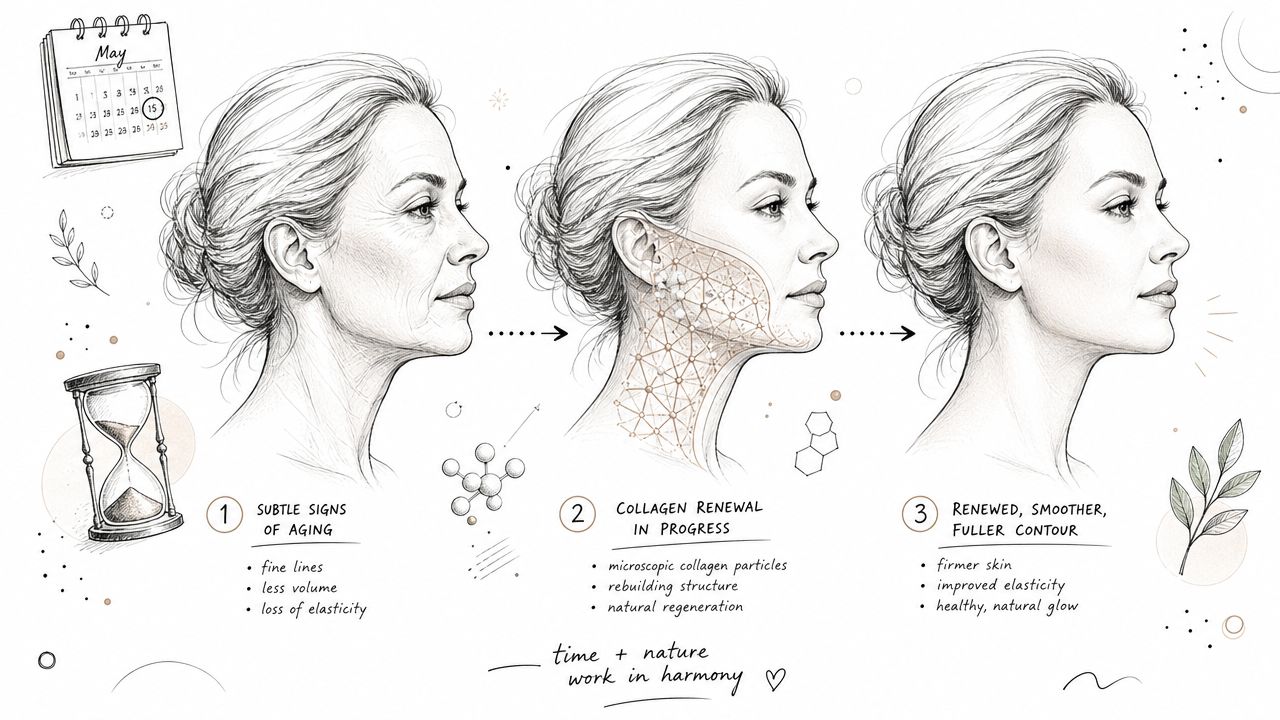
Sculptra results don't show up overnight. Subtle changes typically become noticeable as early as 4 weeks, more visible structural improvement around months 3 to 4, peak improvement around 5 to 6 months, and results last an average of 25 months after the final treatment session, with a clinical range of 18 to 36 months.
If you're reading this, you're probably trying to answer a very practical question. You want to look refreshed, not obviously “done,” and you want to know whether Sculptra is worth the wait. That's a smart question, because Sculptra works differently from treatments that give instant volume.
For many adults in Bel Air, Fallston, and Forest Hill, the appeal is simple. You want natural-looking change that builds gradually and lasts. You also want honest expectations about when you'll see it, how long it will hold, and why your timeline may not look exactly like someone else's.
Table of Contents
- Your Guide to Natural Long-Lasting Rejuvenation
- How Sculptra Rebuilds Your Collagen Foundation
- The Sculptra Results Timeline from Start to Peak
- How Long Do Sculptra Results Last
- Personal Factors That Influence Your Results
- Creating a Long-Term Sculptra Maintenance Plan
- See Your Potential Results Before Treatment
- Frequently Asked Questions About Sculptra
Your Guide to Natural Long-Lasting Rejuvenation
A lot of people looking into facial rejuvenation want the same thing. They want softer hollows, smoother transitions, and better facial support, but they don't want to look puffy or overfilled a week later. Sculptra fits that goal because it works with your body's own collagen-building process instead of placing instant volume where it's missing.
That's why the question “Sculptra results how long?” has two parts. The first is how long it takes to show. The second is how long it lasts once it's there. Both matter, because this treatment asks for patience up front and tends to reward that patience with a longer runway.
At ProMD Health Bel Air, patient education matters because Sculptra works best when expectations are realistic. Patients often require a treatment series rather than one appointment, and the outcome develops in stages. If you understand the rhythm of that process, you're much less likely to feel anxious during the early weeks when visible change is still subtle.
A natural option for patients who don't want a quick fix
Sculptra appeals to patients who like the idea of gradual improvement. Friends may notice you look healthier or more rested, but they often can't pinpoint exactly why. That's part of the appeal.
If you want a broader foundation before treatment, this overview on understanding Sculptra for anti-aging gives helpful background on why this collagen-first approach feels different from a simple fill-and-go treatment.
Sculptra is often a better match for patients who value progression over instant gratification.
What makes this timeline worth learning
Patients often get confused because they hear general phrases like “results in a few months” or “lasts up to two years.” Those aren't wrong, but they're incomplete. The more useful answer includes your treatment series, your body's collagen response, and your long-term maintenance habits.
That personalized view matters even more if you're older, have thinner skin, or want a subtle outcome that builds gradually instead of changing your appearance all at once.
How Sculptra Rebuilds Your Collagen Foundation
A lot of patients come in expecting filler rules to apply. Then they feel confused when Sculptra follows a different rhythm.
Sculptra is a biostimulator, which means its job is to prompt your body to rebuild support from within instead of creating the final result on day one. That distinction matters because the answer to “sculptra results how long” depends on your own collagen response, not just the product placed during the appointment.

Why it feels different from a traditional filler appointment
With a standard filler, the product itself creates visible volume right away because it occupies space under the skin. Sculptra works with a longer biological process. You may notice some early fullness after treatment, but that early look comes largely from the injected fluid and settles as your tissues recover.
The primary goal is gradual structural support.
Over the following weeks and months, your skin starts building more of its own collagen. That is why the change often looks softer and less obvious to other people. Friends may notice that you look fresher or less tired without being able to identify a single sharp change.
For patients who want a broader understanding of treatments that stimulate repair instead of just filling space, our guide to collagen induction therapy and how it supports skin renewal adds helpful context.
What PLLA is doing under the skin
Sculptra contains poly-L-lactic acid, or PLLA. In simple terms, PLLA gives the skin a signal to begin rebuilding collagen over time. The product is absorbed, but the collagen your body creates becomes the lasting support.
A house foundation is a useful way to picture it. If the structure underneath has thinned with age, weight loss, or years of facial movement, adding support to that framework changes how the surface looks and holds itself up. The process is gradual because your body has to do the building.
That is also why the timeline is personal. A younger patient with stronger baseline collagen may respond on a faster schedule than someone with thinner, more mature skin. Lifestyle matters too. Smoking, high sun exposure, poor sleep, and major weight changes can all speed up the collagen clock and shorten how long improvement holds.
Here is the key idea patients at ProMD Health Bel Air find most reassuring:
- Traditional fillers create immediate space
- Sculptra encourages your body to create support
- Gradual change is part of the design
- Longevity depends in part on how your collagen behaves over time
Practical rule: If you judge Sculptra during the first couple of weeks, you are looking before the rebuilding phase has had time to show up in the mirror.
Treatment is usually planned as a series rather than a one-time visit, with appointments spaced out so collagen can build in layers. As noted in the Sculptra Aesthetic patient treatment overview from the manufacturer, improvement develops progressively, which is one reason maintenance planning matters so much if your goal is to keep results going beyond the standard two-year window.
The Sculptra Results Timeline from Start to Peak
A common ProMD Health Bel Air conversation goes like this: a patient checks the mirror a week after treatment and wonders whether the result faded. In most cases, that concern comes from expecting Sculptra to behave like an instant volumizer. It does not. Sculptra follows a slower, more personal timeline because your skin needs time to build new collagen support.
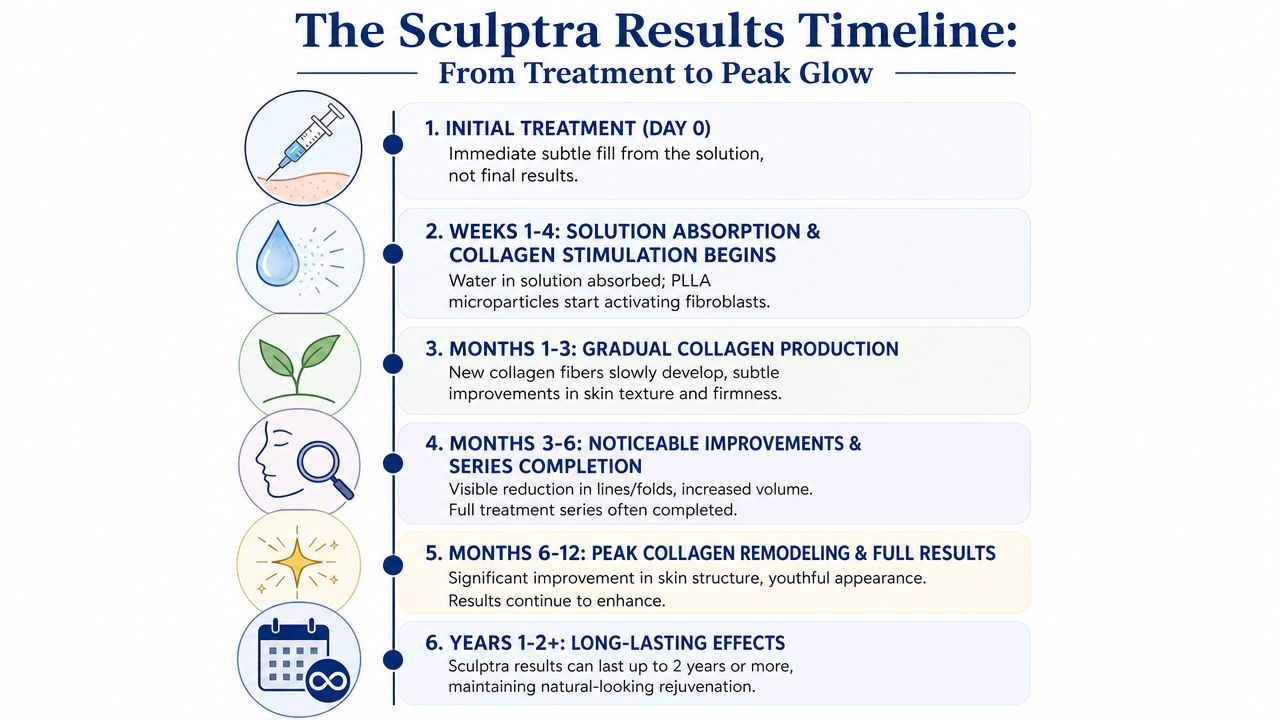
What you may notice right away
Right after treatment, you may see a little extra fullness. That early change is temporary and can create confusion if no one has explained the process clearly. Some of what you see at first comes from the water used to prepare the product, along with normal short-term swelling from the injection itself.
Bruising or swelling often settles during the first several days to a week. After that, there is usually a quieter phase where the mirror does not show dramatic change yet. That is normal.
The first month often feels slow.
Sculptra works like planting and tending a garden rather than laying down instant sod. The visit starts the process, but the visible result depends on what your body builds over time. Age, skin quality, sun exposure, smoking, stress, and weight fluctuations can all affect how fast your collagen clock runs, which is why two patients treated the same day may not look "on schedule" in exactly the same way.
What happens over the next several months
During the first few months, collagen production gradually increases. Patients often describe this stage as subtle but encouraging. Friends may say you look more rested before they can point to one exact reason.
By the middle part of the process, facial support usually becomes easier to appreciate in areas that had started to look hollow or less defined. The change tends to look natural because it develops in layers rather than appearing all at once.
For many patients, the most visible improvement shows up around the later part of the treatment arc, often several months after the initial series has begun. Peak does not mean the product suddenly "switches on" one day. It means enough collagen has accumulated for shape, contour, and skin support to read more clearly in the mirror.
A simple way to follow the timeline is:
Weeks 1 to 4
Early swelling settles. Visible improvement may be minimal.Months 1 to 3
Your body is building collagen in the background. Changes are gradual and easy to miss day to day.Months 3 to 4
Support starts to show more clearly. You may notice softer hollows and a less tired look.Months 5 to 6
The fuller effect of collagen rebuilding is often easier to appreciate.
The best Sculptra results usually appear step by step, not all at once.
This slower progression is one reason patients compare Sculptra with filler timelines during consultation. Fillers create immediate volume, while Sculptra builds support over time through collagen stimulation. If you want a side-by-side explanation, our guide to how long dermal fillers really last can help clarify the difference.
One final point helps set expectations. "Peak" is still personal. A patient in their 30s with stronger baseline collagen and steady skin care habits may move through this timeline faster than a patient with thinner, more mature skin or more collagen loss from sun damage and smoking. That is why smart planning matters more than chasing a one-size-fits-all calendar.
How Long Do Sculptra Results Last
A common question in consultation is simple: once the collagen shows up, how long do you get to enjoy it?
For many patients, Sculptra offers a longer window of improvement than traditional volumizing treatments because the visible change comes from your own collagen framework. The injected PLLA is temporary. The support your skin builds in response is what gives the result its staying power.
Published manufacturer information explains that results can last up to two years after a full treatment series, and in some patients longer, as described in the Sculptra patient treatment overview. In practice, that “two years” figure is a helpful starting point, not a guarantee. Your personal collagen clock still matters.
That point often clears up confusion. Patients sometimes assume longevity depends on the product remaining under the skin for years. Sculptra works more like scaffolding used during a renovation. It sets the rebuilding process in motion, then your body does the long-term work by laying down new collagen. What lasts is the structure your skin created.
This is also why two patients can both complete treatment and keep their results for different lengths of time. A younger patient with stronger baseline collagen, good sun protection, and no smoking history may hold visible support longer. A patient with more collagen loss, frequent sun exposure, or faster tissue breakdown may notice the result softening sooner.
At ProMD Health Bel Air, we explain Sculptra longevity as a range with a plan attached. The treatment can last a long time, but the best long-term outcome usually comes from watching your collagen gradually decline again and refreshing before you feel like you are starting over.
If you are comparing Sculptra with treatments that create volume right away, our guide to how long dermal fillers really last explains why the timelines and maintenance patterns are different.
A practical way to think about longevity is:
- Standard expectation: many patients enjoy improvement for about two years after completing their series.
- Longer-lasting outcomes: some patients maintain visible benefit beyond that window because their collagen loss is slower and maintenance is timed well.
- Shorter duration: some patients need earlier touch-ups because their collagen clock runs faster.
That is the personalized part many articles skip. Sculptra does not fade on the same calendar for everyone. It fades on your calendar.
Personal Factors That Influence Your Results
A common question in consultation sounds like this: “If my friend saw improvement quickly, will I?” The honest answer is that Sculptra follows your biology, not someone else's calendar.
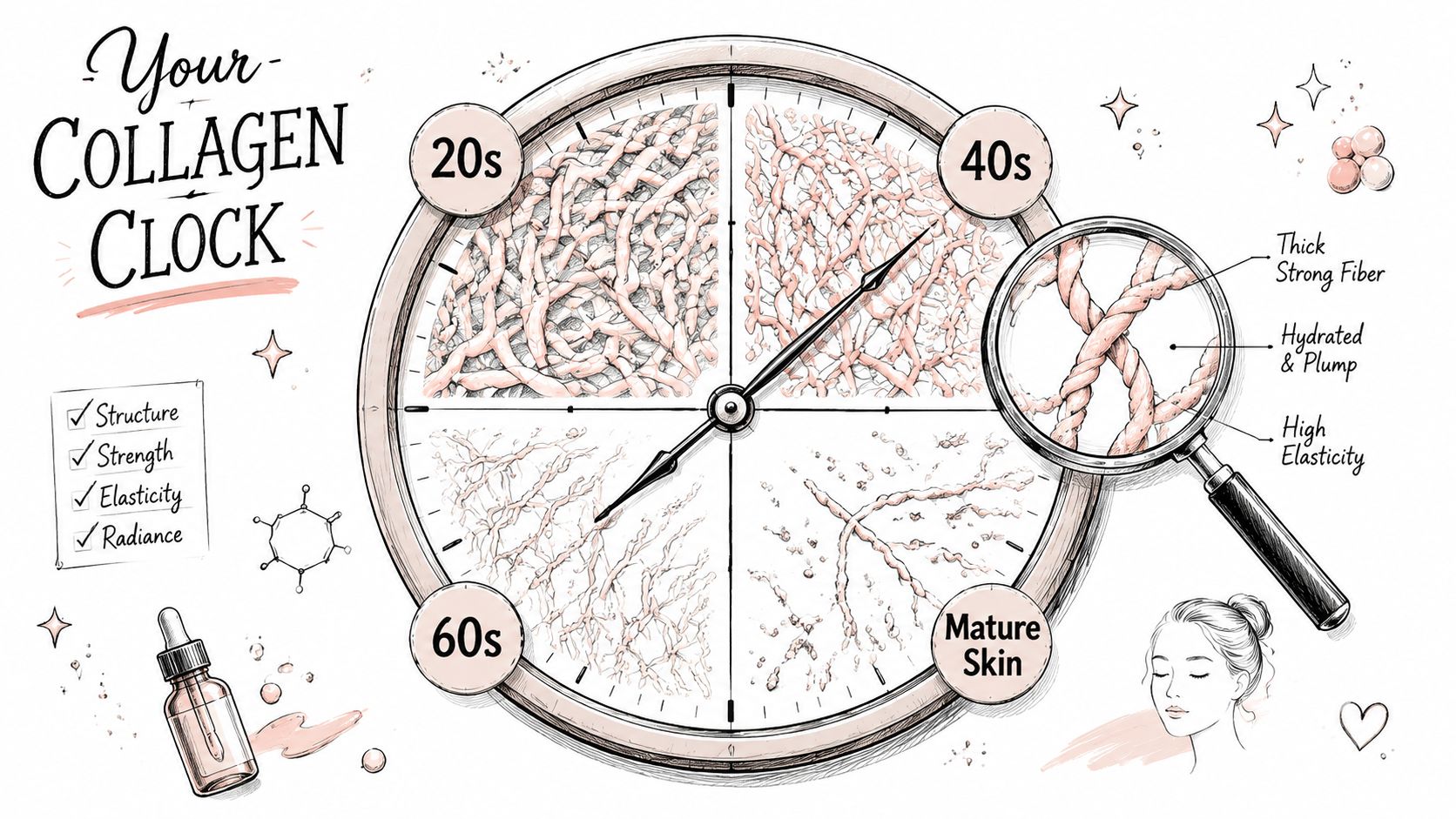
Your collagen clock is personal
Sculptra does not act like a filler that sits in place and creates instant volume. It works more like a signal to your skin, asking it to rebuild support over time. The speed of that rebuilding depends on the condition of the tissue you start with and how quickly your body makes new collagen.
That is why age matters, but it is not the only factor. Younger skin often has a stronger collagen reserve. Skin that has been through more sun exposure, smoking, weight changes, or natural age-related thinning may need more time to create visible structure. The American Society of Plastic Surgeons explains that Sculptra works gradually by stimulating collagen production, which helps explain why timing varies from patient to patient, as outlined in this overview of how Sculptra builds volume over time.
Patients often find this reassuring. A slower timeline does not automatically mean something is wrong. It often means your collagen clock is different.
Why one person's timeline can look different from yours
Several personal factors can shift how soon you notice change and how long that improvement holds:
- Age and baseline collagen: Skin with more existing collagen support often responds sooner.
- Skin thickness and quality: Thinner, more depleted tissue may need longer to show visible rebuilding.
- Lifestyle habits: Smoking, heavy sun exposure, poor sleep, and chronic stress can work against collagen formation and preservation.
- Overall health and metabolism: Your body's healing and remodeling pace affects how gradually Sculptra reveals itself.
- Treatment plan design: The number of sessions, spacing, and placement all shape the pace of your result.
A simple way to picture it is to compare two gardens planted on the same day. One has richer soil and a steady routine of care. The other starts drier and more depleted. Both can grow well, but they do not bloom on the same schedule.
The same idea applies to facial aging. Your result is tied to how fast your body builds collagen and how fast everyday aging continues in the background. That is one reason a personalized treatment plan matters so much at ProMD Health Bel Air.
Lifestyle affects more than the starting point
Lifestyle does not just influence your first few months. It also affects how long your collagen support stays visible.
Daily sun protection, good skincare, avoiding nicotine, and maintaining a stable weight can help you hold onto the structure Sculptra creates. Frequent UV exposure, smoking, and ongoing tissue stress can shorten that window by breaking collagen down faster. If you are thinking about Sculptra as one part of a broader facial aging plan, this guide to the pros and cons of non-surgical facelifts over time gives helpful context.
That is the personalized timeline many articles miss. Sculptra has a general range, but your age, habits, and tissue quality set the pace. Your collagen clock is individual, and your plan should be too.
Creating a Long-Term Sculptra Maintenance Plan
A common scenario comes up at follow-up visits in Bel Air. A patient loves the gradual, natural change from Sculptra, then asks one practical question: how do I keep this from slowly fading back to where I started?
The answer is a maintenance plan built around your own collagen clock.
Sculptra is different from a filler that gives an immediate shape change and then predictably softens over time. It works more like a long-term remodeling project. Your treatment series helps your skin rebuild support, and maintenance helps preserve that support as normal aging continues year by year.
Why maintenance changes the timeline
The often-quoted two-year range is a helpful average, but averages do not tell you what happens after your initial improvement peaks. Some patients hold their results well for a long stretch. Others notice earlier softening because their natural collagen loss, facial movement patterns, sun exposure, or weight changes keep moving in the opposite direction.
That is why longer-lasting results usually come from a plan, not from hope.
A good comparison is home maintenance. If you restore a house and then ignore the roof, paint, and foundation, wear will show up sooner. If you inspect it regularly and fix small issues early, the overall structure stays stronger for longer. Sculptra maintenance follows that same logic.
What smart maintenance means
Smart maintenance means reassessing before the loss becomes obvious. It does not mean overfilling, chasing perfection, or scheduling injections on autopilot.
At ProMD Health Bel Air, that plan usually includes a few simple parts:
- Complete the initial series. Longevity is hard to judge if treatment stopped before enough collagen stimulation occurred.
- Return for follow-up evaluation. Photos, facial assessment, and timing matter because Sculptra changes develop slowly.
- Use touch-ups selectively. Some patients benefit from periodic maintenance sessions, especially if they started with more collagen loss or want to hold a consistent level of correction.
- Protect the collagen you build. Daily sunscreen, stable weight, and strong skin care habits help preserve the result between visits.
Your maintenance plan should match your aging pattern
This is the part many articles skip. Maintenance is not the same for a patient in their 30s with early volume loss and a patient in their 60s with deeper structural change. One may only need occasional reinforcement. The other may need closer monitoring and a more intentional schedule to keep the result balanced and natural.
Lifestyle matters too. A patient with high UV exposure, smoking history, or frequent weight fluctuations may move through collagen loss faster than someone with healthier tissue support and steadier habits. That is why a personalized plan often works better than repeating treatment once a year just because a calendar says so.
If you are deciding how Sculptra fits into a broader facial aging strategy, this perspective on the lifespan of youth and the tradeoffs of non-surgical facelifts over time can help you place maintenance in the bigger picture.
Patients tend to feel most confident when they stop waiting for the result to disappear and start treating collagen support as something they can maintain with timing, observation, and good habits.
See Your Potential Results Before Treatment
You sit down for a consultation wanting a simple answer. How long will Sculptra last on my face? The honest answer starts with a close look at your collagen baseline, because two people can choose the same treatment and move through very different timelines.
Why a personalized consultation matters
Sculptra works by stimulating collagen over time, so the best planning starts before the first vial is opened. A consultation helps map where support has thinned, how quickly you seem to be losing structure, and whether your goal is early prevention, visible restoration, or a gradual refresh that no one can easily identify.
Age is part of that picture, but it is not the whole story. Your lifestyle helps set your collagen clock too. Sun exposure, smoking history, weight changes, exercise habits, and skin quality can all affect how quickly your body uses up the support it builds. That is why a standard timeline can only go so far.
The consultation should also separate what Sculptra can improve from what may need a different approach. It is often a strong fit for diffuse volume loss and facial hollowing. It is less about instant filling and more about rebuilding the framework under the skin, like reinforcing the foundation of a house before repainting the walls.
A more visual way to plan treatment
Photos help, but many patients understand the process better when they can see a realistic direction for their own features. Visual planning can make the gradual nature of Sculptra easier to grasp, especially for patients who are deciding between subtle correction and more noticeable restoration.
Published clinical information from the manufacturer explains that Sculptra is designed to address shallow to deep nasolabial fold contour deficiencies and other facial wrinkles by helping stimulate collagen production over time, with results that can last up to two years in many patients according to the official Sculptra product information. That gives useful context, but your likely result still depends on how much collagen support you have now and how your face is aging.
At ProMD Health Bel Air, Amanda Pittillo, PA-C, Lauren Mason, PA-C, MSHS, and the rest of the Bel Air team use that longer-view approach during consultation. The goal is to show you what progression may look like, explain where patience matters, and build a plan that fits your face rather than forcing your timeline into an average.
Frequently Asked Questions About Sculptra
Sculptra vs. Hyaluronic Acid Fillers at a Glance
| Feature | Sculptra | HA Fillers |
|---|---|---|
| Primary action | Stimulates collagen over time | Adds immediate volume |
| Onset | Gradual | Immediate |
| Look and feel | Progressive, subtle build | Instant correction |
| Best for | Patients who want long-term structural support | Patients who want fast visible change |
| Treatment style | Usually a series with follow-up planning | Often treated by area and adjusted as needed |
Is there downtime after Sculptra?
Individuals typically return to normal routines quickly, but mild swelling or bruising can happen. It helps to think of the first week as the settling period, not the results period. Your injector will also review aftercare and massage instructions if they apply to your plan.
How many sessions do most people need?
Most patients need a series, not a single appointment. The right number depends on your degree of volume loss, your age, your treatment goals, and how gradually you want to build. This is one reason consultation photos and a long-view plan matter so much.
Can Sculptra be combined with other treatments?
Yes, but the right combination depends on the problem you're trying to solve. Sculptra addresses collagen support and age-related volume loss. Other treatments may target dynamic lines, skin texture, pigmentation, or surface quality. Good treatment planning keeps each service in its proper role instead of expecting one treatment to do everything.
What if I'm worried I won't know whether it's working?
That concern is common because Sculptra isn't dramatic right away. Progress photos help a lot. Many patients don't notice day-to-day change because it happens slowly, but when they compare baseline photos to later images, the improvement is much easier to appreciate.
Does aftercare really matter?
Yes. Aftercare matters because early healing and proper follow-through help your treatment stay on track. The details should come from your injector, since instructions can vary based on the areas treated and your individualized plan.
If you're considering collagen-stimulating injectable treatment and want a plan built around your face, your pace, and your maintenance goals, schedule a consultation with ProMD Health Bel Air. The team can walk you through candidacy, expected timing, and a personalized roadmap for natural-looking facial rejuvenation.