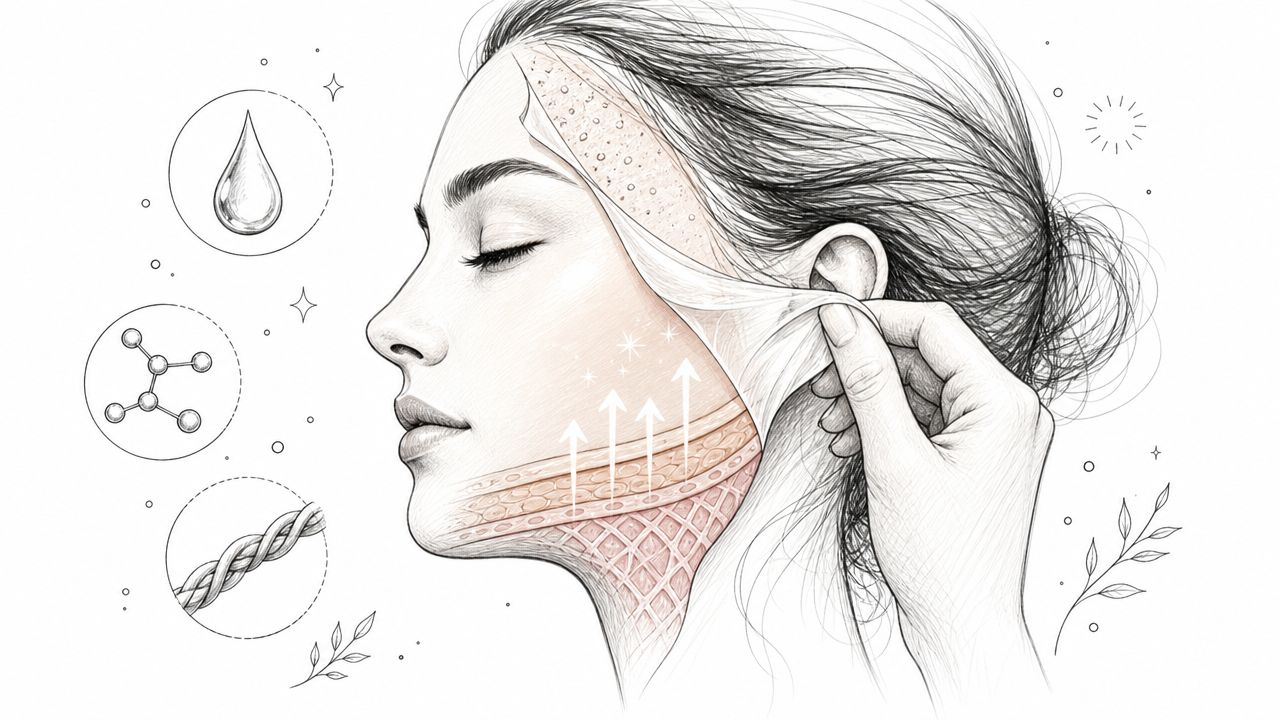
You're probably here because your skin looks a little different lately. Maybe you're seeing uneven tone in the mirror, old breakout marks that won't fade, or fine lines that seem more obvious no matter how many serums you try. A lot of people reach that point where home skincare helps, but it doesn't quite move the needle enough.
That's where professional face peels come in. They're not just “strong exfoliation.” They're a controlled skin-renewal treatment designed to remove damaged surface cells and trigger a healing response that can improve texture, tone, and overall brightness. If you've been wondering how do face peels work, the short answer is this: they create a very precise, intentional injury so your skin can rebuild in a healthier way.
At our Bel Air clinic, that conversation is always personal. Some patients want a light refresh before an event. Others want help with acne, discoloration, or early signs of aging. The right peel depends on your skin, your goals, and how much downtime you're comfortable with.
Table of Contents
- Your Guide to Brighter, Smoother Skin
- The Science of Skin Renewal How Face Peels Work
- Choosing Your Peel at ProMD Health Bel Air
- Are You a Good Candidate for a Chemical Peel
- Your Peel Journey What to Expect Before During and After
- Peels vs Other Treatments Microneedling Microdermabrasion and Lasers
- Start Your Skin Renewal Journey in Bel Air
- Frequently Asked Questions About Face Peels
Your Guide to Brighter, Smoother Skin
A peel is often easiest to understand when you stop thinking about it as a beauty add-on and start thinking about it as guided skin resurfacing. The solution is applied in a controlled way so the outer damaged layers loosen and shed, making room for fresher skin underneath. That's why peels are often used for concerns like dullness, uneven tone, rough texture, acne, and visible signs of sun damage.
People also get confused about where peels fit compared with everyday skincare. Your cleanser, moisturizer, and pigment products work best when they're supporting healthy skin. A peel is different. It changes the skin more directly and more intentionally, which is why professional evaluation matters.
Why people look into peels in the first place
Usually it starts with one or two stubborn concerns:
- Tone changes: Brown spots, patchiness, or post-breakout marks that seem to linger.
- Texture issues: Skin that feels rough, bumpy, or just not as smooth as it used to.
- Aging signs: Fine lines, dullness, and that “tired” surface look makeup can't fully hide.
- Breakout-prone skin: Congestion that keeps coming back even with consistent home care.
A lot of patients are also trying to sort out what belongs in a home routine and what needs an in-office treatment plan. If you're also looking at nutrition and wellness support, this guide on evaluating hair skin nails supplements is a useful way to think through what supplements can and can't realistically do for appearance goals.
Practical rule: If your skin concern has stayed the same for months despite good products, it may be time to consider a treatment that works at a deeper clinical level.
The good news is that peels aren't one-size-fits-all. There are lighter options for maintenance and brighter skin, and there are stronger options for more noticeable resurfacing. The safest plan is the one matched to your skin type, your history, and how much recovery time fits your life.
The Science of Skin Renewal How Face Peels Work
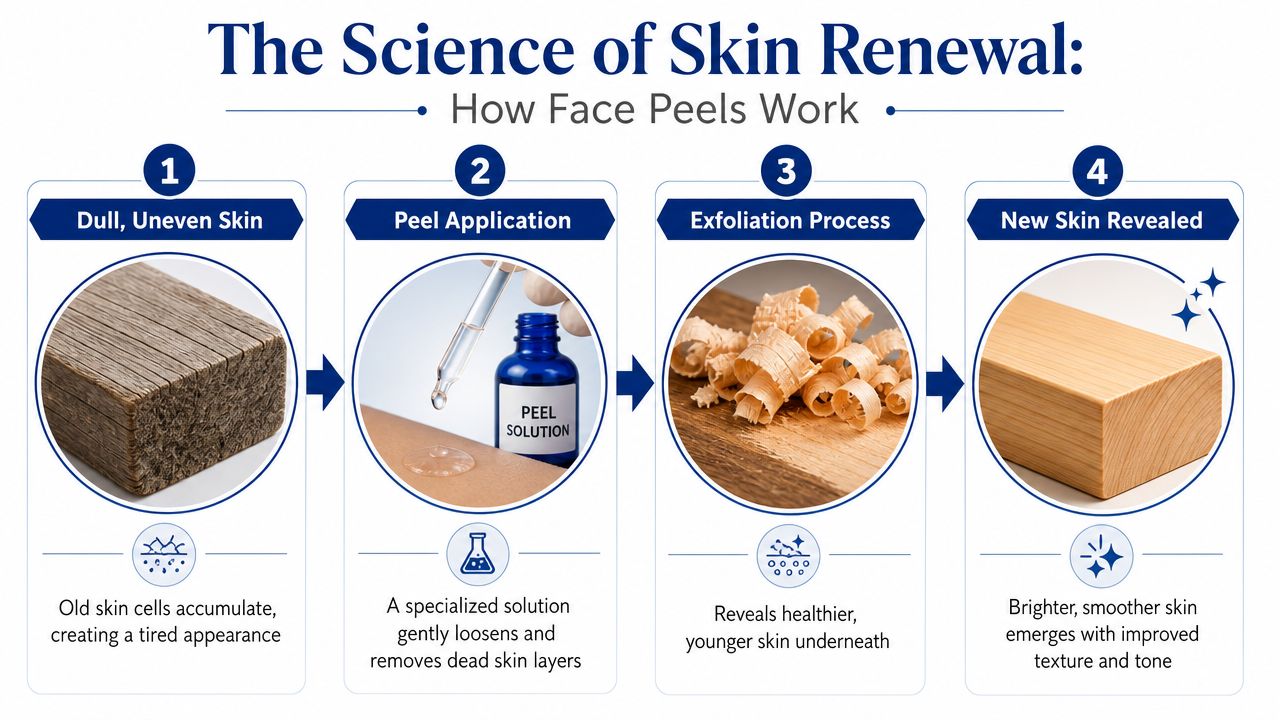
A simple analogy helps. Think of a weathered wood table. If the top layer is rough, stained, and uneven, you don't fix it by polishing over the damage. You refinish it. You remove the worn surface carefully so a smoother finish can come through.
That's the basic idea behind a face peel.
What a peel is actually doing
A professional peel uses acids such as glycolic, salicylic, trichloroacetic, lactic, or phenol to penetrate to a chosen depth. Light peels target the epidermis, medium peels reach the upper dermis, and deep peels go further, as outlined in this medical overview of chemical peel depth and mechanism.
That same review explains something many patients have never been told. A peel works through a controlled injury-healing mechanism. There is immediate but temporary inflammation within 5 minutes, visible melanin redistribution at 48 hours, and a fully remodeled fibrous collagen network by day 9, with no residual inflammatory cells seen on optical biopsy analysis. In plain language, the peel briefly disrupts damaged tissue so the skin can move into repair mode.
Why the healing response matters
This is the part people often miss. A peel doesn't only “take skin off.” It also triggers the release of inflammatory mediators and cytokines that support renewal. The result can include thickening of the epidermis, new collagen deposition, reorganization of structural elements, and increased dermal volume.
That's why the finish after healing can look smoother and fresher, not just temporarily scrubbed.
The goal isn't irritation for its own sake. The goal is controlled regeneration.
Another way to think about it is this:
| Stage | What happens |
|---|---|
| Application | The peel solution begins loosening damaged outer skin cells. |
| Early response | The skin shows a temporary inflammatory reaction. |
| Shedding and repair | Old layers lift away while healing signals increase. |
| Remodeling | The skin reorganizes collagen and reveals a smoother surface. |
When done properly, this controlled process can reduce the look of rhytides, pigmentary irregularity, and photodamage by removing a predictable thickness of damaged skin and allowing healthier tissue to replace it.
Choosing Your Peel at ProMD Health Bel Air
Peel selection works a lot like choosing the right level of reset for your skin. Some patients come in wanting a polished, refreshed look before an event. Others are trying to make real progress on acne marks, uneven pigment, or early lines. Those goals call for different strengths, different ingredients, and different recovery plans.
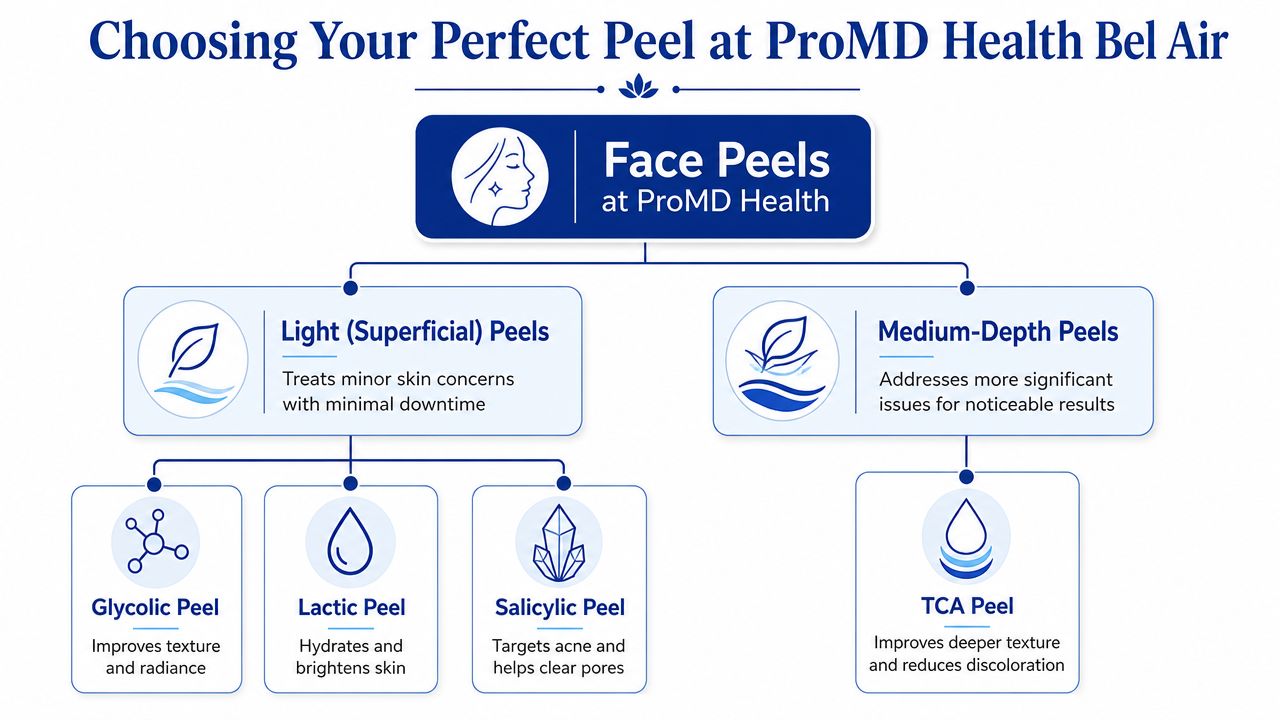
At ProMD Health Bel Air peels, that conversation stays specific to peels. During your visit, the provider is not just asking what bothers you in the mirror. We are also checking how reactive your skin is, how much downtime fits your schedule, whether pigment changes are a concern, and how well your skin barrier is functioning that day. A good peel choice is a match between the treatment and the person wearing the skin.
Light peels for maintenance and glow
Light peels work at the surface level of the skin. They are often chosen for dullness, rough texture, mild discoloration, and that tired look skin can get when dead cells build up faster than they shed.
This category is popular because the recovery is usually manageable. Some patients notice tightness and fine flaking rather than dramatic peeling. That can be confusing if you expect visible shedding every time. Visible peeling is not the only sign a peel is working.
Light peels are often a fit for patients who want:
- Brighter tone: Skin can look fresher without a long recovery period.
- Smoother texture: Helpful when makeup sits unevenly or the skin feels rough.
- Routine upkeep: A good option for patients maintaining results over time.
- Flexible treatment planning: Often easier to repeat as part of a broader skin plan.
Medium-depth peels for more visible correction
Medium-depth peels go further, reaching beyond the outermost layer to create a stronger resurfacing effect. We consider these when a patient wants more than a quick refresh and is prepared for more noticeable healing.
This can make sense for concerns such as acne marks, more visible sun damage, or lines that will not respond much to lighter polishing treatments. The tradeoff is simple. More correction usually means more aftercare, more temporary redness or peeling, and more respect for sun protection while the skin recovers.
Patients often appreciate hearing that stronger is not automatically better. The best peel is the one that your skin can heal from predictably.
Why ingredient choice matters
The peel solution is chosen on purpose. Each ingredient has its own behavior on the skin, so the formula should match the problem we are trying to treat.
For example, salicylic acid is oil-loving, which helps it move into pores and makes it useful for acne-prone or oilier skin. Glycolic acid is often chosen for surface concerns like dullness, fine lines, and uneven texture. TCA is used when the plan calls for a deeper level of correction.
A practical way to compare them is to look at the main target:
- Glycolic-based peels: Often used for surface brightness, mild textural roughness, and early visible aging.
- Salicylic-based peels: Often chosen when congestion, excess oil, and breakouts are part of the picture.
- TCA-based peels: Often considered when a medium-depth result is appropriate.
At our Bel Air clinic, the decision is not based on which peel sounds strongest. It is based on what your skin can benefit from safely, what result you are realistically hoping for, and what kind of healing process fits your life.
Are You a Good Candidate for a Chemical Peel
A good candidate usually isn't someone chasing perfection. It's someone with a specific, realistic concern that a peel is known to address well, and who's willing to follow prep and aftercare carefully.
Who usually does well with peels
Chemical peels are commonly used for concerns such as fine lines, acne, mild scarring, sun spots, age spots, melasma, actinic keratosis, rough skin, uneven tone, and dryness. Patients often do well when they want clearer texture and brighter skin but don't want surgery.
Good peel candidates usually share a few habits:
- They have a defined goal: Not “make me flawless,” but “help with sun spots” or “improve post-acne marks.”
- They understand downtime: Even lighter peels can bring flaking, dryness, or temporary sensitivity.
- They'll protect the result: Sun avoidance and sunscreen use are part of treatment, not an optional extra.
When we pause and reassess
A peel isn't automatically right for everyone on the day they ask for one. Sometimes we delay treatment because the skin barrier looks irritated, the patient has been overusing exfoliants, or there are medical or lifestyle factors that need a different plan.
Pregnancy, certain medications, active irritation, recent over-exfoliation, or a history that raises concern for pigment changes can all affect timing and peel choice. A professional consultation is paramount. It's the difference between choosing a treatment because it sounds good online and choosing one because it's safe for your skin.
Some patients need a peel. Others need barrier repair first. Knowing which group you're in is what protects your skin.
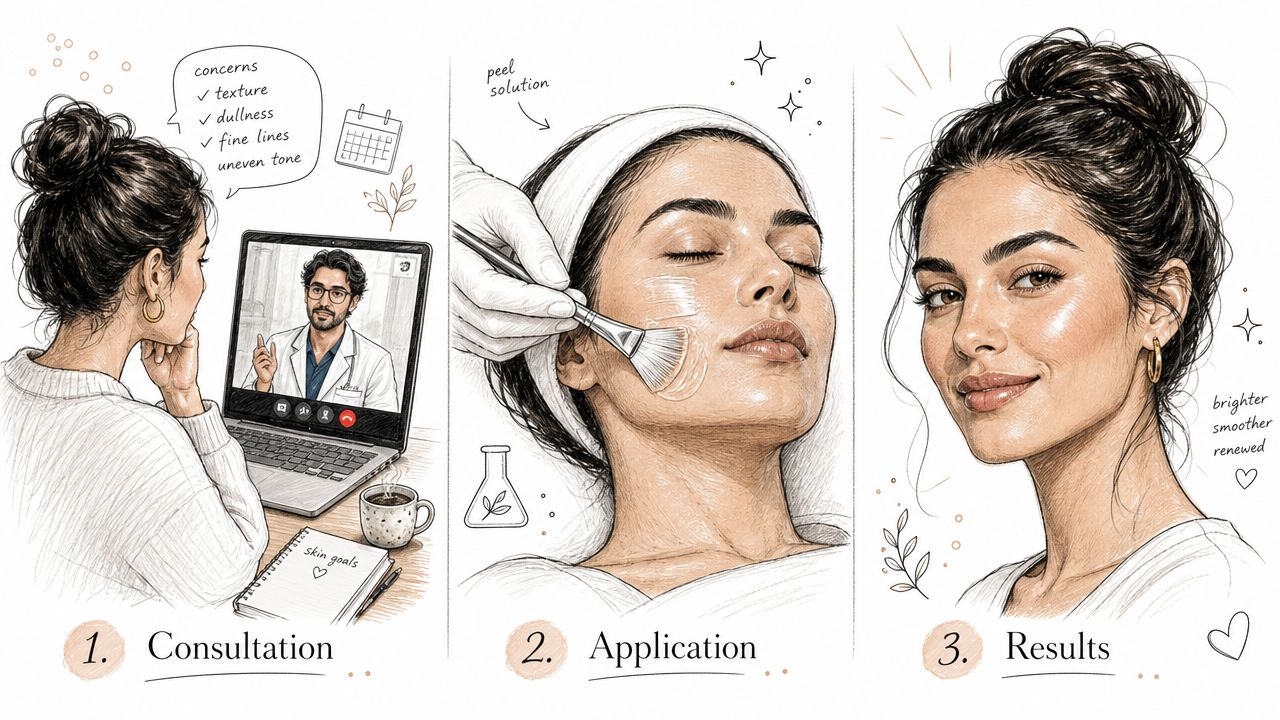
That's why an in-person or virtual consultation in Bel Air is the right first step. It lets your provider evaluate skin tone, sensitivity, history, current products, and recovery expectations before any acid is applied.
Your Peel Journey What to Expect Before During and After
Most patients feel better about peels once they know what the day looks like. The experience is usually straightforward, but details matter.
For a fuller look at downtime and healing, the clinic's guide to chemical peel recovery time is a helpful next read.
Before your appointment
Preparation starts before you sit in the chair. Clinical guidance recommends stopping retinoids and exfoliants 3 to 7 days before treatment and avoiding sun exposure for two weeks before the peel. Hydration also matters.
That prep isn't busywork. Skin that's recently irritated, over-exfoliated, or tanned is less predictable.
A typical pre-treatment discussion includes:
- Current products: Retinoids, acids, scrubs, and acne medications can change how your skin responds.
- Skin history: Pigment concerns, sensitivity, and prior peel reactions affect planning.
- Your calendar: Social events, travel, and outdoor time should line up with your recovery.
During the treatment
Chemical peels are typically performed as an outpatient treatment in a doctor's office or surgery center. The skin is cleansed and protected before the solution is applied. As the peel works, the treated area may whiten as it exfoliates.
The sensation is typically described as warmth, tingling, or stinging that rises and then settles. The exact feel depends on the peel depth and your skin.
The visit itself usually feels more clinical than dramatic. You're monitored, the solution is timed carefully, and the treatment is built around control.
Aftercare and the healing window
Once the peel is done, the next phase is discipline. Post-care guidance includes keeping the skin clean and hydrated, avoiding sun, and using broad-spectrum SPF 30+ every two hours for at least 14 days after treatment.
Here's the practical version:
| Timeframe | What you may notice |
|---|---|
| Right after | Warmth, flushed skin, tightness |
| Early healing | Dryness or light flaking |
| Peeling phase | Visible shedding for some peel types |
| Reveal | Smoother, brighter-looking skin as healing settles |
Don't pick peeling skin. Don't scrub it off. Don't treat fresh post-peel skin like normal skin.
Freshly peeled skin is vulnerable skin. The people who get the nicest outcomes are usually the ones who are most boring and consistent with aftercare.
Peels vs Other Treatments Microneedling Microdermabrasion and Lasers
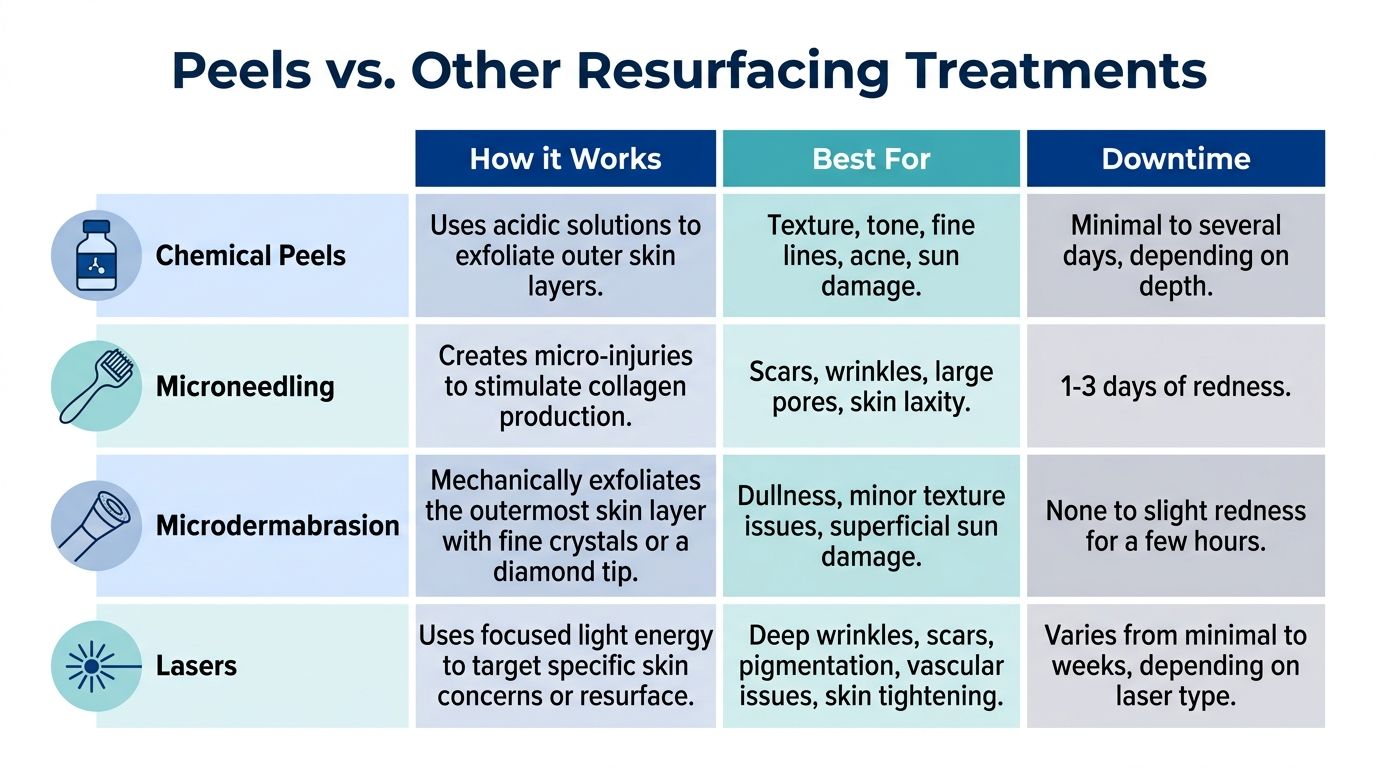
A peel is one resurfacing option, not the only one. Patients often ask whether they should do a peel, microneedling, microdermabrasion, or a laser treatment. The answer depends on what needs to change in the skin and how that treatment creates change.
If you're comparing resurfacing paths, the clinic's page on microneedling is another useful reference point.
How each treatment works
Here's the cleanest side-by-side view:
| Treatment | How it works | Best known for | Downtime |
|---|---|---|---|
| Chemical peels | Use acidic solutions to exfoliate outer skin layers | Texture, tone, fine lines, acne, sun damage | Minimal to several days, depending on depth |
| Microneedling | Creates micro-injuries to stimulate collagen production | Scars, wrinkles, larger pores, skin texture | Often redness for a short recovery period |
| Microdermabrasion | Mechanically exfoliates the outermost layer | Dullness and minor surface texture concerns | Usually little to no downtime |
| Lasers | Use focused light energy to target specific concerns or resurface skin | Pigment, scars, wrinkles, vessels, skin tightening | Varies widely by laser type |
That difference in mechanism matters. Peels are chemical resurfacing. Microdermabrasion is mechanical exfoliation. Microneedling relies on tiny controlled punctures. Lasers use light energy.
When a peel makes the most sense
Peels are especially useful when the problem sits at the level of tone, pigment irregularity, acne congestion, surface roughness, or mild visible aging. They also deserve more credit than they usually get.
A common question is why a superficial peel can still help with aging if it doesn't reach the dermis. Dermatologic evidence shows that even superficial peels, including glycolic acid peels, send signaling molecules into the dermis that stimulate fibroblast activity and new collagen growth, despite not penetrating below the epidermis, as explained in this dermatology discussion on superficial peel collagen signaling.
That's important because many people assume only deeper treatments can support collagen response. That isn't the full story.
A quick decision guide helps:
- Choose a peel when: You want better brightness, tone, acne support, or a smoother surface.
- Consider microneedling when: Texture irregularity and mild scarring are the main concern.
- Consider microdermabrasion when: You want gentle surface polishing with very little recovery.
- Consider lasers when: The target is more specialized, such as pigment, vascular concerns, or deeper resurfacing.
The best treatment isn't the most intense one. It's the one that matches the problem you're actually trying to solve.
Start Your Skin Renewal Journey in Bel Air
Face peels work by doing something very precise. They remove damaged surface layers in a controlled way, then let your skin move through a healing process that can reveal smoother texture, brighter tone, and a fresher overall look. When the peel is chosen well, the result feels natural because the skin is renewing itself.
What matters most is customization and safety. The right candidate, the right peel depth, and the right aftercare plan all matter more than chasing the strongest formula. That's especially true if you have sensitive skin, acne, pigment concerns, or a busy schedule that limits downtime.
If you're in Bel Air, Fallston, or Forest Hill and you're wondering whether a peel is the right next step, book a consultation with the team at 2023 Emmorton Rd, Suite A, Bel Air, Maryland. Virtual consults are also available, which makes it easier to start the conversation before you commit to treatment day.
Frequently Asked Questions About Face Peels
Do face peels hurt?
Most patients describe a peel as a brief tingling or warming sensation. A stronger peel can bring more stinging for a few minutes, but the feeling is usually temporary and expected.
At ProMD Health Bel Air, we talk you through that sensation before treatment starts, so there are no surprises. If your skin is sensitive, your provider can choose a gentler option or adjust the plan to better fit your comfort level.
Will my skin always visibly peel afterward?
Visible peeling is only one version of skin renewal. Some patients flake. Others notice tightness, dryness, or a smoother feel without obvious shedding.
Skin can renew itself, like replacing worn floor tiles one at a time instead of tearing up the whole room at once. That is why a peel can still be working even if you do not see dramatic peeling in the mirror.
How often can I get a peel?
The schedule depends on the type of peel, your skin goals, and how your skin responds. Lighter peels are often done as a series, while medium-depth peels are spaced farther apart and planned more carefully.
This is one reason a consultation matters. In our Bel Air clinic, we do not hand everyone the same timeline. We match the treatment plan to acne, discoloration, fine lines, sensitivity, and your downtime preferences.
Are superficial peels only for glow, not anti-aging?
Superficial peels can do more than refresh the surface. They help speed up cell turnover, improve texture, and support a more even tone over time.
A helpful way to picture it is housekeeping for the top layer of the skin. Once that outer layer is less congested and dull, skin often reflects light better and responds more predictably to a long-term treatment plan. For some patients, that is a smart first step before considering microneedling or laser treatments at ProMD Health Bel Air.
What should I stop using before a peel?
Your provider will usually ask you to pause products that make the skin more reactive, such as retinoids, exfoliating acids, scrubs, and other potentially irritating actives. Sun exposure matters too. Skin that is freshly tanned or irritated is harder to treat safely.
The exact timing depends on the peel you are getting and your skin history. During your consultation in Bel Air, we give you a clear prep plan so you know what to stop, what to keep using, and when to restart your routine.
What's the most important thing after a peel?
Sun protection is at the top of the list. Freshly treated skin is more vulnerable to irritation and pigment changes, so daily broad-spectrum sunscreen and gentle skincare are part of the treatment, not an extra step.
Moisturizer, a mild cleanser, and patience also help. Picking, scrubbing, or trying to speed up peeling can interrupt healing and make results less even.
If you're ready for a personalized peel plan, schedule a consultation with ProMD Health Bel Air. The team can assess your skin, review your goals, and help you decide whether a light or medium-depth peel fits your routine and recovery preferences.