Why Your Skin Ages (And What You Can Actually Do About It)
Younger looking skin starts with understanding what makes skin age in the first place. Here’s what actually works:
Quick Answer: 11 Evidence-Based Ways to Get Younger Looking Skin
- Sun protection – Wear SPF 30+ daily (prevents 90% of damage)
- Quit smoking – Wrinkles show under microscope by age 20
- Eat antioxidant-rich foods – Vitamin C, colorful vegetables
- Limit alcohol – Dehydrates and damages skin
- Drink 1.5L water daily – Maintains plumpness
- Exercise regularly – Boosts circulation and collagen
- Sleep 7-8 hours – On your back to prevent wrinkles
- Manage stress – Meditation, yoga reduce inflammation
- Cleanse gently – Twice daily with mild cleanser
- Moisturize daily – Traps water, maintains barrier
- Use proven ingredients – Retinoids, vitamin C, peptides
Your skin changes as you get older. The outer layer thins. Blood vessels become more fragile. Your body produces less collagen and elastin—the proteins that keep skin plump and smooth.
But here’s the thing: some aging is natural, and some is preventable.
Dermatologists divide skin aging into two types:
- Intrinsic aging – The genetic, natural process you can’t control
- Extrinsic aging – Damage from sun, smoking, diet, and lifestyle choices you can control
The difference is huge. About 90% of visible skin aging comes from sun exposure alone. That means most of what we think of as “aging” is actually preventable damage.
Even better news? It’s never too late to start. Studies show that making lifestyle changes like adding sun protection and quitting smoking can help your skin repair existing damage and look healthier at any age.
I’m Ryan Pittillo, a franchise owner at ProMD Health, and while my background is in coaching athletes to perform their best, the same principles apply to helping patients achieve their aesthetic goals—including younger looking skin through evidence-based treatments and daily habits. In this guide, I’ll walk you through exactly what causes your skin to age and the 11 most effective ways to reverse and prevent it.
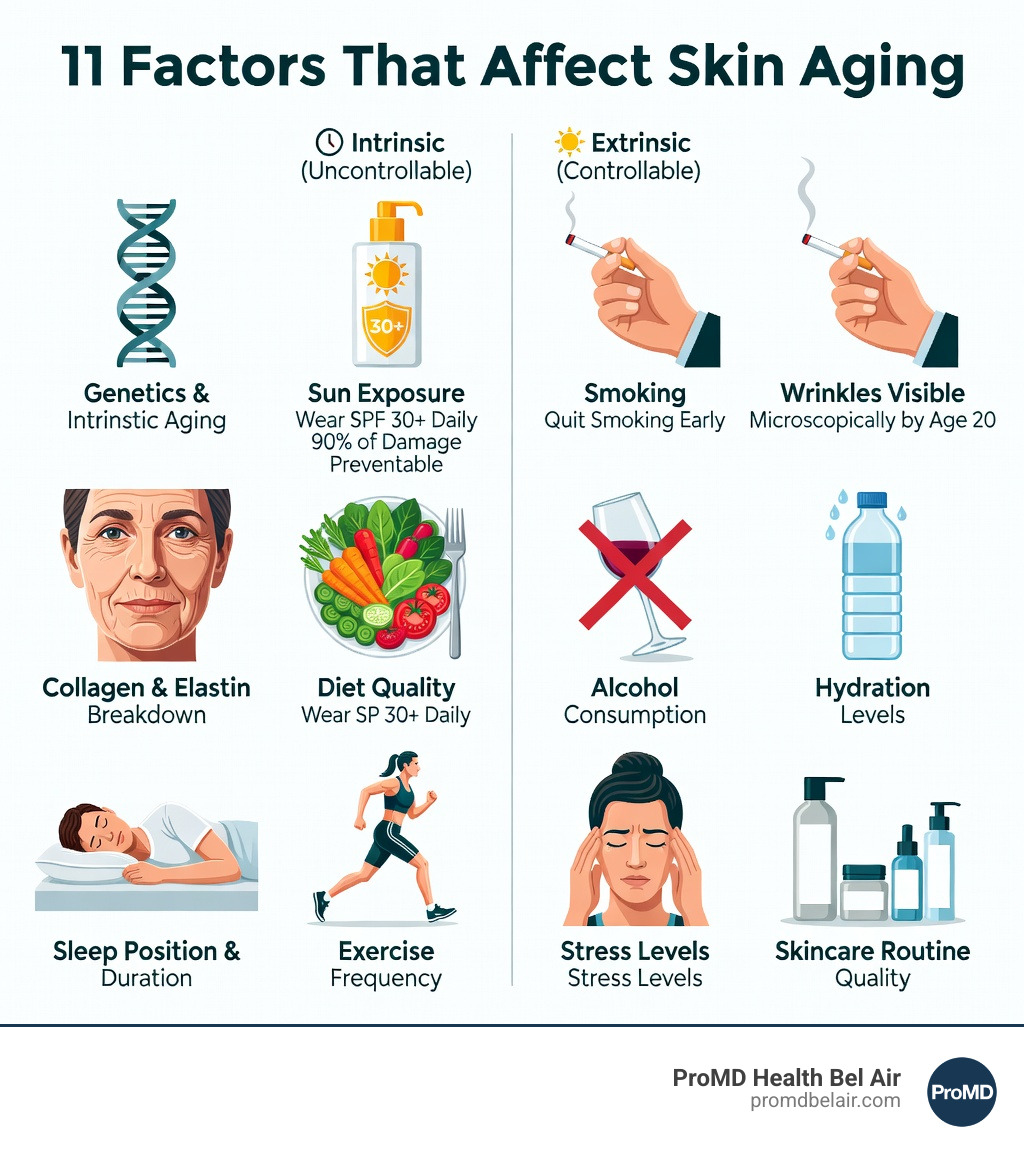
Understanding Intrinsic vs. Extrinsic Skin Aging
To achieve younger looking skin, we first have to look at the “biological clock.” Intrinsic aging is the natural aging process that begins in our mid-20s. Within the skin, collagen production slows down, and elastin (the stuff that enables skin to snap back) has a bit less spring. Dead skin cells don’t shed quite as quickly, and the turnover of new skin cells may decrease slightly. While these changes are inevitable, they usually happen gradually and are influenced by our genetics.
Extrinsic aging, however, is where the real drama happens. This refers to external factors that act upon our skin to speed up the clock. The most significant culprit is photoaging, or damage caused by the sun.
Research from the FDA confirms that UV radiation is the primary cause of age spots (once called “liver spots”) and leathery texture. When UV rays hit the skin, they create free radicals—unstable molecules that damage DNA and break down the scaffolding of our skin. This doesn’t just make us look older; it significantly increases skin cancer risk, particularly for those with fair skin that freckles easily.
Beyond the sun, hormonal shifts play a major role. For many of our patients in Bel Air, menopause is a turning point where a drop in estrogen causes the skin to become thinner, drier, and more fragile. This thinning of the epidermis makes the skin look less “plump” and more “crepey.”
11 Lifestyle Habits for a Youthful Glow
If you want to maintain younger looking skin without undergoing surgery, your daily habits are your most powerful tools. We like to think of these as the “foundational pillars” of aesthetic health.

1. Prioritize Sun Protection
As the statistic goes, 90% of all skin damage is due to the sun. We recommend a broad-spectrum, water-resistant sunscreen with an SPF of at least 30. This should be applied every single day, even if it’s cloudy or you’re staying indoors (UVA rays can penetrate window glass!). If you’re outdoors in the Maryland sun, reapply every two hours.
2. Smoking Cessation
Smoking is a “fast-forward” button for aging. It narrows the tiny blood vessels in the outermost layers of skin, which depletes oxygen and nutrients. It also damages collagen and elastin. Shockingly, smokers as young as 20 can show wrinkles under a microscope. Quitting is one of the best things you can do to restore a healthy glow.
3. Eat an Antioxidant-Rich Diet
What you put in your body matters as much as what you put on it. A diet high in sugar and refined carbohydrates can actually “caramelize” your collagen through a process called glycation, leading to sagging. Instead, focus on Vitamin C (found in citrus and bell peppers) to help your body produce collagen, and colorful vegetables that provide phytonutrients to fight free radicals. For those looking to dive deeper into systemic anti-aging, you can read more about Age Gracefully treatments that complement a healthy diet.
4. Reduce Alcohol Consumption
Alcohol is a vasodilator and a diuretic. It dehydrates the skin and, over time, can lead to permanent redness and broken capillaries. Limiting alcohol helps keep your complexion clear and hydrated.
5. Hydration is Key
Your body needs at least 1.5 liters of water daily to function, and your skin is often the last organ to receive that hydration. When you’re dehydrated, wrinkles look deeper and your skin looks dull.
6. Get Moving
Moderate exercise improves circulation and boosts the immune system. This increased blood flow helps carry oxygen and nutrients to skin cells while flushing out waste products. Just remember to wash your face immediately after sweating to prevent irritation!
7. Sleep Hygiene and Position
We call it “beauty sleep” for a reason. During sleep, your skin goes into repair mode. Aim for 7–8 hours a night. Interestingly, sleeping on your back can prevent “sleep lines”—wrinkles that become etched into your face from pressing against a pillow every night.
8. Manage Stress
High stress levels trigger the production of cortisol, which can break down collagen and trigger inflammatory conditions like rosacea or acne. Practices like yoga or meditation aren’t just good for your mind; they’re essential for your skin.
9. Gentle Cleansing
Scrubbing your skin raw won’t make it younger; it will only cause irritation that accelerates aging. Use a mild, soap-free cleanser and warm (not hot) water. To truly deep-clean without damage, many of our clients find professional Facials to be a game-changer.
10. Daily Moisturizing
A good moisturizer traps water in your skin, which can temporarily “plump” out fine lines and give you an immediate younger looking skin appearance. Look for ingredients like glycerin or hyaluronic acid.
11. Use Proven Ingredients
Don’t get distracted by “miracle” creams. Stick to the ingredients that have decades of science behind them.
The best ingredients for younger looking skin
When building your arsenal, look for these heavy hitters:
- Retinoids (Vitamin A): The gold standard. They increase cell turnover and stimulate collagen synthesis.
- Vitamin C Serum: A potent antioxidant that brightens the skin and protects against environmental damage.
- Hyaluronic Acid: A humectant that can hold 1,000 times its weight in water.
- Niacinamide: A form of Vitamin B3 that improves skin elasticity and reduces redness.
- Peptides: Short chains of amino acids that act as building blocks for proteins like collagen.
- Bakuchiol: A plant-based alternative to retinol that is gentler for sensitive skin.
If your skin feels dull or congested, professional Peels can help these ingredients penetrate deeper and work more effectively.
Building Your Daily Routine for Younger Looking Skin
A complicated 15-step routine is hard to maintain. We believe in a simple, effective “AM/PM” approach.
The Morning Routine (Protection)
- Cleanse: Use a gentle, non-comedogenic cleanser.
- Antioxidant: Apply a Vitamin C serum to fight free radicals during the day.
- Moisturize: Apply a light moisturizer.
- Protect: The most important step—apply SPF 30+.
The Evening Routine (Repair)
- Double Cleanse: Remove the day’s grime and sunscreen.
- Treat: Apply your Retinol or prescription treatment.
- Nourish: Use a thicker moisturizer or “night cream.”
| Step | Morning (AM) | Evening (PM) |
|---|---|---|
| Cleanser | Gentle / Light | Deep Cleanse |
| Treatment | Vitamin C / Antioxidants | Retinoids / Peptides |
| Hydration | Light Moisturizer | Rich Night Cream |
| Protection | SPF 30+ | N/A |
When starting new products, watch for skin purging—a temporary period where your skin might break out as cell turnover increases. This is normal! However, if a product stings or burns, stop using it and consult a professional. For those who want to start with a “clean slate,” we often recommend Dermaplaning to remove dead skin cells and “peach fuzz,” or Microdermabrasion for a more intensive exfoliation.
Professional Treatments to Reverse Visible Aging
While habits prevent future damage, professional treatments can often “reverse” the damage that has already occurred. At ProMD Health Bel Air, we specialize in high-impact, non-invasive options.
Addressing Specific Concerns
- Age Spots & Sun Damage: Laser therapies and chemical peels are highly effective at breaking up pigmentation and revealing fresh skin.
- Crow’s Feet & Forehead Lines: Botox & Dysport are neuromodulators that relax the muscles responsible for these “dynamic” wrinkles.
- Loss of Volume: As we age, we lose fat in our cheeks and around our mouth. Dermal Fillers use hyaluronic acid to restore that youthful “plumpness.”
- Skin Texture: Microneedling creates controlled micro-injuries that trigger the body’s natural collagen production.
- Sagging Jowls: A Thread Lift can provide a subtle, non-surgical lift to the lower face and neck.
- Deep Resurfacing: For more significant sun damage and deep wrinkles, CO2 Laser Resurfacing offers dramatic results.
Professional interventions for younger looking skin
One area often overlooked is the hands. Your hands are frequently exposed to the sun and lose collagen quickly, often revealing your age even if your face looks 20 years younger. Hand rejuvenation treatments can plump the skin and erase age spots to match your facial glow.
Whether you are interested in Laser Treatments or other Turn Back Time treatments, the goal is always natural-looking results.
Conclusion
Achieving younger looking skin is a journey that combines daily discipline with modern medical science. At ProMD Health Bel Air, we understand that every face is unique. That’s why we offer our exclusive AI Simulator, which allows you to preview your personalized post-treatment results before you even start. This technology takes the guesswork out of aesthetics, ensuring you feel confident in your plan to restore your youthful glow.
If you’re ready to see what’s possible for your skin, we invite you to explore more info about our services and schedule a consultation with our expert team in Bel Air.
When should I see a dermatologist for aging skin?
While we focus on aesthetics, your skin health is paramount. You should see a medical professional if you notice:
- Changes in moles (following the ABCDE rule: Asymmetry, Border, Color, Diameter, Evolving).
- Persistent rashes or redness (which could be Rosacea or Psoriasis).
- Painful rashes (like Shingles).
- Signs of Scleroderma or skin infections.
- Any new growth that bleeds or doesn’t heal.
Are nonprescription anti-aging products effective?
Yes, but with caveats. Over-the-counter “cosmeceuticals” aren’t regulated as strictly as drugs by the FDA. While they can improve the appearance of skin, they aren’t “facelifts in a bottle.” You should generally give any new skincare routine at least three months to show visible results. If you don’t see changes by then, it might be time for a medical-grade intervention.
How does sleep position affect wrinkles?
Believe it or not, your pillow can be an enemy. Sleeping on your side or stomach can create “compression wrinkles.” Furthermore, sleeping flat can cause fluid to pool around your eyes, leading to puffy eyes and under-eye bags. Sleeping on your back with your head slightly elevated can reduce this fluid retention and keep your skin looking smooth and rested.